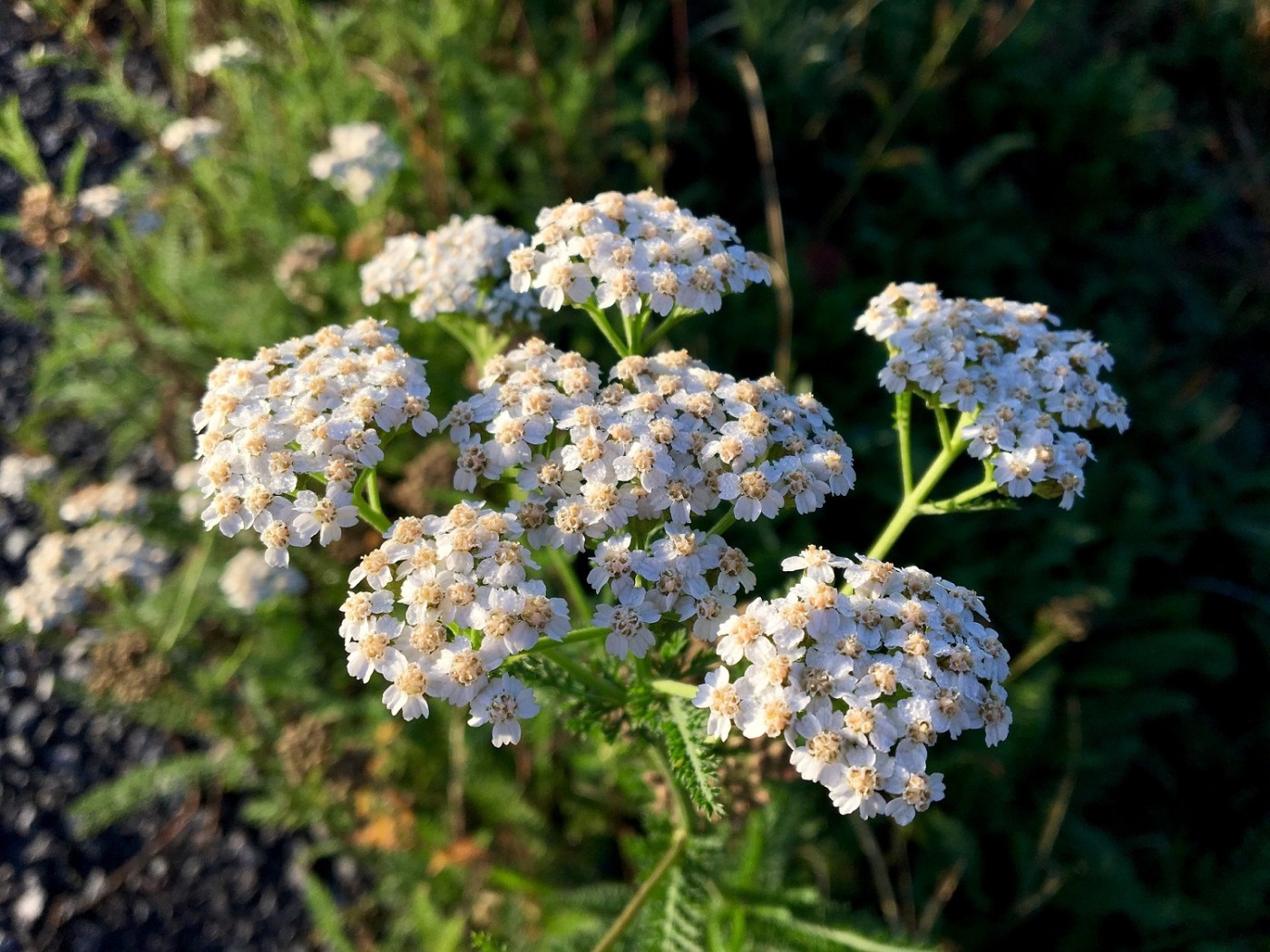
Yarrow
As the reserve’s flora turns itself over to making seed, there are fewer and fewer flowers in our hedgerows. Yarrow (Achillea millefolium) is one of the few.
Its genus name, Achillea, is derived from ancient Greek myths (Achilles, hero of the Trojan Wars, is said to have used it to treat his men’s battle wounds) and the species name millefolium, which means thousand leaved, comes from the finely-divided, featherlike leaves.
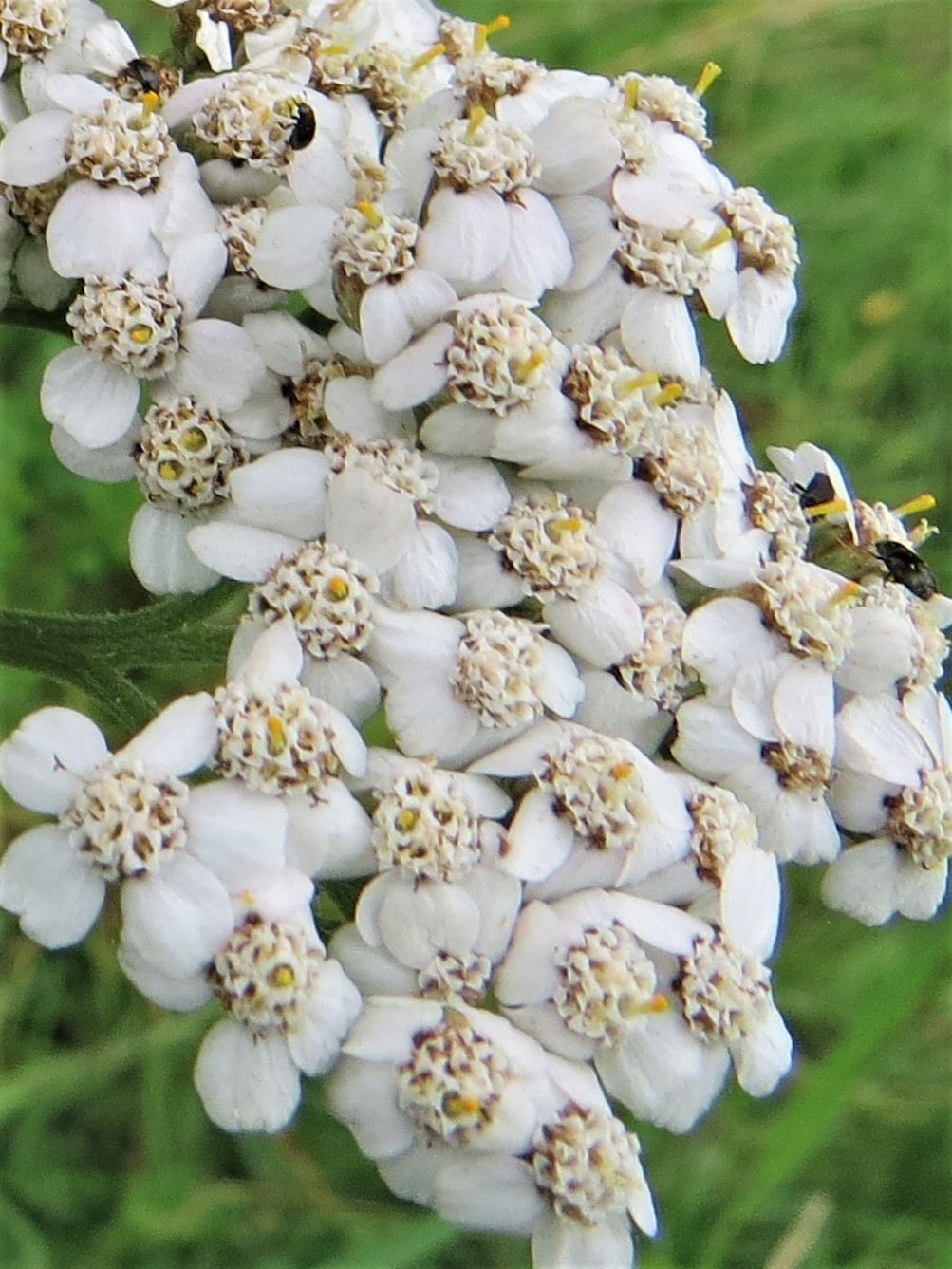


But this is also one of those wildflower species with dozens of different common names: old man’s pepper, sanguinary, milfoil, soldier’s woundwort, arrowroot, nose bleed, death flower, eerie, and snake’s grass, names that reflect a history, thousands of years old, of medicinal and culinary use.
In particular, it was known for its anaesthetic and anti-inflammatory qualities, for instance chewing the leaves will reduce the pain of toothache. But it’s a herb with a very complex chemistry, not to be taken lightly, and some species of animal will refuse to eat it. Like fleabane, it has insect-repellent qualities and several species of cavity-nesting birds, including the common starling, are known to use it to line their nests, where, experiments show, it inhibits the growth of parasites.



 Southwick Country Park Nature Reserve