
Each year, more meadow browns are spotted in the reserve than any other species of butterfly.
The meadow brown (Maniola jurtina) is the most widely distributed of Britain’s butterfly species, found everywhere from the Scilly Isles to as far north as the Shetlands, sometimes in impressively large numbers. It lives anywhere that grows fine meadow grasses, the food plants for their caterpillars.
Slowly, we are returning the reserve’s fields to the state of native grassland and each year we find new fine-bladed grasses that will attract meadow browns and other species of British butterflies that lay their eggs in and on various kinds of grass.
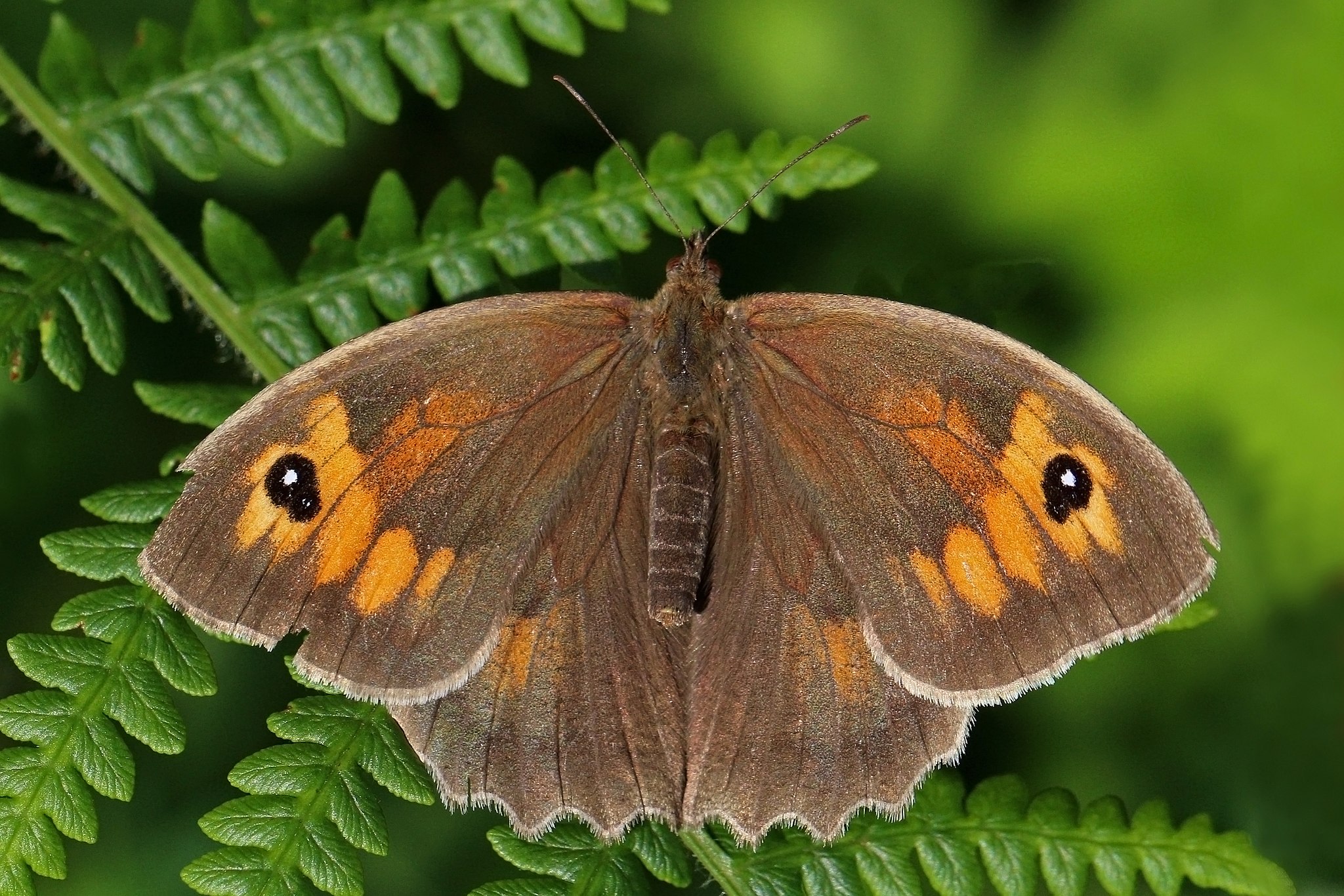
The meadow brown is, as its names suggests, largely brown with an orange patch on each forewing surrounding a black eye spot with a single white spot like the light reflected in the pupil of an eye. Unusually for a butterfly species, there are distinct differences between the sexes. The header picture is of a male and above is a picture of a female; she has a brighter brown background colour with more extensive orange patches.
Meadow browns overwinter as caterpillars hidden inside the sheaths of grass stems. If there is fine weather and the temperature rises, they will come out of hiding to feed for a while. The caterpillars pupate in the spring and the adults emerge a couple of weeks later. The adults mate and in the late summer the female lays her eggs either singly on the food-plant or occasionally by simply ejecting them into vegetation while she is perching. The eggs hatch in two to four weeks, depending on the temperature.


The image is of an early instar meadow brown caterpillar; the diagram is from Butterfly Conservation’s website and shows how the meadow brown’s four stages are distributed through the year.
There is one generation of meadow browns each year. The flight period can be quite protracted with adults being seen from the middle of June to the end of September in most years. In a good year, there will be hundreds, if not thousands, of meadow browns in the park.



 Southwick Country Park Nature Reserve
I have hardly seen any btterflies this year even on the buddleja! Barbara Johnson.