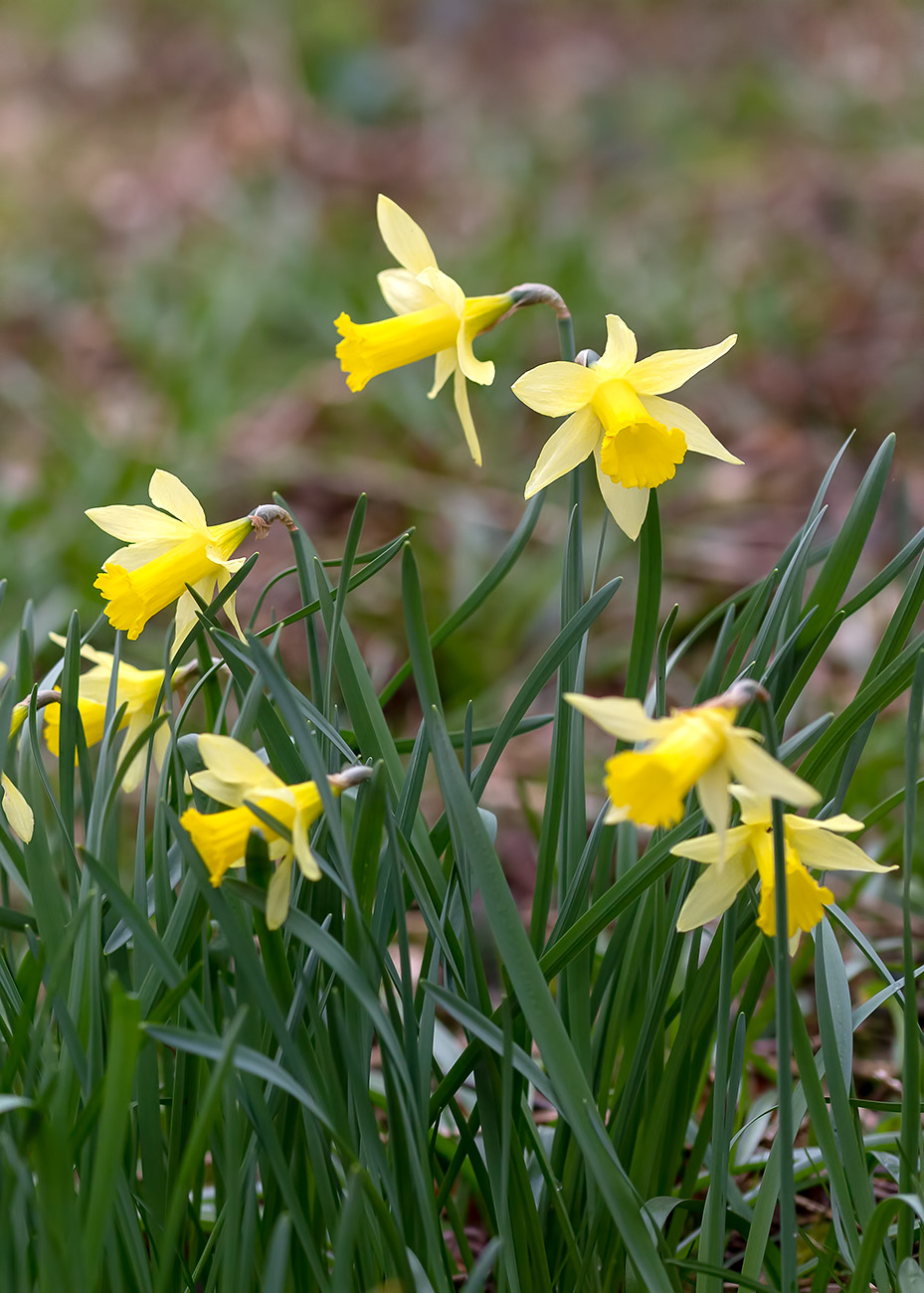
Over the years the Friends have planted hundreds, if not thousands, of native daffodil bulbs in and around the reserve’s woodland. Some, sheltered at the bottom of Kestrel Field, flower in February but the rest wait for spring: a host of golden daffodils etc.
There are modern daffodil cultivars in the car park, near the reserve’s main entrance and at the top of the arboretum: blousy domesticated leftovers from an earlier planting policy, and gifts too generous to refuse. But go deeper into the reserve and we do our best to plant only native species.
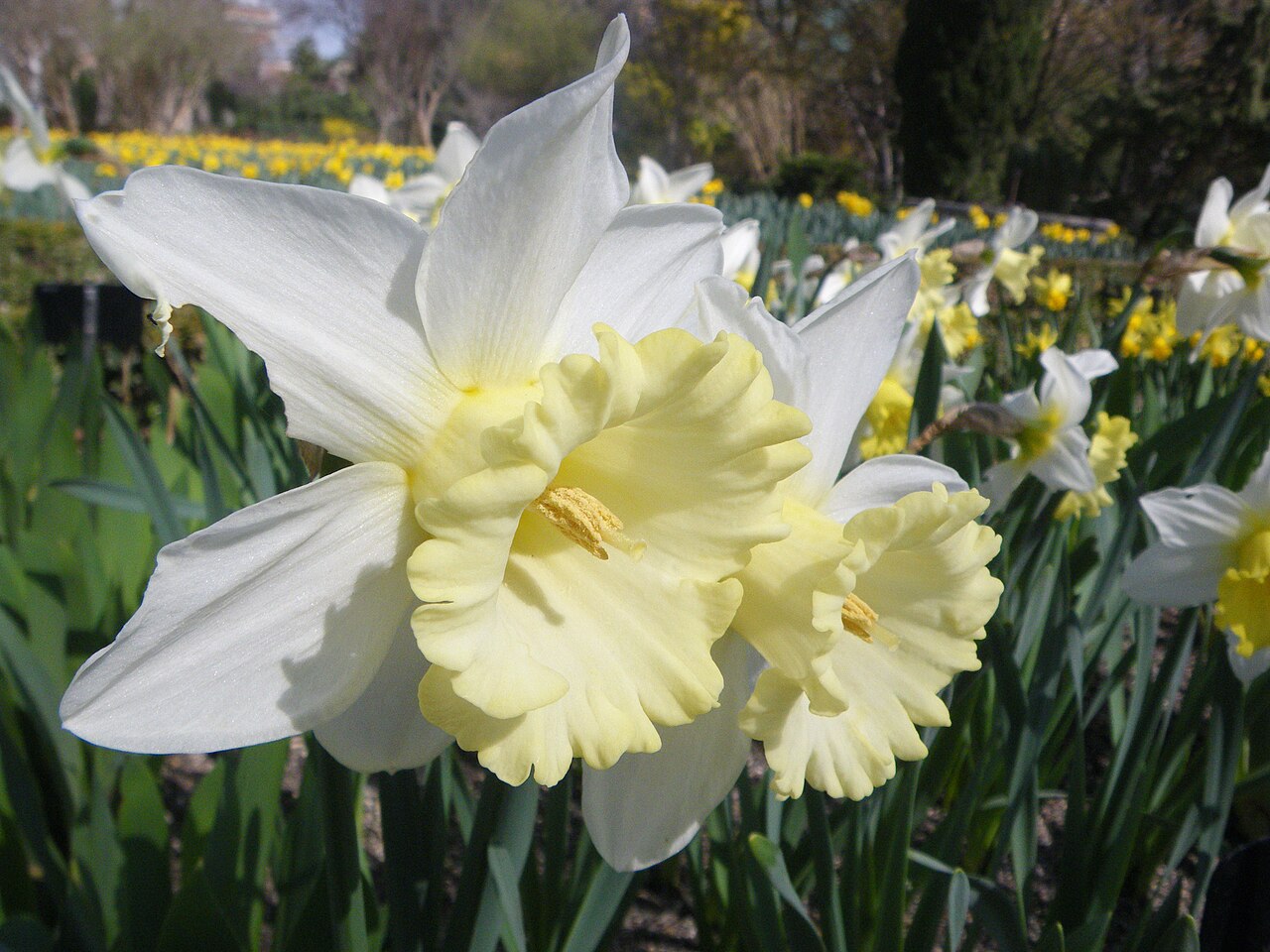
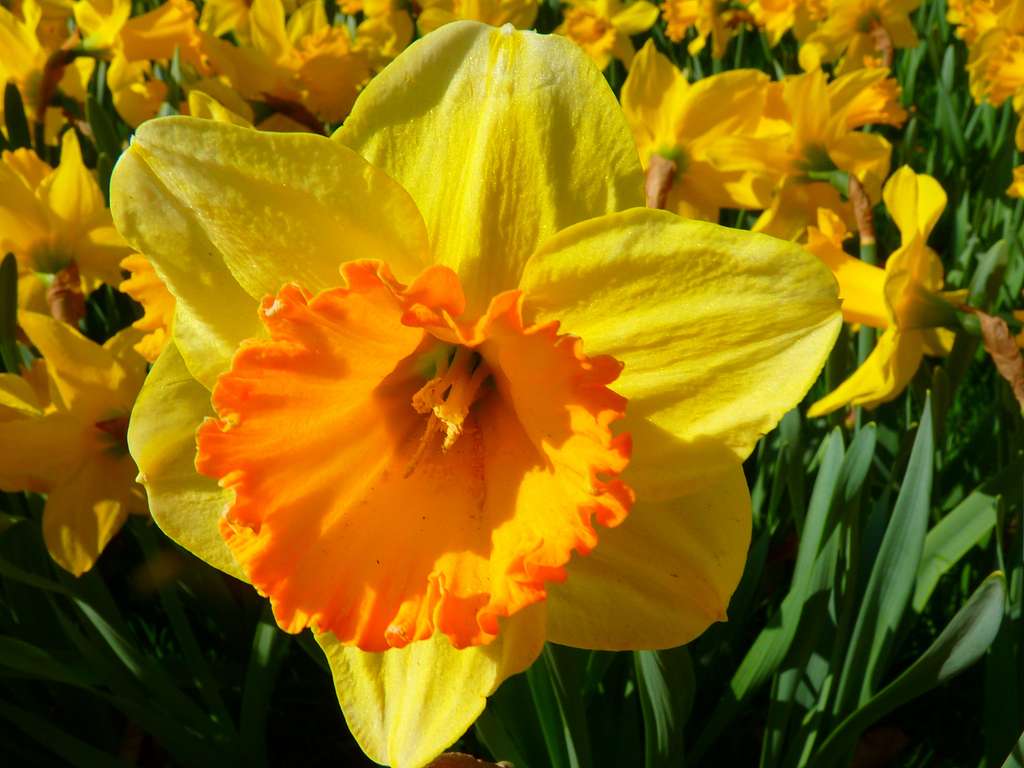


Two modern daffodil cultivars and two native wild daffodils. It was the wild daffodil, Narcissus pseudonarcissus, that inspired the poet Wordsworth to write of “a host of golden daffodils, beside the lake, beneath the trees, fluttering and dancing in the breeze.”
Our native daffodils (usually called wild daffodils) evolved in the damp edges of temperate woodland, part of an interacting community of organisms and their physical environment: an ecosystem. We are only just beginning to understand how complex ecosystems are and how easily they are damaged by the addition of non-native species.
To better understand the problems, let’s consider two non-native species widespread in Wiltshire: common comfrey (Symphytum officinale) which we are happy to tolerate in the reserve and Himalayan balsam (Impatiens glandulifera), which we battle to keep out of the reserve’s waterways as it advances steadily towards us from the banks of the river Biss and the lower reaches of Lambrok Stream. Comfrey, a perennial, is just now putting out its spring growth; Himalayan balsam is an annual, and the seeds it made last year are beginning to germinate.
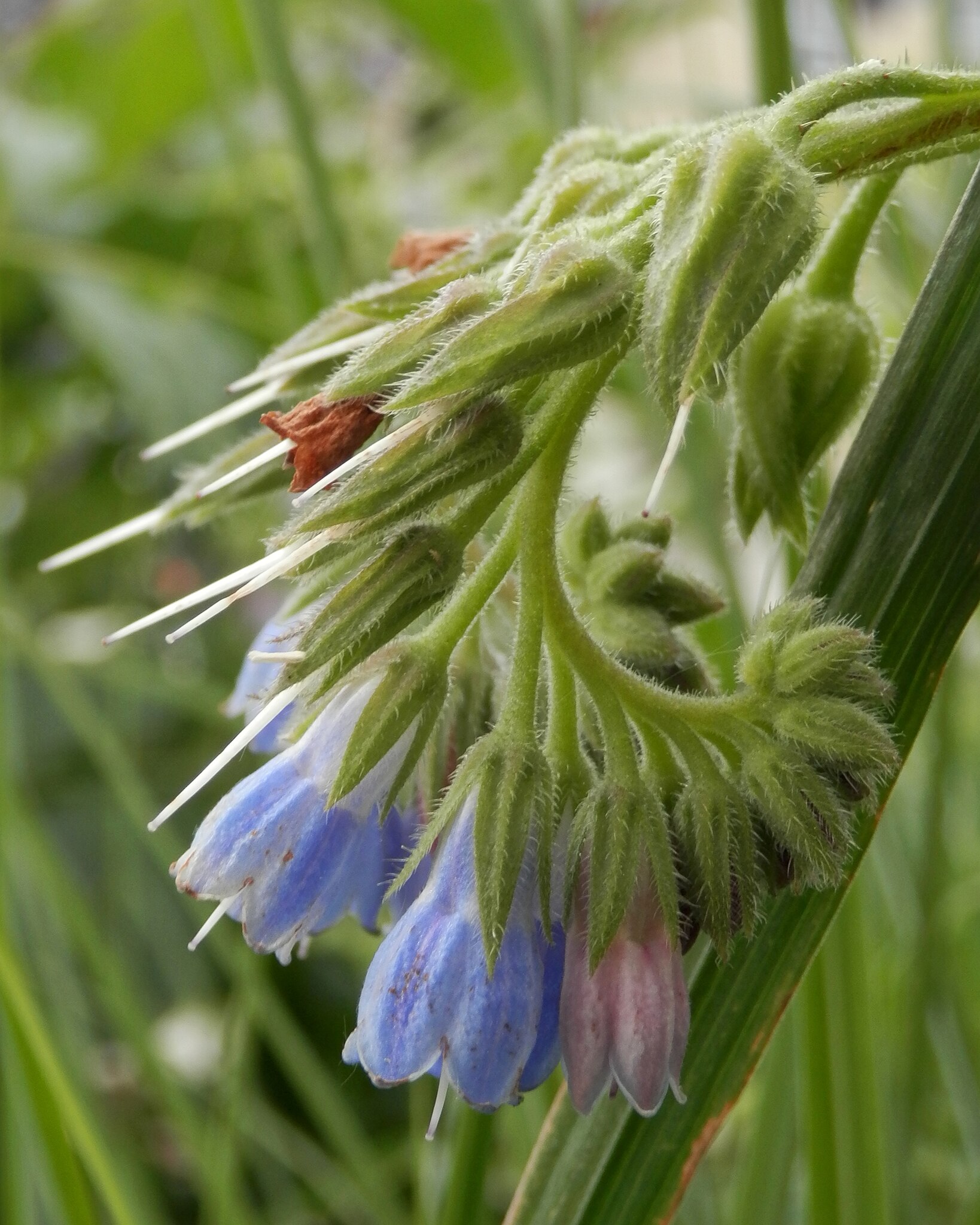

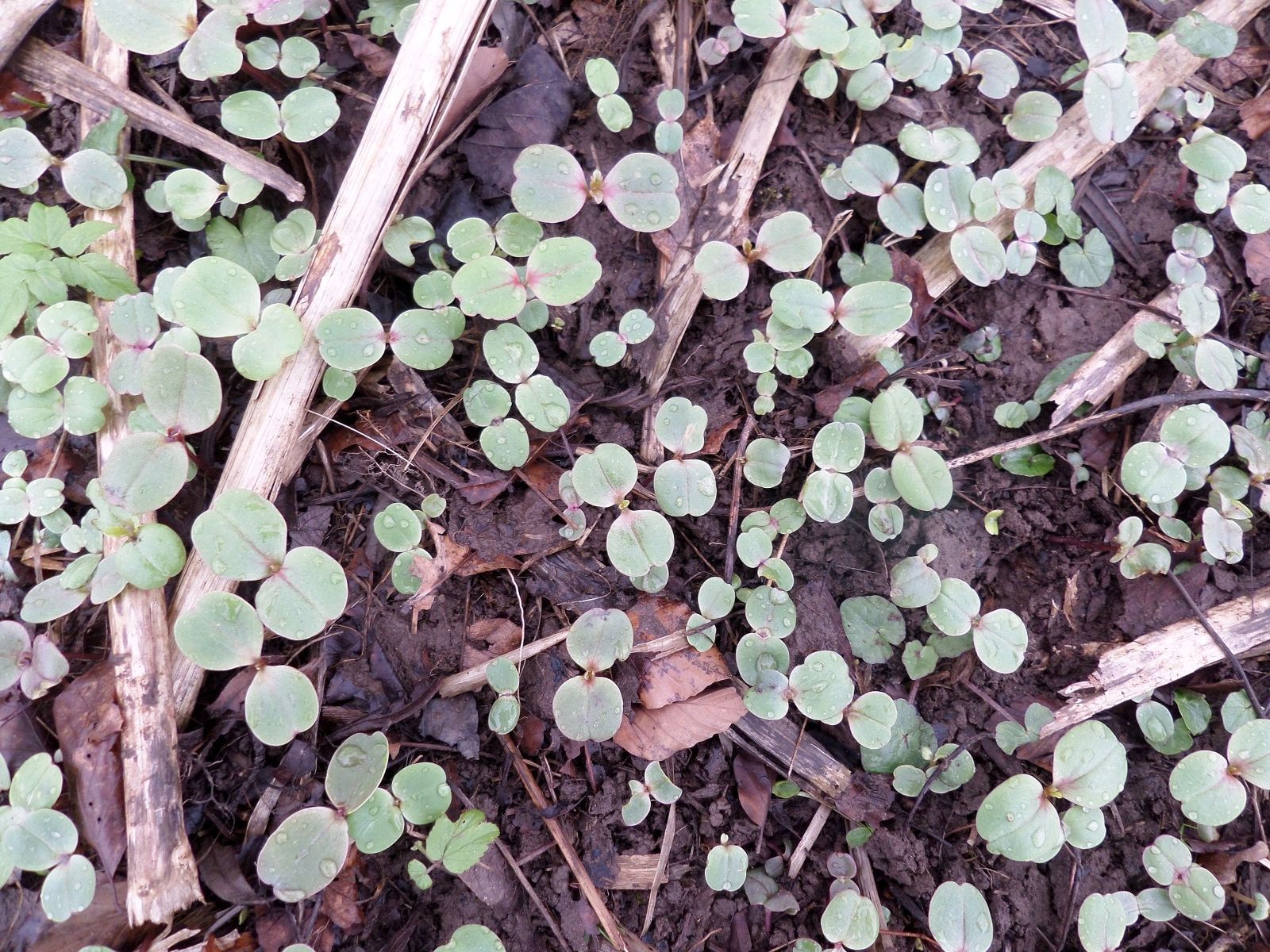

Common comfrey is a European native and its journey here, probably in the saddlebags of a Roman apothecary two millennia ago, was relatively short. Therefore, in its new home, it will have found many of the features it left behind in its native territory: not just geology and climate but the range of creatures that feed on its flowers, leaves and roots. Our native bumblebees collect its copious nectar, deer eat the leaves, wild boar and any number of rodents dig for the nutritious roots. While it is not native, it has adapted to our native ecosystem and does little, if any, damage.
Himalayan balsam, on the other hand, was brought here in 1839 by a plant collector, and introduced into the UK’s gardens as a fashionable exotic. Its native territory, as its name suggests, is the high Himalayas, at altitudes of over 2,000 metres: half a world away from Southwick and considerably higher than anywhere in the whole of the British Isles.
The tricks it evolved in order to survive in such an extreme environment have served it very well here in our mild damp lowlands and it has become an invader, beautiful but unbeatable. It makes masses of seed in explosive pods that throw their contents up to ten metres; it smothers competitors; it can survive sub-zero winters, tropical summers and long periods immersed in water. Here in the UK, faraway from the Himalayas, where nothing eats any part of Himalayan balsam, its very presence on our river banks is depleting local ecosystems.
I expect that neither the Roman apothecary nor the Victorian plant collector considered for one moment that their import might cause damage. But we do know – and therefore we plant native daffodils in our woodlands where they add to the reserve’s complex ecosystem.

Header image: Native daffodils by Charlie Jackson (CC BY 2.0) flickr.com


 Southwick Country Park Nature Reserve