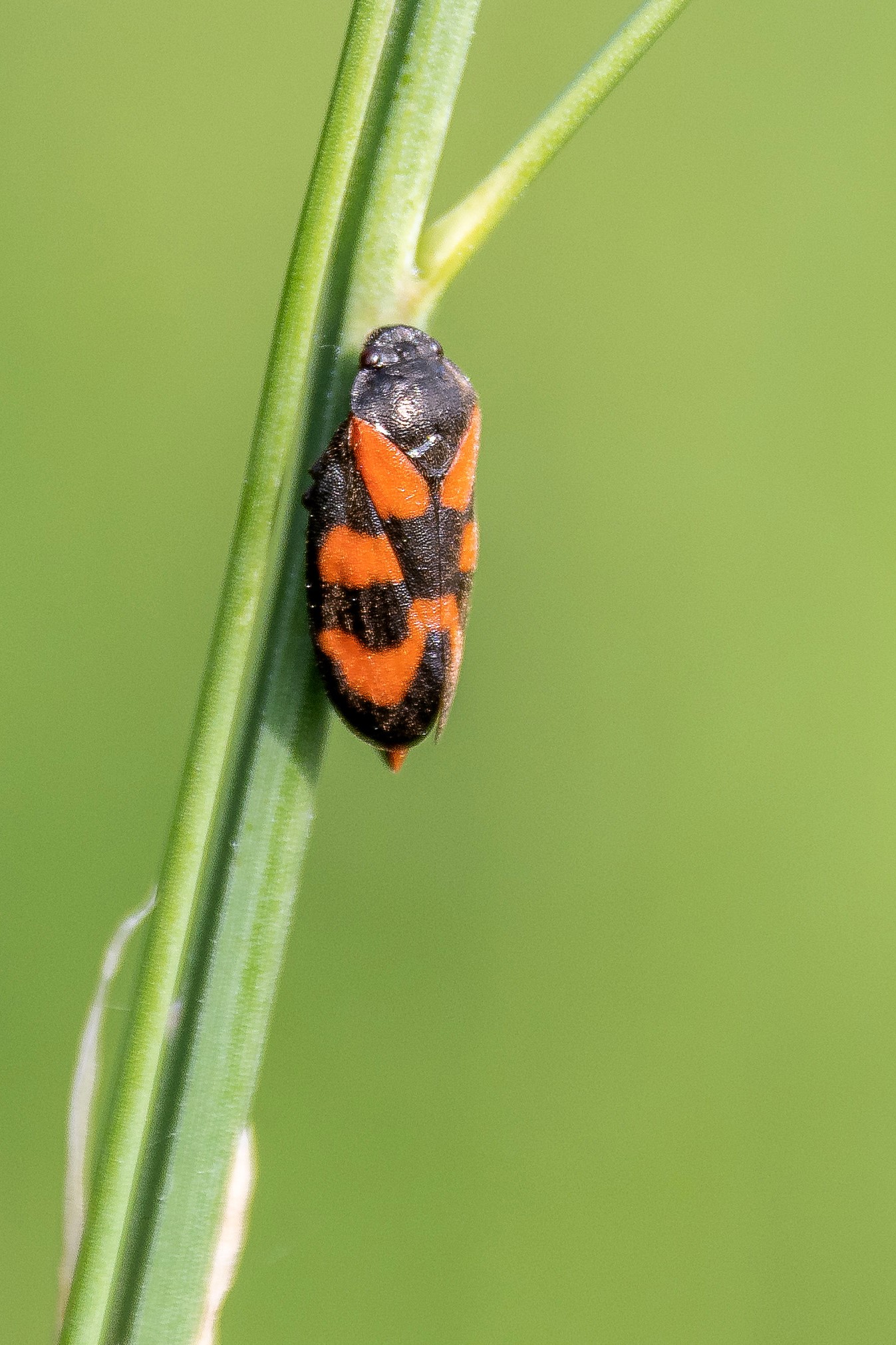
Red-and-black froghopper
This is a red-and-black froghopper (Cercopis vulnerata) photographed by DKG on Sunday morning in Village Green. There are ten different species of froghopper in the UK and while the red-and-black froghopper is not the most common, it is widespread.
Froghopper larvae are called nymphs and they are responsible for that thing called cuckoo spit. Cuckoo spit, which is not spit and has nothing to do with cuckoos, is a foam of plant sap which the froghopper nymph produces by blowing bubbles through its anus.
The nymph hides from predators in the foam which has an acrid taste to deter further investigation. Research has shown that the foam also provides temperature control for the developing nymph, mitigating extremes of heat and cold.

cuckoo spit 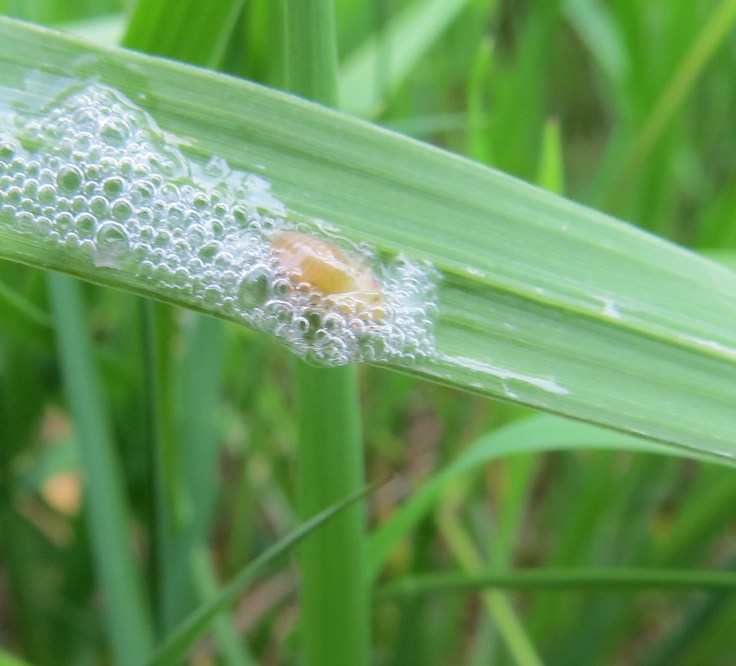
froghopper nymph
Xylella fastidiosa
Froghoppers are believed to be among the sap-sucking invertebrates responsible for spreading a bacterium ( Xylella fastidiosa) which causes fatal disease in an estimated 500 different plant species ranging from lavender bushes to oak trees. Xylella fastidiosa has been called by the European Commission “one of the most harmful pathogenic bacteria worldwide.”
The UK is, as yet, free from the bacterium but scientists at Sussex University are collecting information about froghopper nymphs and other sap-sucking insects in an attempt to avoid what could be a disastrous epidemic. They are looking for volunteers to record where and when cuckoo spit or froghoppers are seen in gardens, meadows, grasslands and woodlands. The records will be used to try to predict and prevent the spread of Xylella fastidiosa if it reaches Britain.
As we move plants and plant products around the world, we are moving plant diseases and infections into new ecologies that have no resistance to them. The only defence we have, apart from banning the trading of plants, is knowledge; we need to know as much as possible about the disease vectors. Please help if you can.
Here, just for fun, is a short video of a froghopper nymph blowing bubbles through its bottom.


 Southwick Country Park Nature Reserve
Cuckoo spit certainly seems to be a very effective form of protection. Who do we contact with our records of froghopper sightings?
There is a link in the article ( “They are looking for volunteers” in red) that will take you to an application form. There is a website here: https://www.xylemfeedinginsects.co.uk/ but it has been overwhelmed by the interest raised in the national media and is asking people to come back in a couple of days.