
Another new species
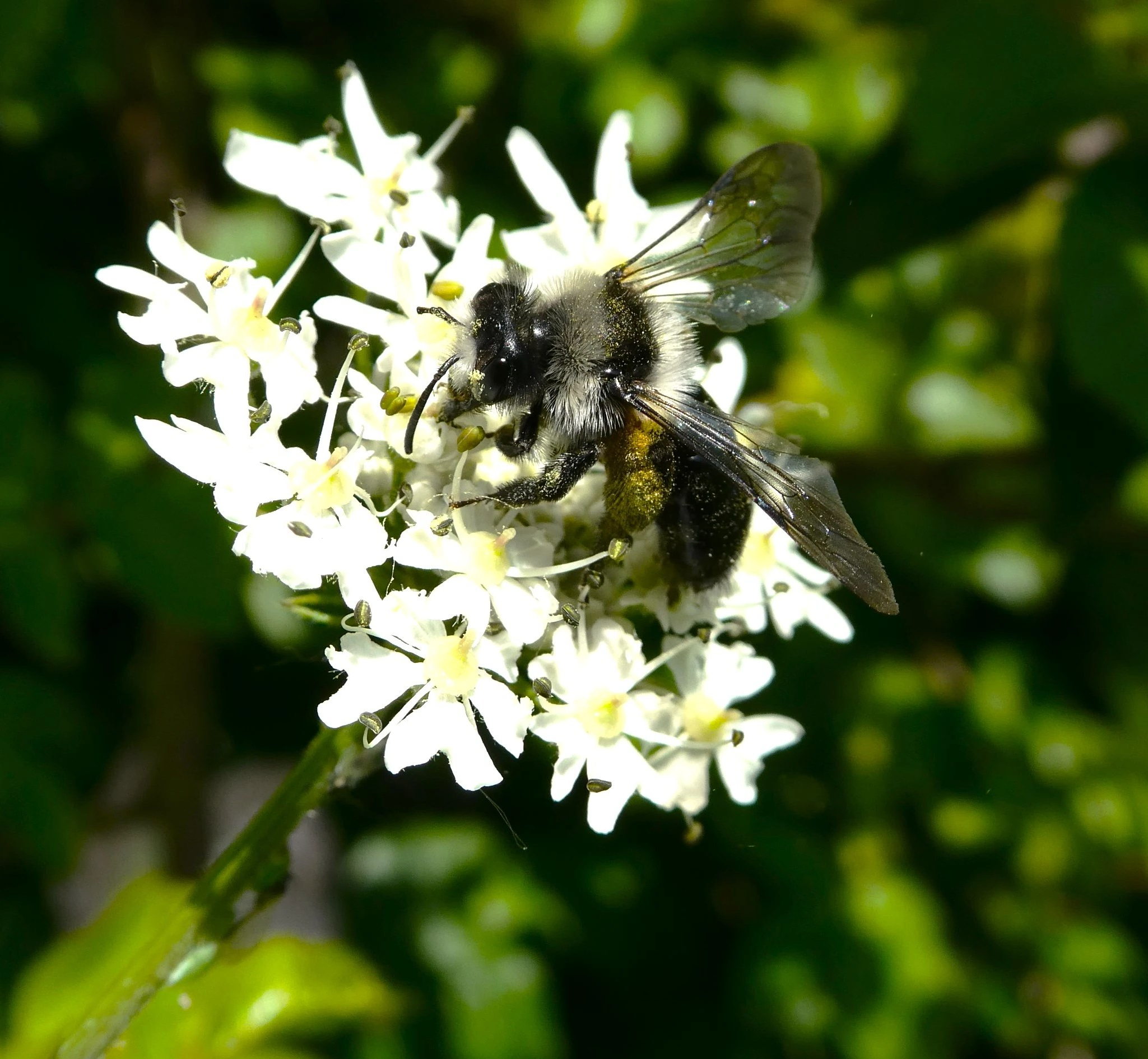
An ashy mining bee (Andrena cineraria) seen yesterday in the reserve, and photographed by Clive Knight. This is a female with two distinct bands of grey hairs across her thorax and a black, shiny abdomen.
Ashy mining bees are solitary. They nest in the soil, digging tunnels in bare ground or short mown turf, each one surrounded by a little pile of excavated debris. The female bee burrows 5 – 20 cm into the ground and builds a nest of up to 12 cells, where she stores moistened pollen. She lays an egg by the pollen store in each cell and then closes up the nest and moves on to dig the next one. When the eggs hatch, the larvae will feed on the stored pollen until they pupate and the pupae will lie dormant underground until next spring.


Sometimes many bees will nest in the same small area, not as a colony in the way that a nest of honey bees is a colony, just many individual bees all choosing to nest in the same open sunny place. If that open sunny, place is your lawn, it will look as if hundreds of tiny volcanoes have erupted in the grass.
There are 67 species of mining bee native to the UK, all in the genus Andrena. They are important pollinators, far more efficient at the task than honey bees but, lacking the honey bee’s furry glamour and media-savvy PR, they are rarely noticed.
Ashy mining bees are common and widespread in southern Britain and doing well; their population numbers are rising.




 Southwick Country Park Nature Reserve
Oh wow… Amazing!
Very interesting
I am planning a sometime-soon post about solitary bees, particularly the ground nesting species. They are such an important (and numerous) part of our ecosystem but nobody even mentions them.