
Regular contributor Cheryl Cronnie has sent pictures she took last week of house martins (Delichon urbicum) collecting mud from the banks of the new pond in Lambrok Meadow.
A house martin’s nest is made almost entirely of mud, built up mouthful by mouthful until it is ready to be lined with down and dried grass. A new nest can take two weeks to build but a pair that is repairing an old nest can be finished in just a few days. No matter if they are undertaking a new build or a restoration, nesting house martins need mud, nearby and in substantial quantities.


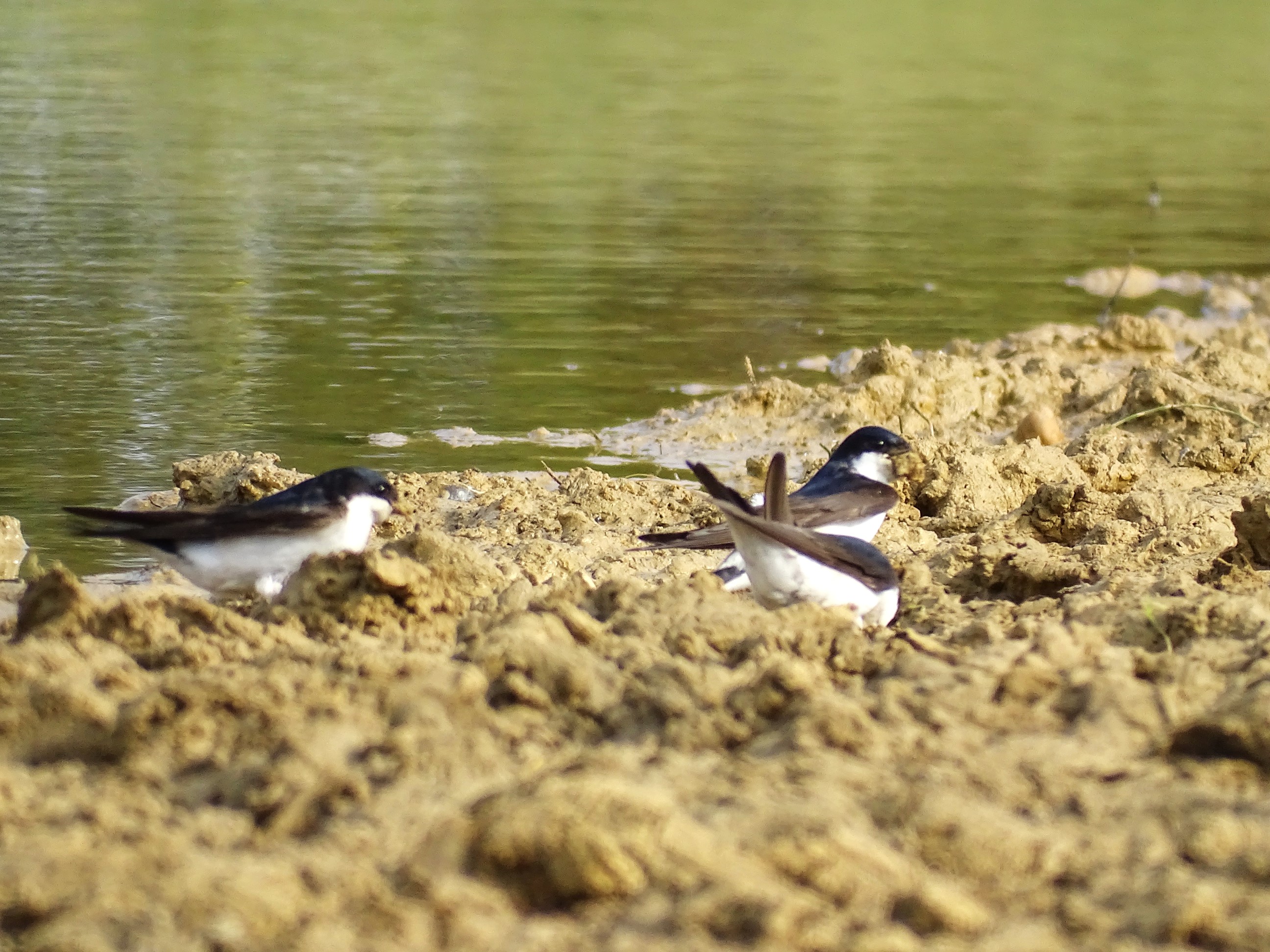

A dry spring, like the one that has just ended in thunder storms, is a problem for these little birds. They nest in traditional sites, returning year after year, and if the sources of mud they habitually use dry up before the nests are finished, fewer pairs will reproduce successfully. Our changing climate seems to be bringing us long dry spells early in the year, which may be one of several reasons house martin numbers are declining sufficiently for the RSPB to have put the species on their Red List.
Our new pond in Lambrok Meadow could be a life-saver for local martin colonies: not only a new and apparently endless source of mud close to established nesting sites but also a new stretch of still water, ideal breeding territory for mosquitoes, water fly, and all kinds of tasty house martin nestling food.





 Southwick Country Park Nature Reserve
Great pictures, Cheryl. Thank you for sending them in.