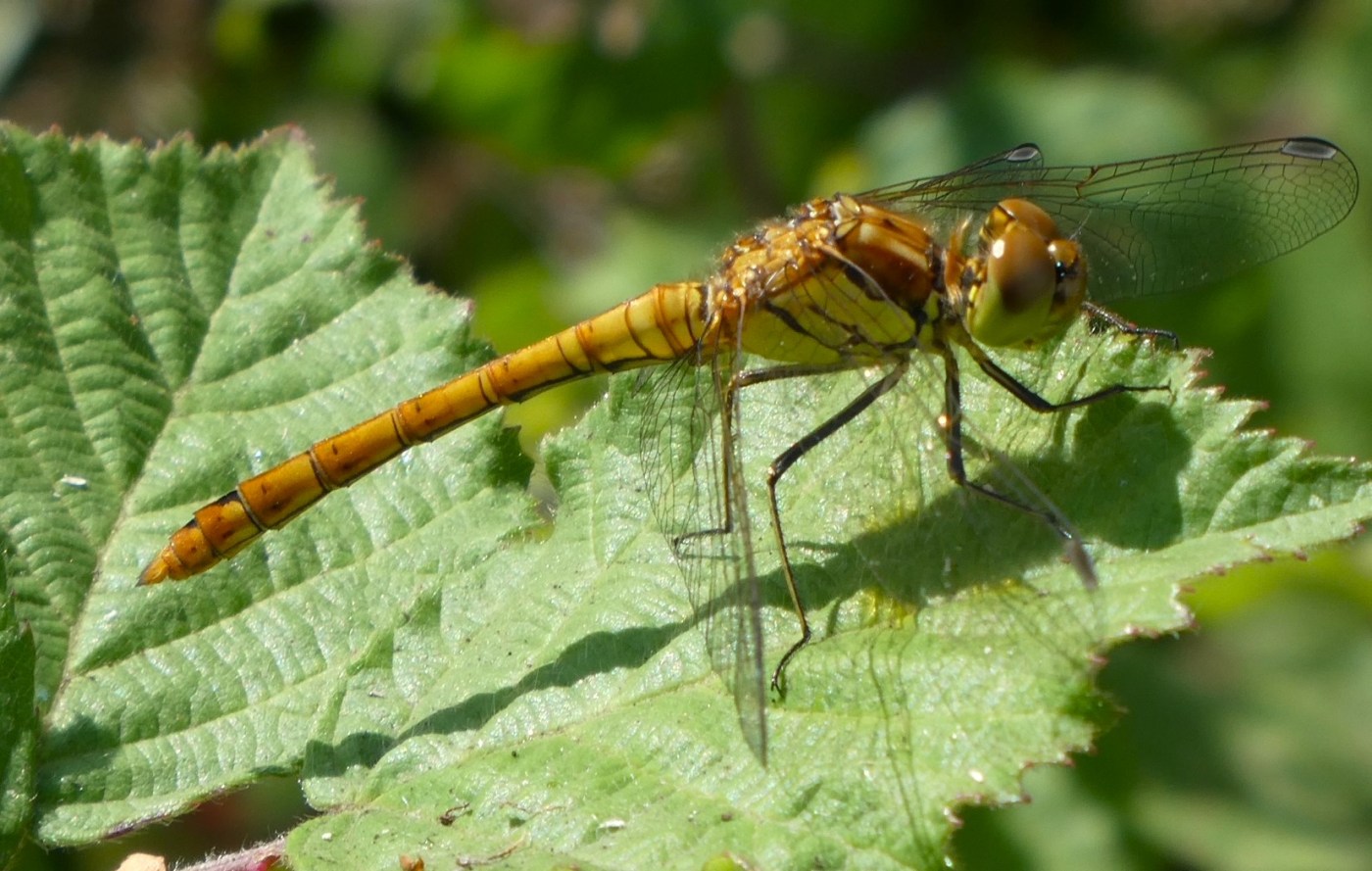
While he was chasing butterflies through the reserve’s lush hedges, Clive Knight found and photographed this beautiful female ruddy darter (Sympetrum sanguineum).
She is posed nicely for the camera, with her wings spread out so that we can see the pterostigma, the pigmented spot on the front edge of each of her four wings. The latest research has found that pterostigmata are heavier than the surrounding transparent tissue, reducing the vibrations in her wings when she is actively flying and helping her control her flight when she is gliding, just like adding Blu Tack to the leading edge of a paper aeroplane wing to stabilise it.

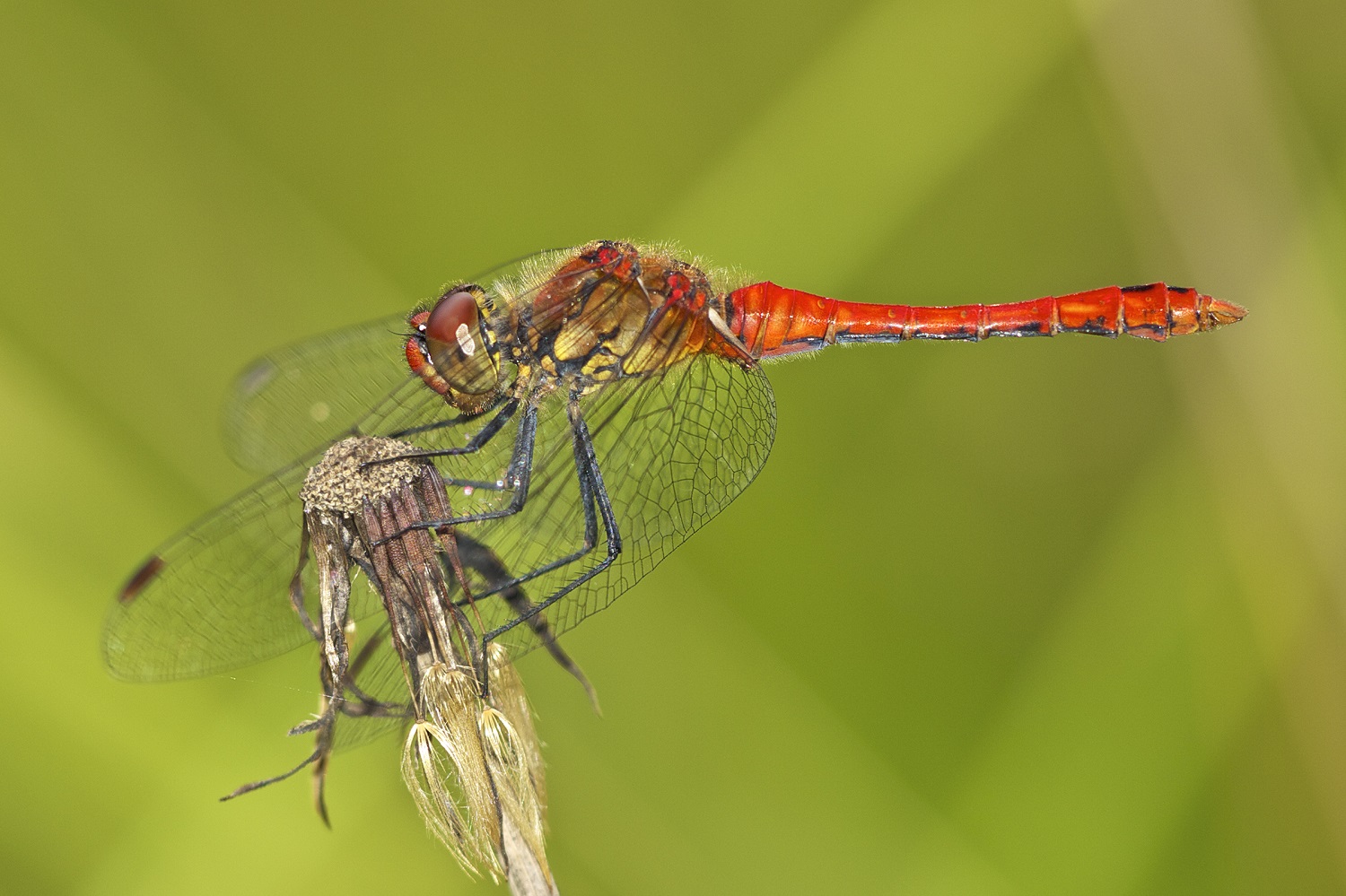

On the right is a fossil of a Meganuera species (previously classed as griffinfly); Meganeura species had wingspans ranging from 65cm to 80cm, some of the largest insects that have ever flown.
Modern dragonflies belong to a group called the Palaeoptera, which means ancient-winged. Like their enormous, now-extinct ancestors, the griffinflies, Palaeoptera lack the ability to fold their wings up against their bodies as more modern insects can. But this does not seem to be any sort of a disadvantage to dragonflies.
Because they are able to control the angle and speed of each of their wings independently, dragonflies can hover and can take off in any direction at any speed: they are superb, acrobatic fliers. Their wings are living structures that contain hundreds of sensory neurons that feedback to their brains a constant flow of information about the conditions they are flying through. Even in our sometimes turbulent and unpredictable summer weather you will see dragonflies on the wing.

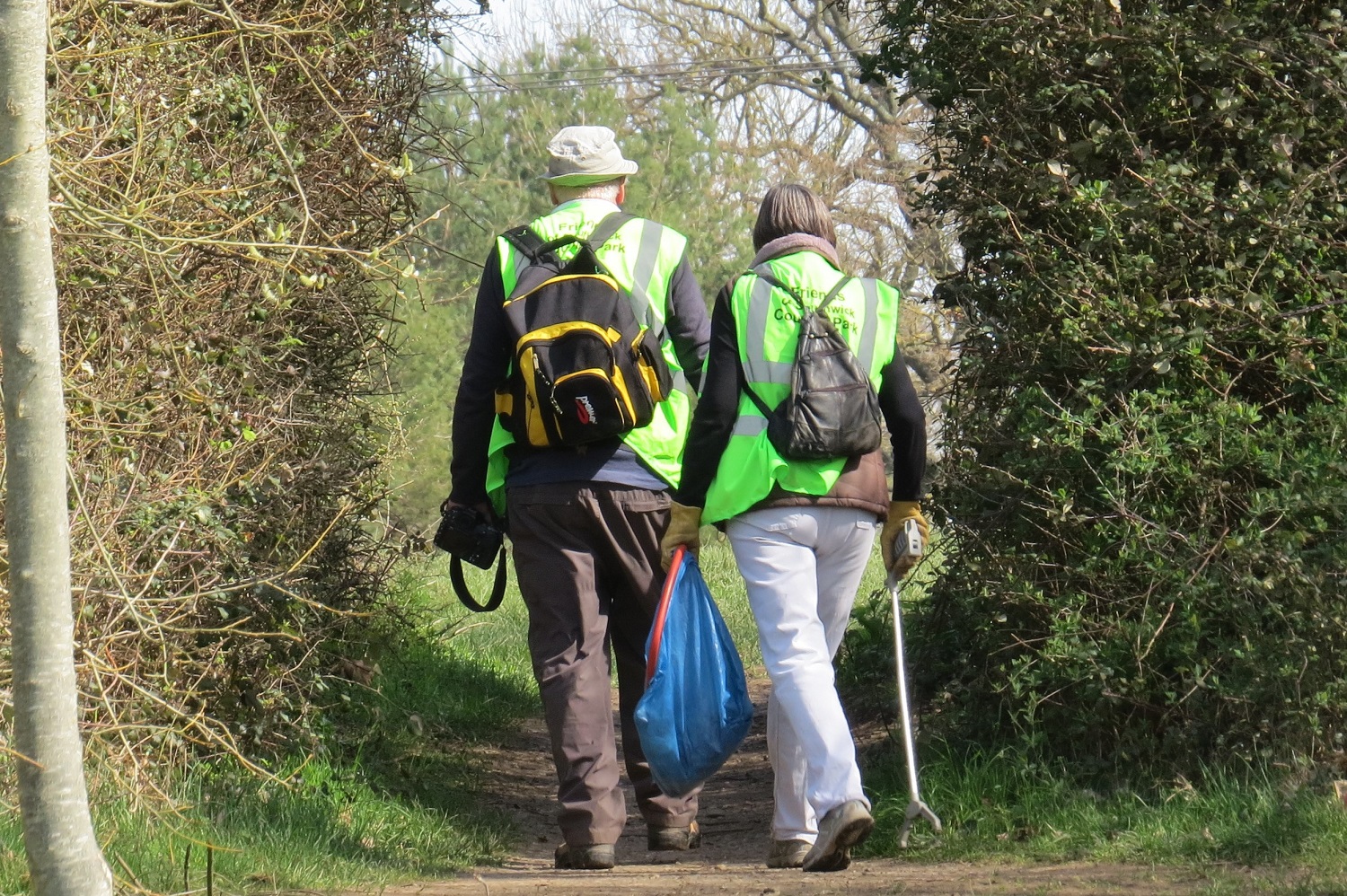



 Southwick Country Park Nature Reserve
Their manoeuverabilty is amply demonstrated by the Broad-bodied Chaser males as they ‘dog fight’ over the water to establish their territories
It’s well worth a visit to the Village Green pond to watch the broad-bodied chaser males fighting over territory – very exciting.