
ONE: Wood pigeons are the most numerous large bird in Britain with an estimated 5 million breeding pairs.
TWO: While the average age of a wood pigeon is 3 years, the majority of young birds die within their first 12 months and the record age for a ringed wild bird is over 16.
THREE: Baby pigeons are called squabs.
FOUR: Squabs are fed by both parents on a regurgitated liquid known as crop or pigeon milk.
FIVE: A female wood pigeon never lays more than two eggs in a clutch


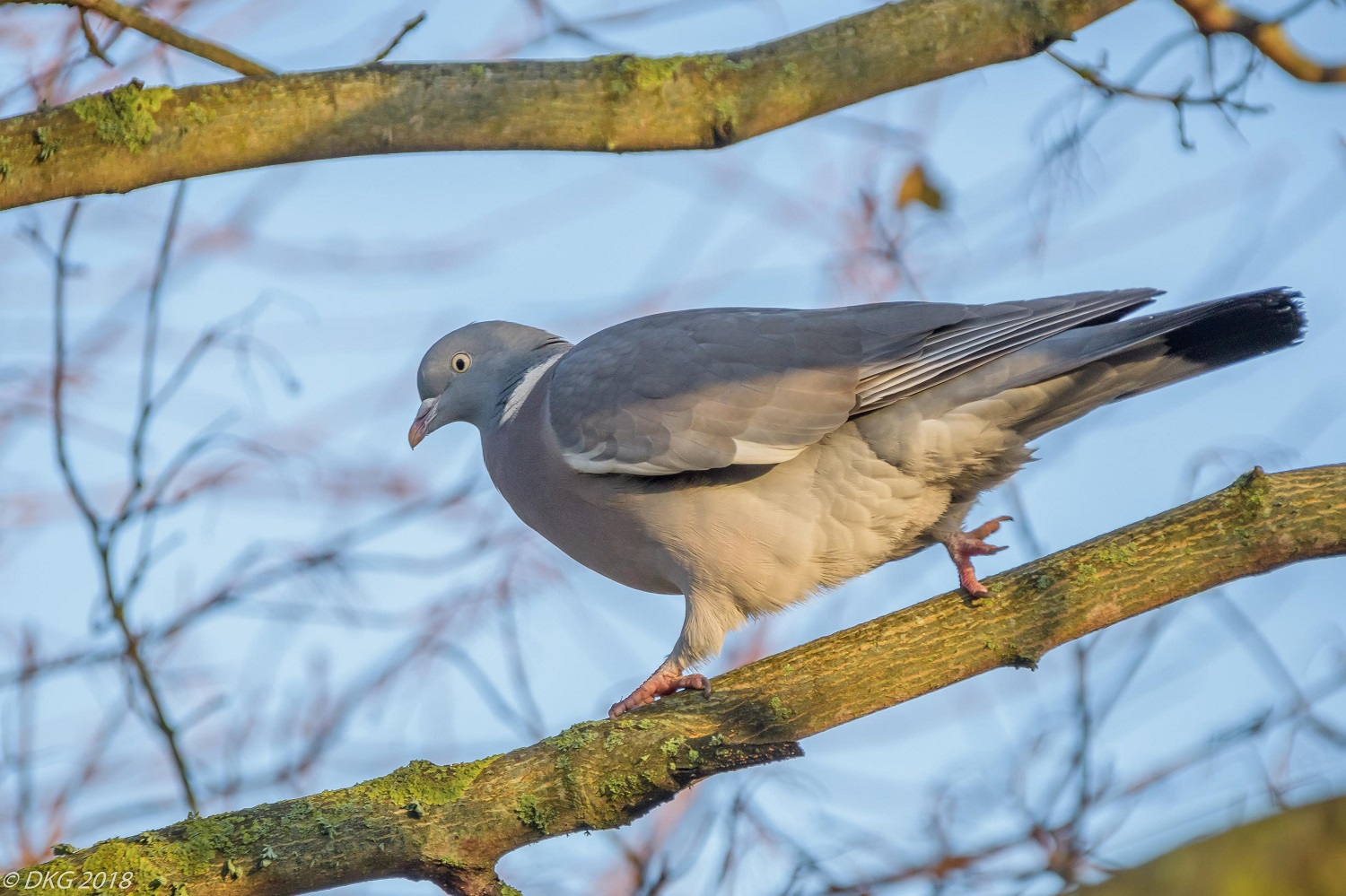
SIX: A wood pigeon’s crop can hold as many as 150 acorns, 1,000 grains of wheat or 200 beans.
SEVEN: It takes a young wood pigeon 16 weeks to acquire its distinctive white neck ring.
EIGHT: A male pigeon will incubate the eggs in the morning, until around mid-afternoon when the female will take over .
NINE: The total weight of all the feathers on a wood pigeon is greater than the weight of its entire skeleton.
TEN: A wood pigeon’s eye is a bright yellow.
AND ONE FOR LUCK: In a Japanese laboratory in 1995, wood pigeons were trained to discriminate between paintings by Picasso and by Monet.

Header and footer images by DKG
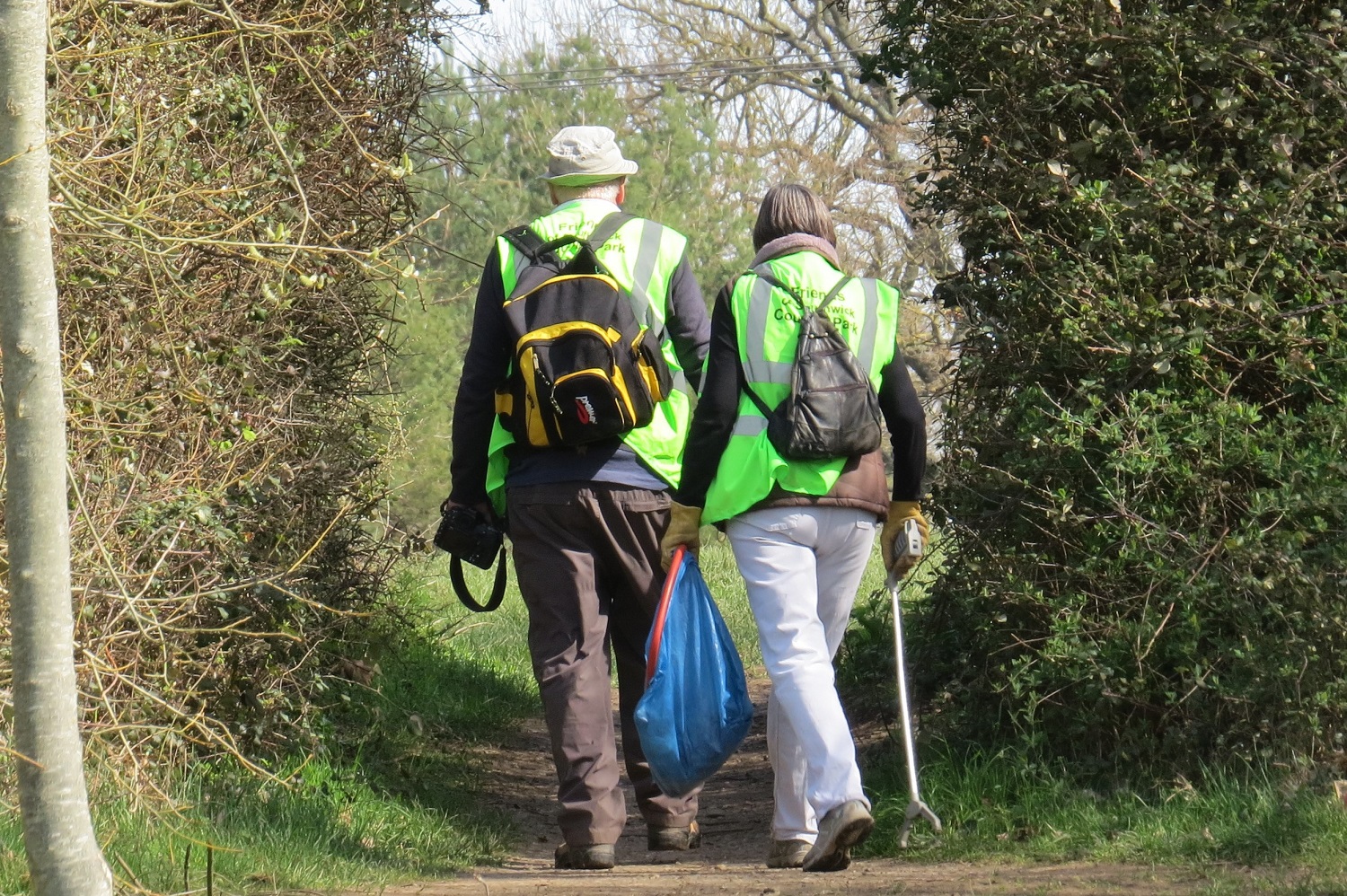


 Southwick Country Park Nature Reserve
We have a number of woodpigeons in the trees in our garden and often in summer I’ll sit in the garden listening to them calling. It appears at first just a random grouping of coo’s but after a while you can identify different combinations. About mid-morning a bird we know is sitting on a nest nearby, starts to call a slightly different call, after a while we may hear an answering call in the distance. The first bird may start to call more frequently, almost in desperation until it seems it is relieved of nest sitting duties, then all is quiet again.
Please leave a name. Our policy is not to post anonymous comments but I like your story of the male pigeon, mid morning, shouting for his mate to come and do her share so much that I am going to leave it. Email me a name (friendsofscp@outlook.com) and I will edit it in.
One more woodpigeon fact. Like other pigeons, woodpigeons have separate nasal passages so can drink without having to keep raising their heads to swollow.
Thank you Barbara.