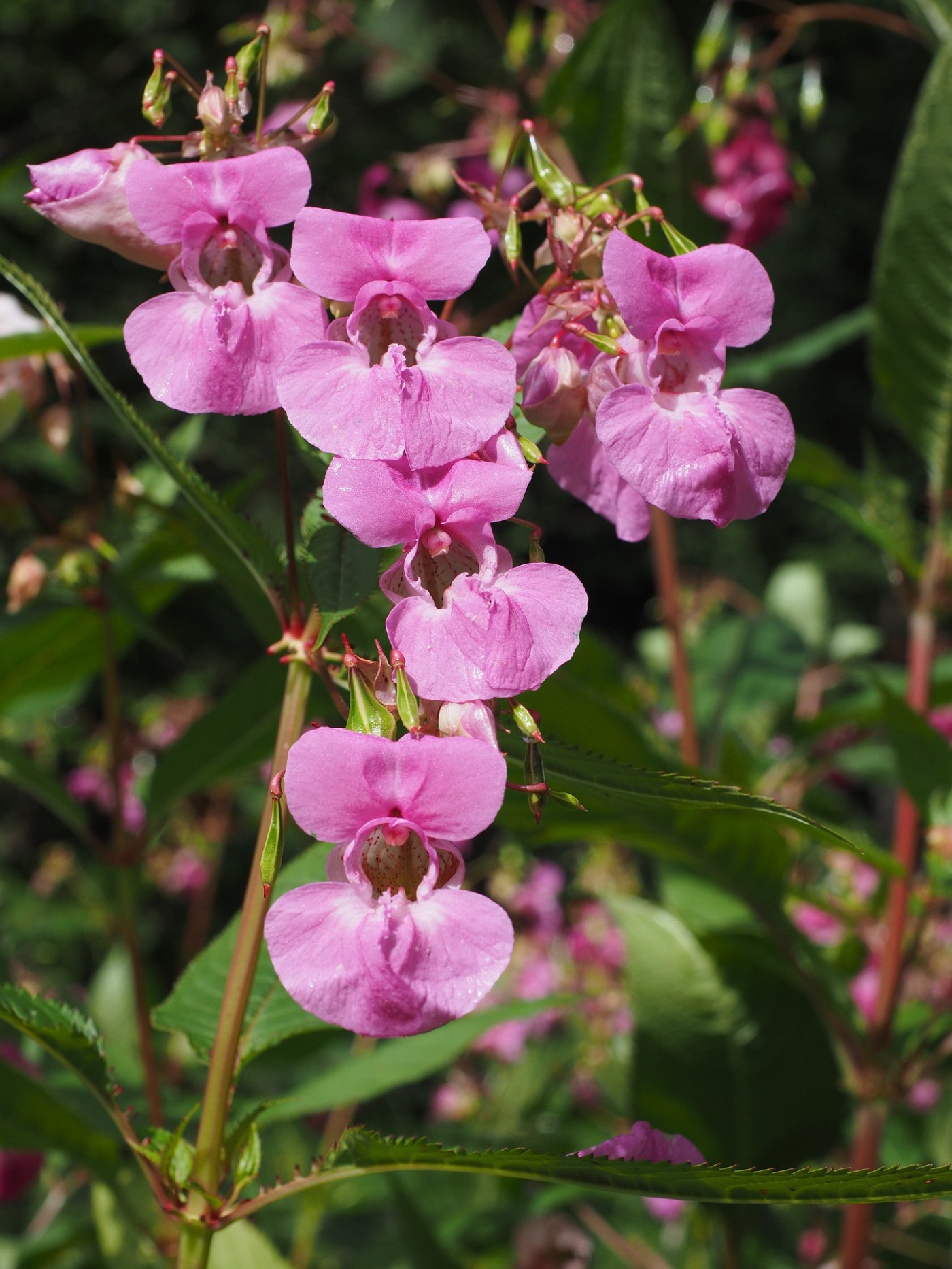
We keep constant watch in the reserve for the beautiful invasive alien, Impatiens glandulifera, or Himalayan balsam. It might be very lovely to look at but it is an environmental horror story
It was imported from Kashmir in 1839, more damaging exotica for the gardens of the 19th century’s wealthy and fashionable. It soon escaped into the wild and spread along Britain’s waterways.
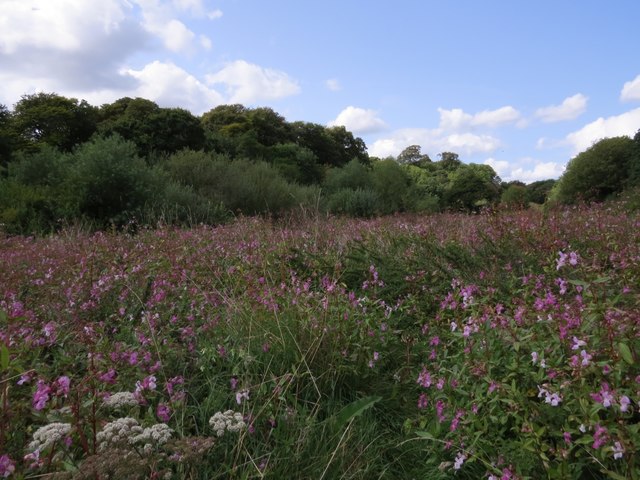
Left: a colony of Himalayan Balsam near the River Frome.
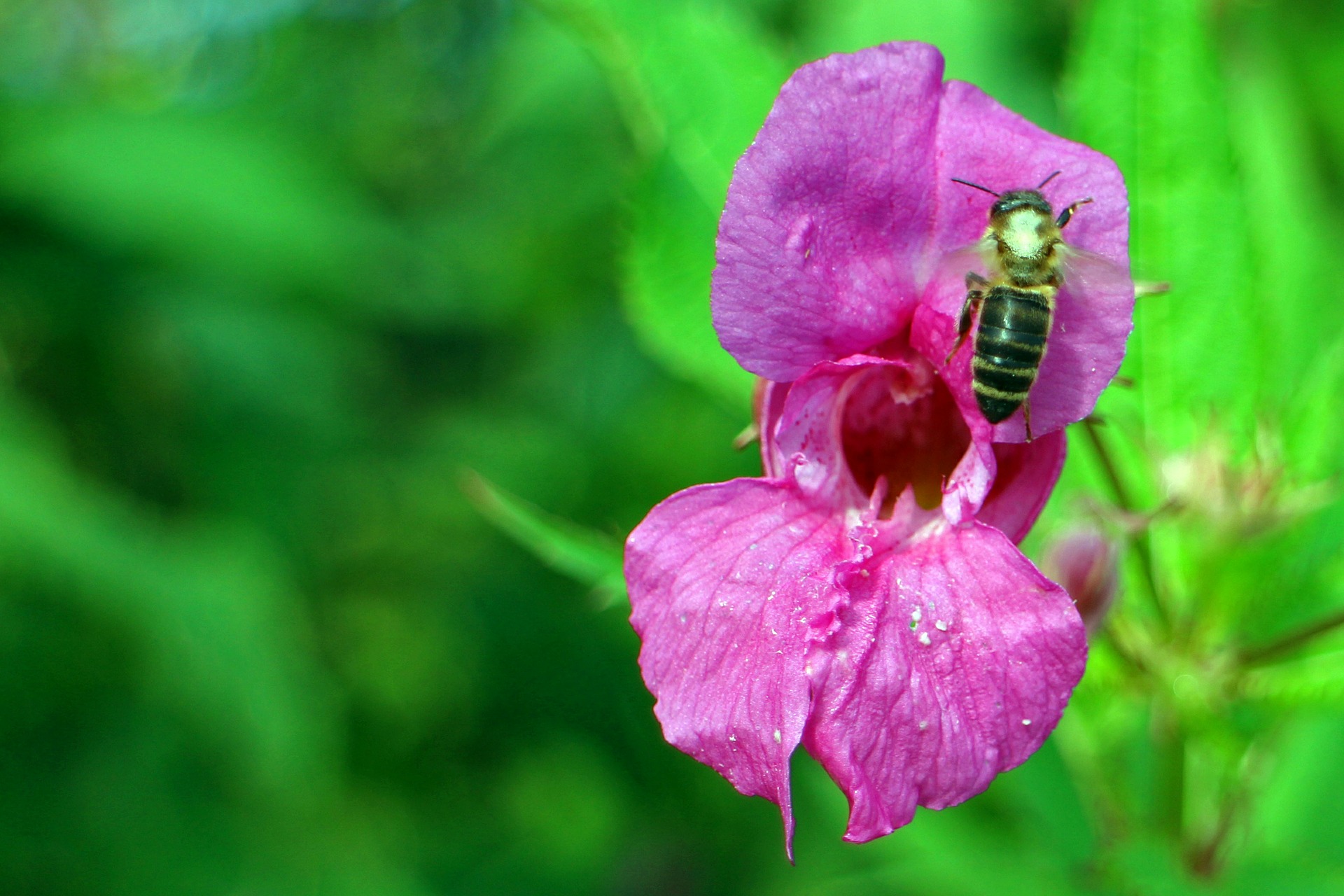
Right: the flowers produce enormous quantities of nectar to attract pollinators.
It has become a major problem. Himalayan balsam colonises an area very quickly; it produces more nectar than native plants and attracts more pollinators; its seeds are very numerous, contained in explosive capsules that throw their contents into the water to be carried away downstream. Native riparian vegetation can be totally smothered in just two or three years.
In addition, Himalayan balsam is an annual plant. It dies right down in winter and its fragile roots rot away, leaving river and stream banks bare, crumbling and very vulnerable to erosion. In our changing climate, with its long periods of heavy rain, this is proving disastrous in some areas.
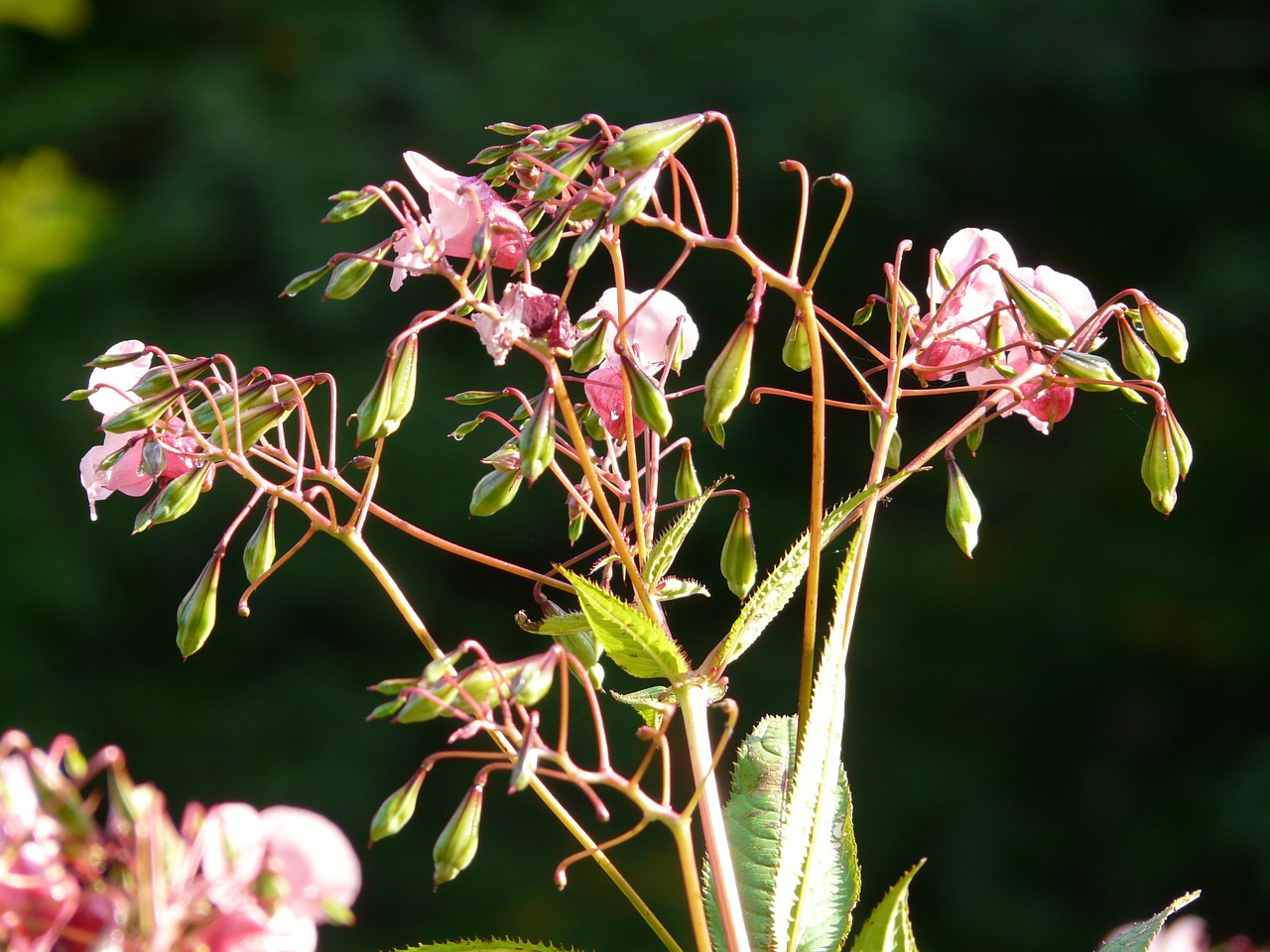

Explosive seed capsules
There is some Himalayan balsam downstream of us but the reserve is free of it. You can help us keep it that way by pulling the plants up now, when they are easily identifiable because they are in flower, but before they make any seed. If we let the plants make seed, any attempt to uproot them will result in all the seed pods exploding at the slightest touch and spreading the next generation far and wide.
Let’s look after our Lambrok!

If you are interested in protecting our native flora, here is more:




 Southwick Country Park Nature Reserve
Does anything eat it?
People eat it – but the only other creatures known to eat it are slugs, aphids, and elephant hawk moths.
Here is a link to a free food site that tells about eating it.
https://www.riverseverncustodians.co.uk/Himbalrecipes.html
Thanks Mike. I might try adding it to a veggie curry.