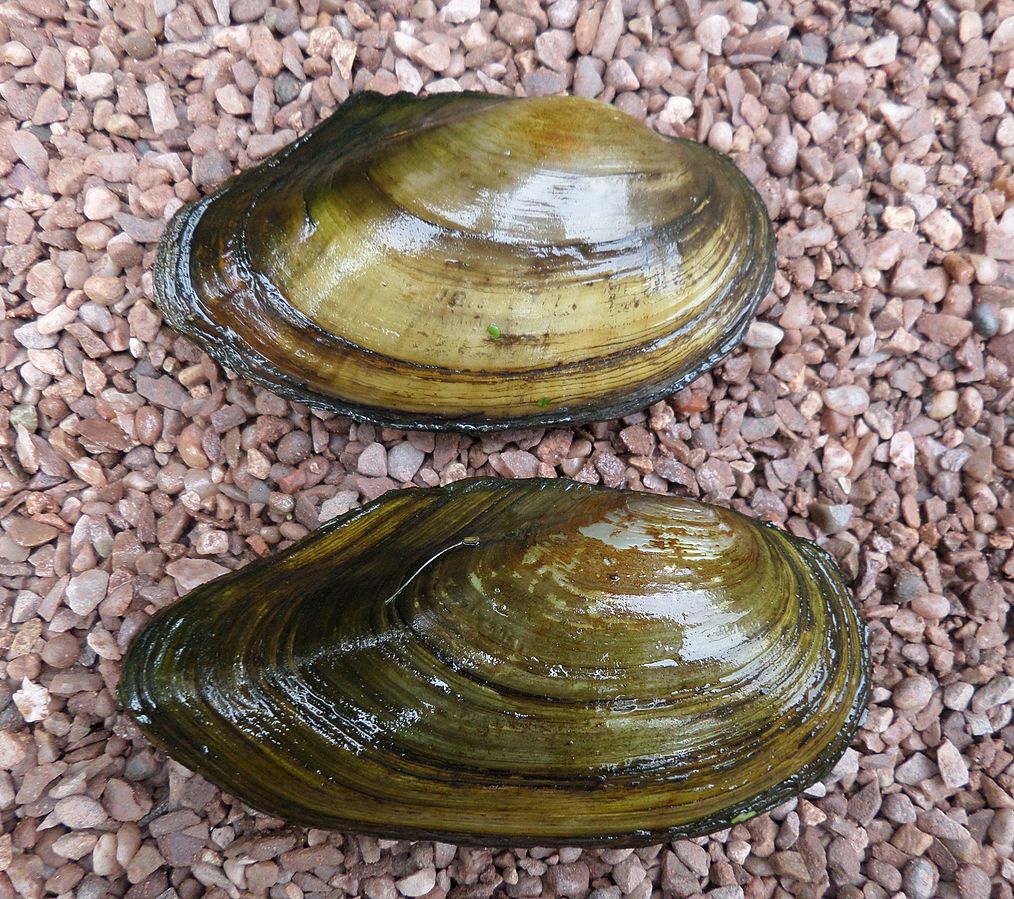
The extraordinary life cycle of a swan mussel
For decades, there have been swan mussels in the pool below Village Green Pond’s weir. Last years’s drought was hard on the colony but it seems to have survived.
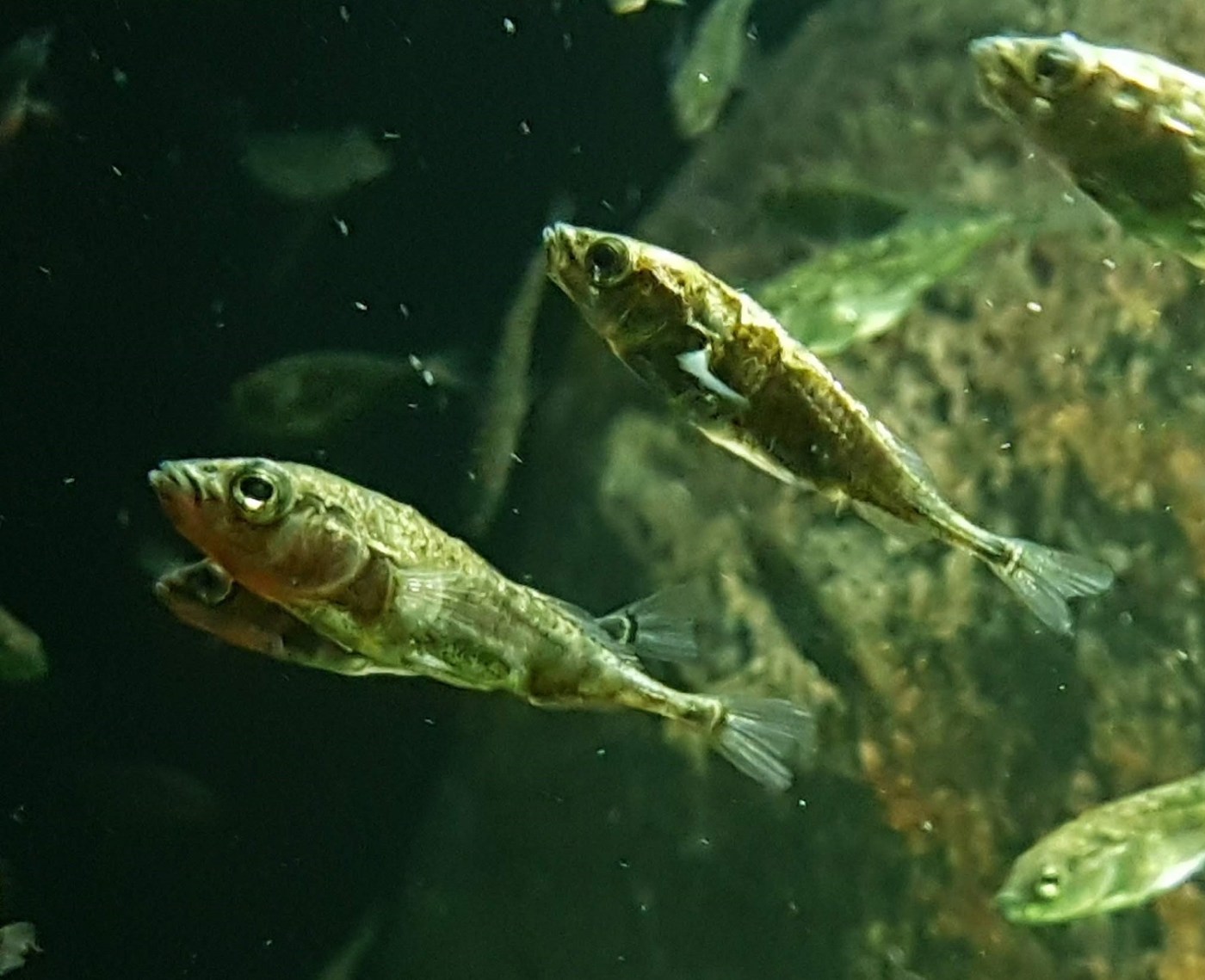
The life cycle of a swan mussel (Anodonta cygnea) is extraordinary, a real illustration of the complexity of the reserve’s freshwater ecosystem – and the reason for illustrating a post about swan mussels with a picture of a little shoal of three -spined sticklebacks.
The female swan mussel retains her fertilised eggs right through the winter; they hatch into larvae, called glochidia, in the spring and she then releases them into the water. They have no method of self-propulsion and are entirely at the mercy of water currents so what comes next is purely happenstance.


If a glochidium comes into contact with any one of several species of fish, it will parasitise it, latching onto the fish’s skin, gills or fins where it feeds on fluids or mucus while it transitions into a baby mussel. It seems to do its host little or no harm. After a few weeks the immature mussel detaches and settles into the stream bed.
Swan mussels are generalists; unlike some species of freshwater mussel, they can parasitise many different species of fish, some more successfully than others. Perch, orfe, trout and carp are all on their favourites list but in Lambrok Stream it is the three-spined stickleback (see above) that is probably their most common and most successful host.

This short period of parasitism is a dispersal strategy; it is how swan mussel larvae travel upstream to new habitat or, as in the case of the weir pool, stay with the parent colony by attaching to the local sticklebacks. Without it they could only be dispersed downstream by the current.
The number of larvae that the female releases must be enormous for such a hit and miss survival strategy to have the smallest chance of working. Thousands must be swept downstream to feed other species.
The interdependence of a streambed is remarkable, full of microscopic trade-offs and interactions. Every new discovery merely serves to emphasise how little we know.




 Southwick Country Park Nature Reserve
So interesting ! Thank you
Stream beds are filled with interesting creatures that have fascinating life cycles.
Yes a glimpse into the complex life of the Lambrok Stream. Thank you!