
Five spot burnet moth
These are five spot burnet moths (Zygaena trifloii), dayflying nectar feeders. Regular contributor Cheryl Cronnie photographed this mating pair at the end of June.
We hope that this female will have laid her eggs on the vetchlings, clovers and trefoils in Village Green, species of legume we have been encouraging for several years to attract butterflies like the common blue and perhaps even the rare wood white.
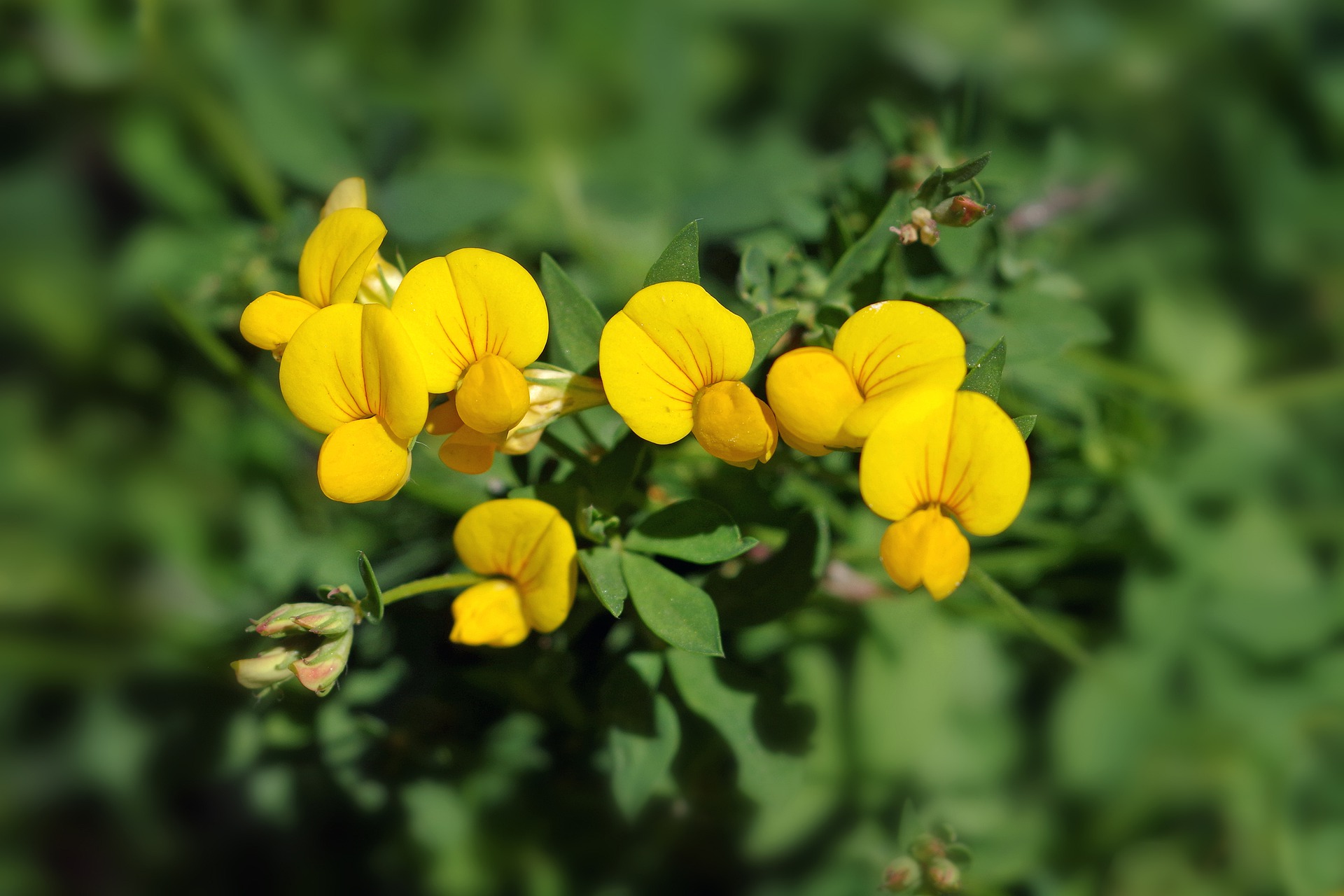

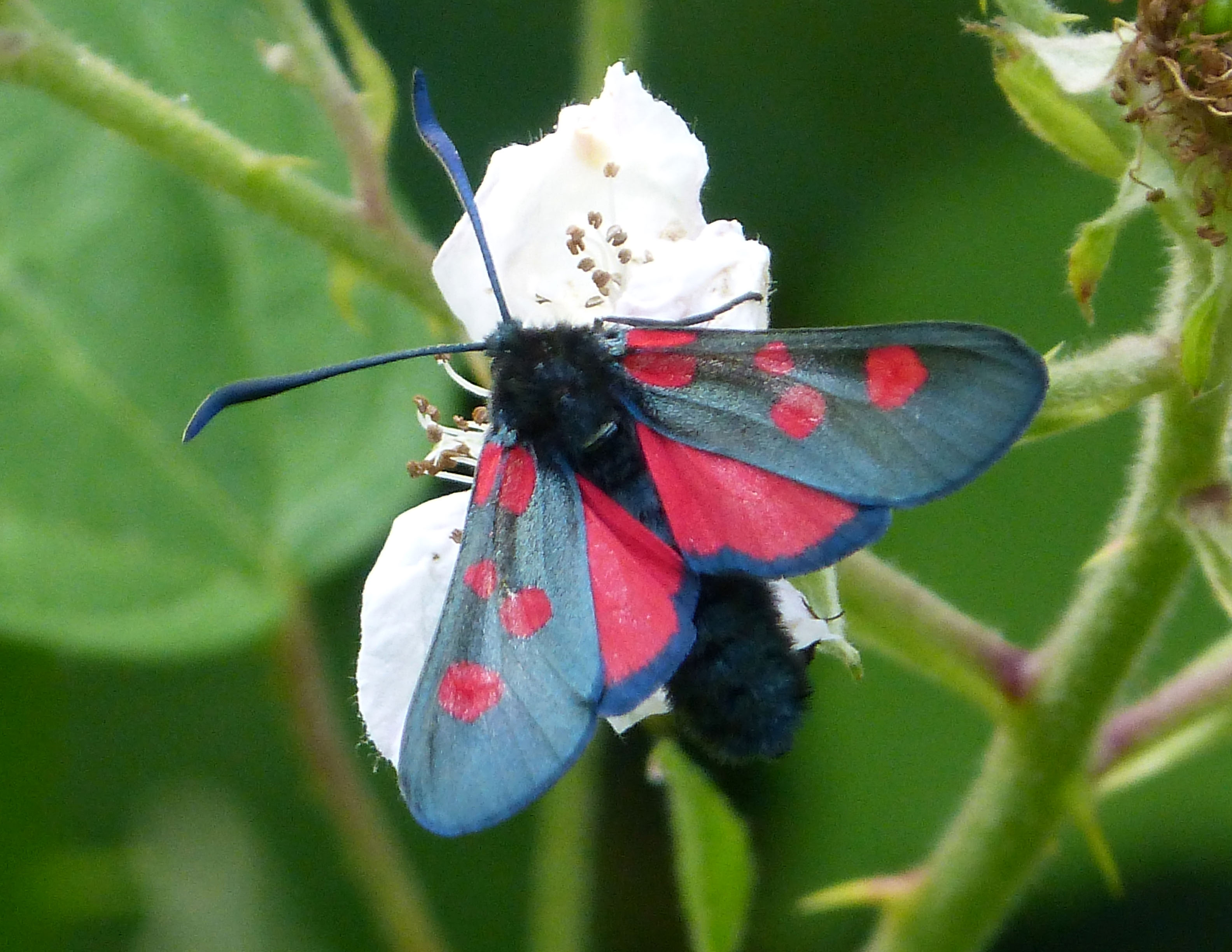
Bird’s foot trefoil (CC0 pixabay.com) and five spot burnet moth caterpillar and adult (Gail Hampshire CC BY2.0)
That’s how biodiversity works: we prepare the ground, remove the alien invaders, and encourage flowering plants (both rare orchids and common clovers) into the reserve’s hayfields where Lepidoptera come looking for exactly the right plant on which to lay their eggs. Hawking birds and all kinds of spiders come to hunt the moths and butterflies; ladybirds and ants take the eggs; small mammals, hedgehogs, blackbirds, various insects and a dozen different species of parasitoids come for the caterpillars.
In turn, all these predators become prey for something bigger, faster, smarter: raptors come to hunt our little insectivorous birds, foxes come for the mice, European hornets hunt parasitic wasps in the oak trees.
So an amorous pair of five spot burnet moths is not just a pretty photo opportunity: it is one important element of the reserve’s increasingly complex biodiversity.





 Southwick Country Park Nature Reserve
Well done Cheryl – first record of Five-spot Burnet in the reserve.
Is that you Ian? Please put don’t forget to leave your name.
Sorry Cheryl, I should have checked the lists so that I could have included in the post that fact that you found and photographed a new species.