
The Big Butterfly Count ends on Sunday, August 6th. Are you still counting?
Clive is! He has sent in pictures of a beautiful Jersey tiger moth (Euplagia quadripunctaria) sheltering from the rain in the reserve’s border hedge, and a small copper butterfly (Lycaena phlaeas) feeding among our plentiful creeping thistle.
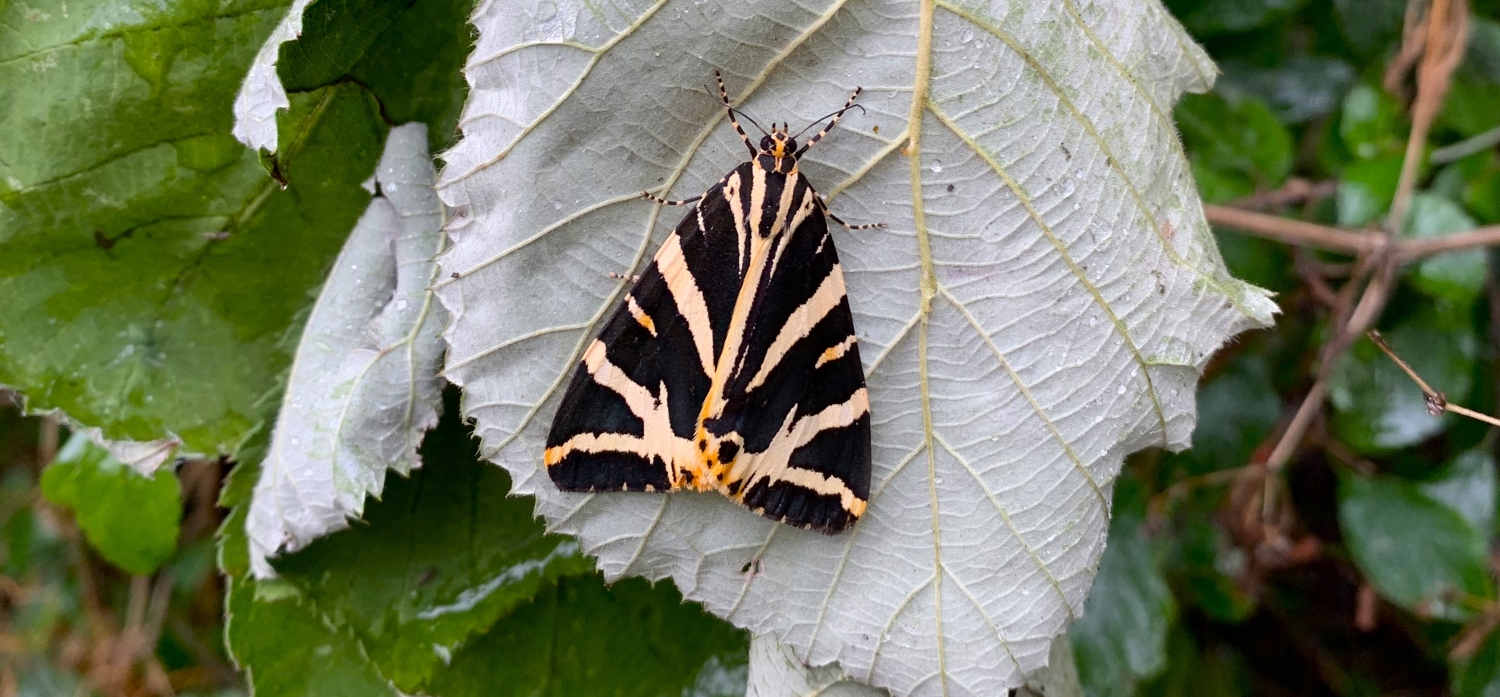
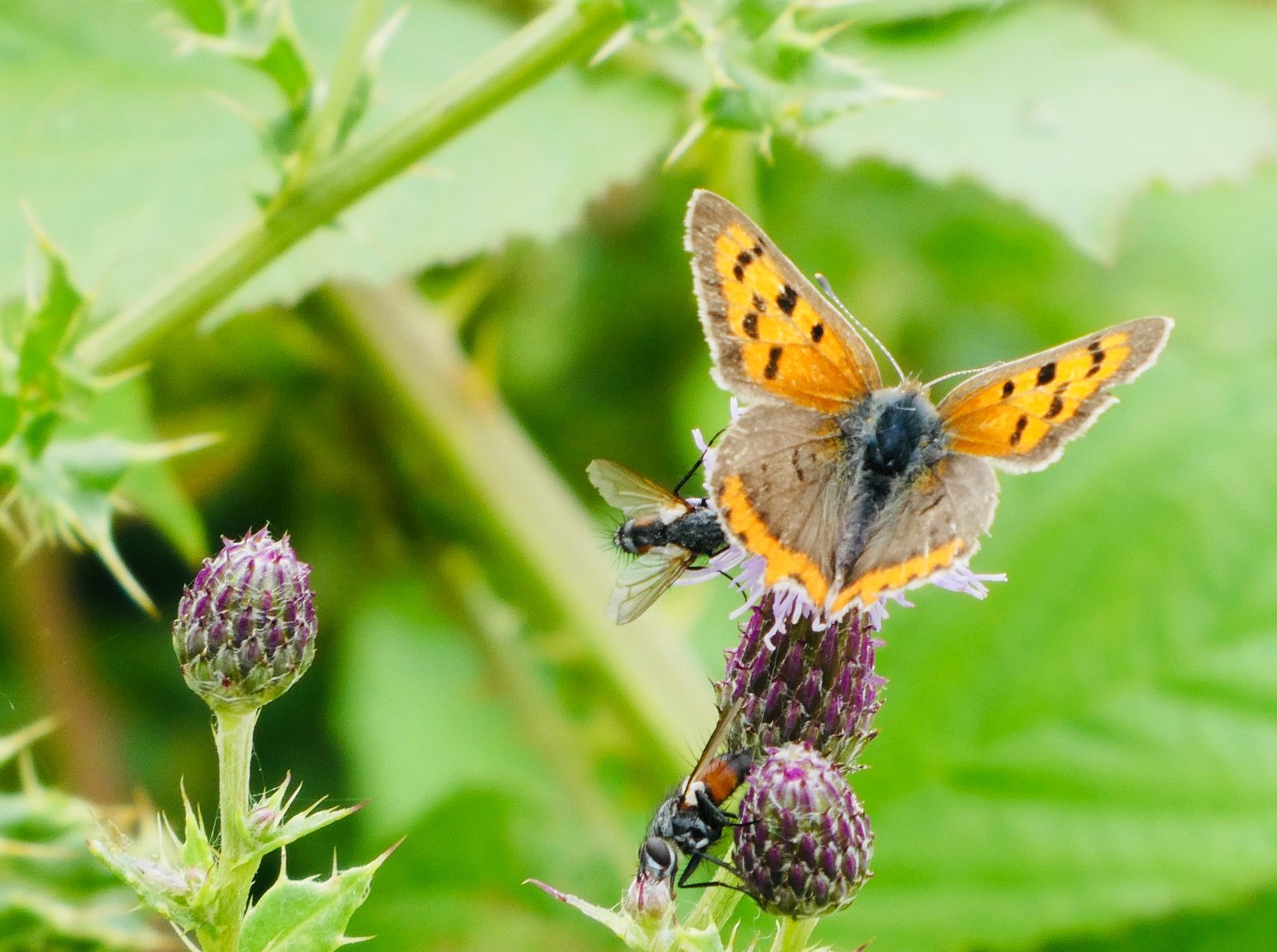
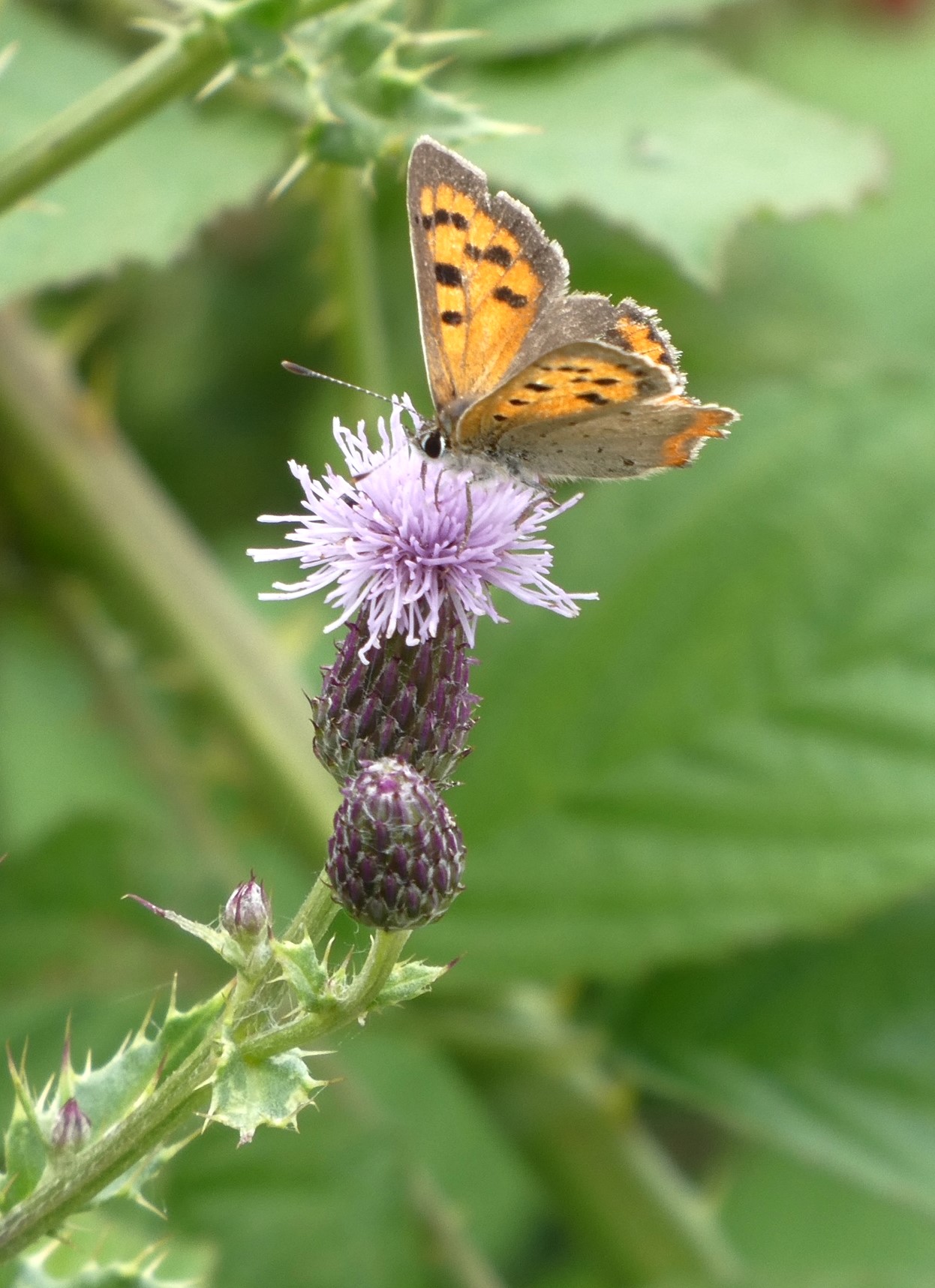
These are two very different species. Both overwinter in the larval stage of their life cycle but that is where the similarity ends. Overwintering small copper caterpillars pupate in the early spring and hatch into the first generation of adults during April. In a good summer there will be three or even four broods of small coppers; sometimes, this far south, you might spot one as late as November.
Jersey tiger moth adults don’t emerge until July and each summer there is a single generation that flies until September. They are not common in the UK, restricted to specific localities in southern England, but their population is increasing and spreading northwards as our average temperatures rise.
Small coppers, on the other hand, are in serious decline. A long term study showed them to be suffering habitat loss faster than any other of our UK butterfly species and more recent research suggests that climate change is also affecting their numbers adversely.
Keep counting. We need the data to understand what is happening to our butterflies and to plan for their futures.

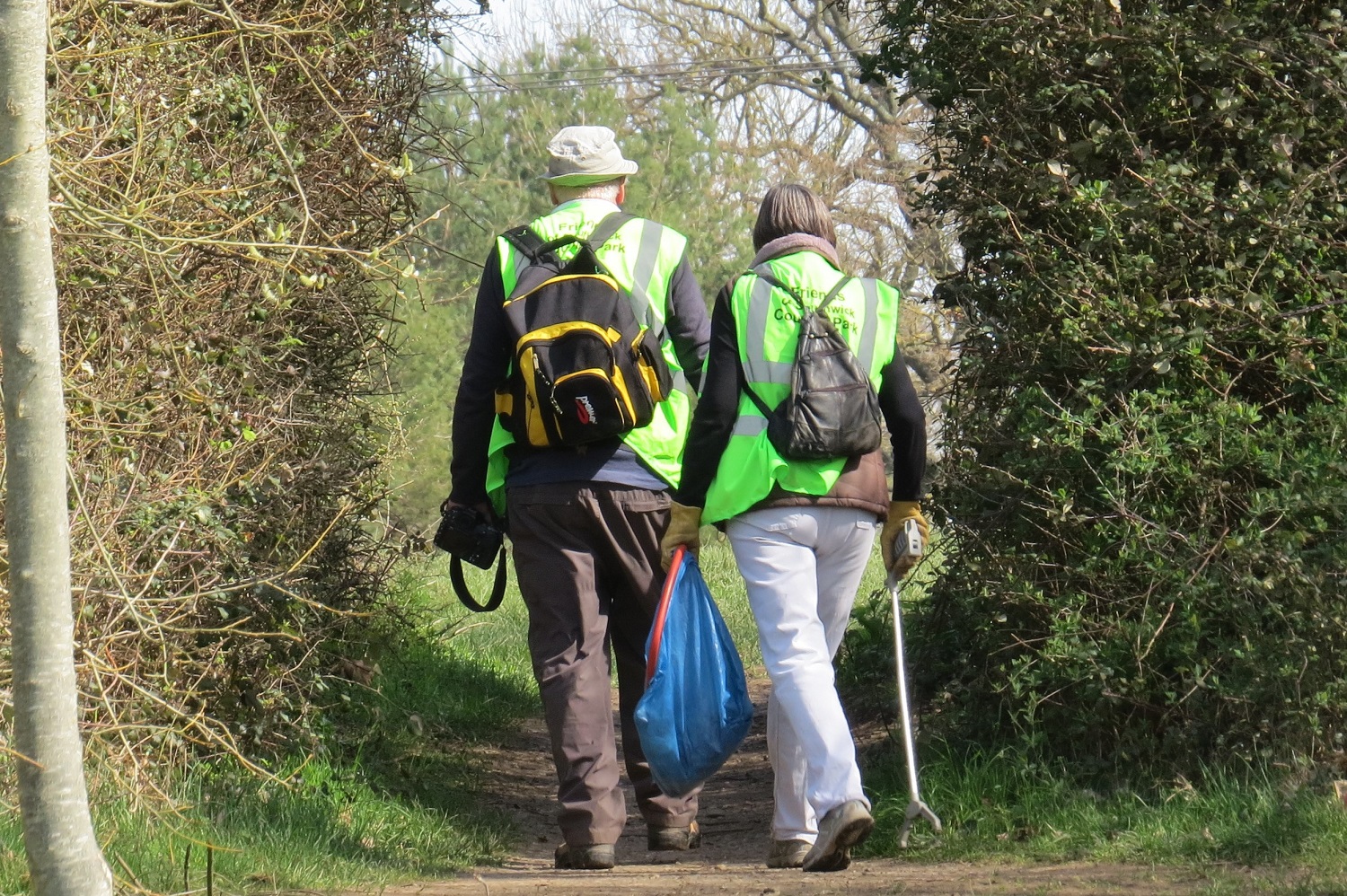



 Southwick Country Park Nature Reserve
Thanks for the reminder, I’ll send my results in today! We saw a Jersey tiger moth in the garden last summer but not this year so far and no small coppers. We have however seen large numbers of red admirals, peacocks, commas and a few other species on a large buddleia bush, whenever the sun is shinning. Far more together than we would normally see!
I have edited your comment Barbara and put your name at the top. I have no idea why our comments section does this to you.