
These are the flowers of Typha latifolia, the common bulrush, growing vigorously in Lambrok Stream.
The female flowers, densely packed brown florets, are at the bottom and the male flowers, usually a lighter brown, are above. The male flowers in these pictures, having produced their pollen much earlier, have shrivelled away. The female flowers will retain their shape and colour until they burst into masses of fluffy seed during the winter.


The male flowers shrivel away after they have produced their pollen and the female flowers do not release their seeds until the winter.
Bulrushes grow in or near standing water and are increasingly being used to protect streams and ponds from contamination. They reduce the levels of phosphates, nitrogen and harmful bacteria in the water, and increase oxygen levels; they collect silt and solid detritus around their roots, providing habitat for the sort of bacteria that help break down other contaminants.
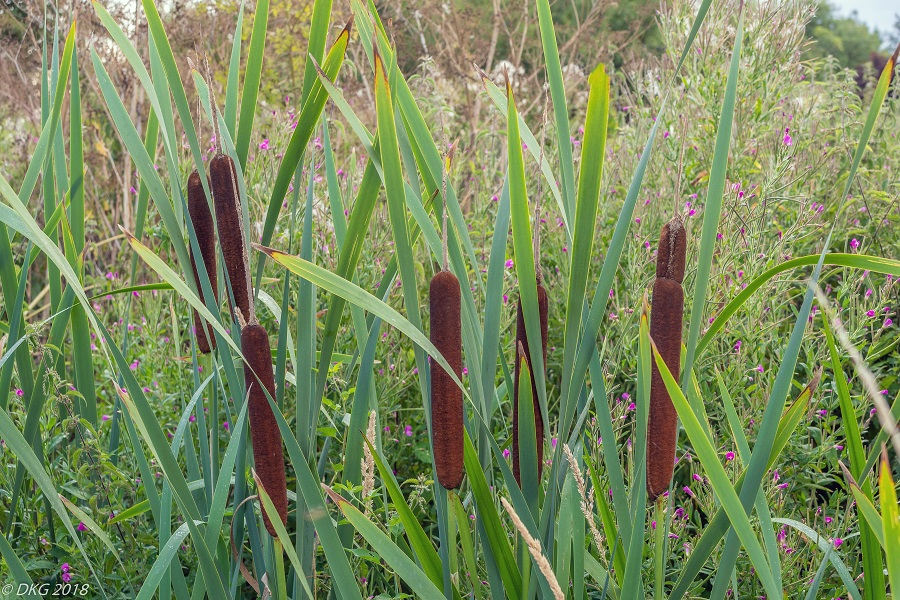
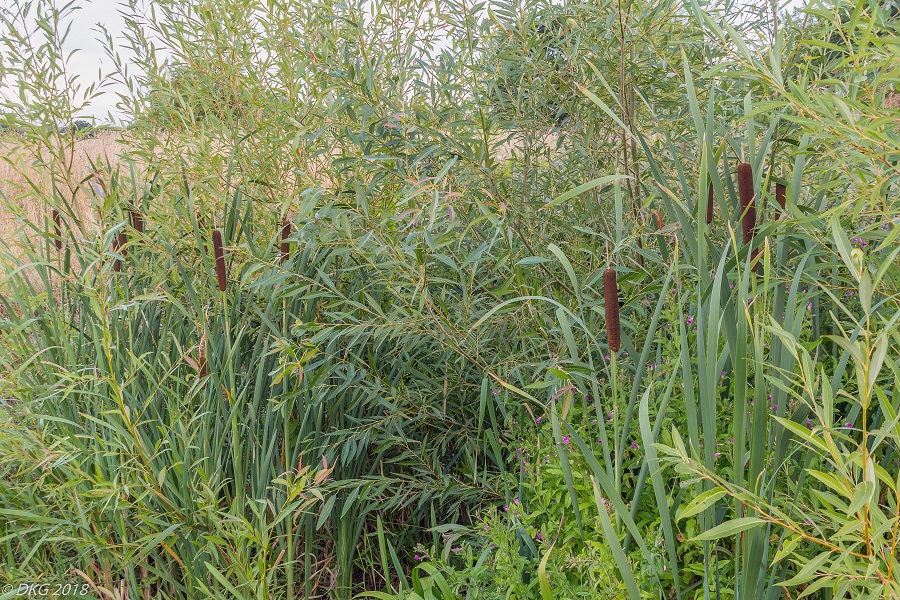
Bulrushes in Lambrok Stream
There are sites in America where artificial reed-beds, planted with bulrushes (or cattail in American parlance) are being used to filter the toxic acidic runoff from old mines. Perhaps carefully designed and installed reed beds of Typha latifolia could be used to protect Lambrok Stream from the developments planned for Church Lane and Upper Studley.





 Southwick Country Park Nature Reserve
I wasn’t aware of that, more interesting information I’ve learned from your posts, thank you!