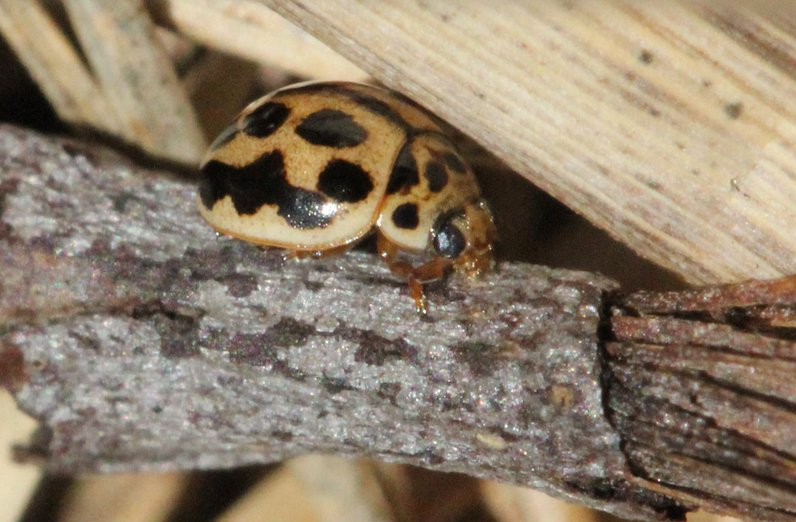
Sixteen spot ladybird
The sixteen spot is Britain’s smallest ladybird.
Ladybirds are beetles in the family Coccinellidae. There are 46 different species of Coccinellids in Britain but only 26 of them look like classic ladybirds, brightly coloured and patterned with spots.
Sixteen spot ladybirds are beige, not red or yellow, with anywhere between 13 and 17 black spots that are sometimes joined together into splodges on the lower part of the wing cases. The diagnostic feature is the central black line where the wing covers meet. Only two species of ladybird have this central line: the 16 spot ladybird and the 14 spot, which is noticeably larger and brighter.


1. The 16 spot is much smaller than the 7 spot
2. Examples of colouration and pattern, including the central line at the edges of the elytra.
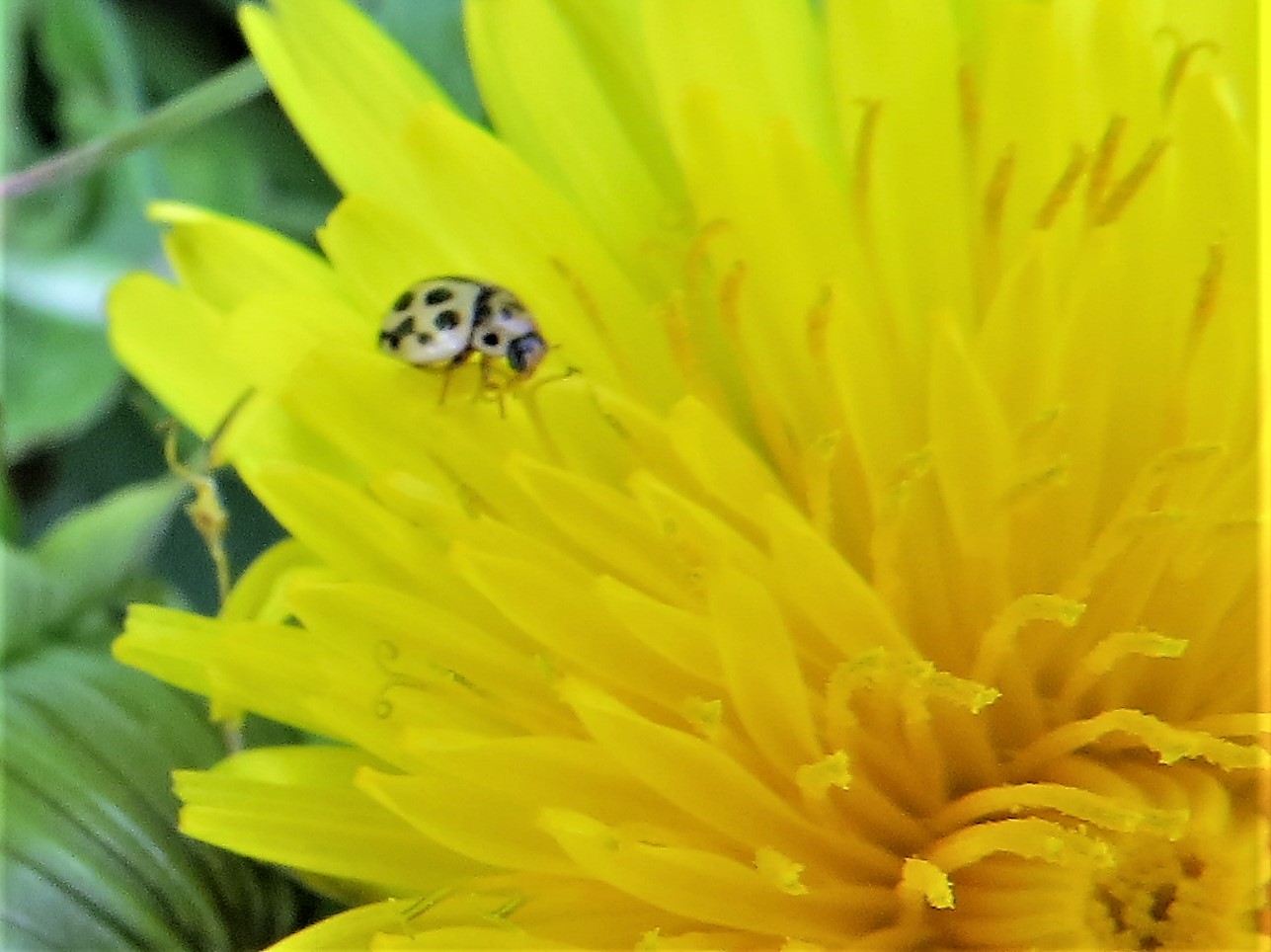
3. In the reserve, feeding on pollen, on a dandelion.
The 16 spot ladybird is a tiny beetle, never more than 3mm in length, often smaller, and very easy to overlook. It prefers to live in dry grassland. Unlike other ladybirds, it is not believed to be predatory; it eats mildews and other fungi, grass pollen, and the pollen and nectar of certain composite flowers. Dandelions are a favourite.
The 16 spot ladybird rejoices in a scientific name that sounds like one of Harry Potter’s spells: Tytthaspis sedecimpunctata. Use it carefully; anything might happen.
Header picture: 16 spot ladybird by Joan Quintana (CC BY-SA 2.0) flickr.com



 Southwick Country Park Nature Reserve