Message from Emma Kilroy-Grant to FoSCP 22/08/2023:
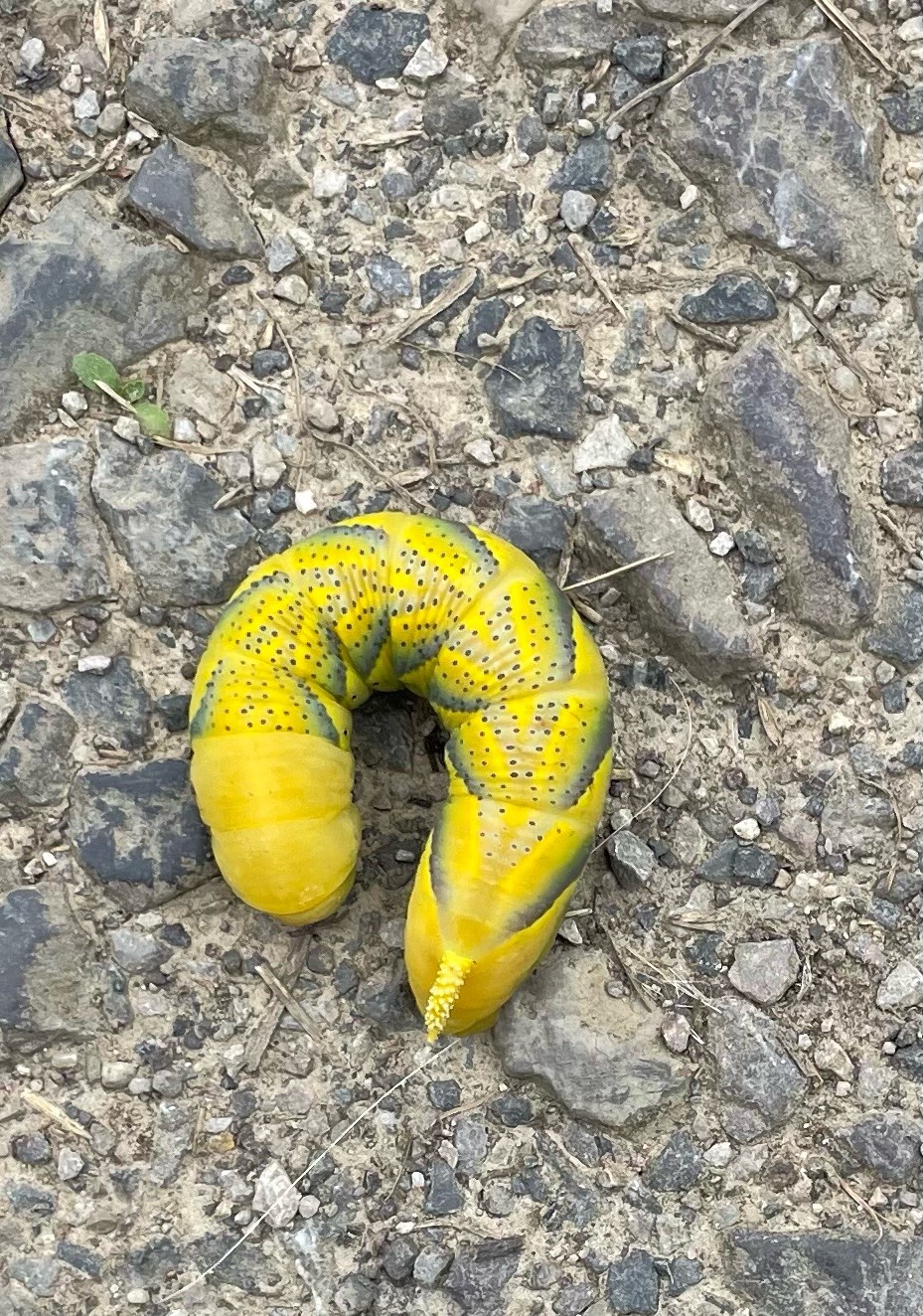
Walking in Southwick Country Park nature reserve this morning, I came across this mammoth caterpillar on the path. I re-located it into the hedge and Googled it to find it is an African Death’s Head Hawkmoth!!
Message from FoSCP to Emma 22/08/2023:
How exciting! Such a rarity, too. Can you tell me exactly where you saw it? There is a map on the sidebar if you need it.
Message from Emma
It was on the path at the bottom of Kestrel Field beside the pond. I wriggled it onto a leaf and popped it in the hedge next to the pond.
Message from FoSCP
Thank you for rescuing it. It’s a new species for the reserve. I would love to put the picture on the website but your phone has sent it as a thumbnail. If it’s OK for me to publish it, can you email the full-size picture with all its pixels to friendsofscp@outlook.com please?
Message from Emma
Done! 👍😊
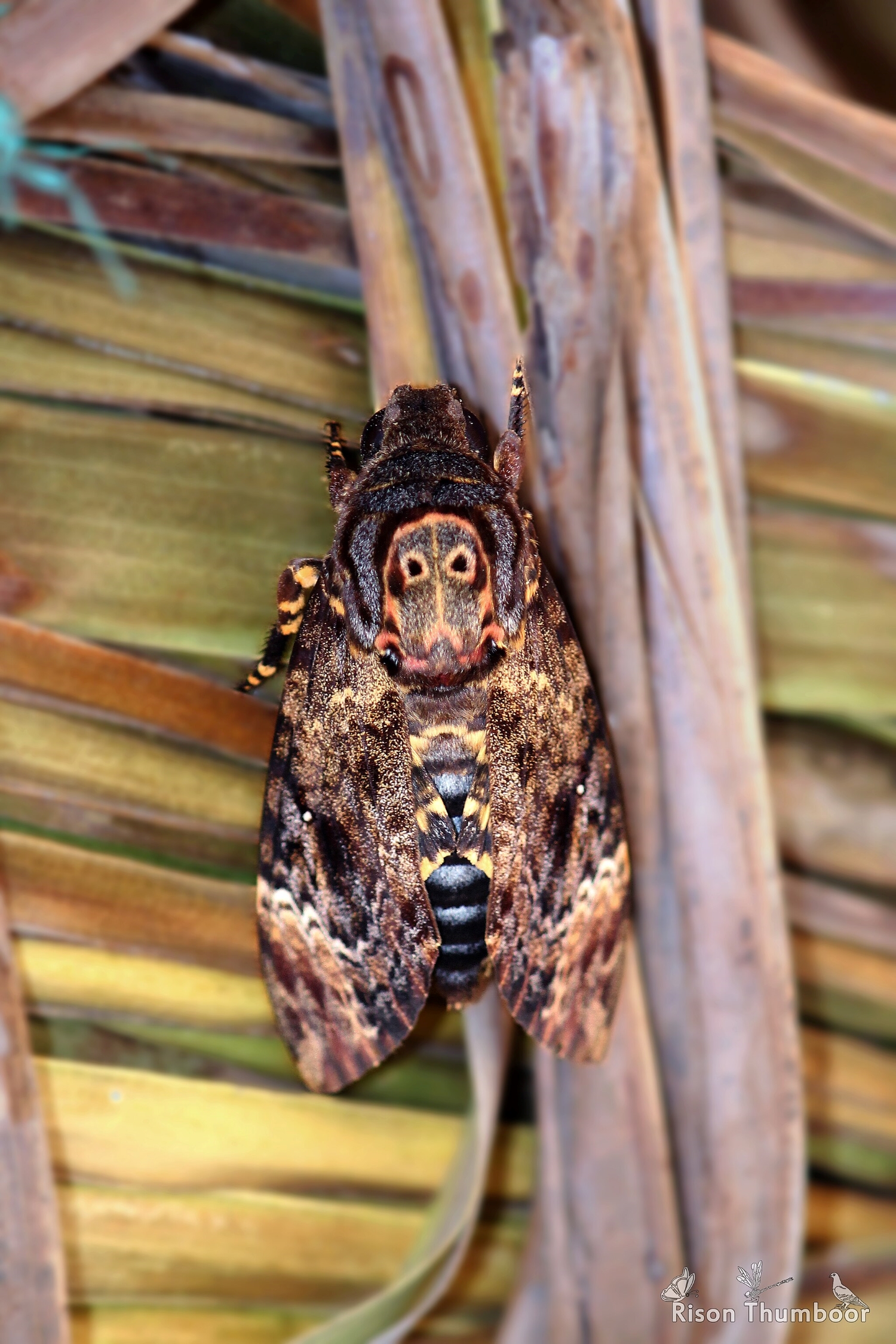
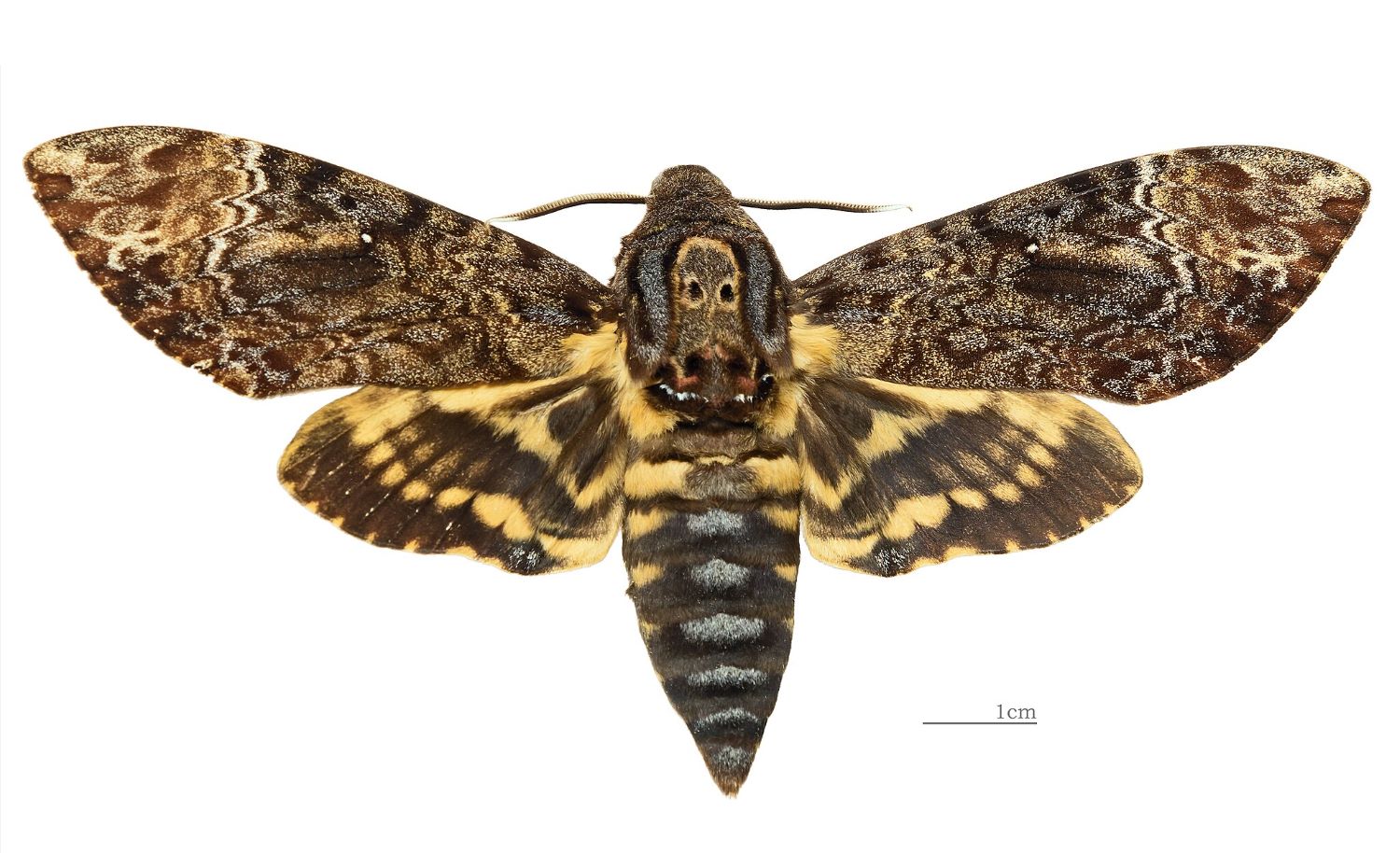

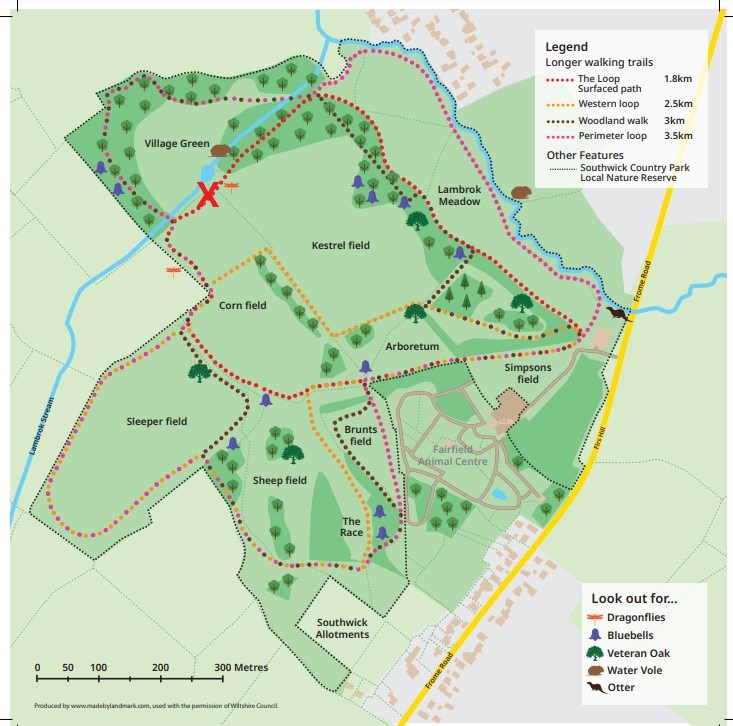
Death’s head hawkmoth adult at rest and with wings spread; woody nightshade, one of the caterpillar’s foodplants; a map with the place where the caterpillar was found marked with a red X.
Email from Ian Bushell to FoSCP forwarded to Emma 22/08/2023
Hi,
It’s more usually called a Death’s Head Hawk-moth [Acherontia atropos] but sometimes it’s called African because it is native to regions in Africa. I am MOST interested to see where Emma found it and possibly see it for myself.
It is the largest moth to appear in Britain [wingspan up to 12.5cm] but it isn’t native here and it can’t survive our winter. It is dark bluish-black overall and named after the skull-like mark on its thorax. The adults are likely to be found near bee hives where their short proboscis is adapted for stealing honey. There are three beehives at Fairfield Animal Centre as well as our feral colonies.
Under attack, the adults show yellow striped rear wings and they squeak. It has been suggested that the squeak mimics the sounds a queen bee makes to communicate with her workers. The caterpillars feed on potato and woody nightshade – plenty of the latter in the reserve and spuds up in the allotments.
The species is listed in Wiltshire’s Macro-moth List as a rare migrant. I will let the county recorder Wayne Clinch and Chrys Drakaki at the Wiltshire and Swindon Biological Record Centre know – especially if I can find it again! They will be delighted – a great record for the county and for the reserve.
Email from Emma to FoSCP 22/08/2023:
Wow! And to think I nearly stepped on it!😳 and then had to fend off the dog while I grabbed a couple of leaves and scooped it up and into the hedge😂
Very exciting!
Cheers, Emma
Header image: Death’s head hawkmoth caterpillar by Emma Kilroy-Grant (SCPLNR 21.08.2023)



 Southwick Country Park Nature Reserve
Good find, Emma! Thanks for sending the picture in. You have caused a real stir among the county’s lepidopterists.
Well done Emma.
Hello, I came across one of these death head hawkmoth caterpillars today, I took a photo and moved it off the path into the grass using a stick, I was shocked and fascinated to see something like that! Chloe, Essex