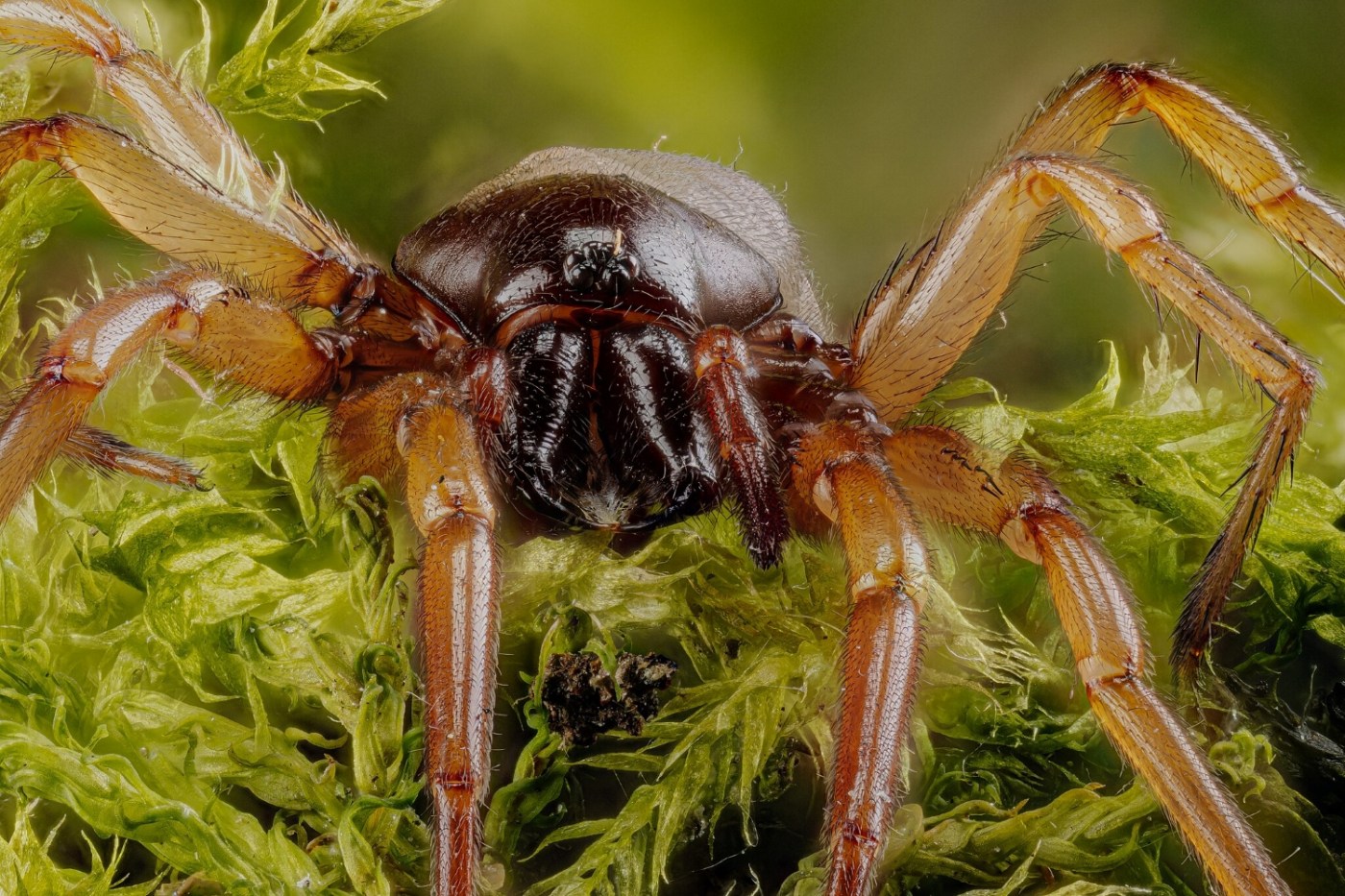
This is Dysdera crocata, the woodlouse spider.
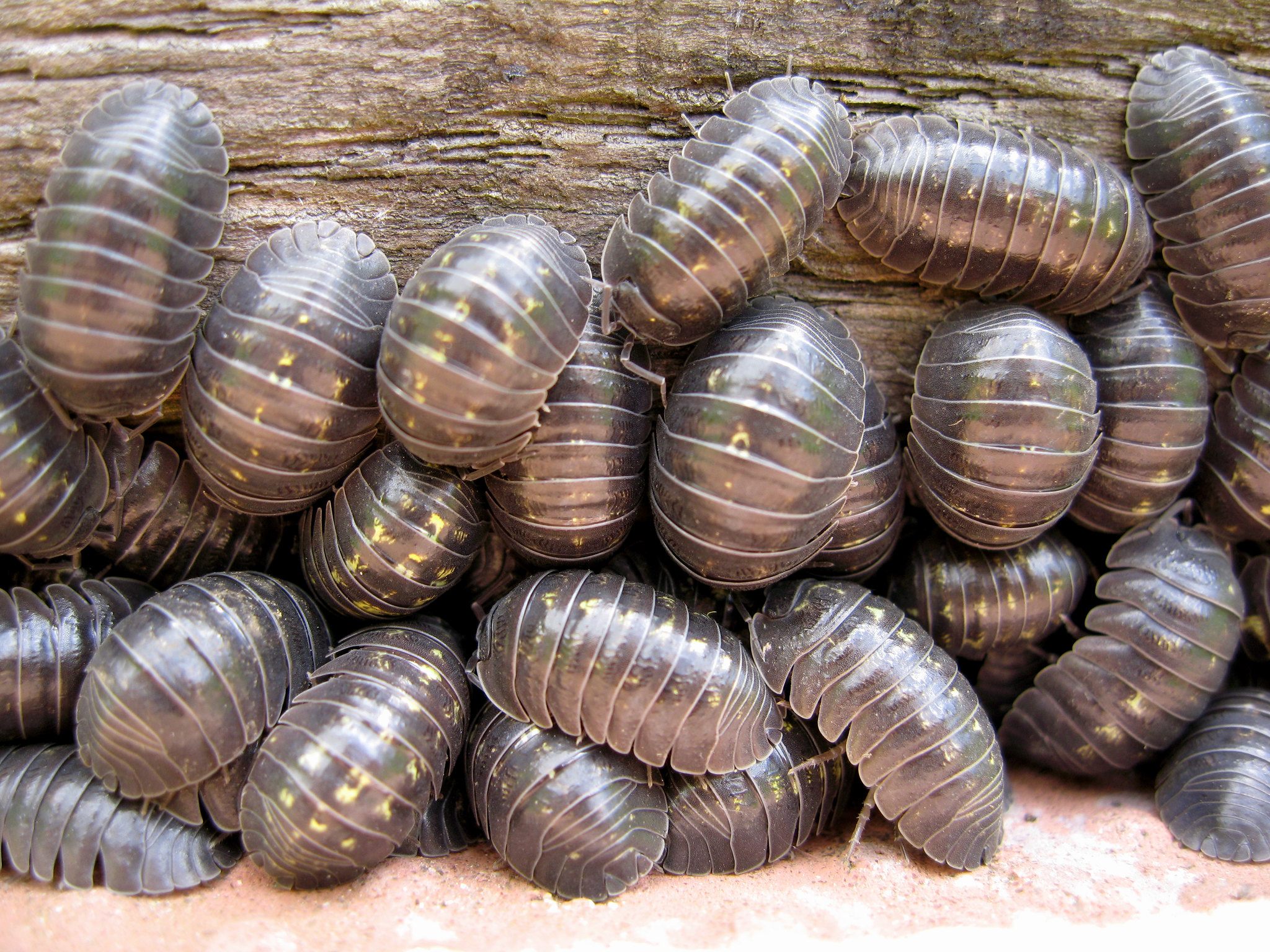
Common reserve residents, these spiders like warm, dark, damp places: rotting logs and leaf-litter, corners where woodland detritus piles up. Until recently, it was thought that they chose these places because that is where woodlice, their main prey, are found. But research has shown that woodlouse spiders, when there is other invertebrate prey available, show no preference for woodlice. It seems that woodlice are just the most common prey in the environment both species share.
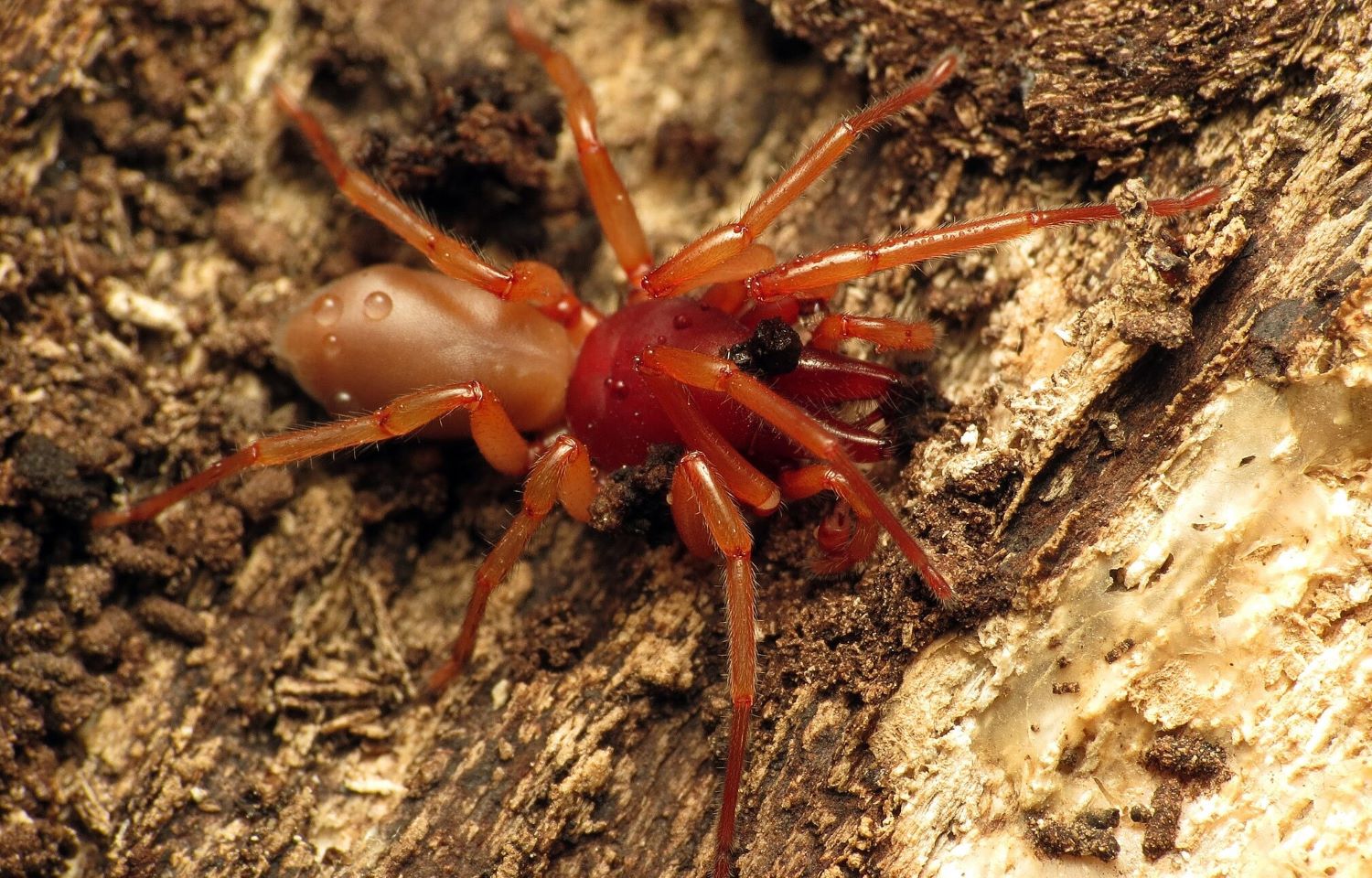
Dysdera crocata is a night-time hunter. Its head, thorax and legs come in a range of reddish colours from tawny orange to dark-red but its long, oval body is paler, beige or grey, and disconcertingly smooth and shiny. They have exceptionally large jaws, more than capable of dealing with an isopod’s tough exoskeleton; this is one of the few spiders in the UK with jaws strong enough to pierce human skin.
Their lifespan is anywhere between two and five years and they are not sexually mature until their second year. They survive our winters by seeking out sheltered places where the decay of wood and vegetation produces heat. But if the temperature in their hideaway drops below 5°C they can enter diapause, a state similar to hibernation, in which their metabolism slows and their chemistry produces antifreeze-like compounds.
Header image: Woodlouse spider by Franz van Duns (CC BY-SA 4.0) wikimedia.org

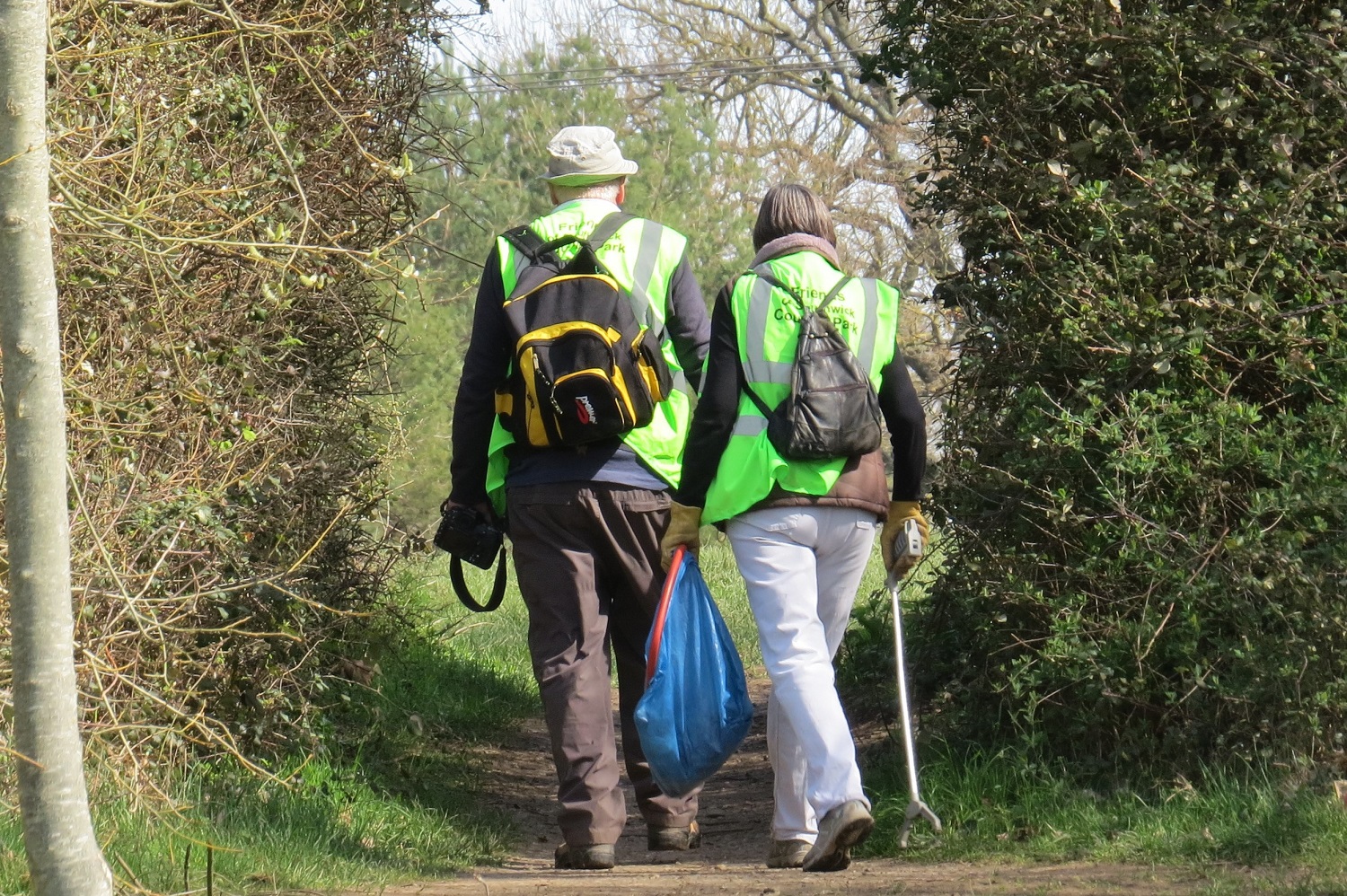


 Southwick Country Park Nature Reserve