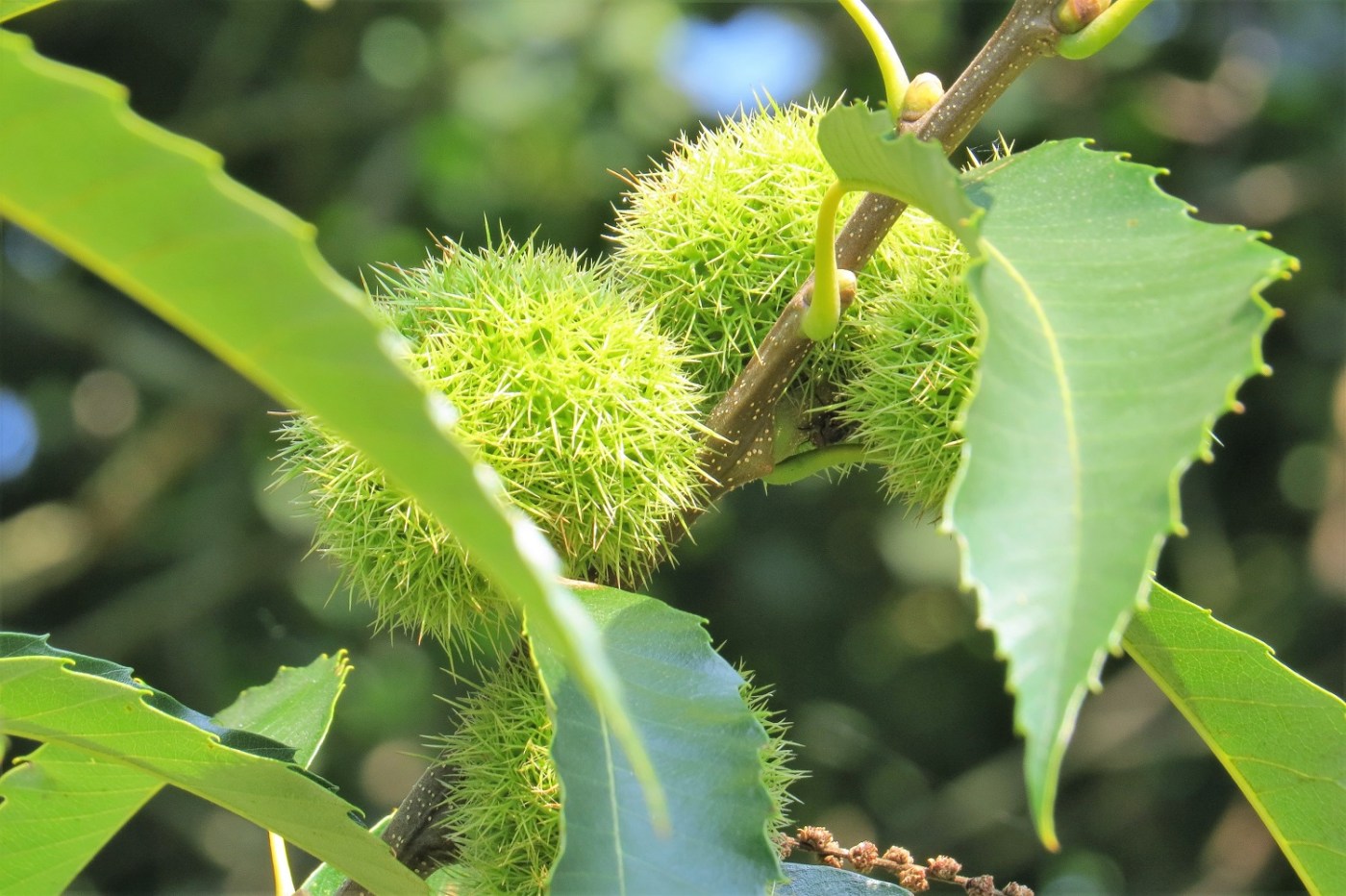
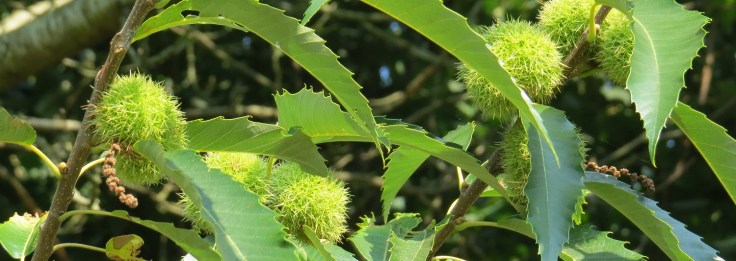
Sweet chestnuts (Castanea sativa) in the reserve’s Arboretum.
Sweet chestnuts are not native to Britain, they are a southern European species introduced here by Roman colonists, two thousand years ago. Roasted and ground into a coarse flour, chestnuts were made into bread, and were an important part of the Roman diet; invading Roman armies planted sweet chestnuts across Europe as they went.
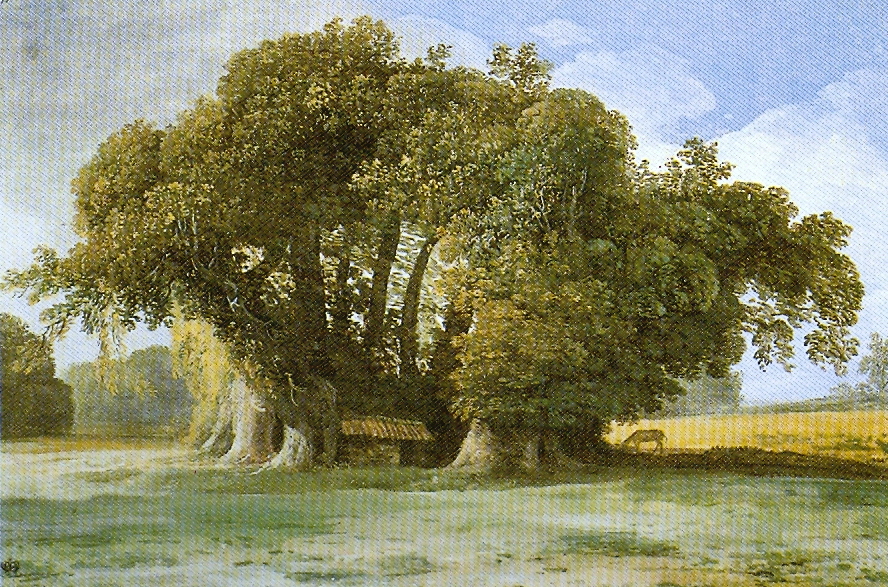
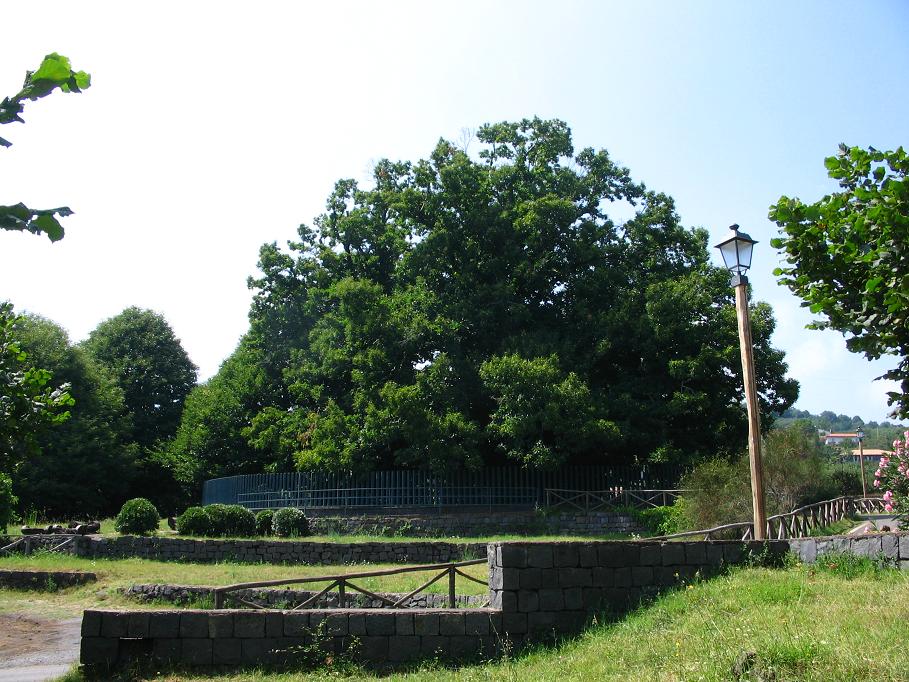
[1] Castagno dei Cento Cavalli, the oldest chestnut tree in the world, drawn in 1777 and [2] the same tree today.
The largest and oldest chestnut tree in the world is called Castagno dei Cento Cavalli; it is believed to be between 2,000 and 4,000 years old and is 60 metres around. It grows just eight kilometres from the crater of Mount Etna in Sicily so not only could it have been a mature tree when the Roman army set out to conquer Britain, but Sicilian conscripts in that army may have carried its chestnuts in their packs.
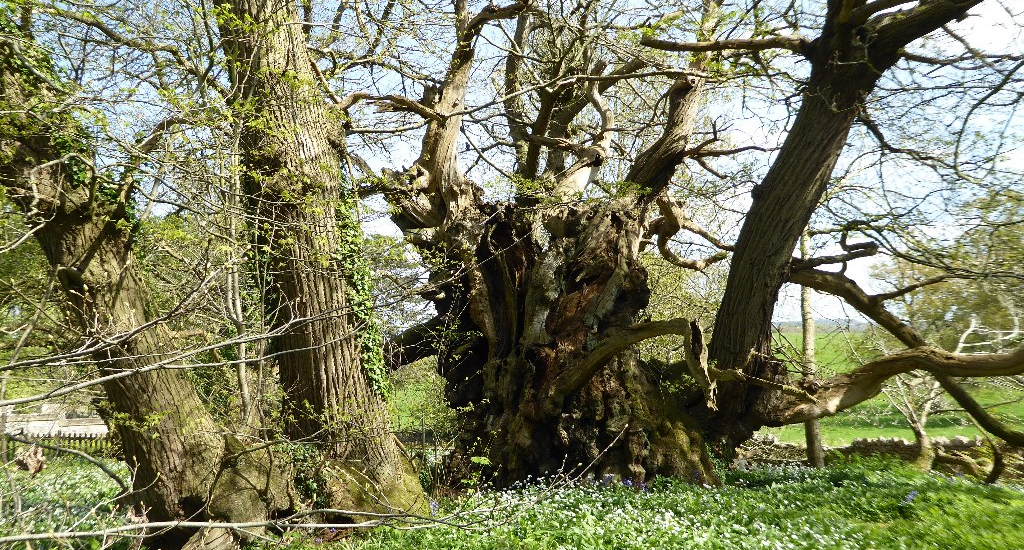
The Great Chestnut of Totworth
Britain’s oldest sweet chestnut tree is known as the Great Chestnut of Tortworth in Gloucestershire. It is more than eleven metres in girth and written records date it back to the 12th Century.
Compared to these aged giants, our sweet chestnut is just a baby, little more than twenty five years old, planted when the park was first opened.


 Southwick Country Park Nature Reserve
Very apt considering that an old Sweet Chestnut in Acton Park, Wrexham has been named Britain’s tree of the year, and one in Greenwich Park, London came third.
For years there has been a tree at the local park that dropped spiky shells. I discovered last year that it was a sweet chestnut but I’d never found any edible nuts. This year however it must have reached full maturity as it’s dropped so many nuts. I see them daily now and have foraged some for winter apple crumbles.