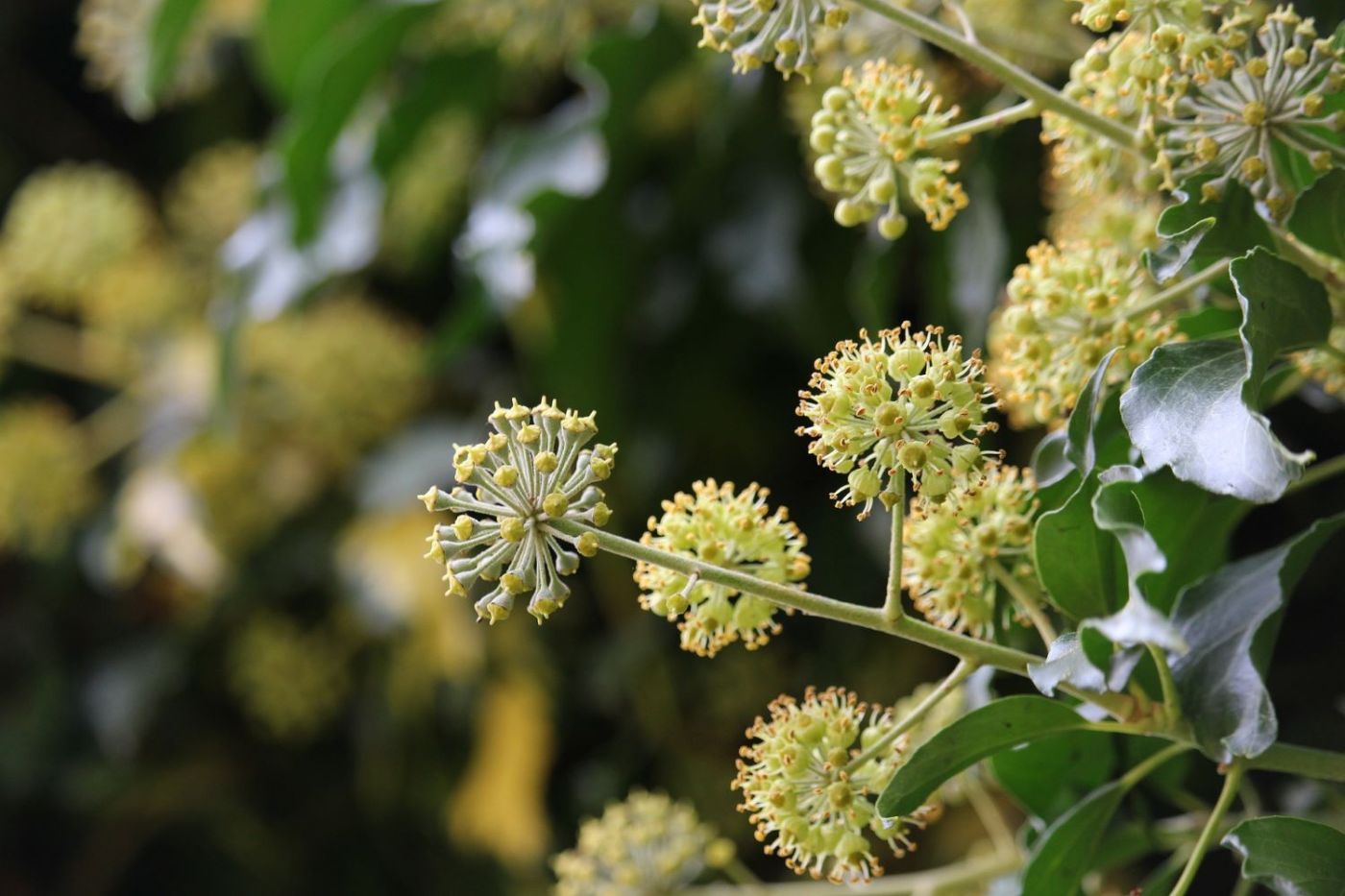
Ivy flowers
The reserve’s ivy blooms from the beginning of September right through November; each plant’s flowering season is quite short but a succession of plants flowers all through the autumn and into the winter. The flowers are small, green and yellow, and so insignificant-looking that many people don’t realise that that they are flowers at all.


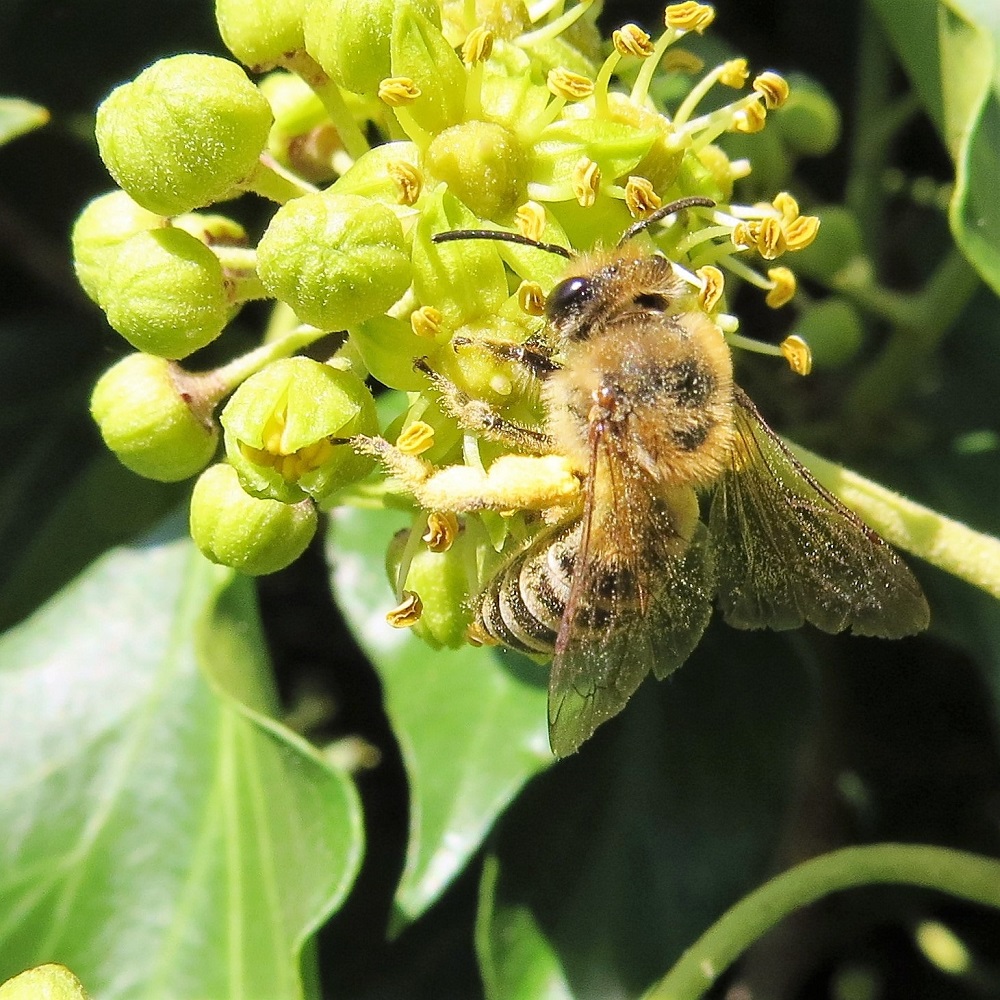
However, these tiny flowers produce copious amounts of nectar and pollen at a time of year when both are in short supply. They advertise themselves with a heavy sweet scent and the nectar feeders flock to them. In the autumn sunshine, young queen wasps come to feed in the ivy, and butterflies that will overwinter in their adult form, building up their reserves for hibernation. There are honey bees and ivy bees, a new species in the UK which feeds only on ivy, and beetles that come to feed on the pollen.
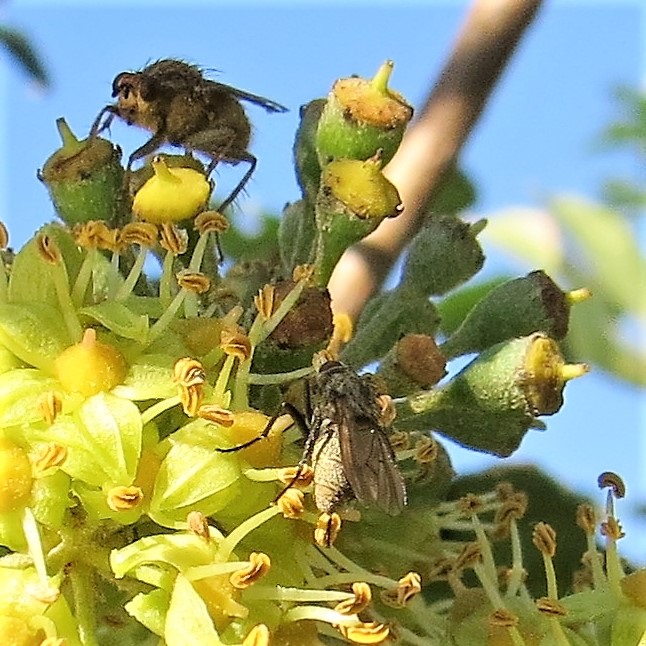

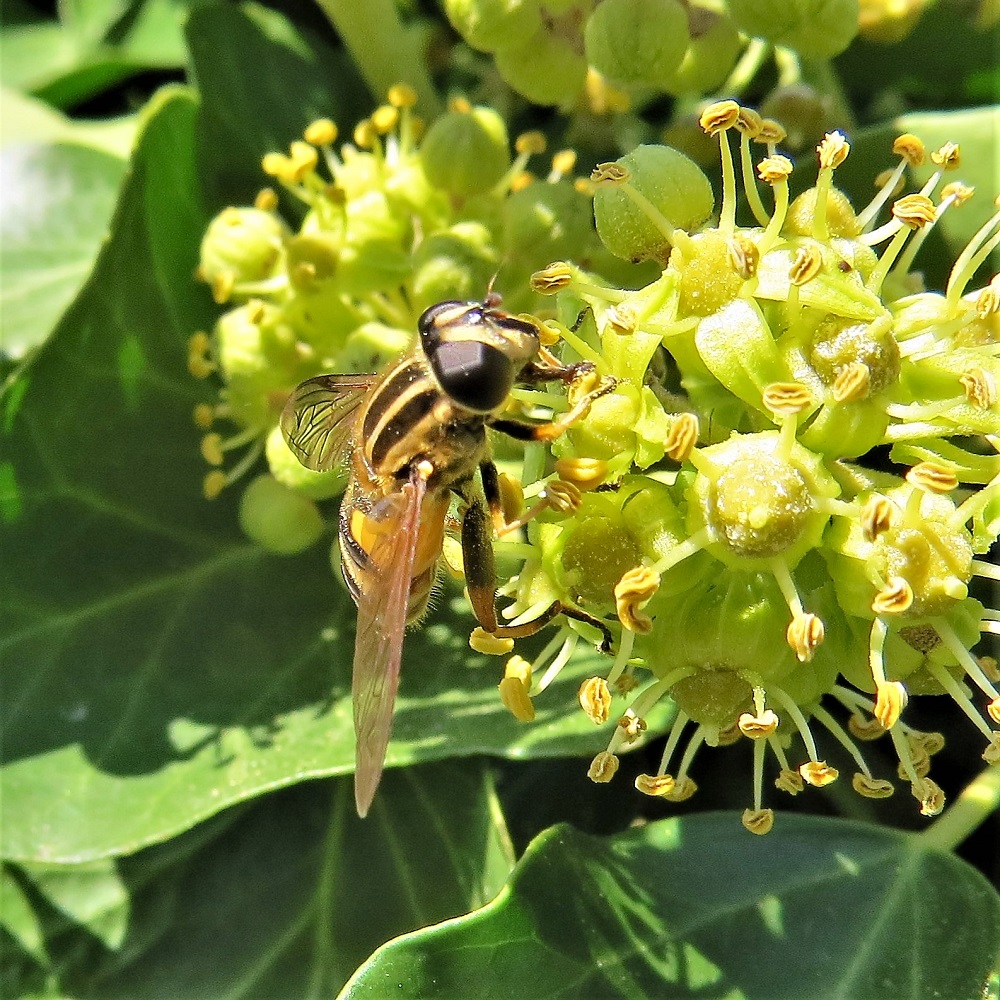
And ivy attracts flies, even at this time of year: hover flies of all kinds, brightly coloured, striped and chequered; blow flies and flesh flies; horse flies, midges and mosquitoes. You can hear an ivy in flower; on a warm autumn day, it buzzes like a bee swarm.
This autumnal feast for insects eventually becomes a feast for insectivores. Late season dragonflies and hornets will hunt around a flowering ivy, and little insectivorous birds, wrens and dunnocks, appear in the hedges nearby.

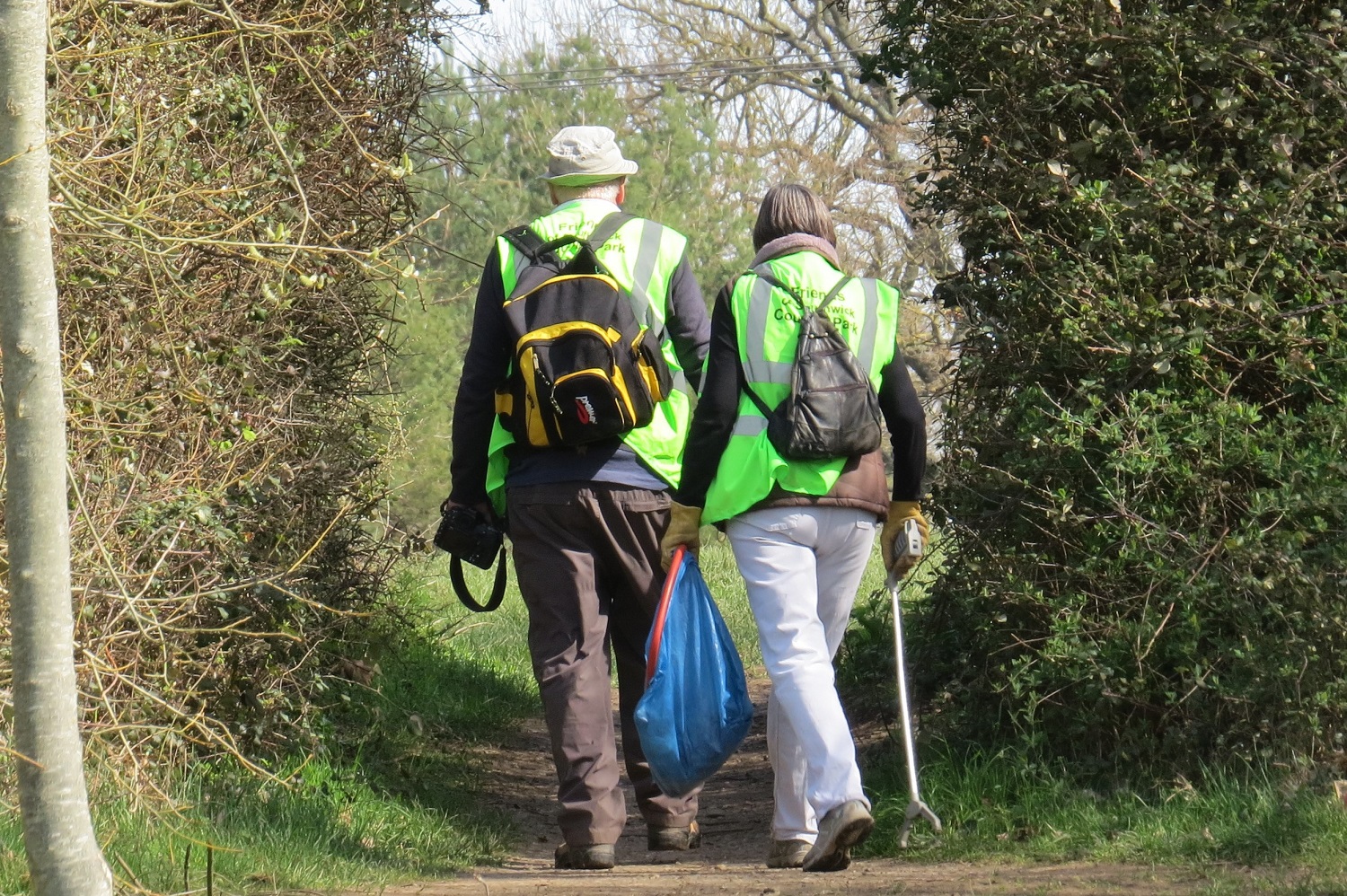


 Southwick Country Park Nature Reserve