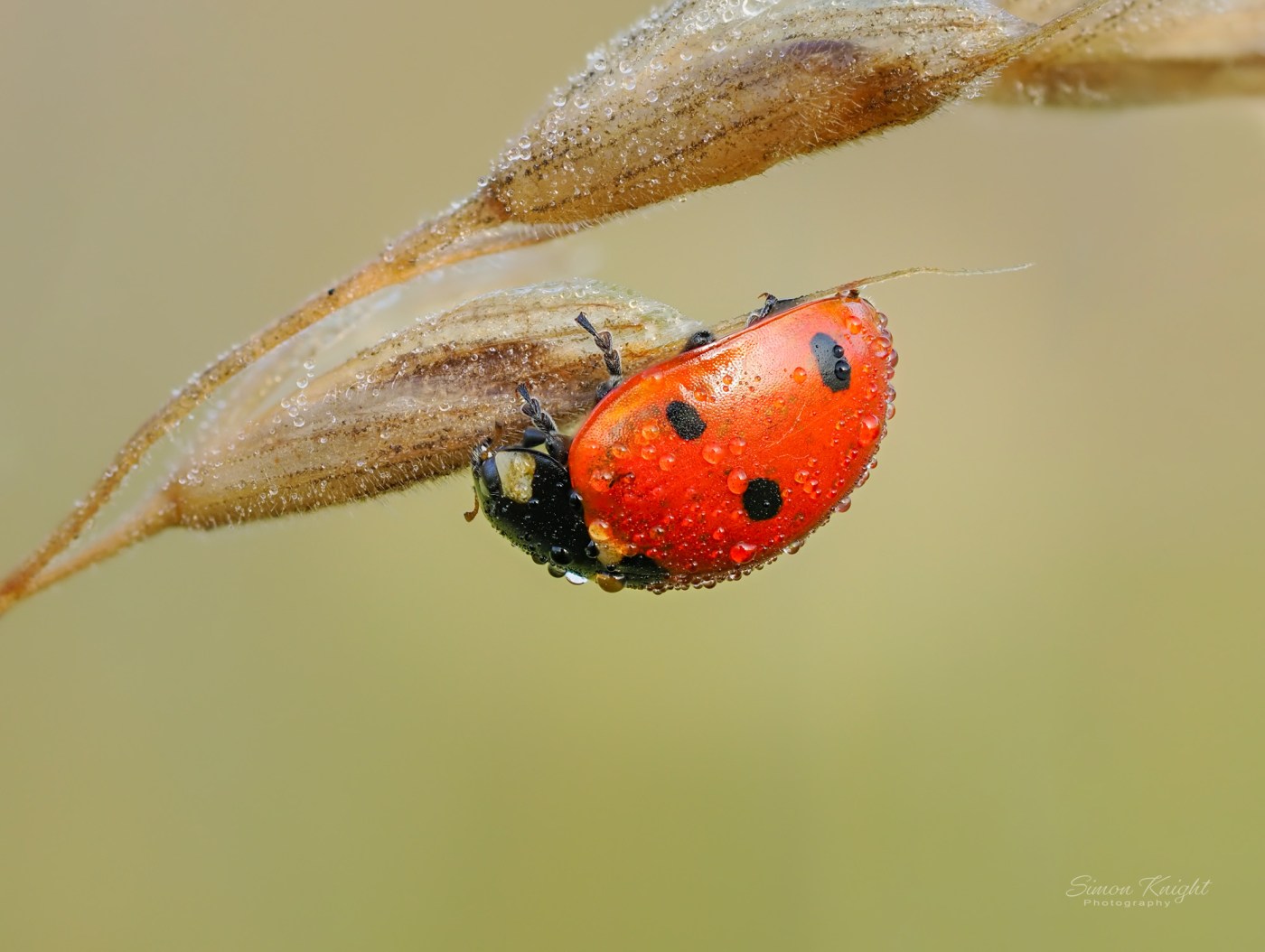
Coccinella septempunctata
Coccinella septempunctata is the rather grand scientific name of the most common of our native ladybirds, the seven spot.
Like all invertebrates, a ladybird goes through several life stages (egg, larva, pupa, and adult) but it is as an adult that this species overwinters. At this time of year, adult ladybirds are tucked away in sheltered places, waiting for the spring.


Eggs, larva, pupa and adult stage of a seven spot ladybird.
After she has mated, a female seven spot ladybird lays between two and three hundred eggs which will hatch in a matter of days, depending on the temperature. The larvae will live and grow for about a month before they enter the pupal stage, which will last a couple of weeks before the adult emerges.
The adult ladybird will live up to one year. Its job is to live through the winter, to leave hibernation in the spring in order to mate and produce the next generation. The survival of the species depends on the adult ladybirds, both male and female, making it through the winter; all the other life stages, egg, larva and pupa, would not have survived the drop in temperature.
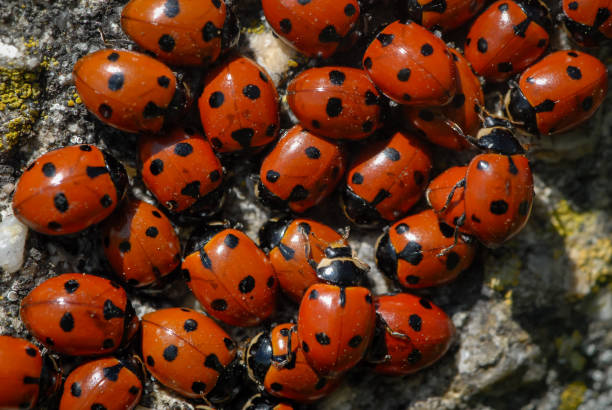
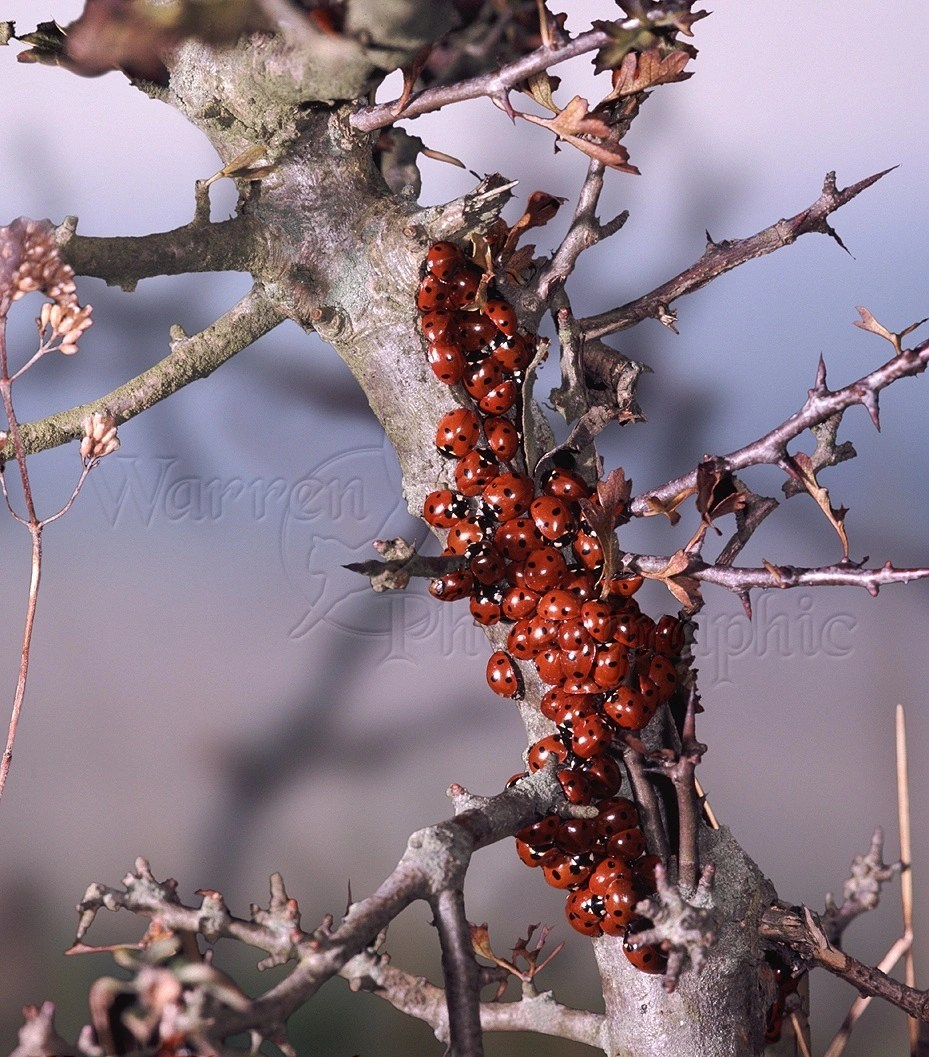

During the winter months, the adult seven spot enters a dormant state called diapause. It relies on the reserves it accumulated during the summer and, just like a hedgehog or a dormouse, its weight correlates with its chances of survival.
Overwintering seven spot ladybirds gather in what the scientists call aggregations in sheltered places among vegetation, in hollow stems and under cracks in tree bark or in garden sheds: yet another reason to cultivate an untidy garden with lots of hiding places for overwintering insects.
Header Image taken in the reserve by Simon Knight

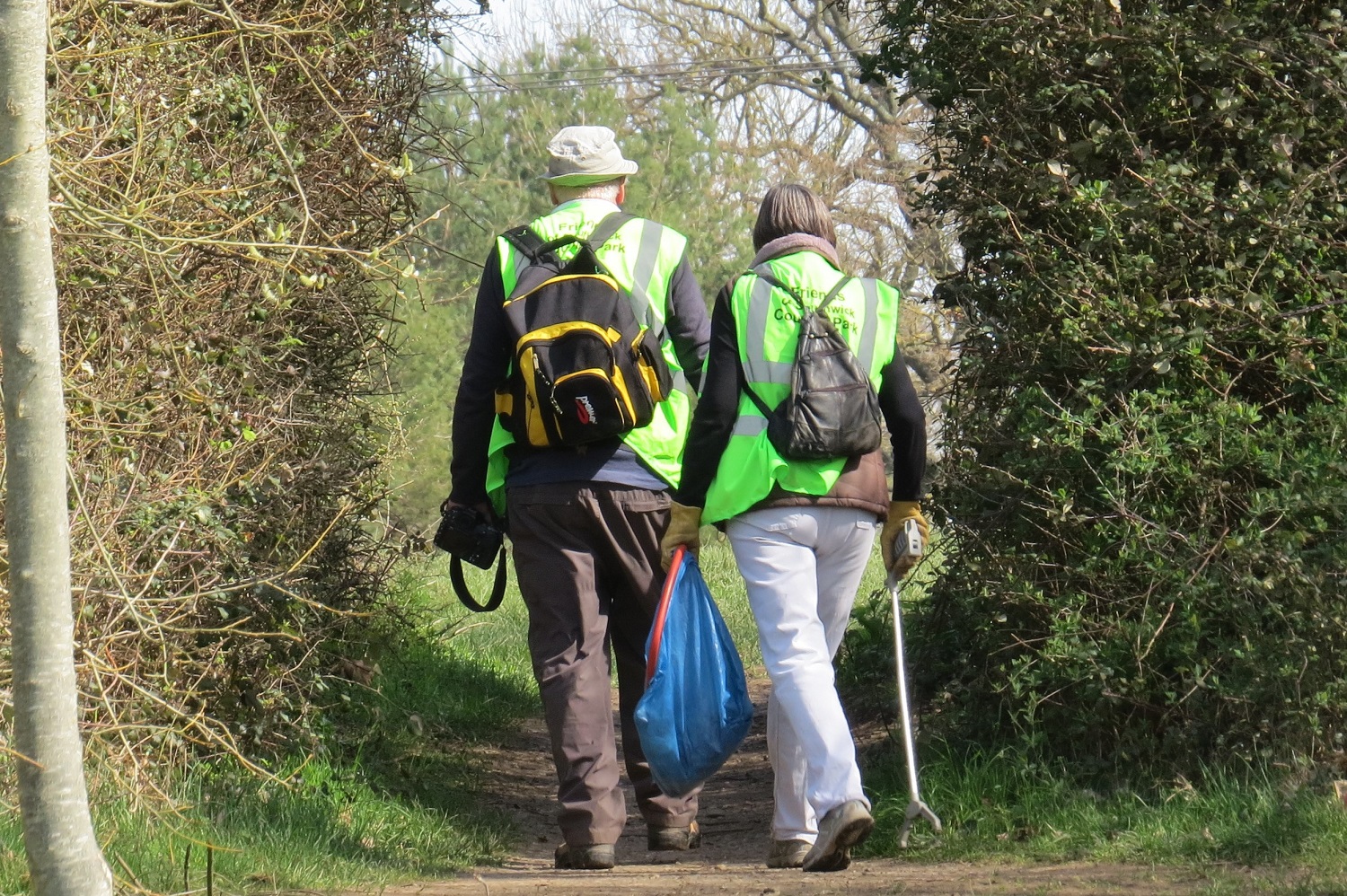


 Southwick Country Park Nature Reserve
They look like tiny alligators in the larva stage. Nice pictures to accompany the stages!
Not all British ladybird species are predators in their adult stages but I think all the larvae are – so little alligators is a good description.