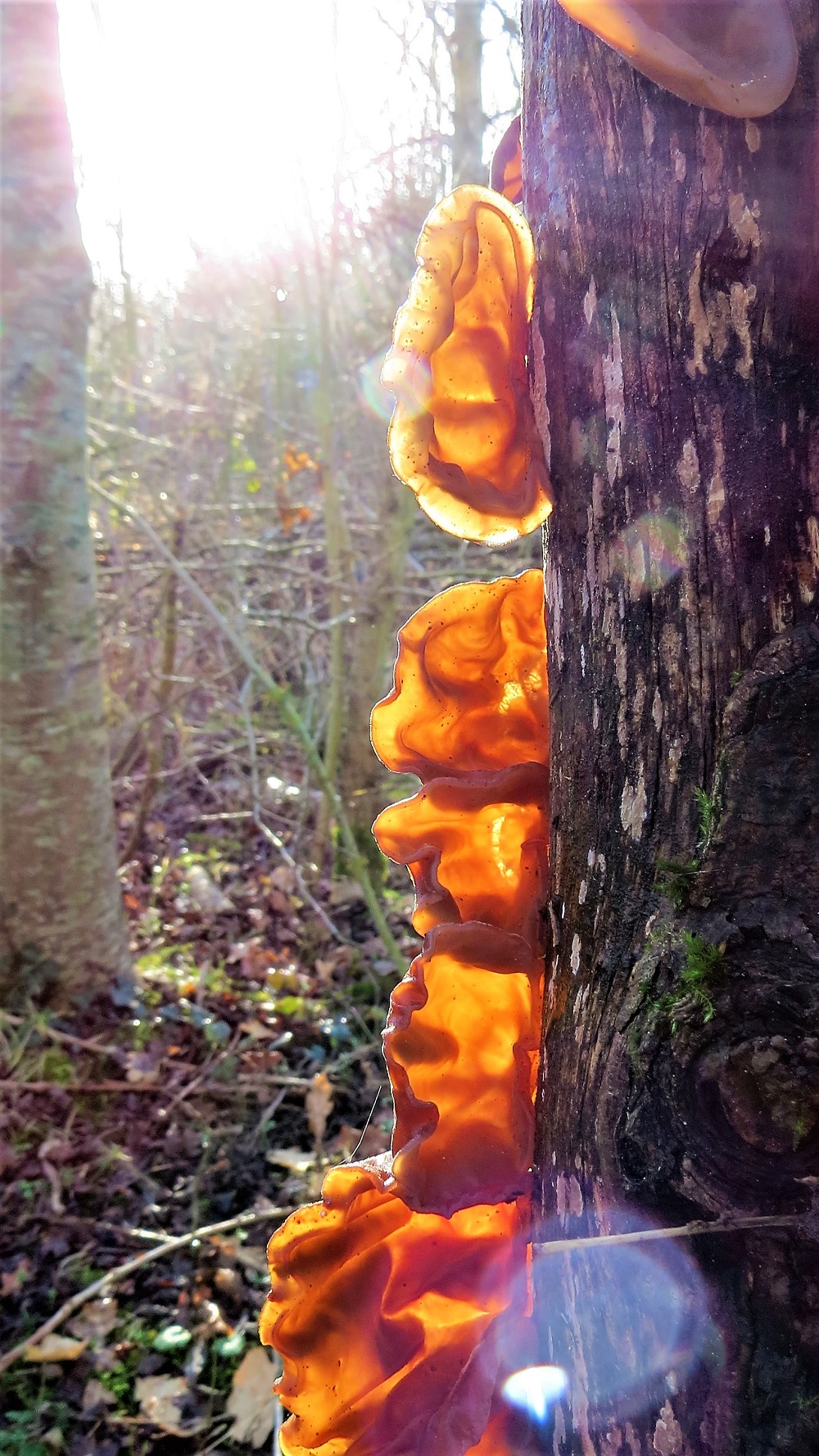
Wood ear
Wood ear is one of the few fungi that produce fruiting bodies all year round.
Winter hardly seems to trouble it and we found these specimens in the strip of wood between Lambrok Meadow and Kestrel Field on a work party morning with the early sunshine just beginning to melt the frost that had covered them overnight. Wood ear fungus can freeze solid, thaw out and continue to grow as if nothing had happened..
In China, where it is a common and popular cooking ingredient, it has always been known as wood ear but in Britain it was, and sometimes still is, called Jew’s ear and its scientific name Auricularia auricula-judea reflects that. There are various myths, some centuries old, to explain where the name came from, almost all of them pejorative and racist stories from less-informed times. Nowadays the species’ common names include not just wood ear but sow’s ear, jelly ear and the enjoyably appropriate tree ear.


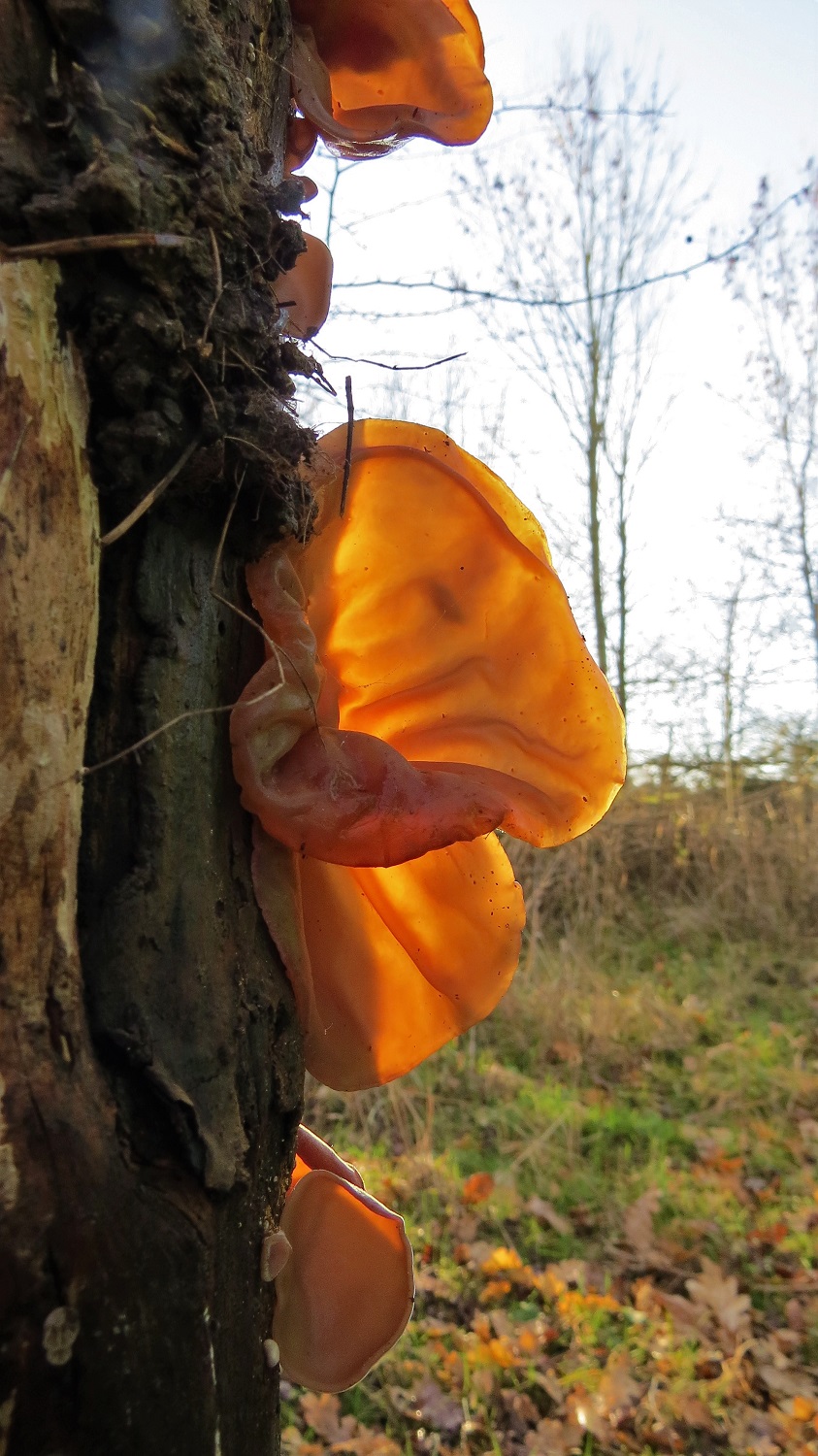
While the naming of the ear might have changed, the ear itself has not; the fruiting bodies do look just like ears. They even feel like ears on a winter’s day: smooth, firm, cold and just a bit icky.
They grow in lines on living wood as well as dead and have a preference for elder. Elder is nearly as common in urban environments as it is in the countryside so wood ear can be found everywhere. It is edible, considered a delicacy in some parts of the world, and makes up a fair proportion of the dried wild mushrooms that you can buy in any supermarket in Trowbridge.
FoSCP will always recommend that you consult an expert, which we are not, before eating any fungus you find in the reserve.
Photographs by Suzanne Humphries and Ian Bushell




 Southwick Country Park Nature Reserve