
Snowdrop
The snowdrops are coming up, pushing pale green shoots up through the mud and leaf mould. They look fragile and delicate but they are driven by powerful forces triggered by the lengthening days and even the frost we are promised next week won’t slow them down.
If you know where to look, you will find our snowdrops flowering in January, February, and right into March. Those in the Village Green copse are early flowerers, they are sheltered by the trees and the copse’s temperature is mitigated by the neighbouring stream. Up at the top of Kestrel Field, far away from the stream, where the wind lowers the temperature of the soil, they flower much later.
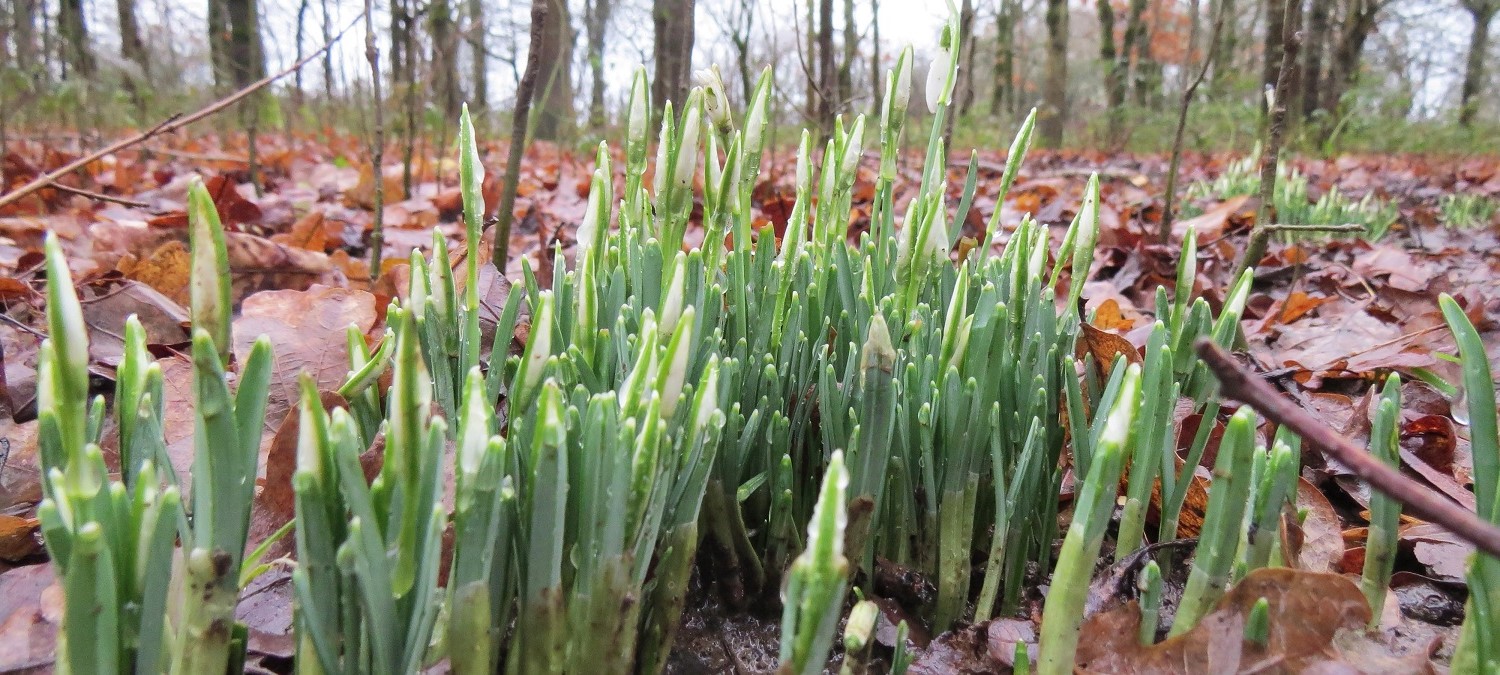


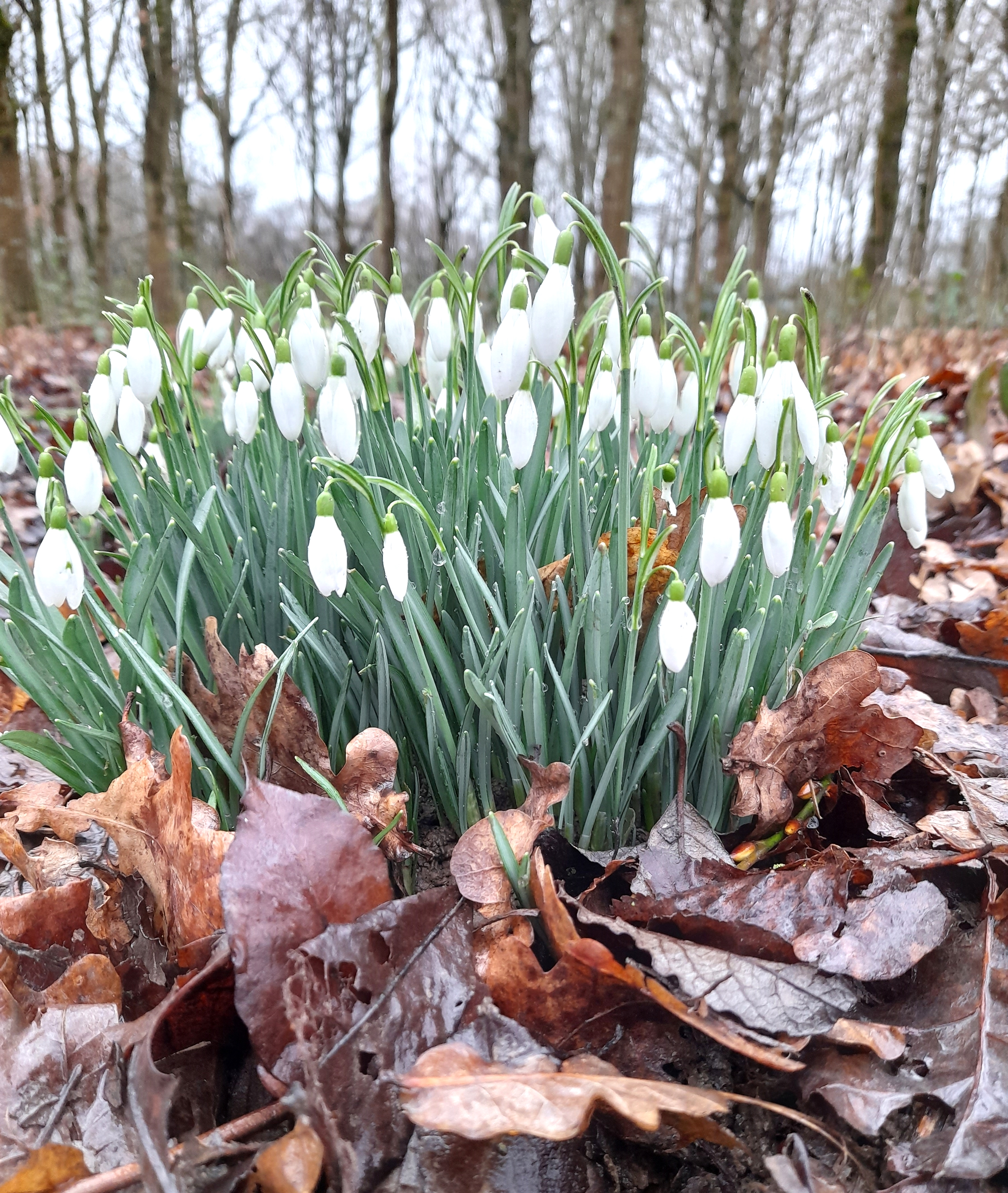
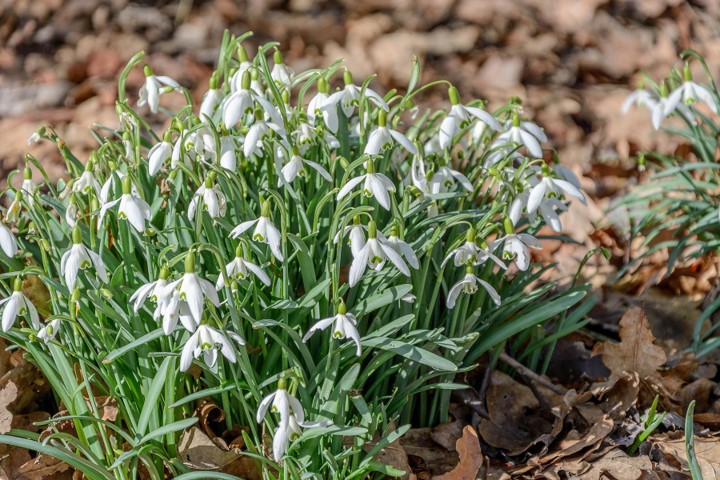
Last year’s snowdrops in the Village Green copse, down by the decorated bridge.
To fuel their early start, snowdrops store away large amounts of energy in their bulbs at the end of the previous summer and use it during the autumn to begin building the growing points for roots and shoots. They have developed a simple and tough structure. Each bulb produces two linear leaves and, between them, a single flower stem. The leaves wrap around the flower bud, forming a spear-shaped shoot with a hard tip that can easily pierce through frozen soil.
Like all bulb-growing plants, snowdrops are chemically complex, producing foul tasting alkaloids to deter grazers and diggers. They also make special proteins that act as antifreeze, preventing large ice crystals from forming in their cells and rupturing the cell walls. Medical science is only just beginning to examine snowdrop chemistry, finding analgesics and chemicals that can boost brain function in Alzheimer’s sufferers.
Go find some snowdrop shoots and be encouraged: the year has turned and spring is on its way.

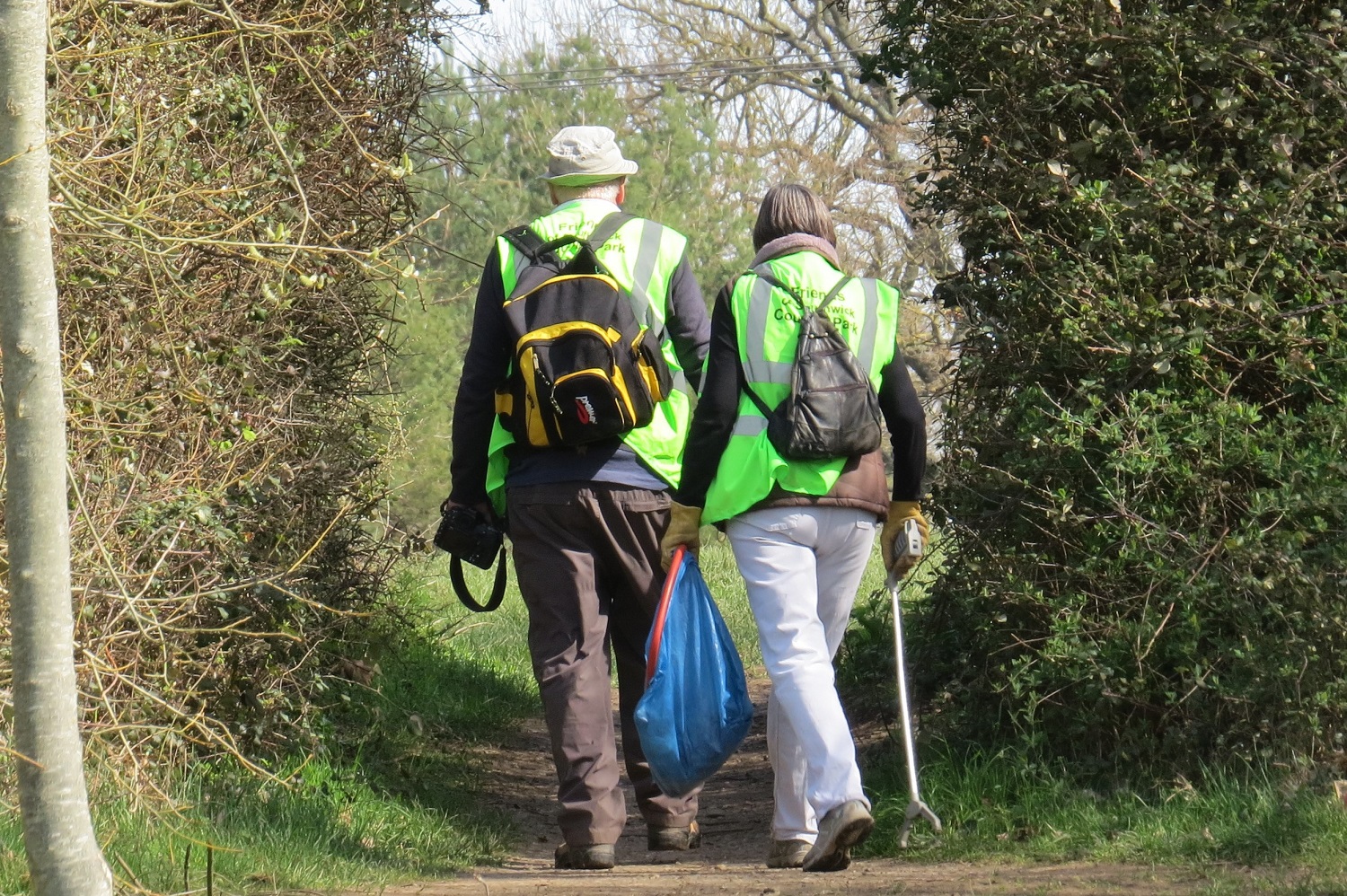



 Southwick Country Park Nature Reserve
My absolute favourite
I know we have some snowdrops in the garden somewhere, I must get out and find them. Yes spring is on its way! Barbara Johnson.