
Coot (Fulica atra), small black waterbirds, close relatives of moorhens, visit the reserve in the spring. They have never nested here but we live in hope.
They have an unusually white beak and a strange white frontal shield above it. Strangest of all are their feet which aren’t webbed but have pale lobes on each side of each segment of the toes. They look as if they are wearing enormous white gloves on their feet.
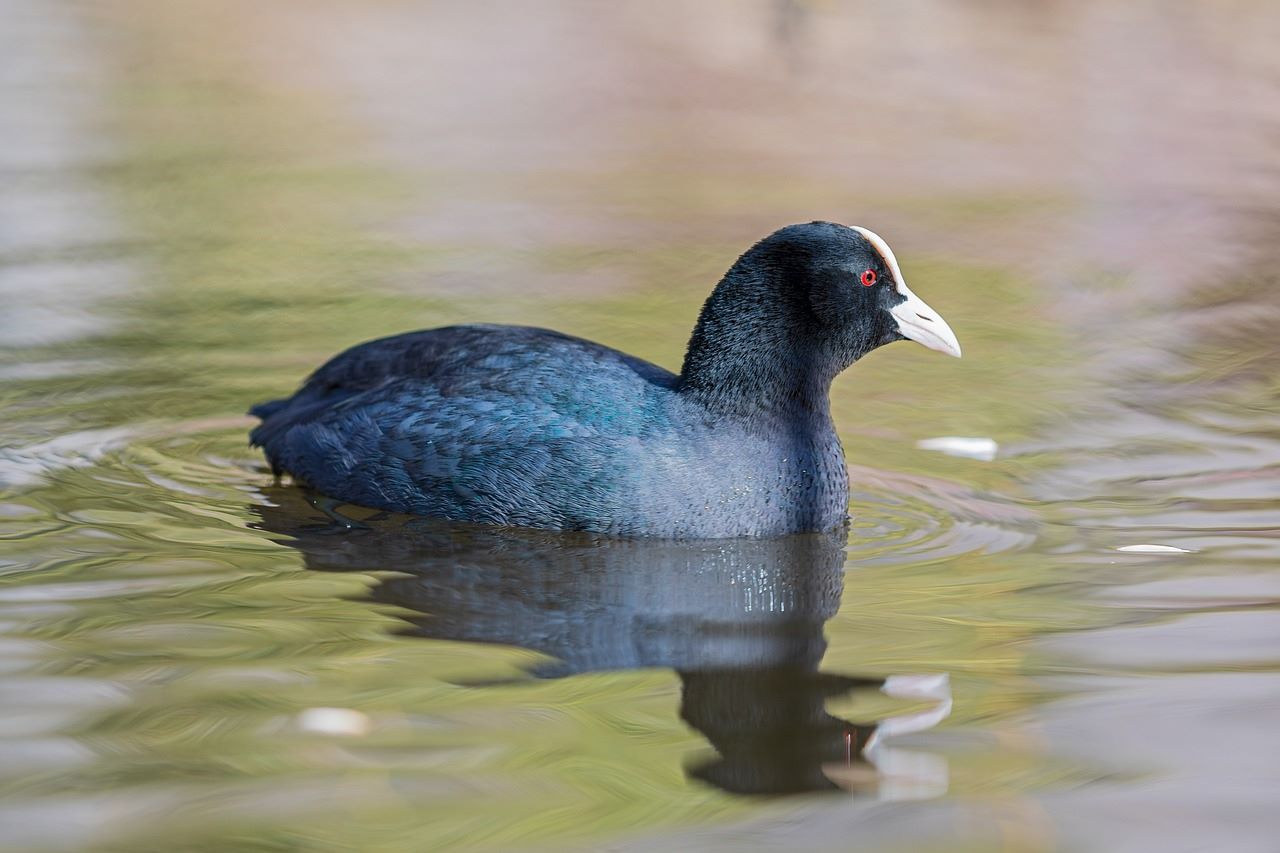


Coot like still water best, shallow lakes and ponds. They are herbivores, bottom feeders that dive for plant material but return to the surface to eat it. When coot have been seen in the reserve, though, they have been grazing on short grass close to water, with a wary eye out for early dog walkers.
This is the time of year when their breeding season begins. The small winter flocks break up into fierce territorial quarrels and local populations scatter, which is probably why we only see coot in the reserve in spring: individuals driven away from local ponds and lakes, looking for territory of their own.
In Britain there are 31,000 breeding pairs of coot, so it is not an uncommon species, and there are twice that number that come here from mainland Europe to overwinter in our milder climate. While the resident population appears to be stable, the population of European visitors has fallen over the past ten years.
Here is a short recording of the coot’s call


 Southwick Country Park Nature Reserve
Nice shot!
I like coots. They have very nice feet 😁
While they may have very nice feet, their chicks are spectacularly ugly.
Heehee even a stork chick isn’t much of a looker! But I still like them, especially when their heads start to wobble 😊
It’s soooo cute! Or coot haha 😂