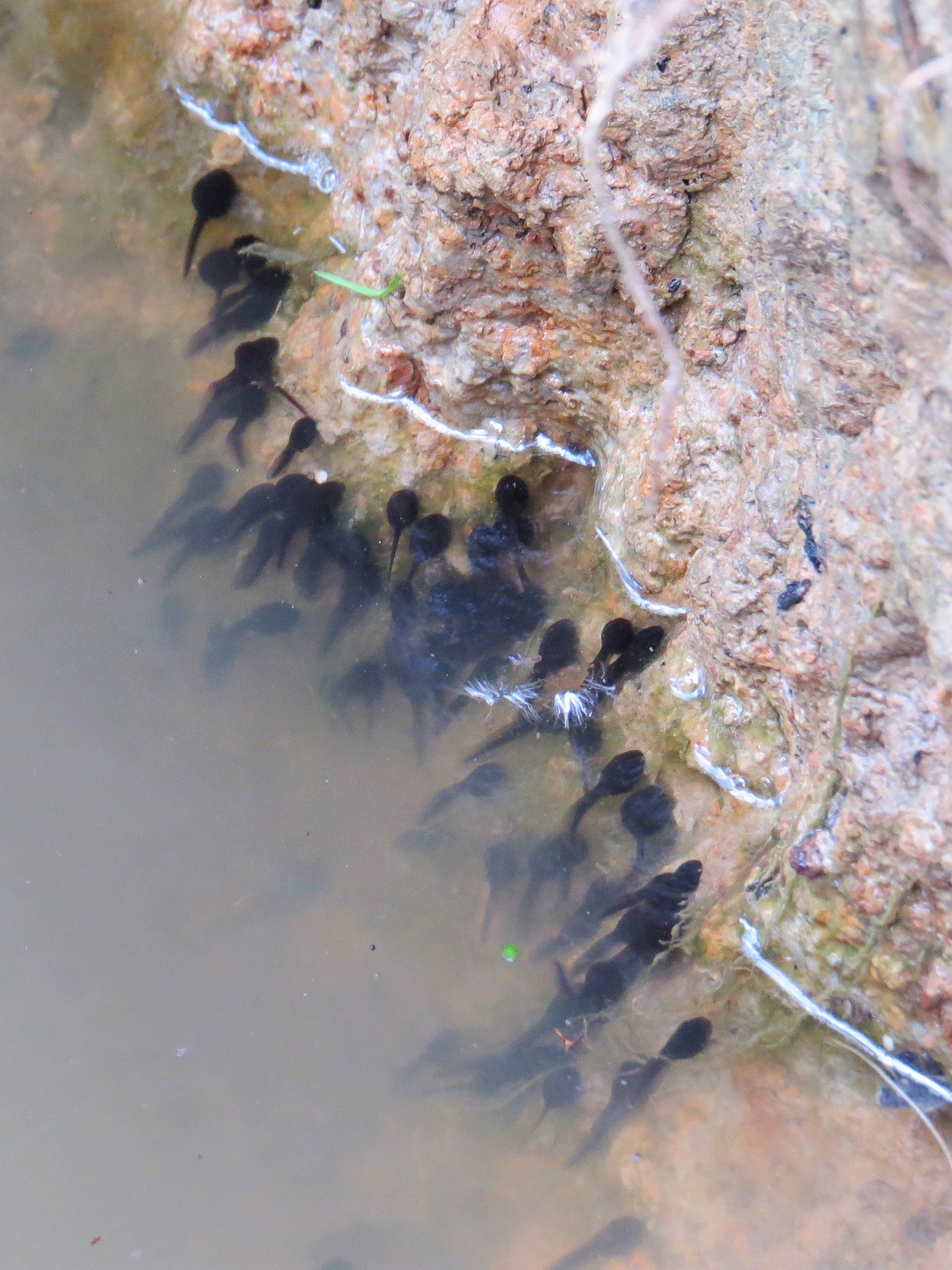
Every year, we find common frog tadpoles (Rana temporaria) in the little pond under the Decorated Bridge.
There are only two species of frog native to Britain: the common frog and the pool frog (Pelophylax lessonae). The pool frog is now so rare that the few places in which it is known to exist are kept entirely secret, therefore it is probably safe to assume that the thousands of tadpoles in the Lambrok tributary are, or will be, common frogs.

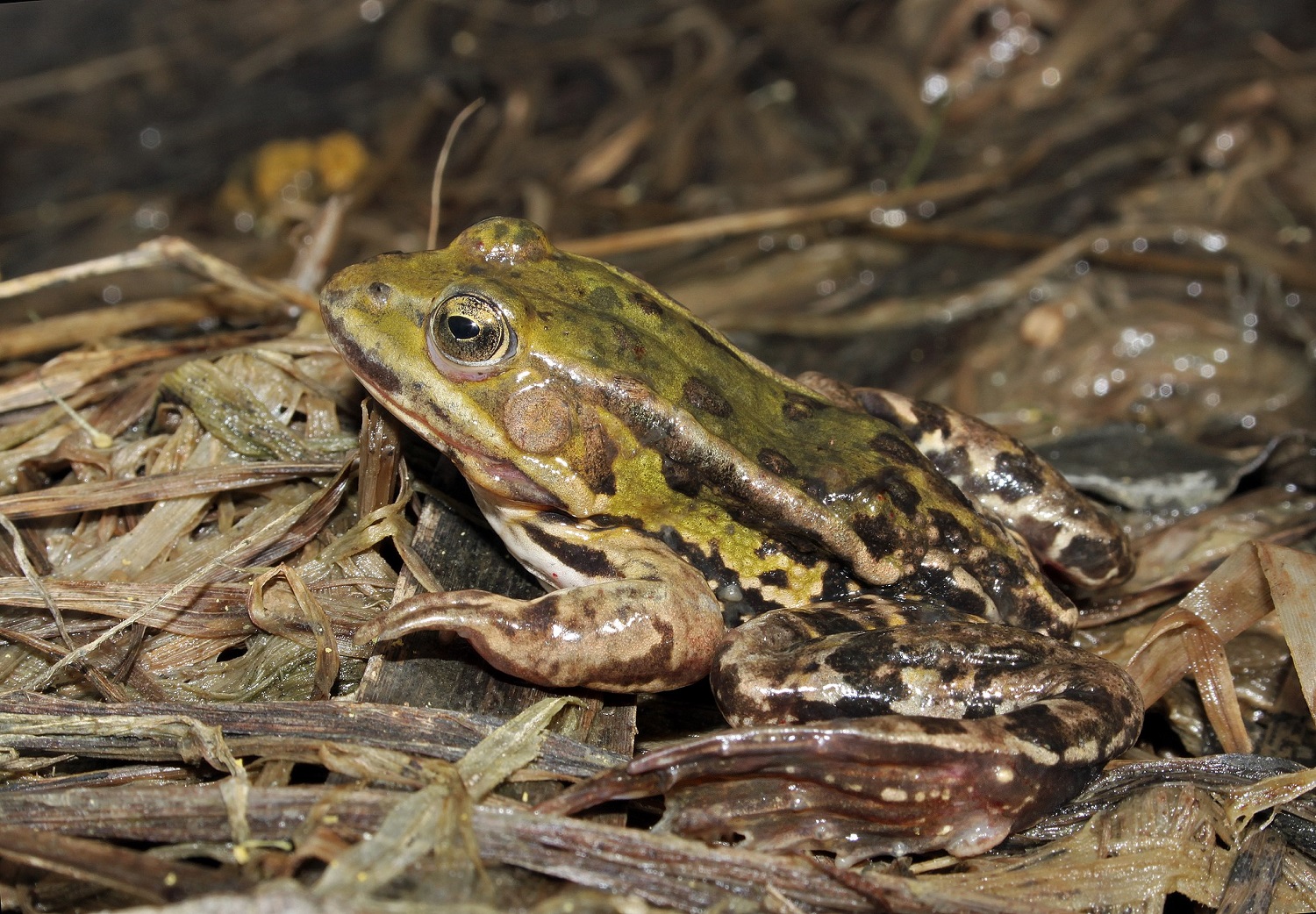
Left: common frog; right: pool frog
Somewhere between one in a hundred and one in a thousand tadpoles will make it to metamorphosis and even less will make it from froglet to breeding adult. Each spring, though, whole ecosystems are jump-started by those that don’t make it.
Winter washes the nutrients of an ecosystem into its streams; tadpoles, as both consumers and prey, help to transfer those nutrients back into the wider ecology. As consumers, tadpoles forage among the rotting vegetation at the bottom of the stream or feed on the algae that thrive in such nutrient rich water. As prey, they are a springtime bonanza for the predators in every layer of the stream’s environment.
On the streambed, they are food for the fearsome larvae of dragonflies and beetles; higher up in the water, newts and all kinds of fish prey on them. Ducks and water birds wait on the stream’s surface and anything brave enough to wade into the clusters of tadpoles at the edge of the water will take them by the mouthful. Kingfishers dive for them, herons lie in wait for them among the reeds and even blackbirds have been seen fishing for tadpoles by a garden pond.
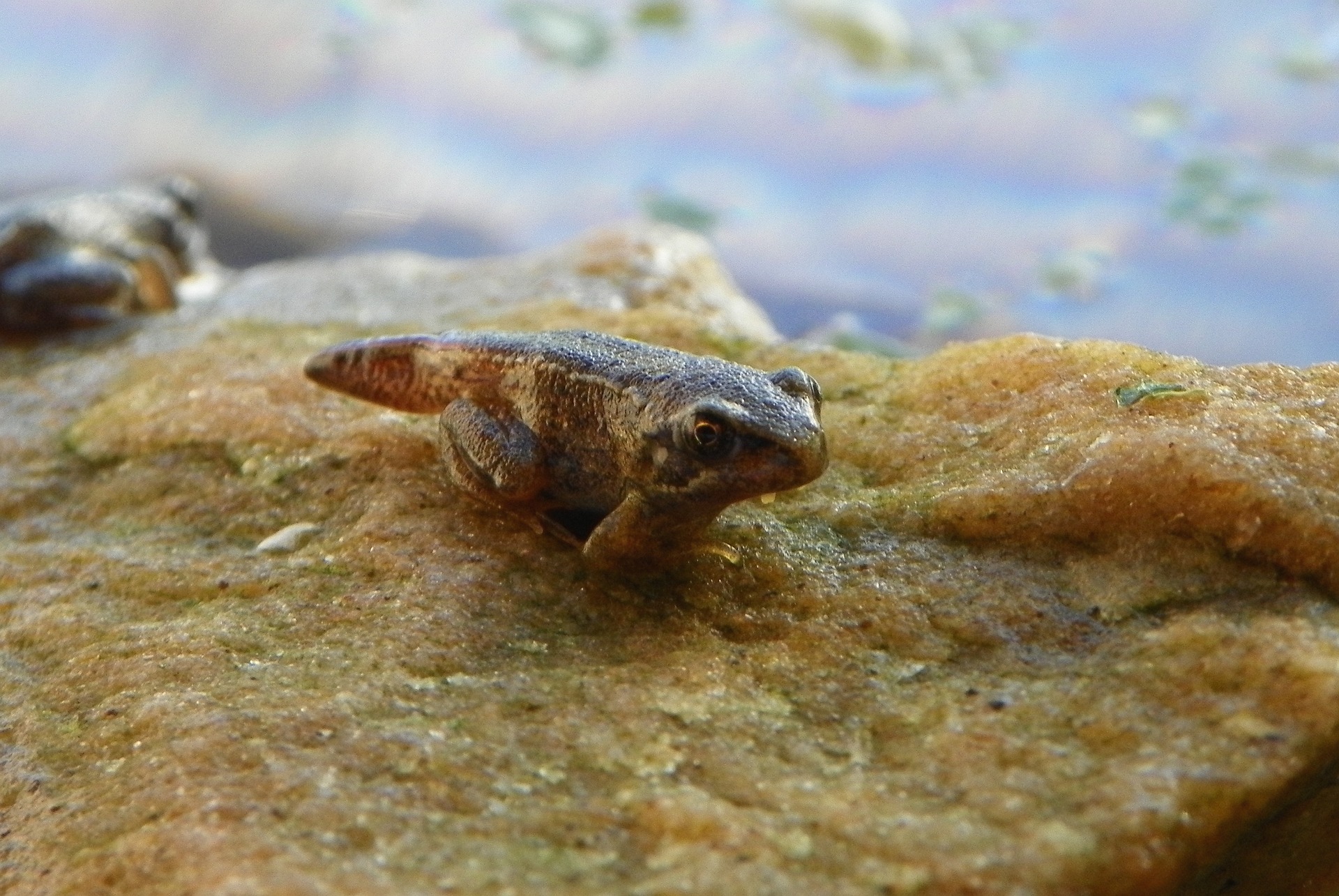

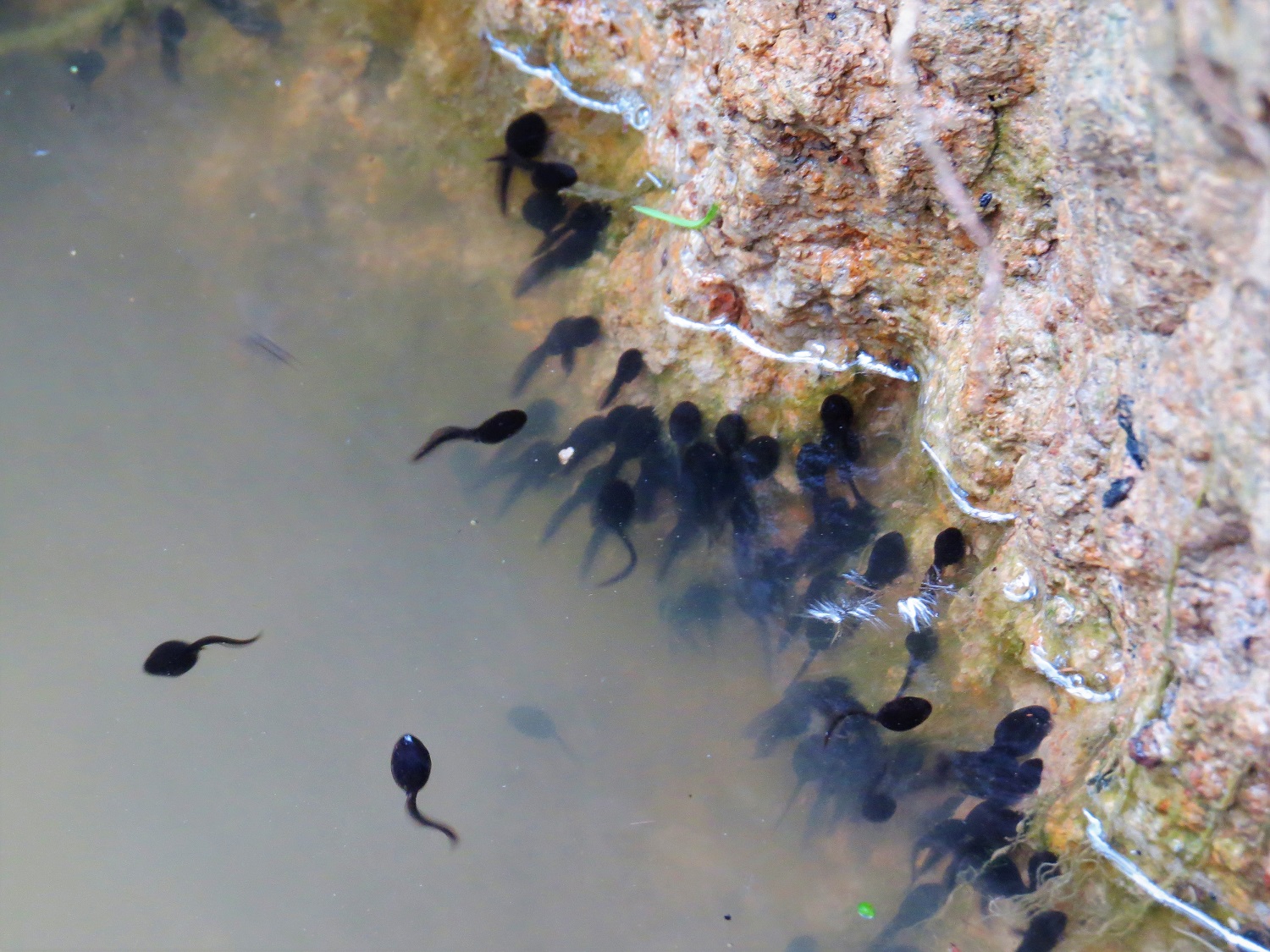
The onset of metamorphosis doesn’t seem to help either; tadpoles appear to be particularly vulnerable when they are transforming into froglets. When they have grown all four legs but still have some of their tail, they can neither swim as well as a tadpole nor jump as well as a frog: easy prey.
By summertime, nine hundred and ninety nine of that thousand tadpoles will have been absorbed back into the ecosystem: nutrients snatched out of the streambed and broadcast through the environment. The survivors, selected by evolution and good luck, will return in the future to spawn in our ponds and feed new generations of predators.



 Southwick Country Park Nature Reserve
in my pond I reckon 20%-30% make it to tiny frog stage. The garden swarms with them, but at this stage they get consumed by everything. Some even seem to get cought in the sun and just dry out sitting on a rock right beside the water. Last year we had a grass snake visit, I assume encouraged by the large number of tiny frogs available.
Please, please remember to leave a name; any name will do. It is our policy to delete anonymous comments but yours is so relevant (and we like the grass snake) so I will leave it.
These tadpoles and froglets have it hard!! Predators everywhere.
Think of them as redistributed protein; nothing goes to waste if the system is working properly.
Yep, very true! Nothing is wasted in nature.