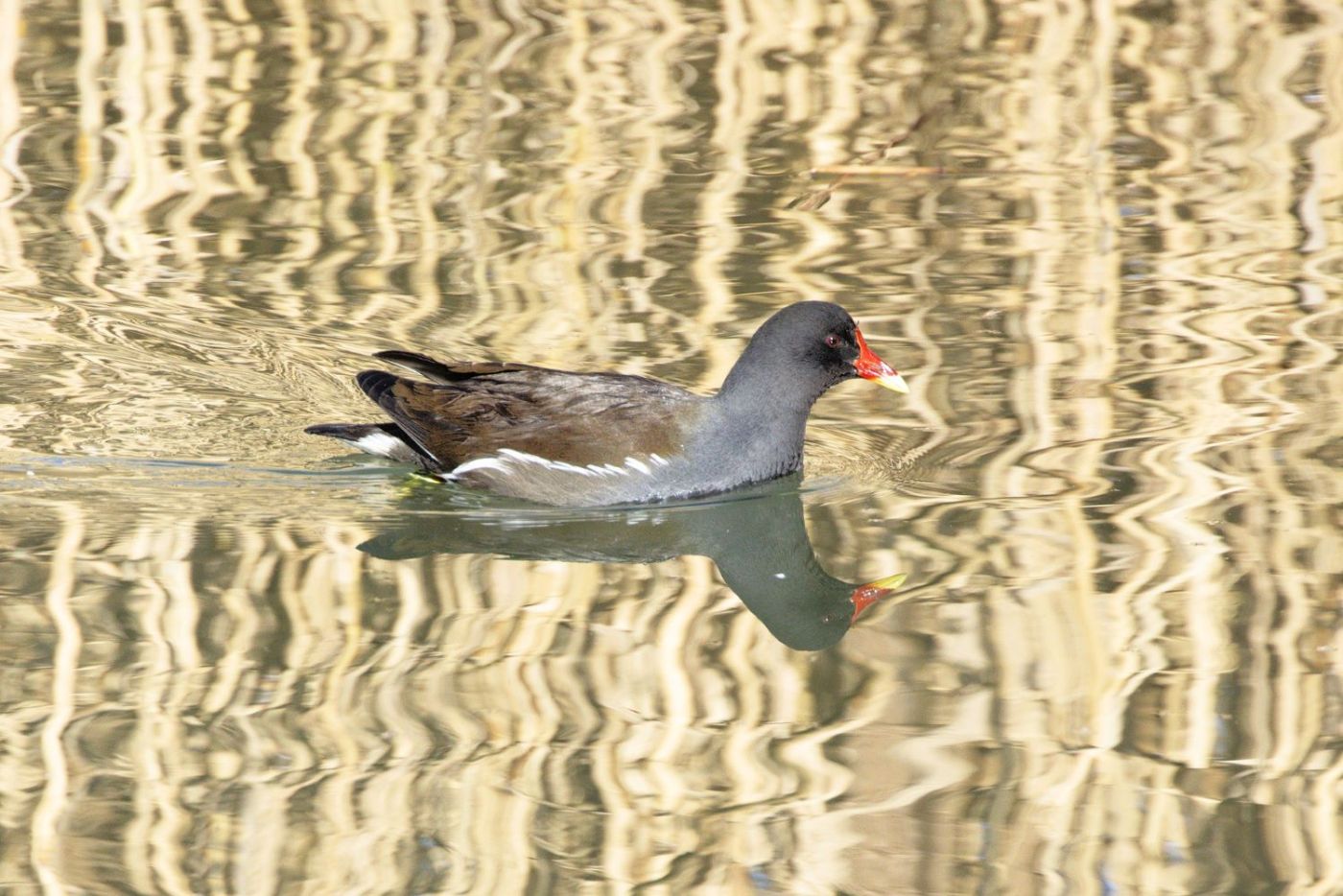
We have a resident moorhen on one of the reserve’s lesser-known ponds.
Moorhens (Gallinula chloropus) are small, plump, native waterbirds. They are various shades of black with a bright red and yellow beak, green legs and a dotted line of white feathers under their wings.

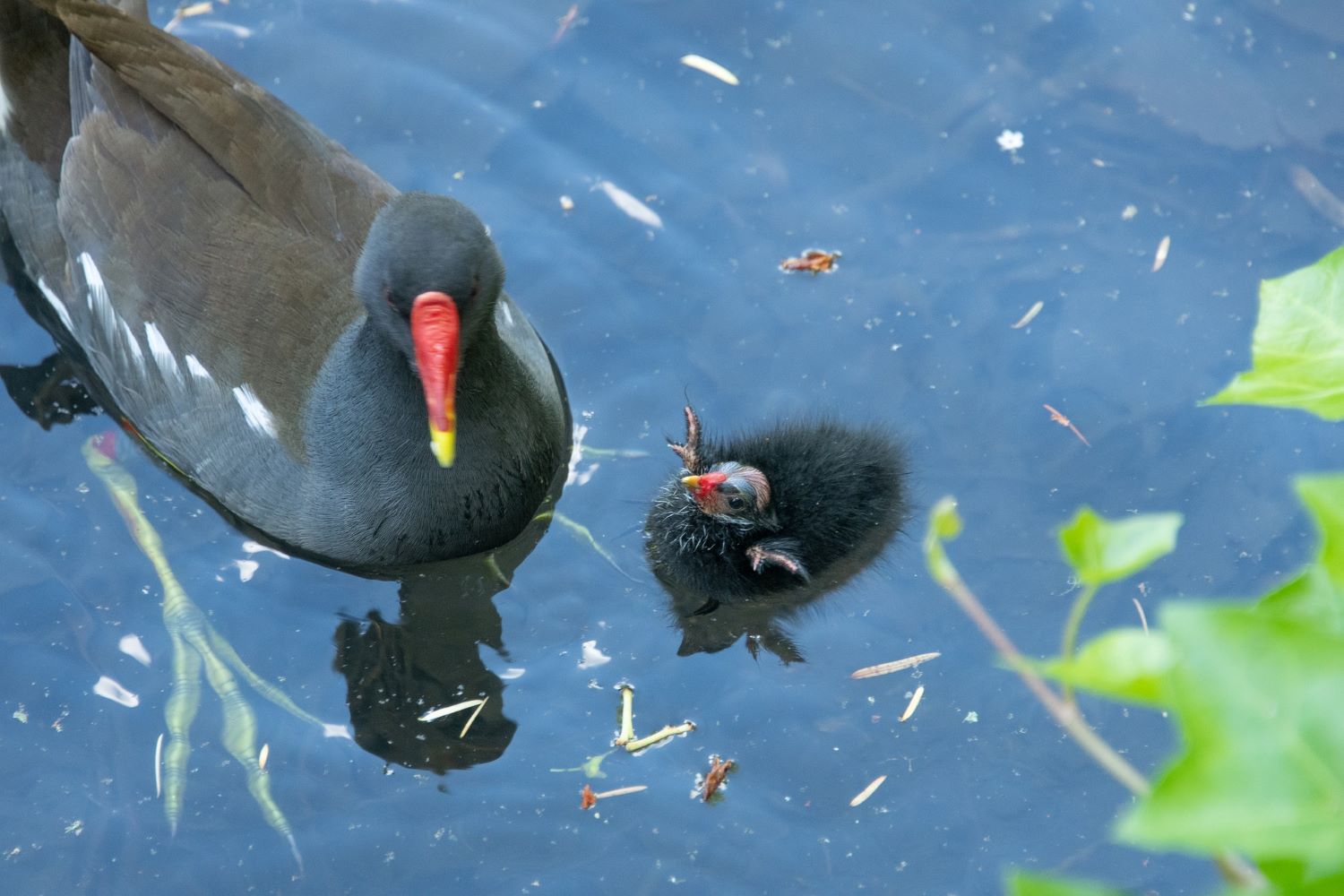

They constantly flick and fan out their tails, which shows sharply contrasting patches of white feathers on each side. While this is obvious signalling behaviour, nobody seems to be certain what is being signalled. Research published in 2006 found that measurably healthier birds flicked their tails more frequently, and suggested that the signal was to tell a predator that they would not be easy prey. In the complex balance between calories expended to catch prey versus calories gained by eating it, such a signal might just tip the scales in favour of the moorhen.
They are omnivores: they eat all sorts of things they find under the water, on the water, and on the banks beside the water. Plants, small fish and tadpoles, snails and invertebrates, seeds, fruit, and grass will all suffice.
Moorhens are not good fliers but they have large feet and strong legs, and are more likely to run and hide than they are to fly away. So this individual will have come from fairly local water and may well have walked here. Hopefully, it is one of a pair with a mate hidden somewhere in the reeds, perhaps already thinking about building a nest.
Conservation status: common; classified in the UK as Amber under the Birds of Conservation Concern in the 2021 Red List for Birds; protected under the Wildlife and Countryside Act, 1981.



 Southwick Country Park Nature Reserve