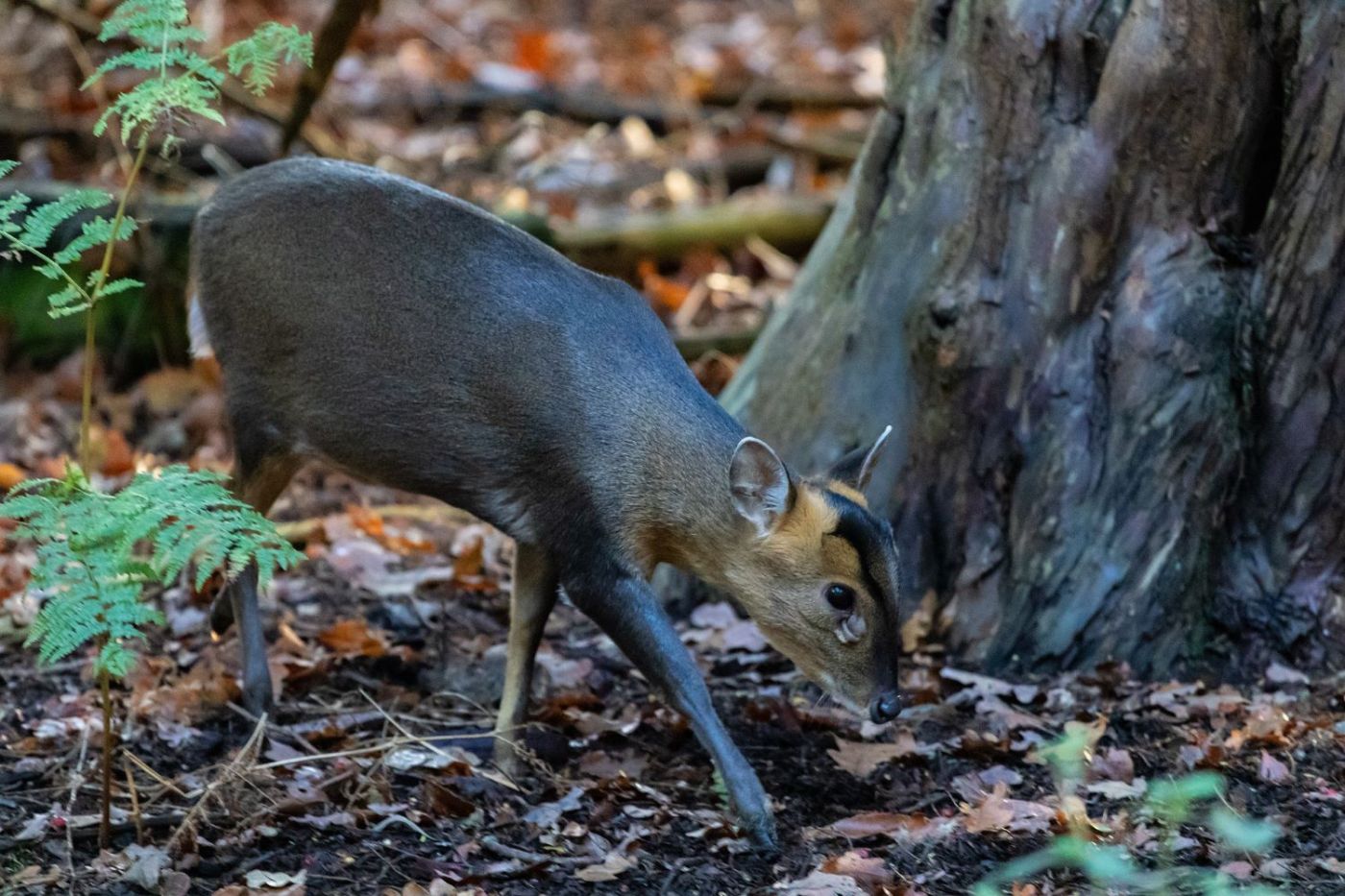
Muntjac
A message from an early-bird dog walker:
I spotted a Muntjac deer this morning, about 5 o’clock whilst walking my dog, who luckily is always kept on his lead. It was In the hedgerow that runs along the path from the carpark towards Studley, just one by itself only. Is this a species you are aware of?
I was very surprised to see it so close to a built up area which has quite considerable footfall. But for well over a year I haven’t haven’t seen the larger deer which frequented the park.
The larger deer, roe (Capreolus capreolus), which were regularly seen in Lambrok Meadow, used to hide up during the day in the field on the other side of Lambrok Stream, the area between Church Lane and the reserve. It was good daytime cover, overgrown with nettles, ragwort, and thickets of bramble and willow seedlings, while the stream was a natural barrier that few visiting dogs bothered to cross.
One year, a doe gave birth to a kid there and the late DKG, armed with a long lens, was able to photograph it. We felt very privileged.
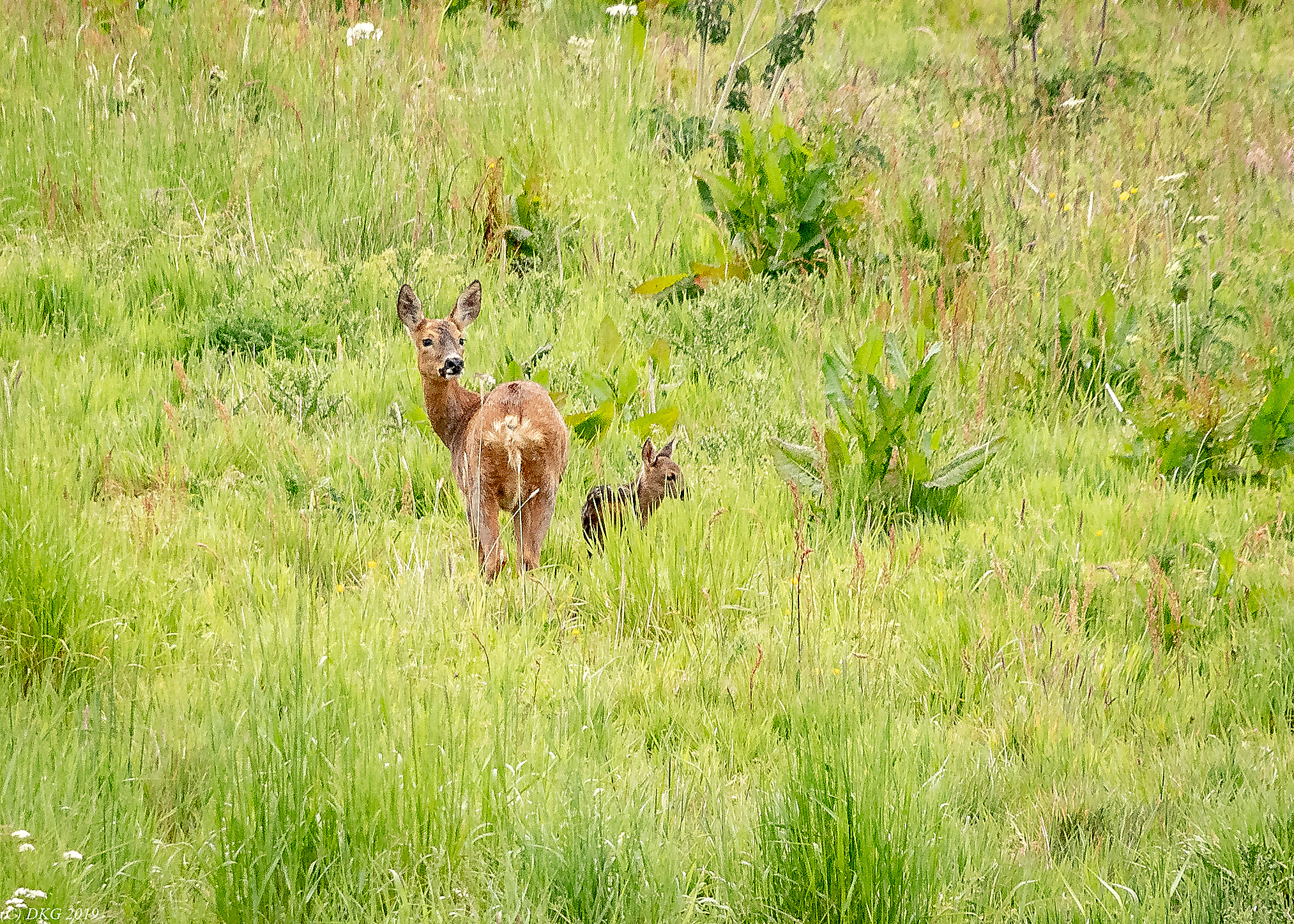

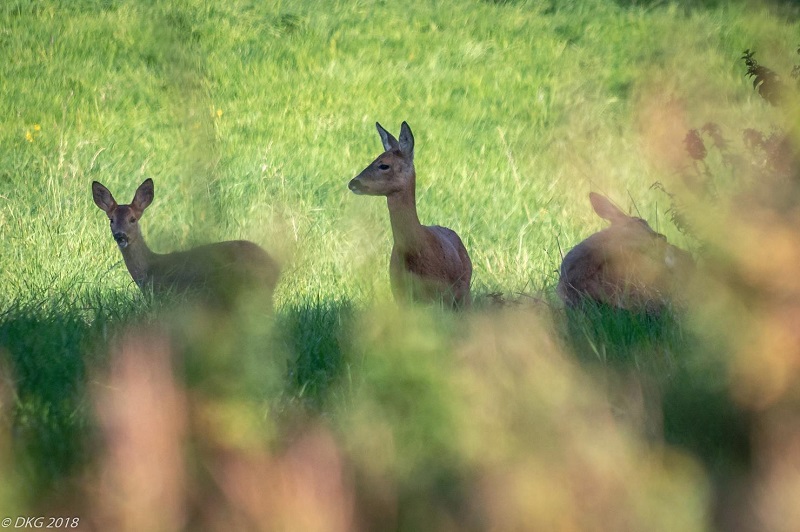
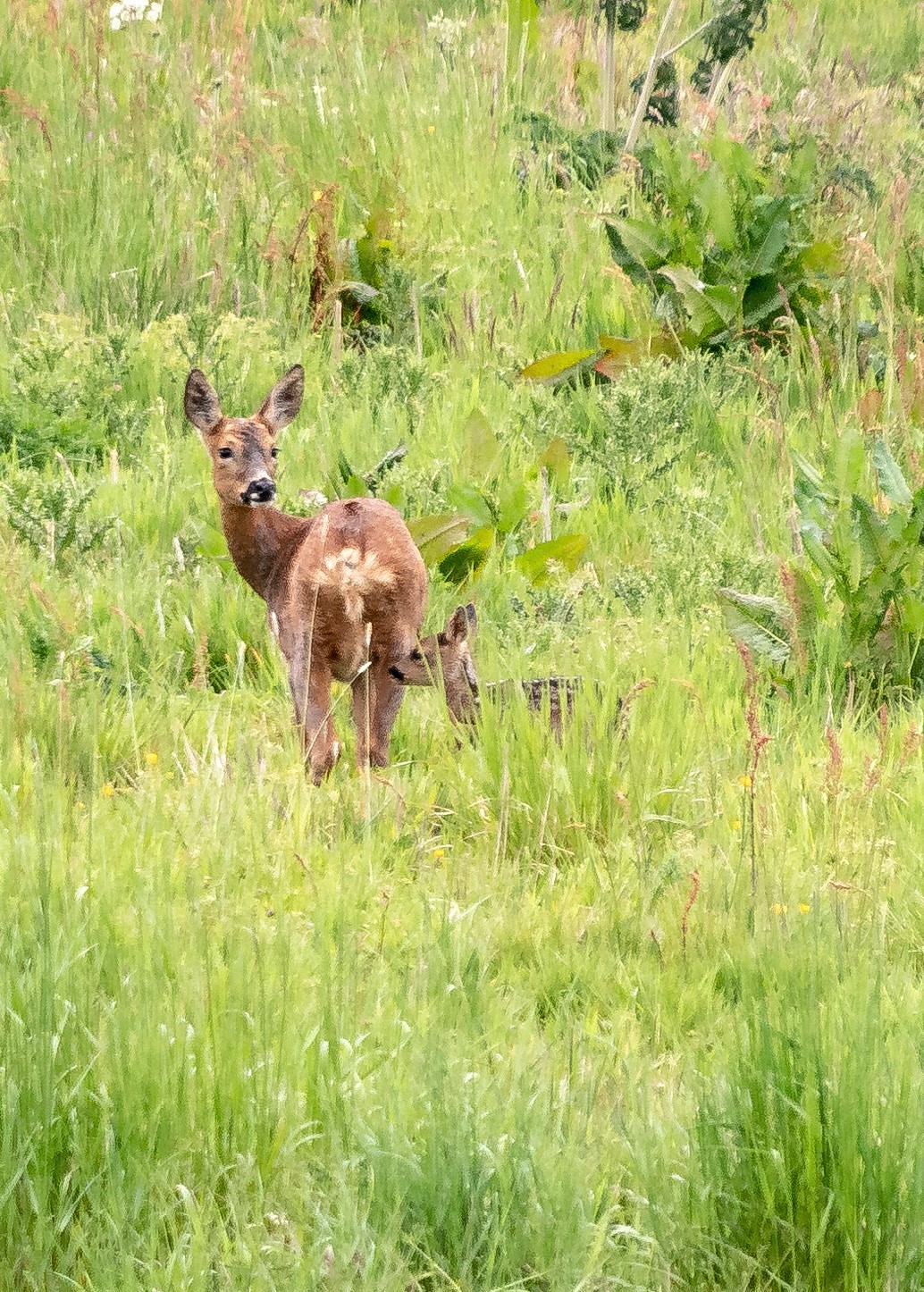
Roe deer photographed in or from the reserve by DKG
Last year, when the the county’s Strategic Planning Committee was finally due to consider the application to build houses on this land, the owners mowed the field for the first time in several years, removing the cover that had attracted and protected so much wildlife. The little family group of roe deer that was so often seen grazing in Lambrok Meadow in the early morning moved on to find new territory with better cover. Muntjac (Muntiacus reevesi), smaller than you think and very secretive, seem to have moved into the habitat that the roe deer vacated, hence yesterday’s and other recently reported sightings.
Muntjac are an alien prey species, evolved to survive in a much more demanding environment than Southwick village. They breed at any time of the year. The female, fertile at little more than six months old, undergoes a pregnancy of seven months and will mate again just days after giving birth, resulting in a birthrate designed to save the species from heavy predation half a world away.


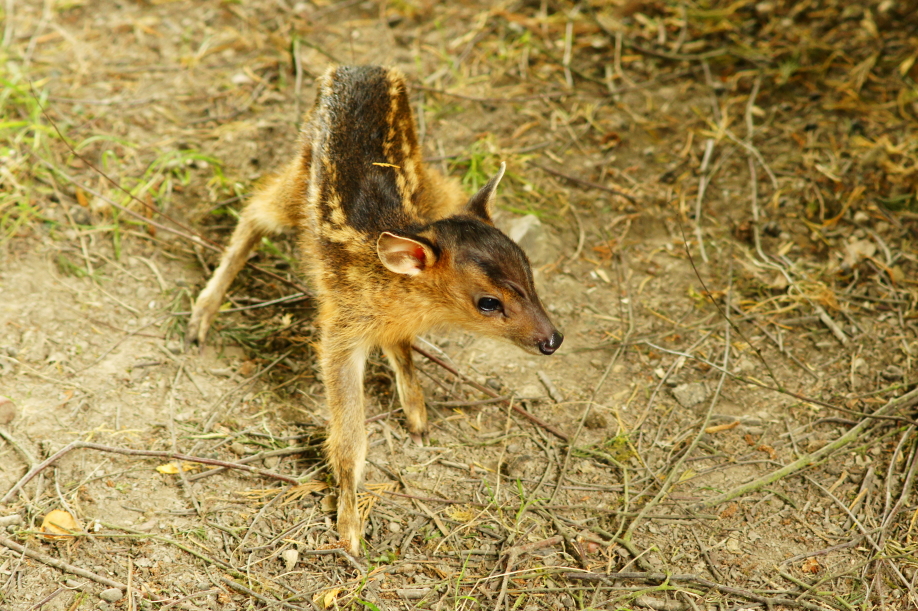
Here in rural England, free from large predators, muntjac are more than just surviving. Their rapidly growing population boomed during the lockdown years, remains high and is now, in some sectors, considered problematic.
Although they are browsers, at home in woodland habitat, village life suits them well. Southwick’s big gardens, orchards, allotments, and nature reserve provide grazing as well as browse and plenty of places to hide. We can only expect to see more muntjac in our woods and fields. So – go very early, leave your dog asleep in his basket, and walk quietly with your camera loaded and cocked. Good hunting!



 Southwick Country Park Nature Reserve
There are loads in the area.
Yes, the UK population of muntjac is somewhere between 50 and 60,000 and once they move into an area, they breed rapidly. However they are so secretive (and little!) that people don’t realise that they are there.
I walk along the canal a lot (early in the morning as a good way to start my day), and see lots of muntjacs in Widbrook Wood (along with regular roe deer on the other side of the canal).
It’s something of a shame to me how much nature on our doorstep that many people miss out on seeing.
Actually, the Mammal Society, says there might be as many as 250,000 muntjac in the UK. I am quite happy to trust the Mammal Society in this; they are usually a reliable source. Sorry to have misled you
Muntjac can be very aggressive. My terrier chased one into the woods one day and was chased straight back out.