
Ten slug facts
Here are some things you may not have known about slugs.
- There are approximately 40 species of slug found in the UK, with only a small number of them considered as pest species.
- Slugs travel at speeds that vary from slow (0.013 m/s) to very slow (0.0028 m/s).
- During cold weather slugs hide in the topsoil.
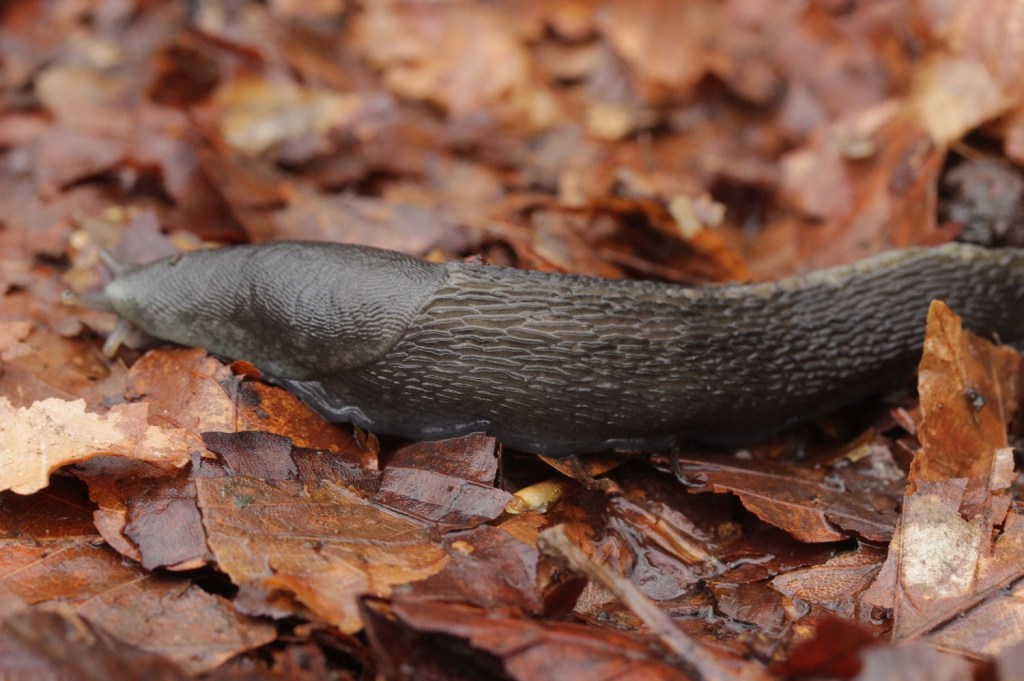

[1] Great grey slug (Limax maximus) [2] Cos lettuce
- Slugs consume around forty times their weight in the space of a day
- Limax maximus, the great grey slug, can stretch to approximately twenty times its length in order to squeeze through narrow gaps.
- The largest UK slug is Limax cinereoniger, which can reach up to 25cm when fully grown.

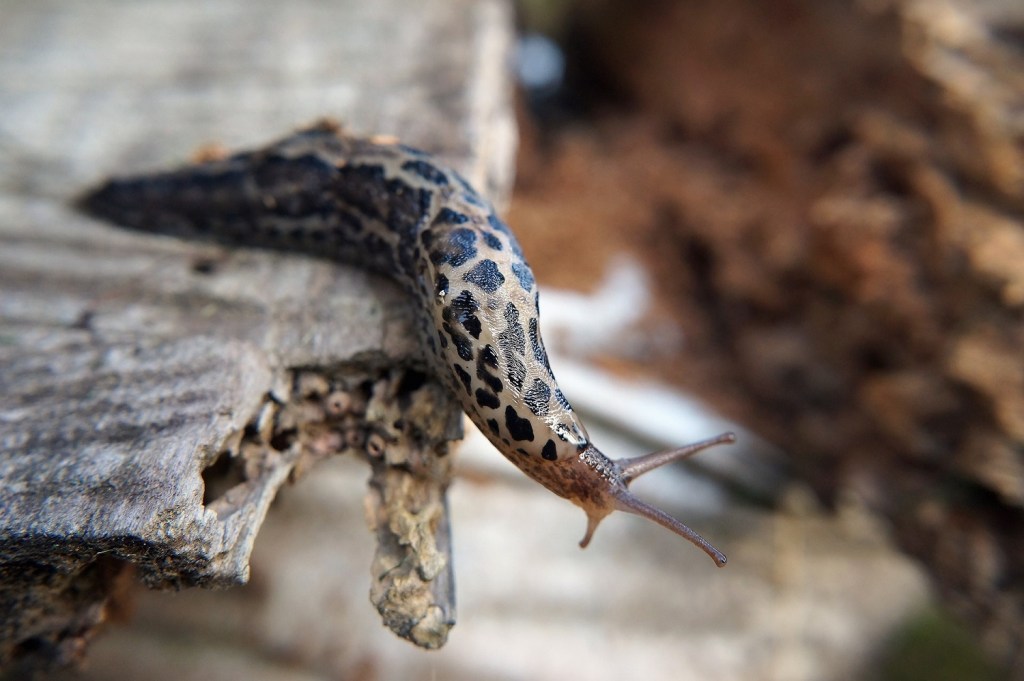
[3] Limax cinereoniger is Britains largest slug. [4] Leopard slugs eat fungi.
- Not all slugs eat lettuce; leopard slugs eat fungi, rotting plants and even other slugs, and there are three species of slugs, of the Testacella family, that eat earthworms.
- A slug has approximately 27,000 teeth!
- Slugs are food. All sorts of mammals, thrushes, slow worms, earthworms and insects eat them. Some people eat them, fried with garlic.


Slow worms, thrushes and badgers all eat slugs.
- Slug blood is green. The proteins in slug blood carry copper atoms instead of iron; copper also attracts oxygen. The copper gives the blood a bluish green colour.
- That was ten interesting things you probably didn’t know about slugs; here is an extra one for luck: slugs can live for six years.
Header image: yellow slug (CC0) pxhere.com




 Southwick Country Park Nature Reserve
Very interesting. I actually learned various new things about slugs!
I had no idea a slugs blood is green! Barbara Johnson.
They are fascinating creatures, Barbara. I treasure my leopard slugs; they breed in my compost bin where I feed them on kitchen scraps. In return they eat the sort of slugs that eat my lettuce.