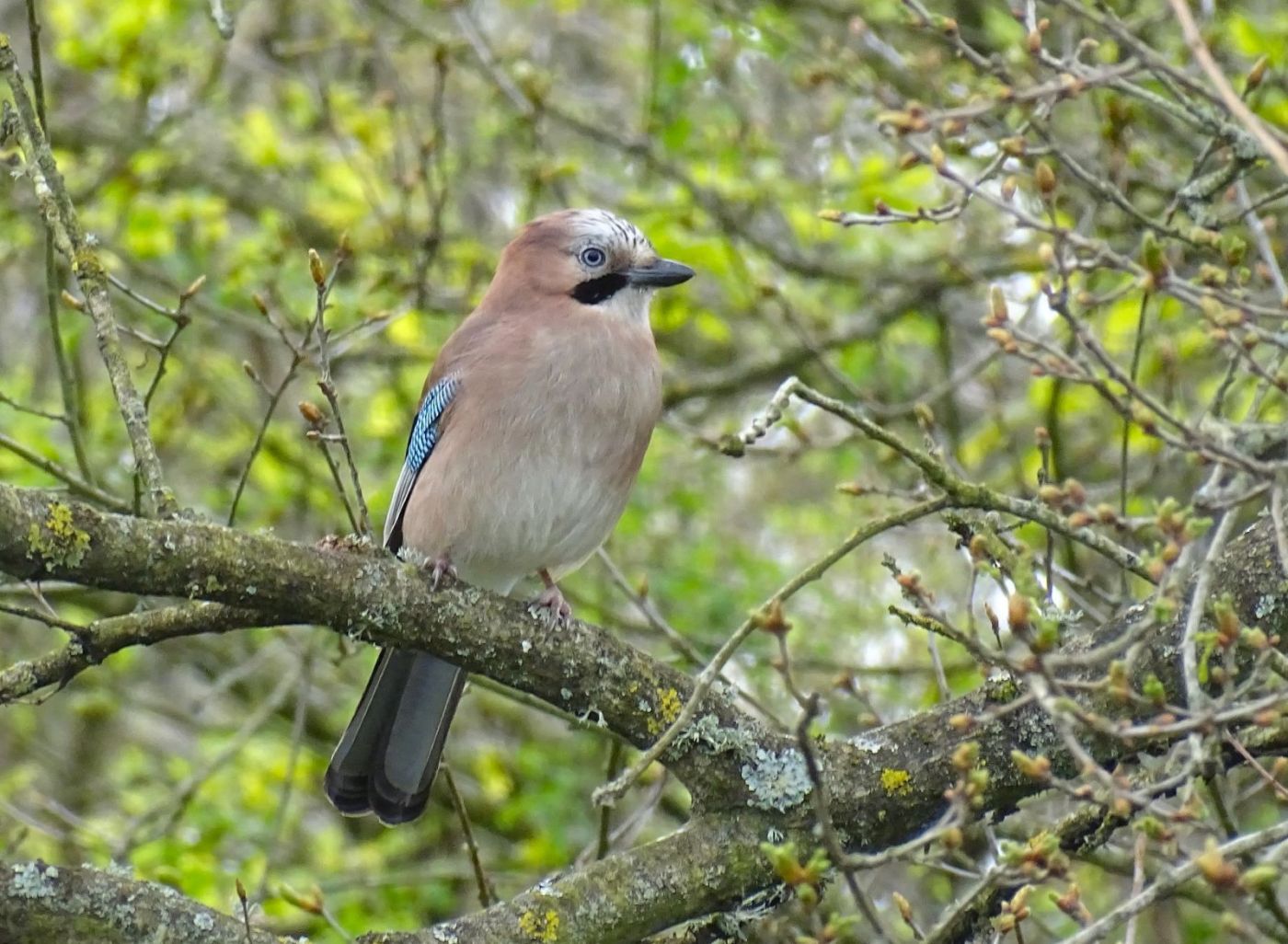
Jay
Common names: common jay, Eurasian jay, acorn jay.
Scientific name: Garrulus glandarius. Garrulus, the name of the genus, means ‘chattering’ and glandarius, the specific epithet, is Latin for ‘of acorns‘.
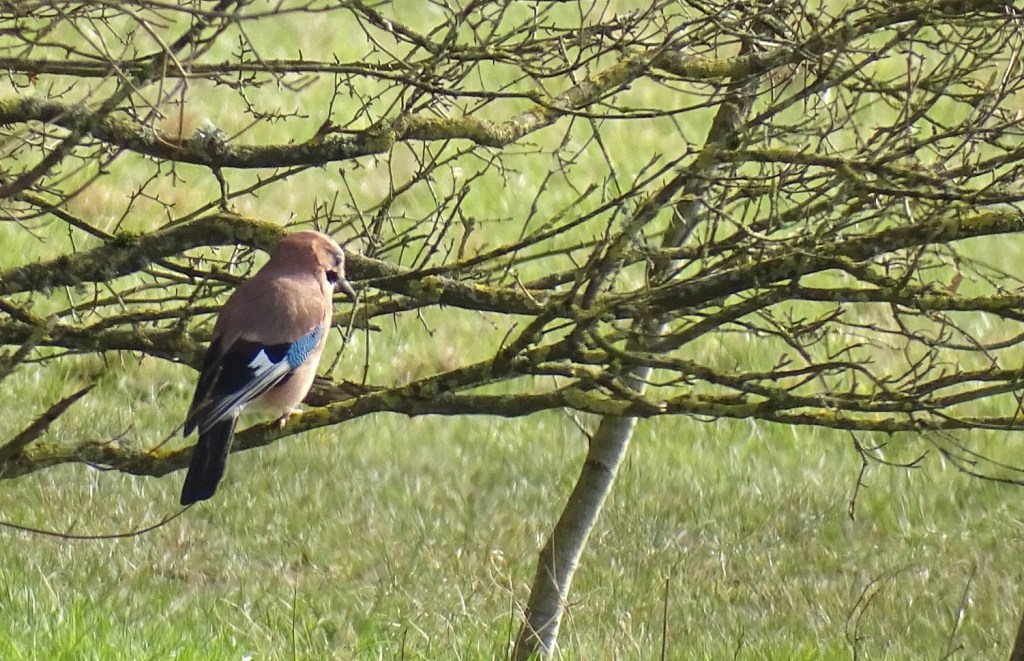

All photographs taken in the reserve by Cheryl Cronnie
Family: Corvidae; jays are crows, close cousins to the reserve’s resident jackdaws and rooks. They have more than their fair share of corvid intelligence.
Habitat: broadleaf woodland exactly like the woodland around the edges of the reserve.
Call: a loud shriek!
Eurasian Jay by Bodo Sonnenburg ( CC -BY-SA) xeno-canto.org
Diet: jays are opportunistic and predatory omnivorous scavengers. At this time of year they are on the lookout for unattended nests from where they will take both eggs and chicks; in the summer they will eat insects and dig for beetle larvae and baby field voles; in the autumn they turn to seeds and fruit and specialise in storing thousands of acorns for the winter. They have even been known to pursue, catch and kill small birds and mammals.
Population: there are an estimated 170,000 breeding pairs of jays in the UK. While the population is stable, their range seems to be expanding probably as a result of climate change.
Conservation status: green.
DYK: a jay can cache up to 10,000 acorns each autumn. It remembers the whereabouts of an astonishing number but it can’t retrieve all of them and those it leaves are believed to have contributed to the rapid spread of oak trees after the last ice age
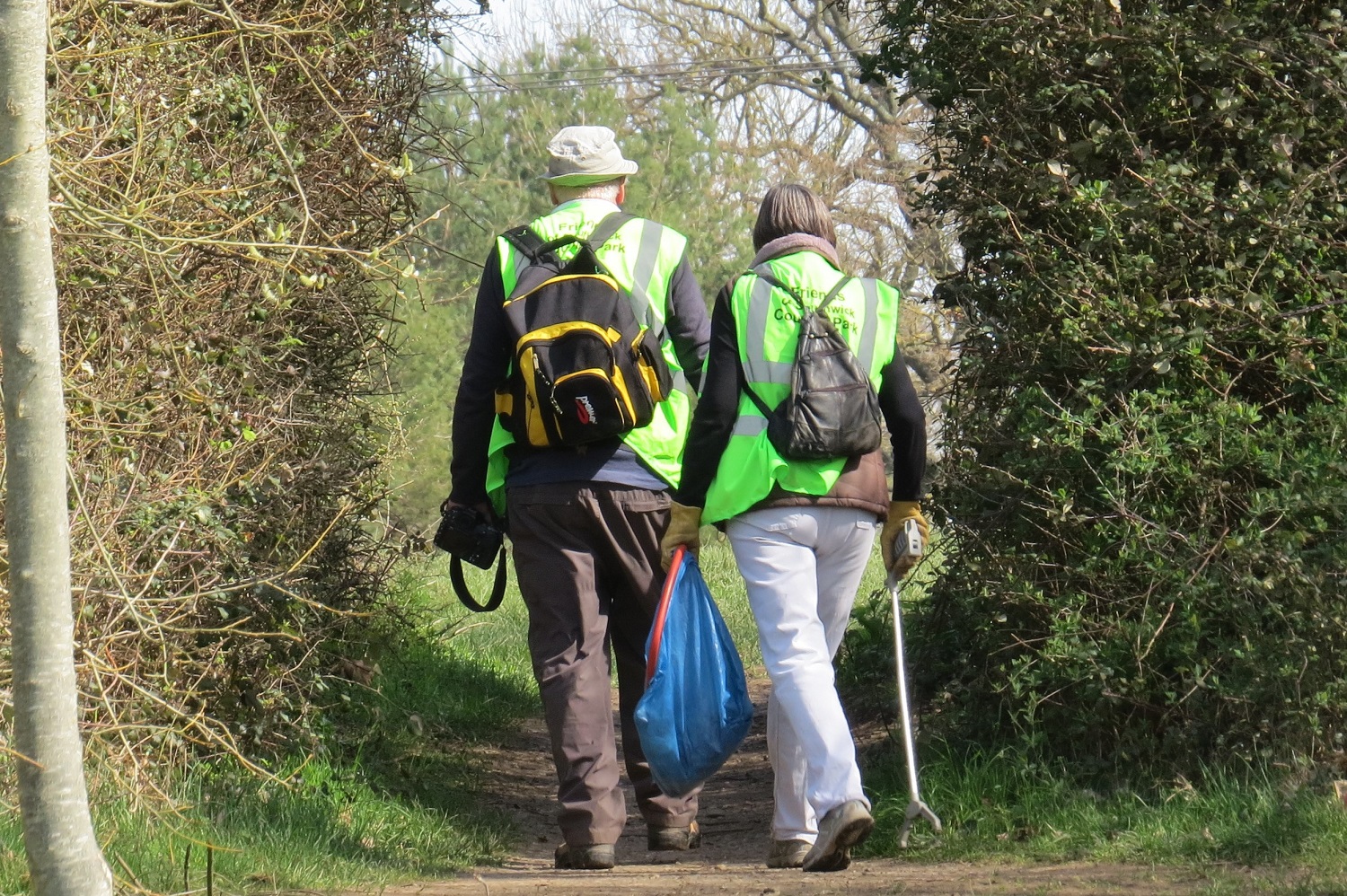



 Southwick Country Park Nature Reserve
I watched a jay chase a sparrow in my garden. It caught the sparrow and ate it while it was sitting in my apple tree and then it wiped its beak on the branch. Until then I didn’t know that jays are predators
And isn’t the chase fast!