
A dandelion crammed with tiny bronze-black beetles.
They are pollen beetles. A more specific ID is difficult because it usually involves dissecting the poor beetle under a microscope but at this time of year the most frequently reported species is Meligethes aeneus: the common pollen beetle.
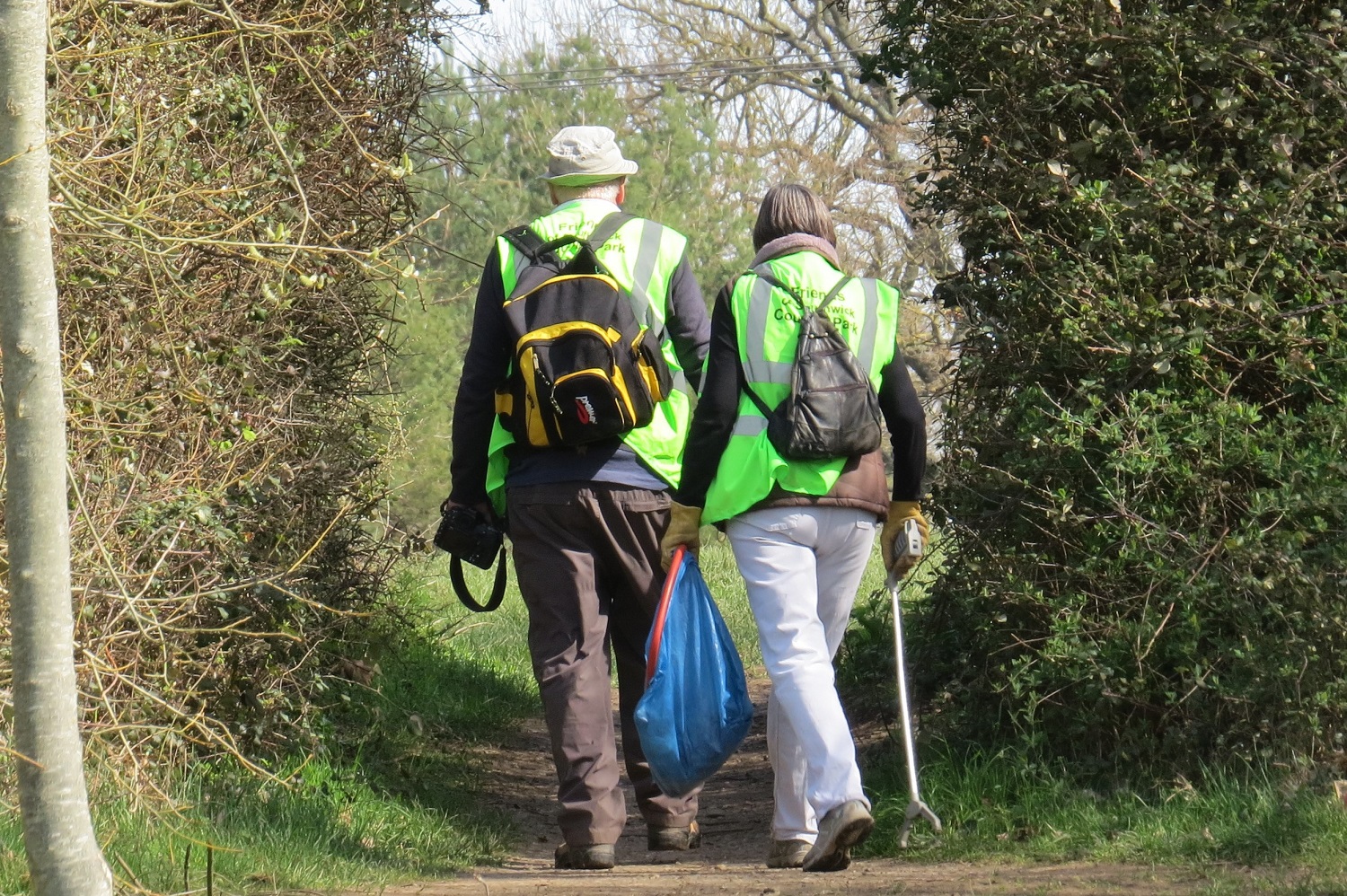
Common pollen beetles overwinter as adults in sheltered places and emerge round about now, in the early spring. They are attracted in large numbers to yellow things : daffodils, dandelions and oilseed rape, tennis balls and hi-viz vests with Friends of Southwick Country Park written on the back.
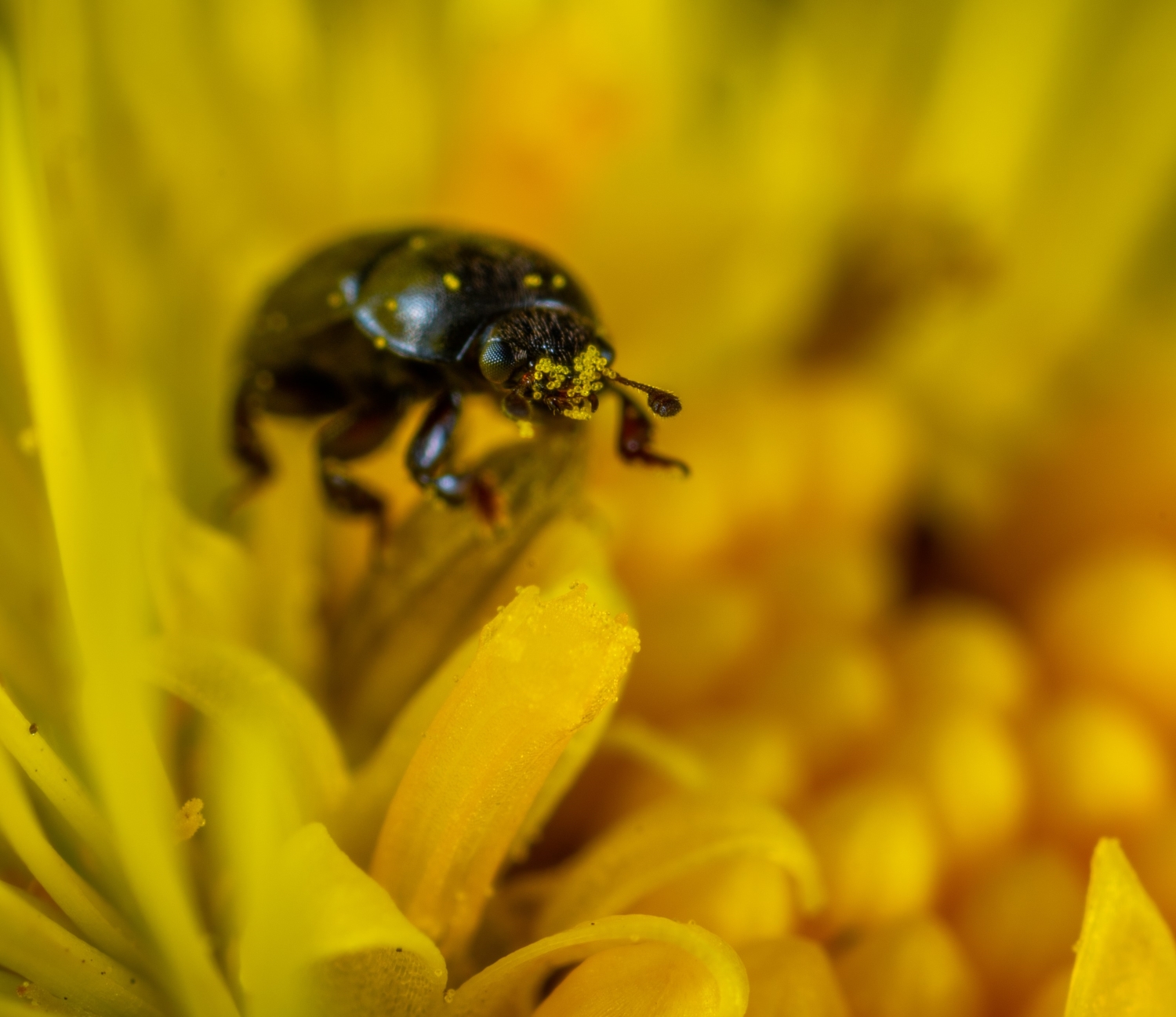


They are important spring pollinators, feeding mainly on pollen and nectar. The females lay their eggs inside the flower buds of various species of Brassica and their larvae, when they hatch, feed on the stamens and pistils inside the flower buds. The damaged flower is no longer able to make seed and dies, which makes common pollen beetles an agricultural pest in the eyes of farmers trying to grow oilseed rape.
When the larvae have finished feeding, they go into the soil to pupate. The adult beetle emerges in July and August and seeks out flowers, where it feeds on pollen and nectar, fattening up until it is time to find a sheltered place to hibernate.
A small and fascinating piece of the reserve’s wildlife, happening almost invisibly inside one of our most common flowers.
Another of the park’s Coleoptera:



 Southwick Country Park Nature Reserve