
Slow worm
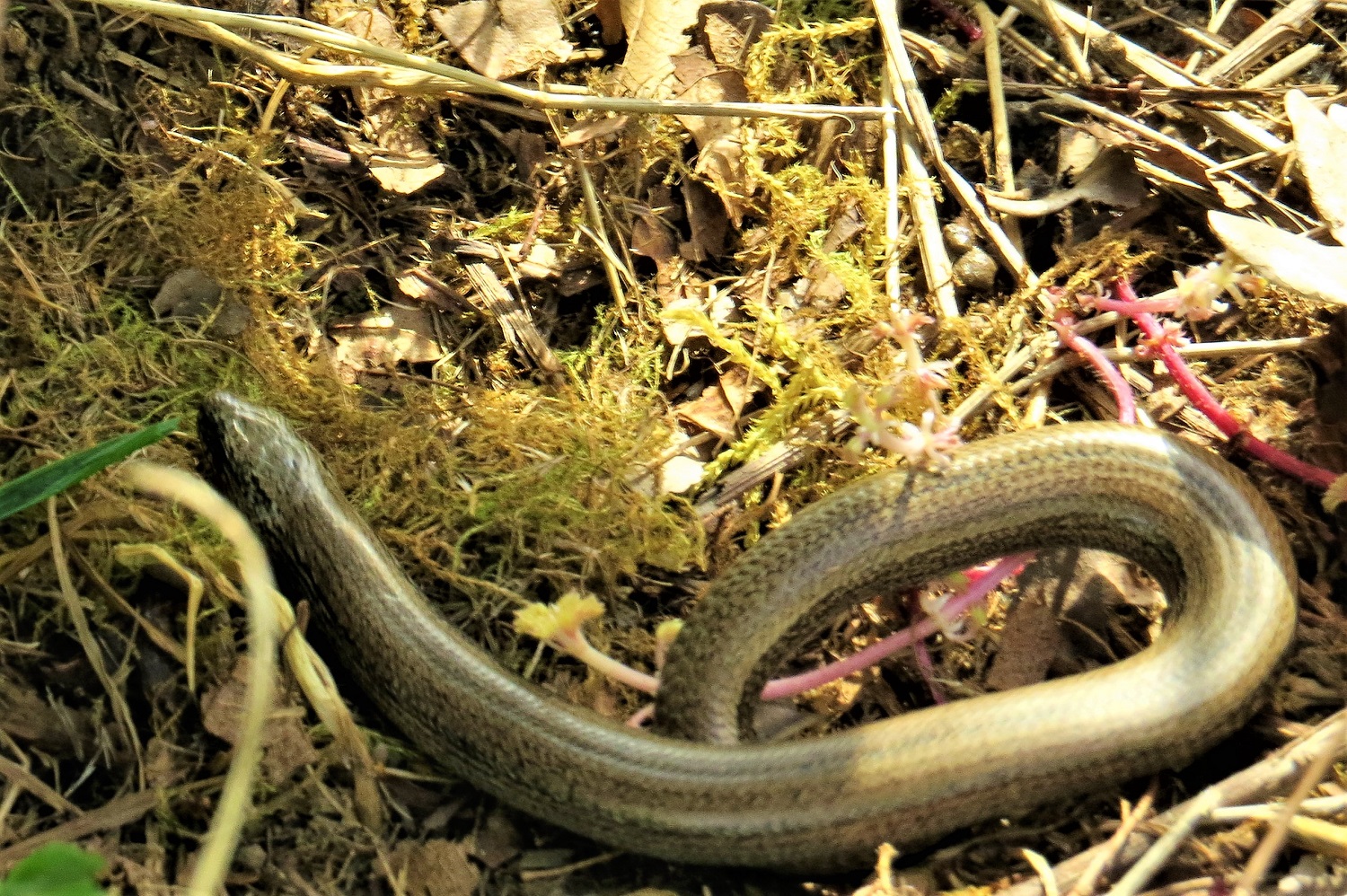
ONE: Slow worms go by many different local names: deaf adder, blindworm, long-cripple and hazelworm are just some of them…
TWO:…but they have only one scientific name, Anguis fragilis.
THREE: slow worms are reptiles, but despite their appearance, they are not snakes; they are legless lizards. While slow worms are the only legless lizard in the British Isles, there are many species around the world. Leglessness is an evolutionary response to an elongated body-shape, to burrowing, and living among dense, close growing grasses.


FOUR: slow worms are smaller than our native snakes. Adult slow worms are up to 50 centimetres long. In comparison, the smooth snake, which is our smallest and rarest snake, can reach 70 centimetres and a fully grown grass snake can be more than 150 centimetres.
FIVE: the quickest and easiest way to tell if the reptile in your compost heap is a snake or a slow worm is to look at its eyes: unlike snakes, slow worms have eyelids and can blink.
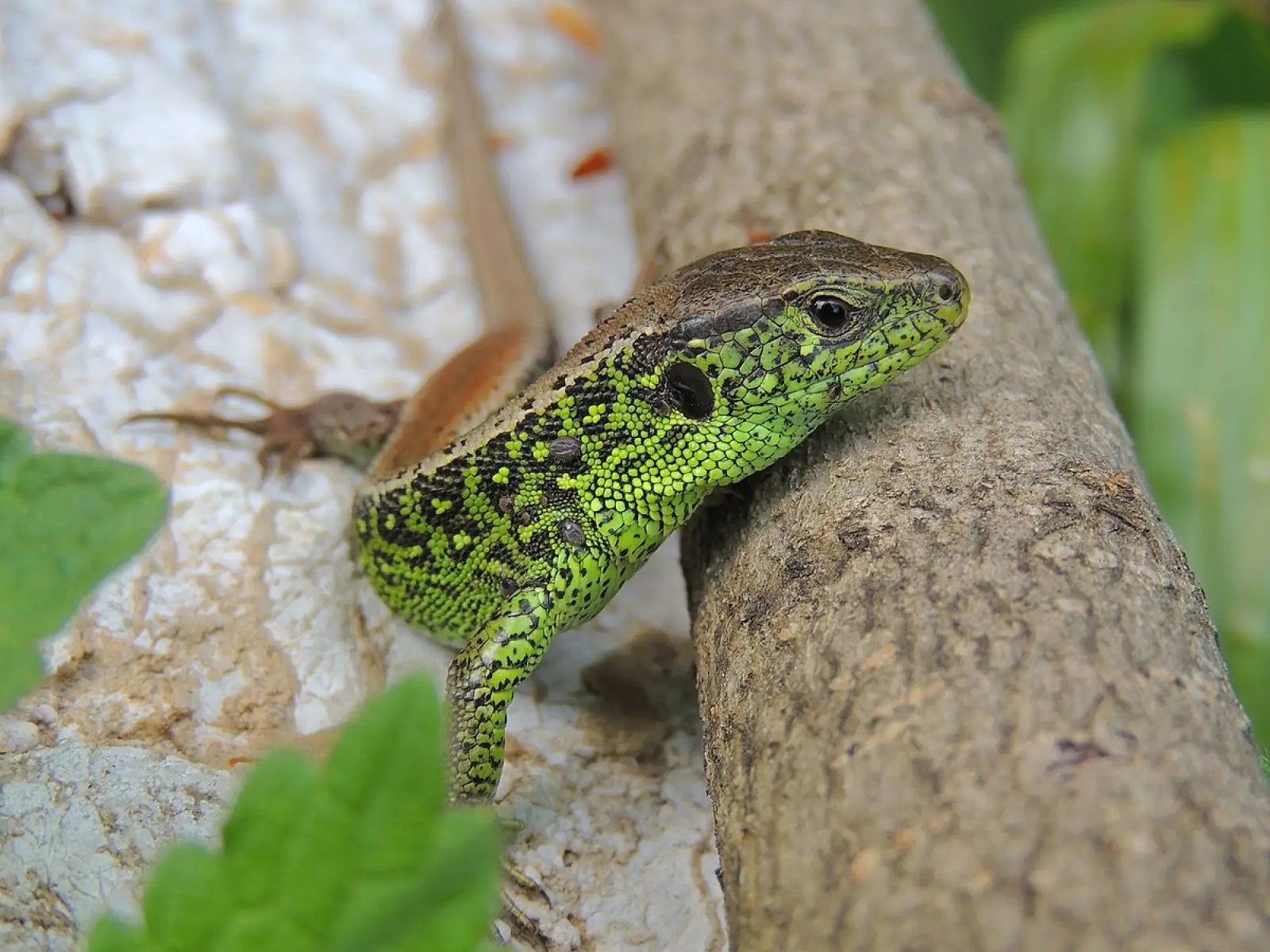
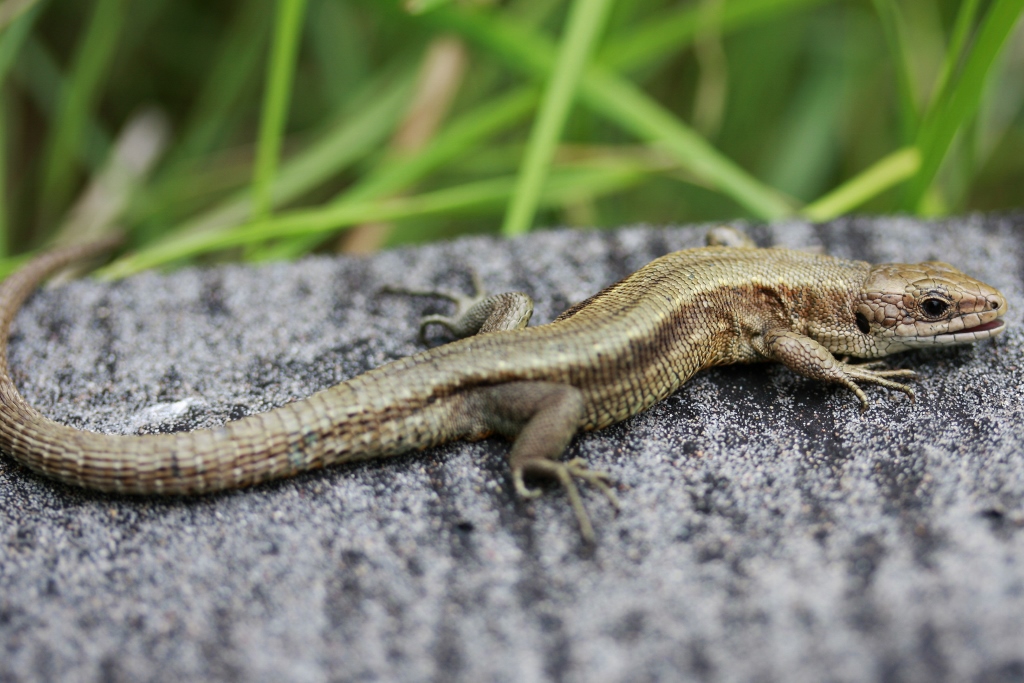
SIX: slow worms are one of only three lizard species native to the UK. The other two are the common lizard and the sand lizard.
SEVEN: slow worms smell with their tongues.
EIGHT: all sorts of predators hunt slow worm: adders, hedgehogs, badgers, many birds and domesticated cats. I checked into the tawny owl web cam on Sunday morning, just in time to see one of the adult owls bring a still-alive slow worm to the three hungry owlets.
NINE: when attacked, defecation is a slow worm’s first line of defence. Its faeces smell unpleasant enough to deter some predators but if this tactic doesn’t work, the slow worm can detach its tail. The shed tail thrashes about, distracting the attacker, and giving the slow worm time to escape.


TEN: slow worms tunnel underground or into rotting vegetation to hibernate and remain there all winter until March.
Header image: slow worm © NathDCFC (CC BY 2.0 DEED) flickr.com
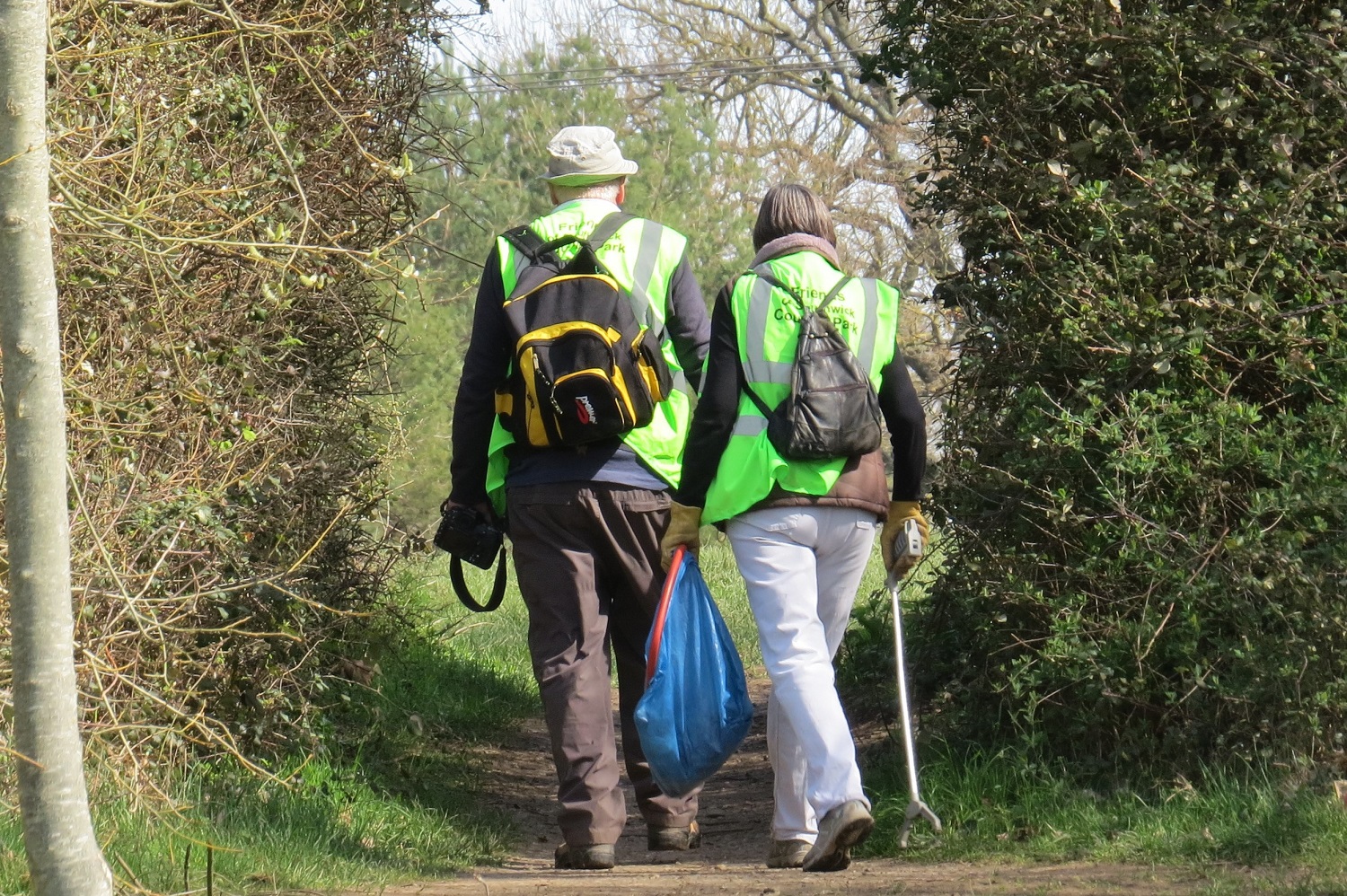


 Southwick Country Park Nature Reserve