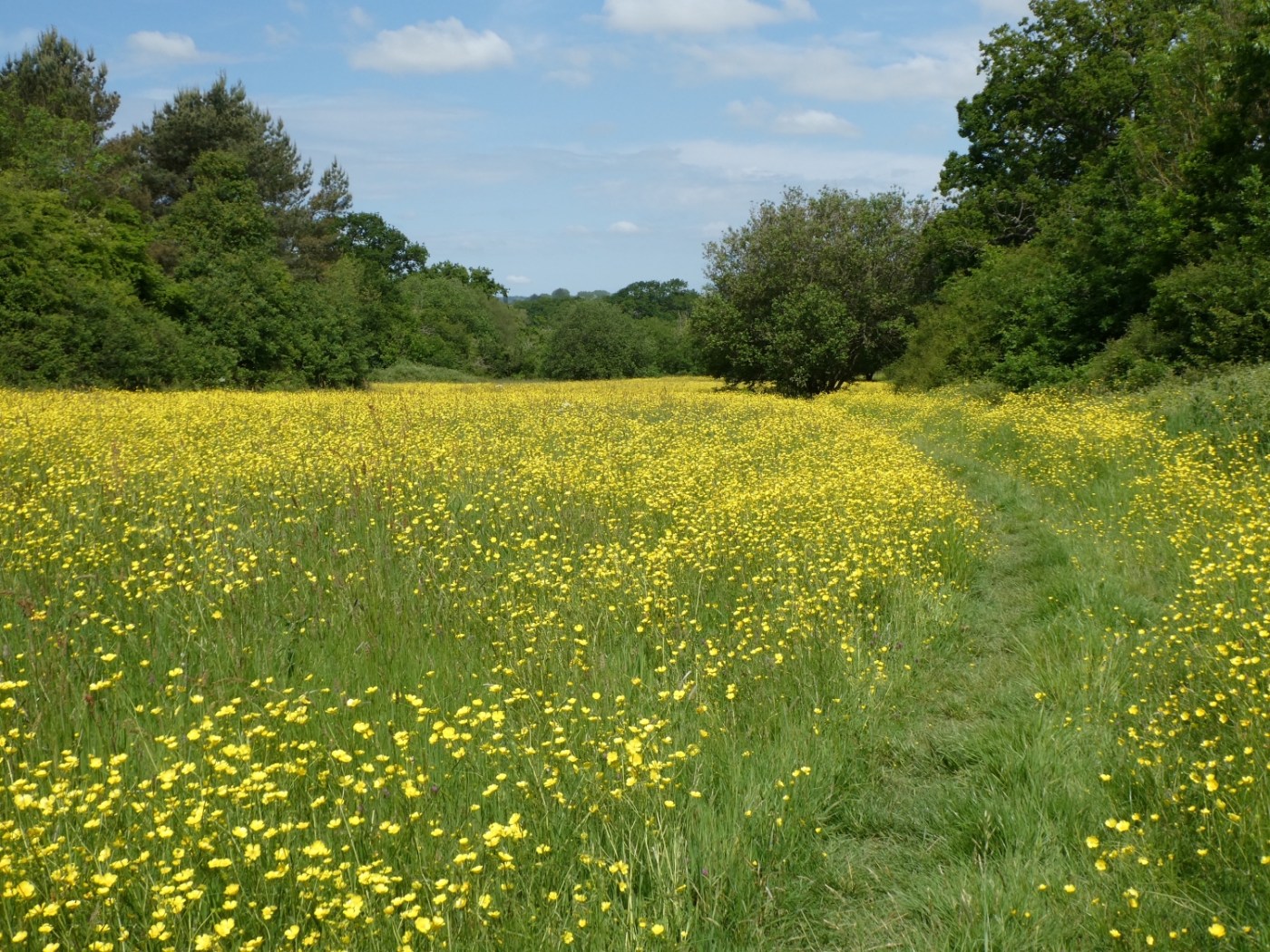
It’s buttercup time!
We have four species of buttercup in the reserve: meadow buttercup (Ranunculus acris), creeping buttercup (Ranunculus repens), Goldilocks (Ranunculus auricomus agg.) and celery-leaved buttercup (Ranunculus sceleratus). The beautiful golden flowers in our hayfields at the moment are almost all meadow buttercups and creeping buttercups; celery-leaved buttercups like damp places and pond edges while Goldilocks, of course, hangs out in the woods.
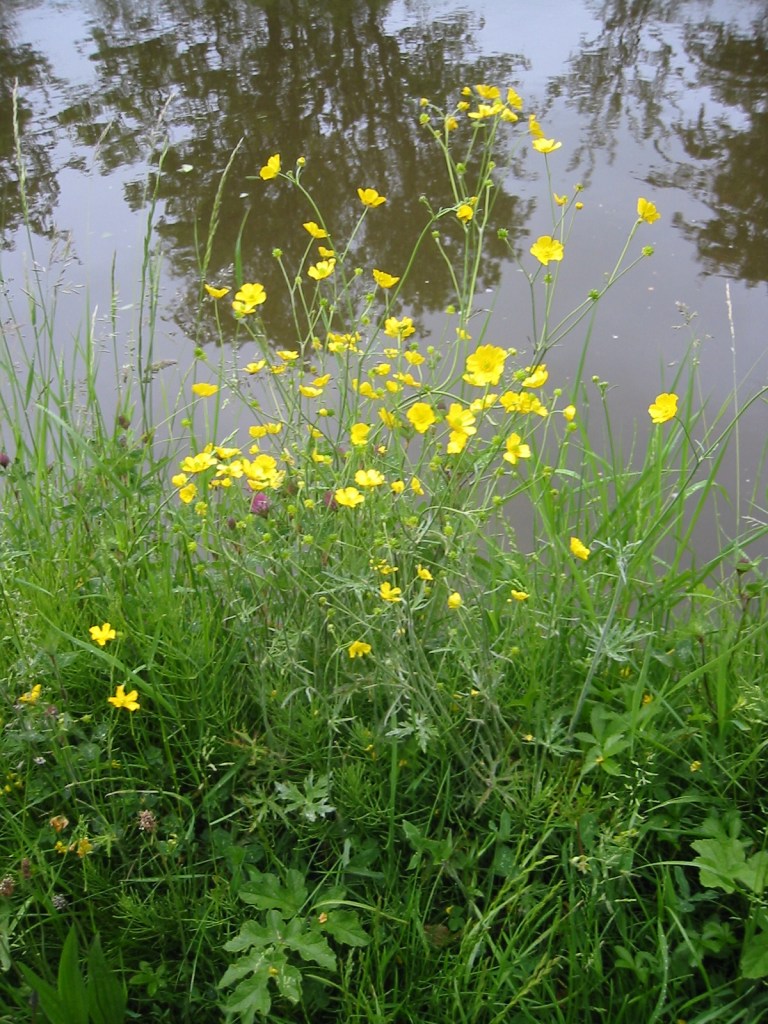
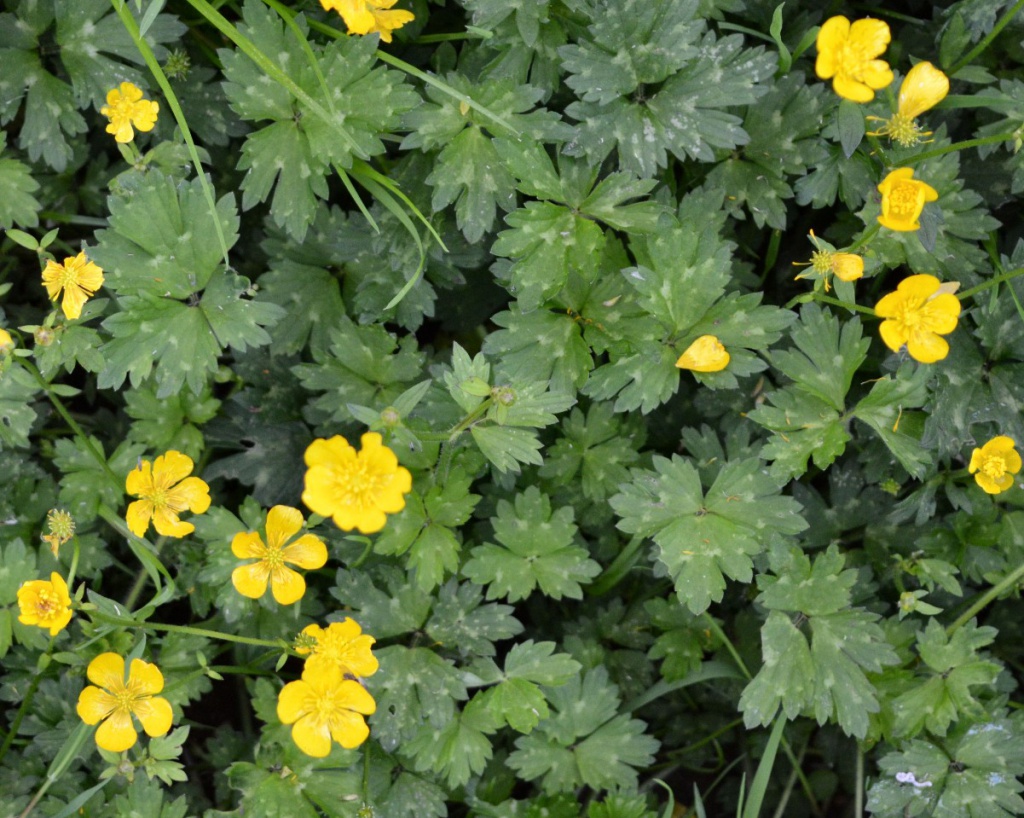
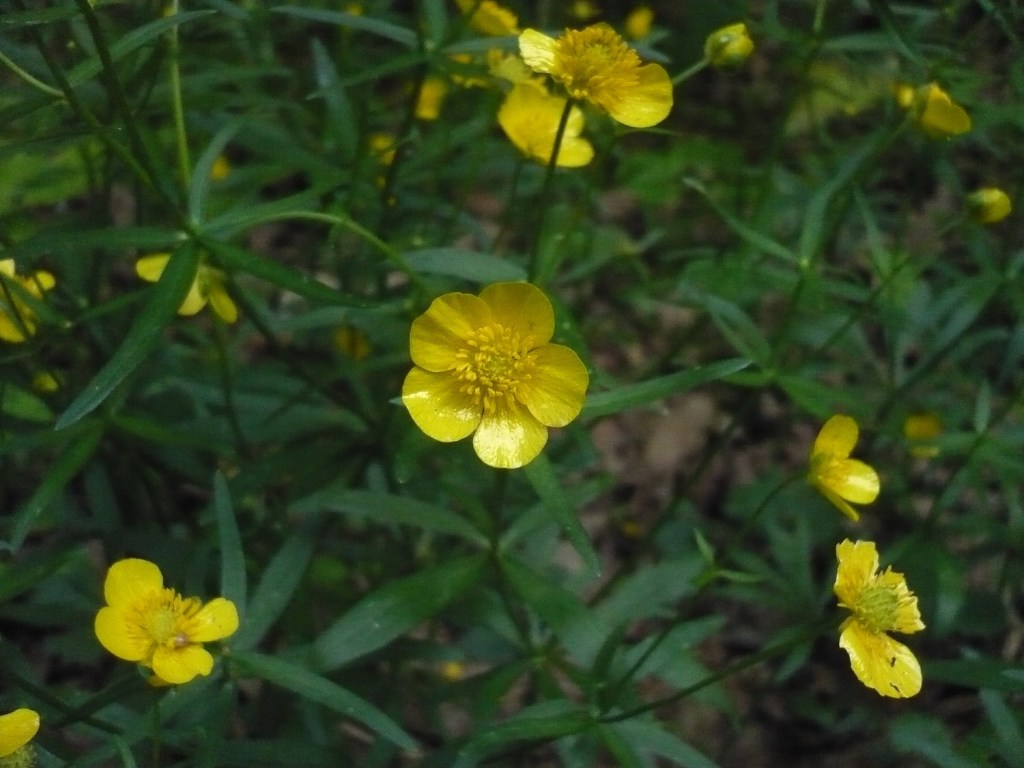

All species of buttercup are poisonous. Like many wildflowers that grow among grasses, they have developed unpleasant-tasting toxins to protect themselves from grazers. As well as their off-putting acrid taste, buttercup toxins will blister the mouth and tongue of any creature that attempts to eat them.
Livestock will eat buttercups in an overgrazed pasture where there is nothing else, but the effect can be disastrous. Fortunately, however, the toxins break down when the plant is dried out and the hay our tenant farmer takes from the reserve is good to eat.
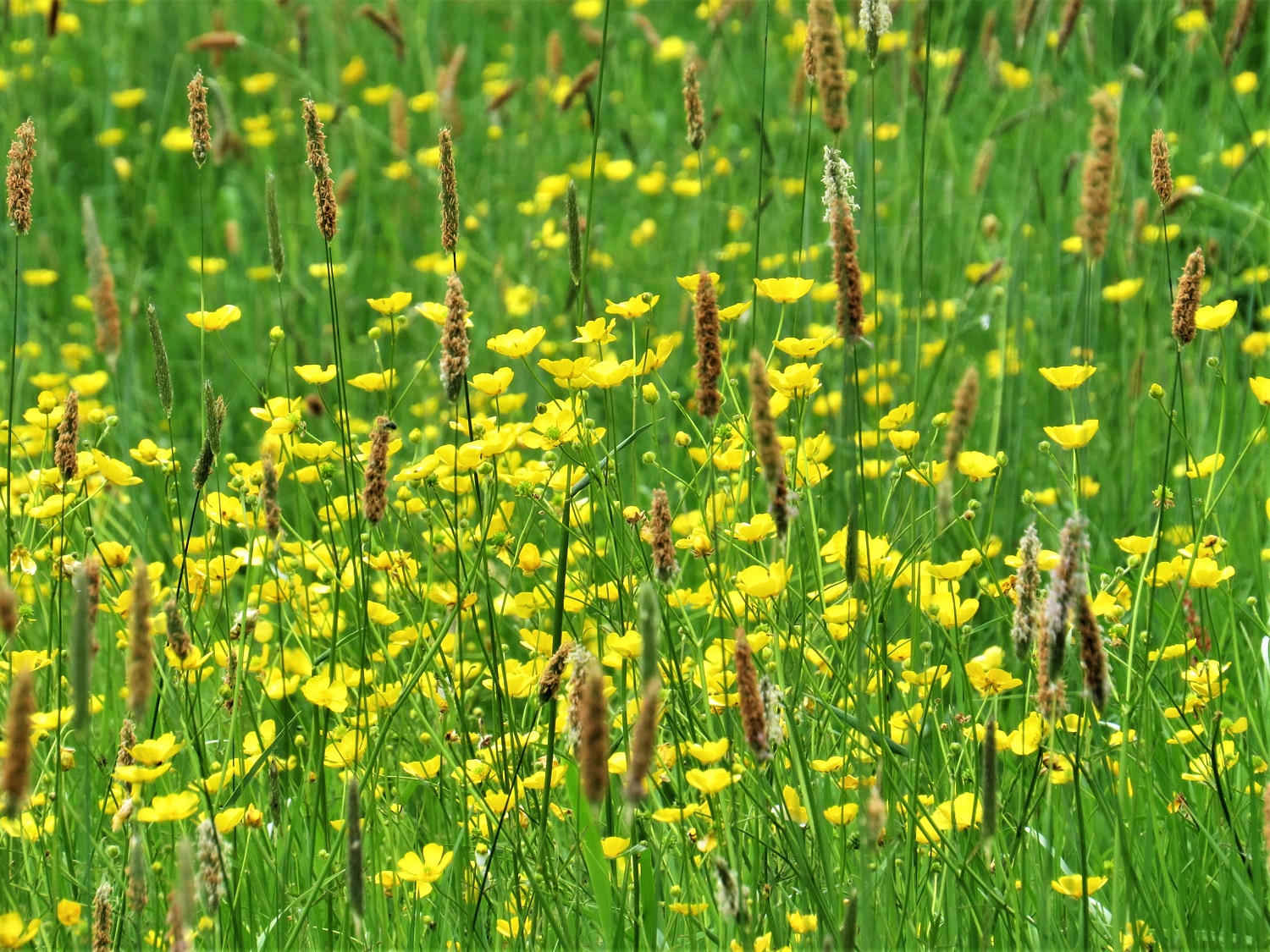

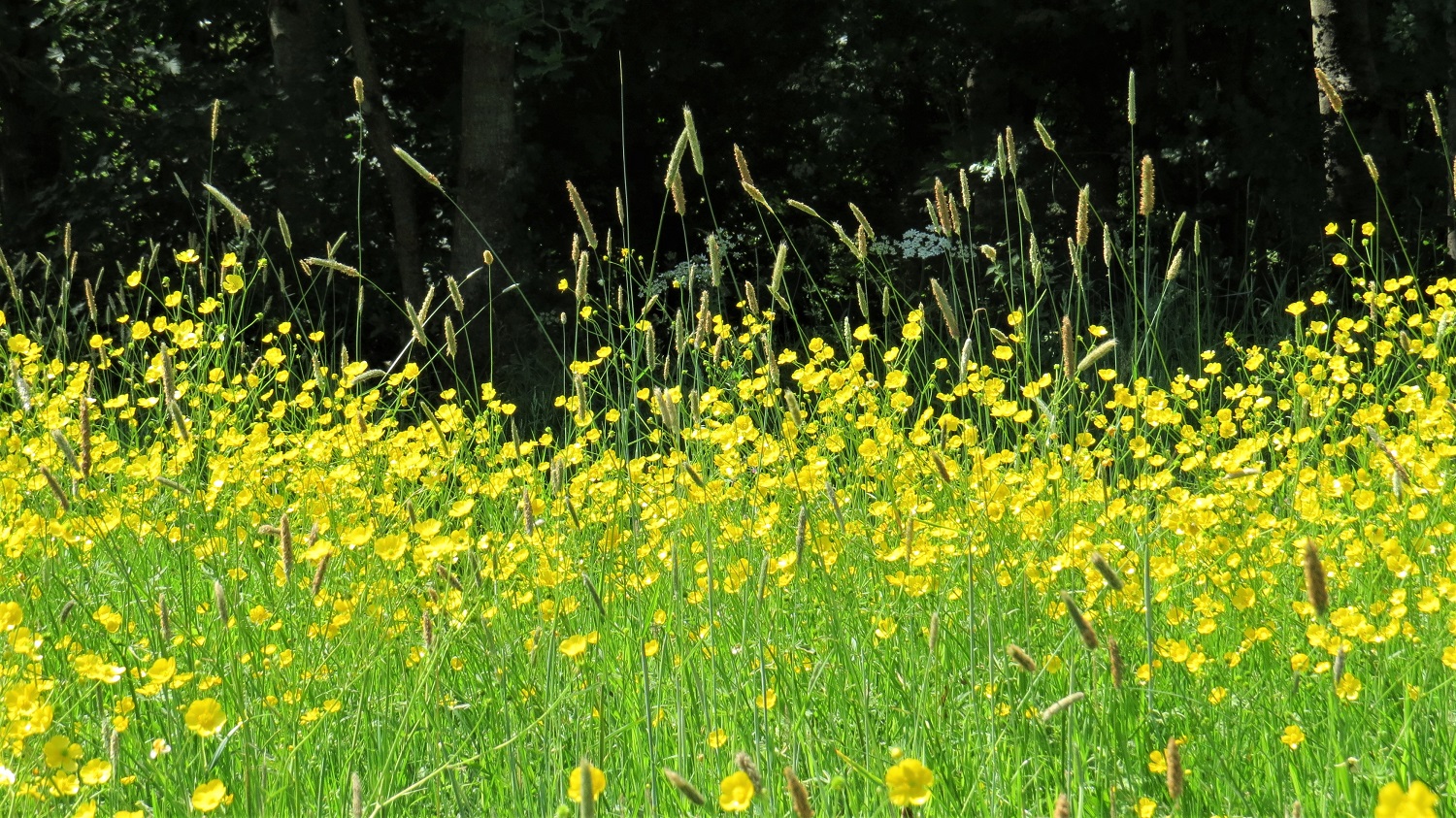
Even handling buttercups can cause a form of dermatitis so beware if your toddler insists on picking flowers as you walk around the reserve. The juice from the crushed flowers and stems can be so corrosive on the skin that for centuries, if not millennia, it has been used to remove warts.
In traditional medicine, herbs that redden and irritate the skin were used to treat conditions that manifest as a warm reddening of the skin: like treats like. Buttercups, pulverised and rubbed in, were used to remedy a painful flare-up of rheumatism, gout or arthritis. But modern medical research is looking, instead, into the the therapeutic possibilities of buttercup toxins in the field of oncology. There is evidence that different types and stages of cancer are responding to these complex bioactive alkaloids and polysaccharides. Buttercup therapy!
Meanwhile, consider a little buttercup therapy of your own and come walk mindfully in our golden hay meadows, abuzz with pollinators.
Header Image: buttercups at the to of The Race © Clive Knight (SCPLNR May 24)


 Southwick Country Park Nature Reserve