
You might see all these butterflies on your buddleia this summer but they all need other, less garden-friendly, sometimes undesirable, plants if they are to complete their life cycles.


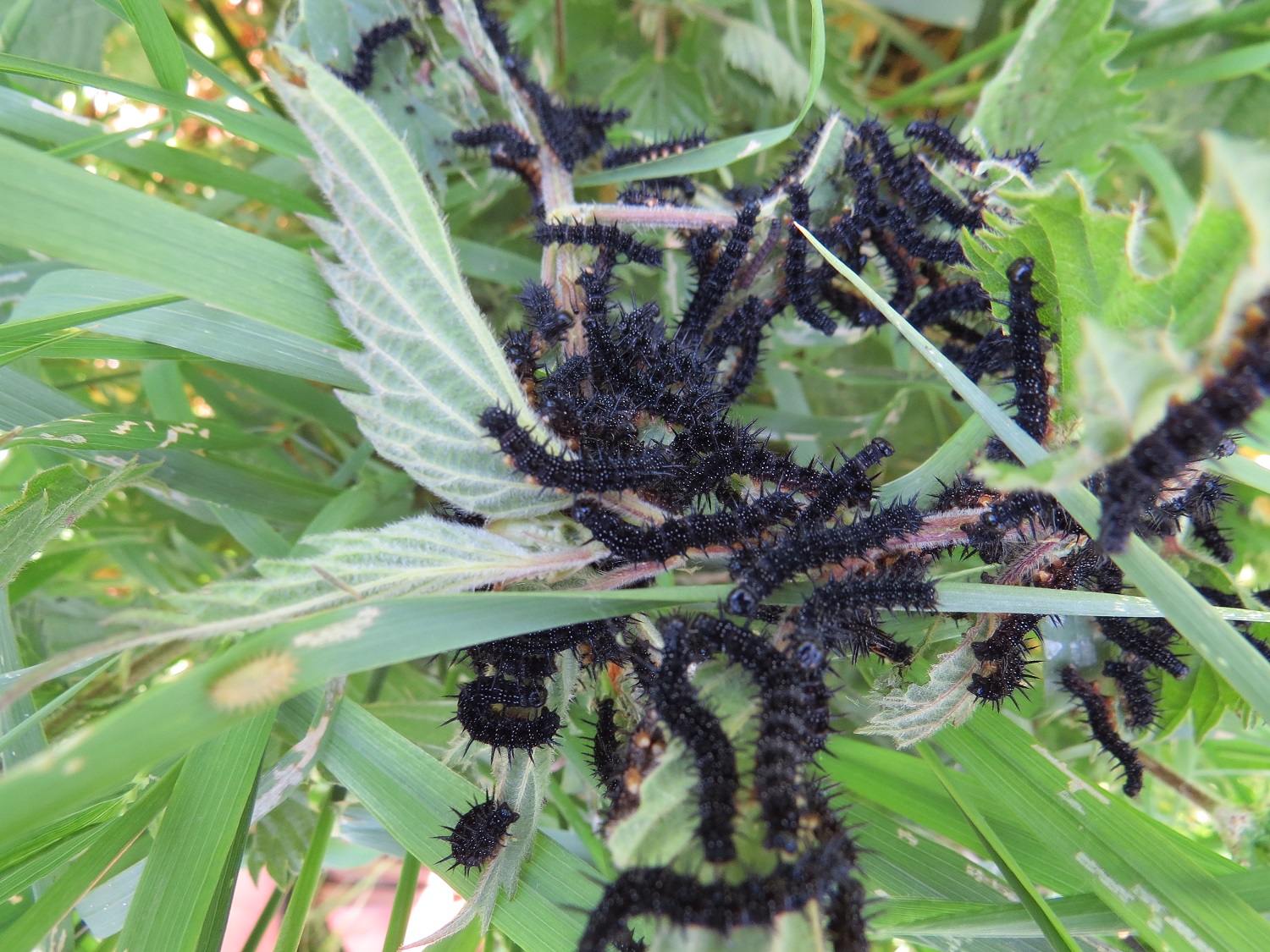
The peacock butterfly (Aglais io) in the header image needs nettles: the female lays her eggs at the tips of young nettles and the caterpillars feed exclusively on the nettle leaves.
Likewise the red admiral (Vanessa atalanta): the first adults that arrived here in March from continental Europe, laid their eggs on young nettles. The caterpillars are already beginning to hatch and will feast on the nettles until they pupate in July.
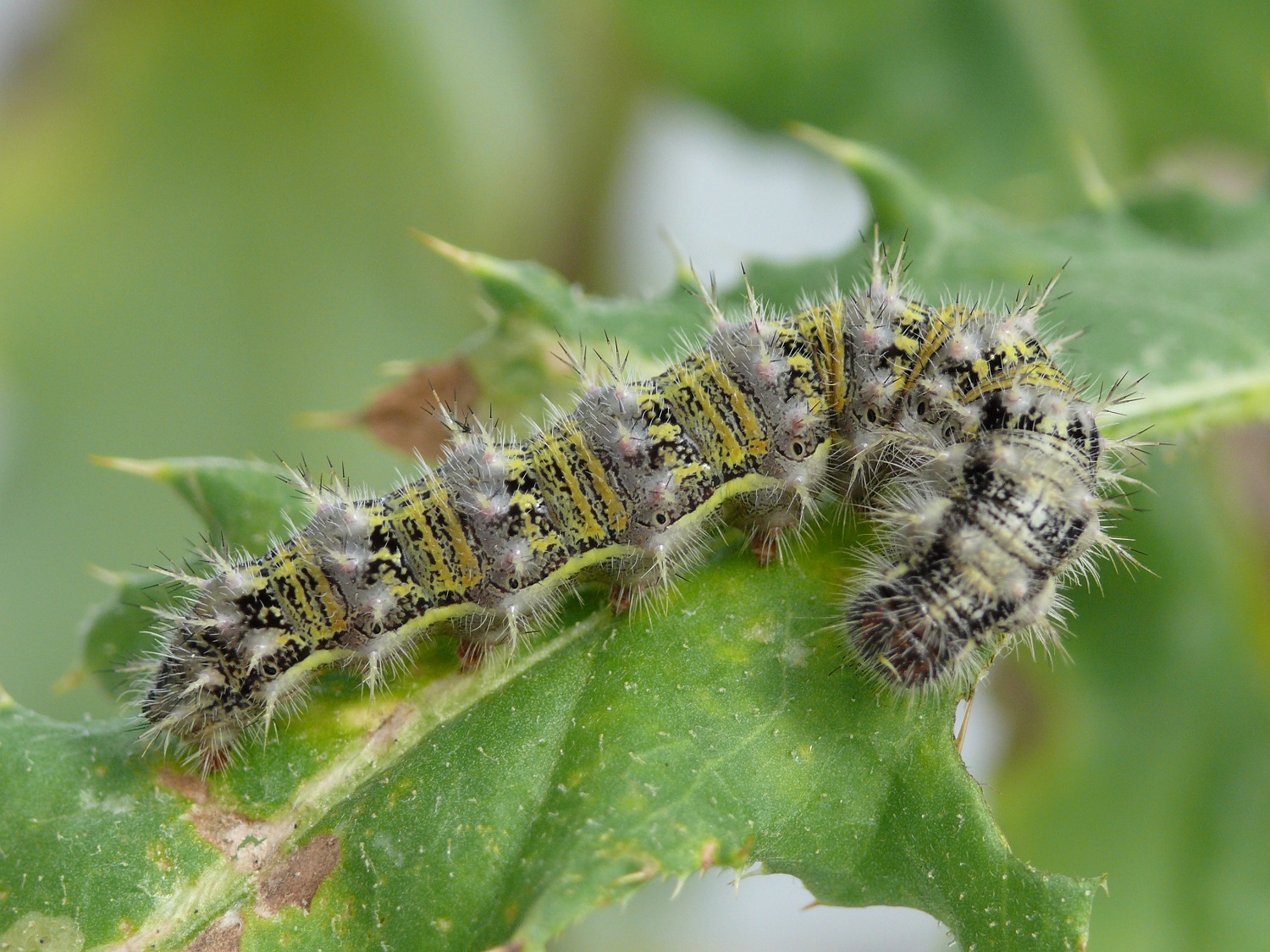
The painted lady (Vanessa cardui) lays her eggs on thistles. The larvae live on the underside of the thistle leaves, eating through the leaf to the skin on the top; thistles that harbour painted lady caterpillars therefore have transparent patches, like windows, on their leaves.

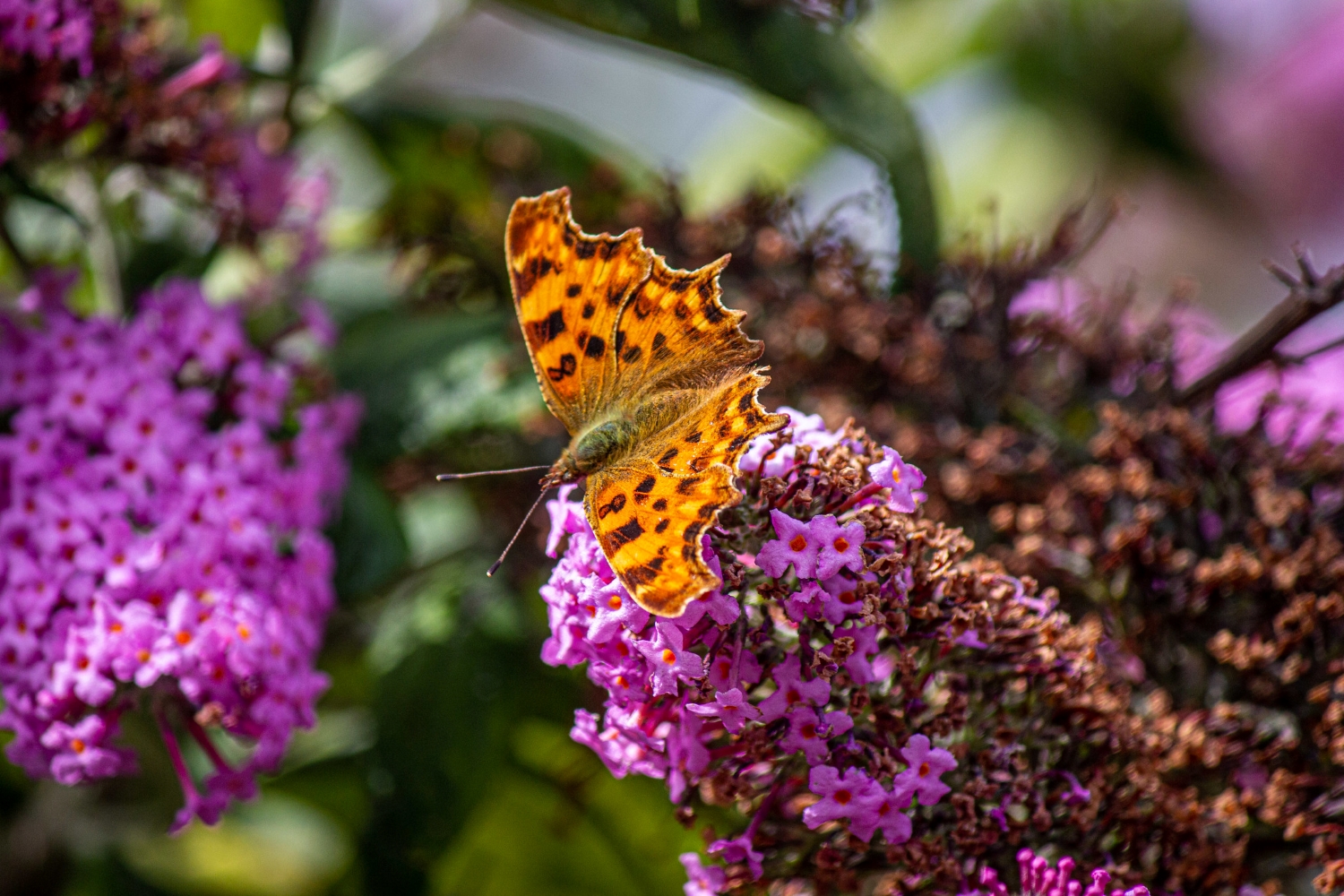
Commas (Polygonia c-album) are less fussy and their larvae, while they prefer nettles, will happily feed on currants, elm, hop and willow as well.
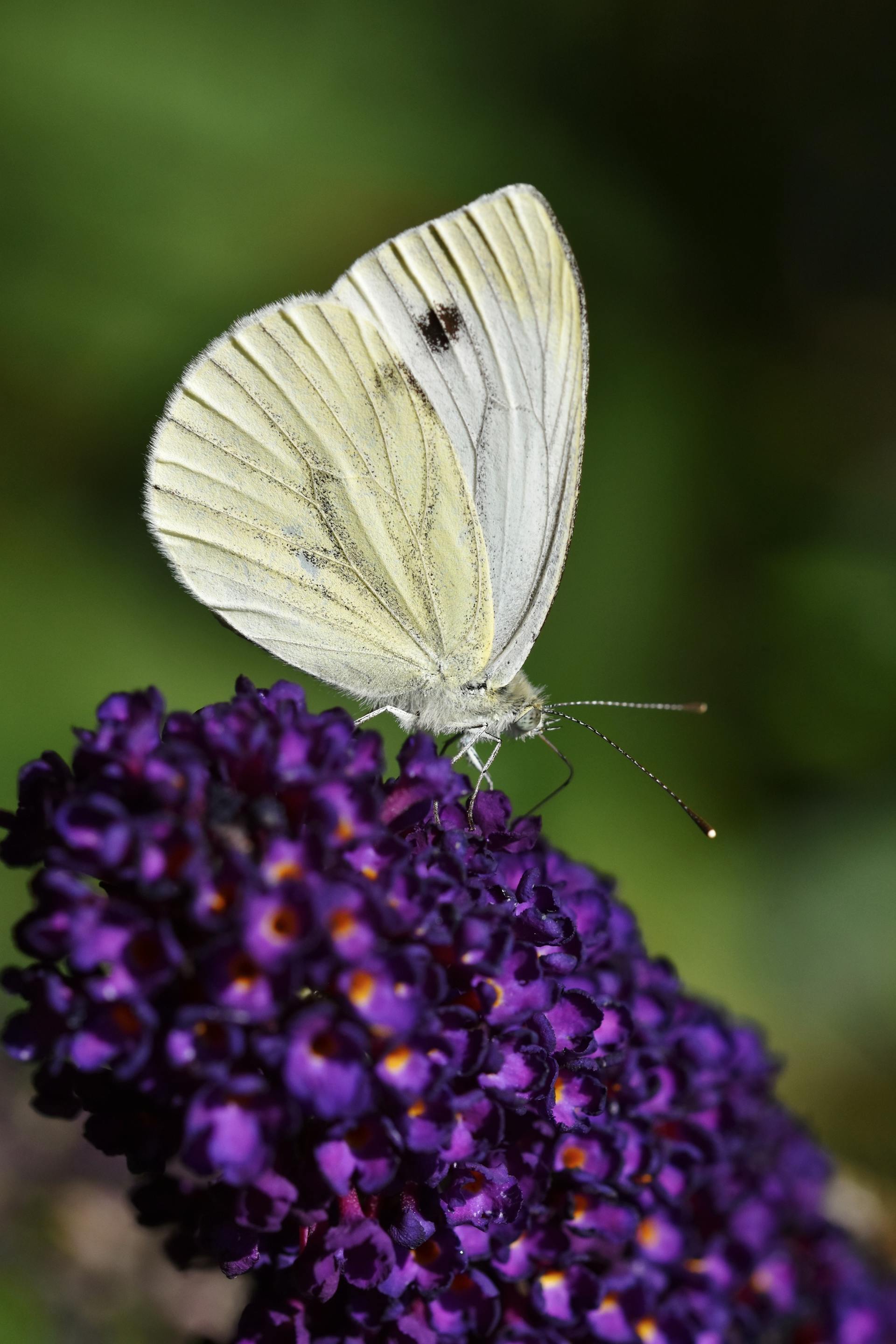
While large white butterflies (Pieris brassicae) favour plants in the Brassica family, they will also lay their eggs on hedgerow crucifers such as hedge mustard or charlock, or on nasturtiums.
Unfortunately, most of these important larval food plants are considered to be weeds; we cut them down, dig them out, or spray them with poisons – thereby interrupting the life cycle of the beautiful butterflies we have worked so hard to attract. To make our gardens truly wildlife-friendly, we must begin to think in life-cycles. The adult butterfly feeding on your buddleia is only one of the four life stages that all lepidoptera go through and we need to make provision for the other three.

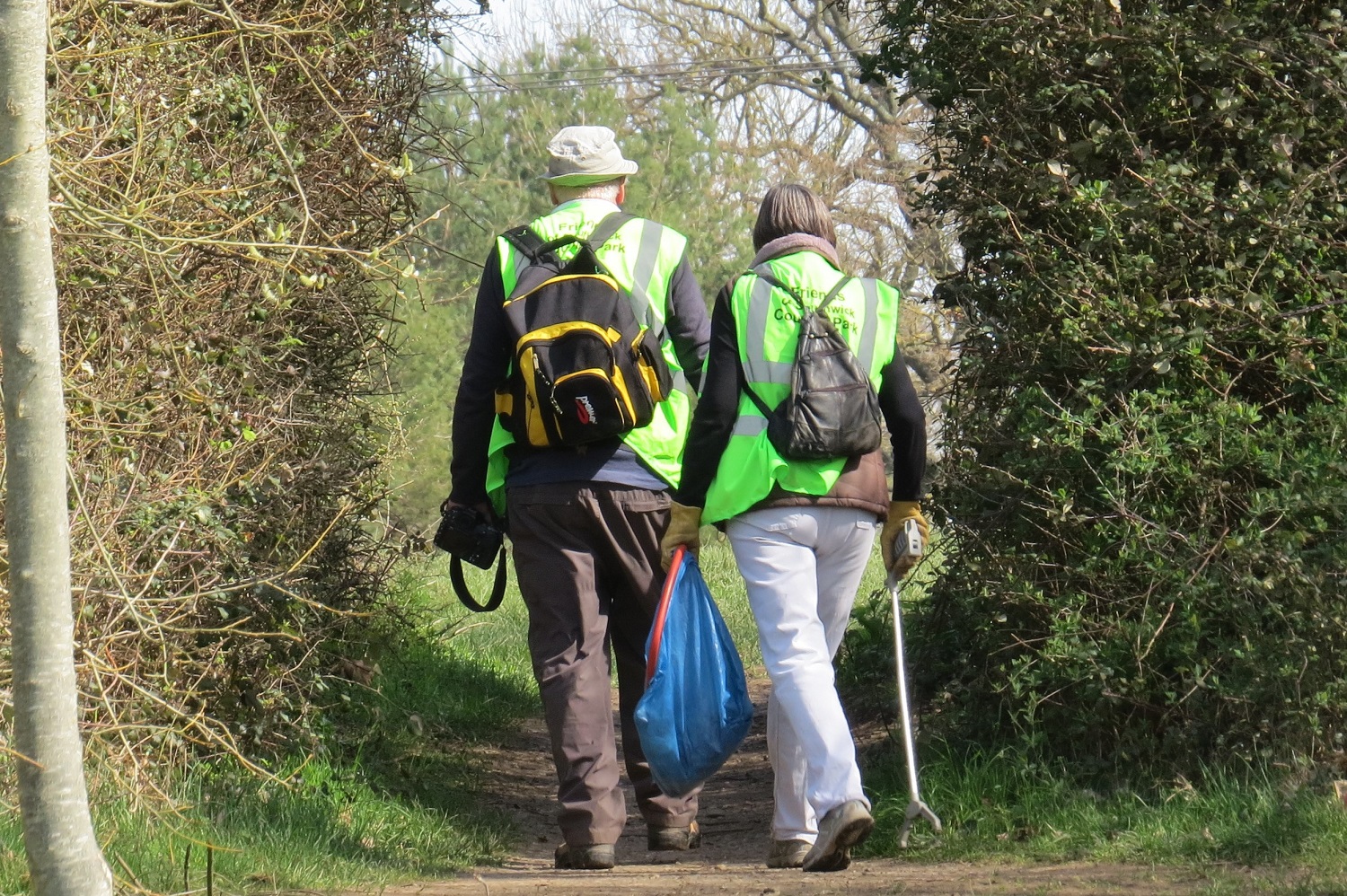


 Southwick Country Park Nature Reserve