
Another life cycle
More than 80% of insect species undergo a metamorphosis of four stages.
The egg (ovum) is where a ladybird’s life cycle starts. It provides a space in which the DNA of male and female mix and the larvae can begin their development. The female lays her eggs in batches of up to fifty on the underside of leaves in places where her larvae will find food when they hatch. In her lifetime she will lay about a thousand eggs.
The larva hatches from the egg after a week or so. Its job is to grow: this is the only stage of a ladybird’s life cycle in which growth is possible. Ladybird larvae are voracious predators and they grow rapidly. Because their skin doesn’t grow with them, they have to shed it four times before they are fully grown; each period of growth before the next moult is called an instar. After maybe a month, the larva is fully grown and ready to pupate. It attaches itself in a secure place and sheds its final skin.

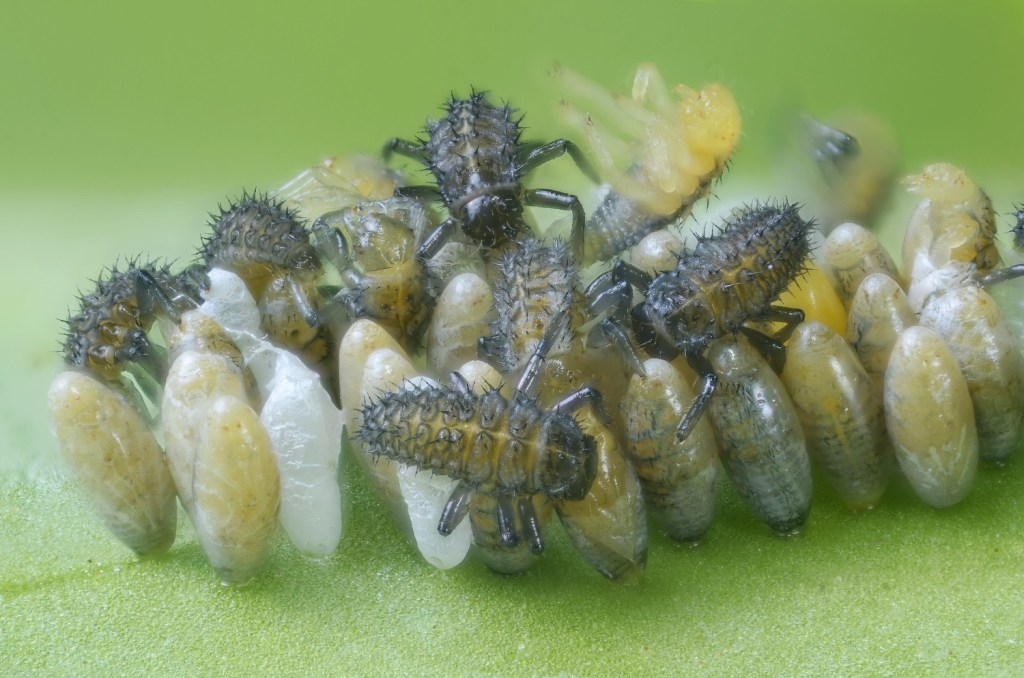


We have identified seven species of ladybird in the reserve: 16-spot, 24-spot, 14-spot, harlequin, 7-spot, two-spot, and eyed ladybird.
The pupa emerges from the final moult and contact with the air hardens its skin. This stage is immobile but inside the pupa a complete reorganisation is taking place. What was the larva breaks down into a kind of soup in which there are growth buds, special cells than contain the instructions for growing a new ladybird adult, capable of flight. This takes about a week and the soup feeds the process.
The adult (imago) ladybird emerges from the pupal case when its transformation is complete and on a day when conditions are right. The new adult is vulnerable in its first few hours: its wings need to expand and its wing cases to harden. Its colour and pattern need exposure to light to fully develop. The adult ladybird’s purpose is to survive the winter and to find a mate and breed in the following spring. All ladybird species overwinter in the adult phase, sometimes huddled together in enormous numbers.
Adult ladybirds are considered to be cute, they are recognised, loved and looked after by everybody. But the larvae just look like scary creepy crawlies, while the pupae resemble bird droppings or something that is already dead, and nobody is happy to encourage the aphids that the ladybirds need to feed on.
Let’s look after whole life cycles.


 Southwick Country Park Nature Reserve