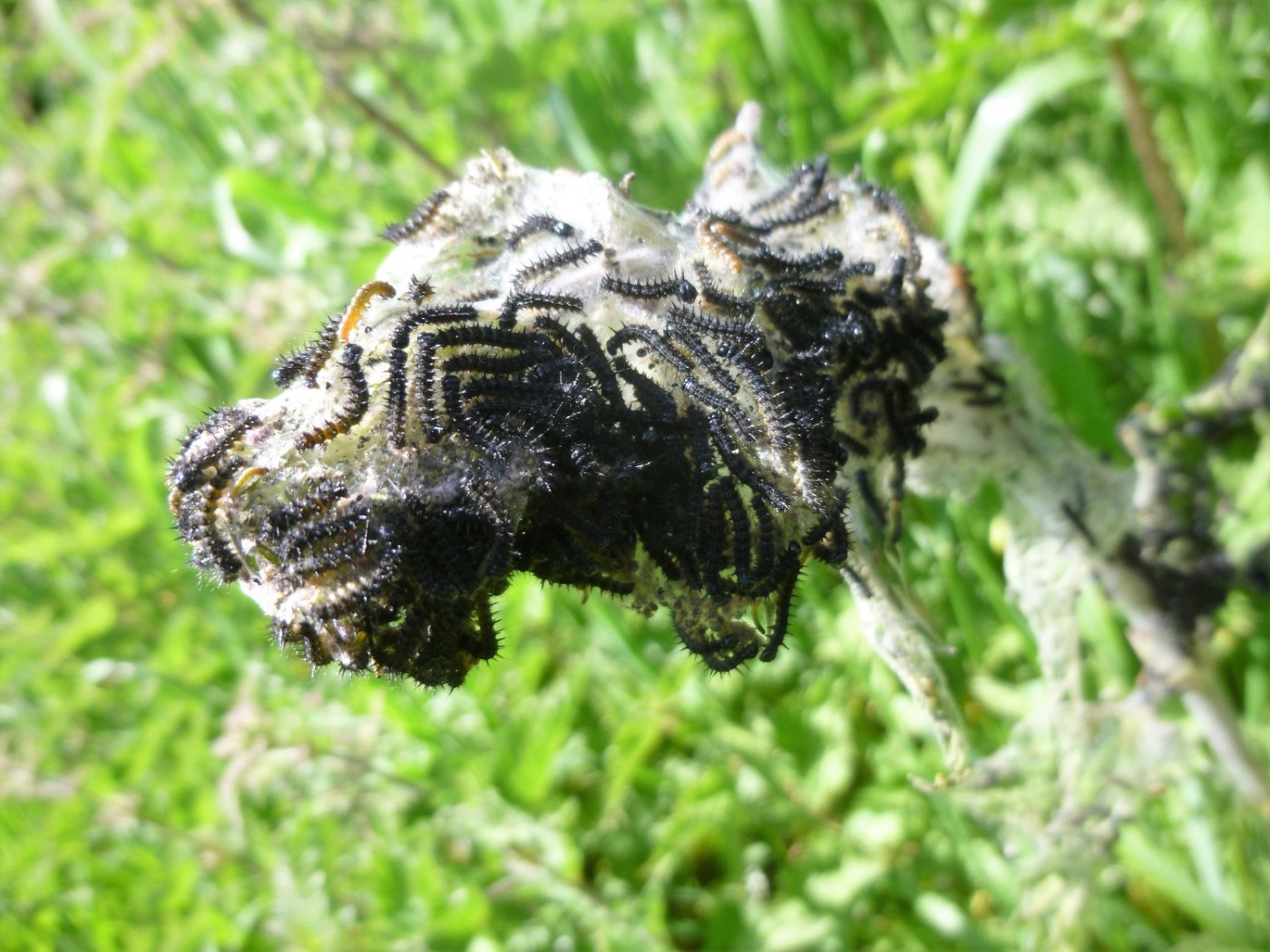
Last week, just in time for National Insect Week, Ian reported the reserve’s first nest of peacock caterpillars, late but very welcome.
The female butterfly mates in the spring and lays her eggs, several hundred of them, under the topmost leaves of new nettles, somewhere sunny for preference but that has proved difficult this year. It is possible that the earliest clutches of eggs were washed away by the spring’s torrential rainstorms.
It takes about two weeks for the eggs to hatch into black spiky caterpillars with white spots. They act as a group for the first weeks of their development, spinning an untidy web around the top of the nettle to protect themselves from predators and adverse weather.


They eat: this is their job. The caterpillar must eat enough to reach sufficient size (4.2cm) to pupate before the summer is over, a definite problem if it starts as late as these have. A caterpillar’s skin doesn’t grow with it and has to be moulted when it gets too tight; caterpillars will moult four or five times before they pupate and the stages between the moults are called instars. With each instar, the peacock caterpillars become more independent and move further away from the group.
In July and August, they pupate. They leave the nettle bed for thicker undergrowth or trees and attach themselves to a leaf or a twig, hanging with their head down; their skin splits one last time and exposes the chrysalis inside. The chrysalis can be a range of greenish colours depending on its position and has a reflective, almost metallic, quality that makes it very difficult to see.


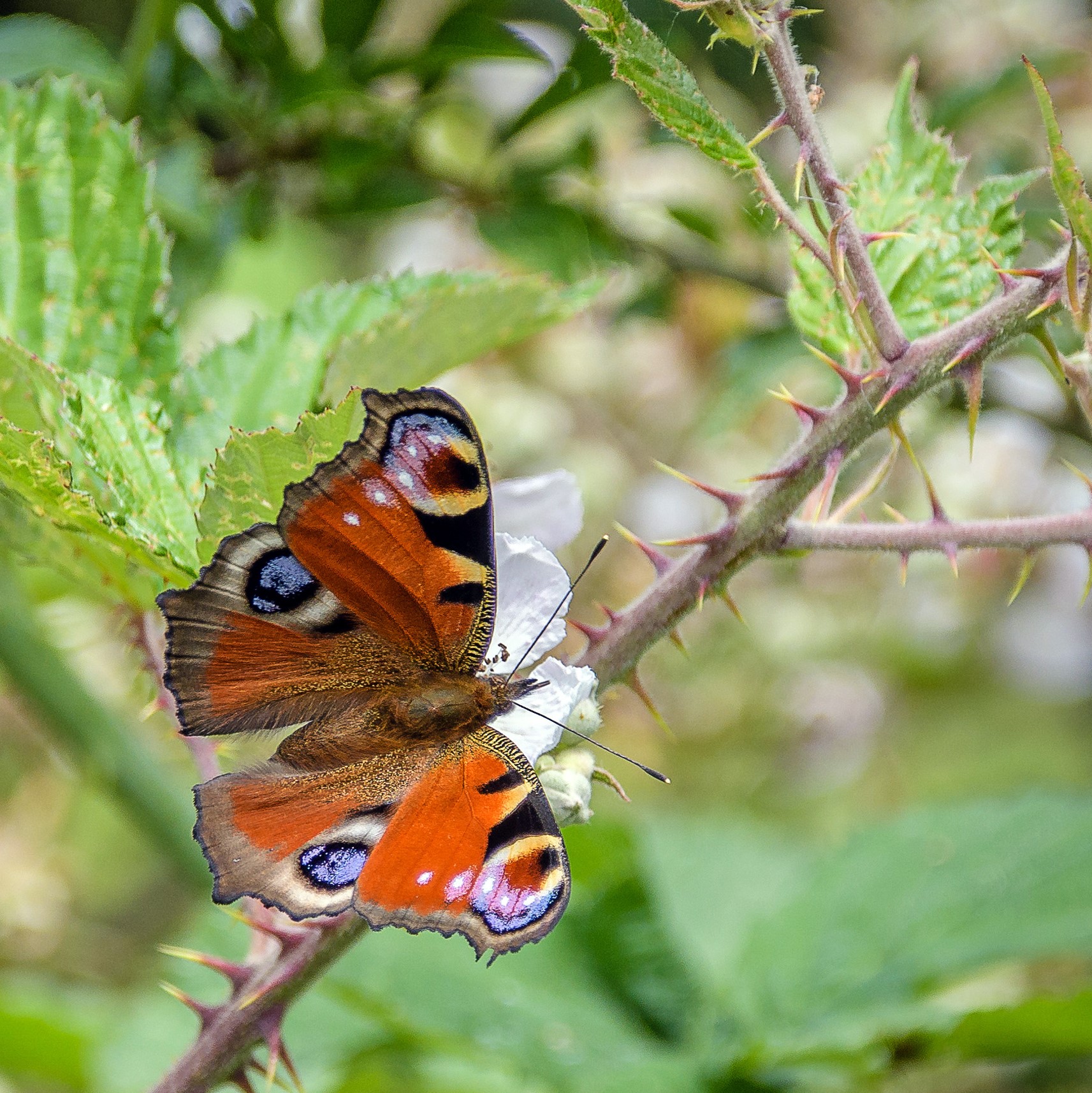
Header image by Ian Bushell

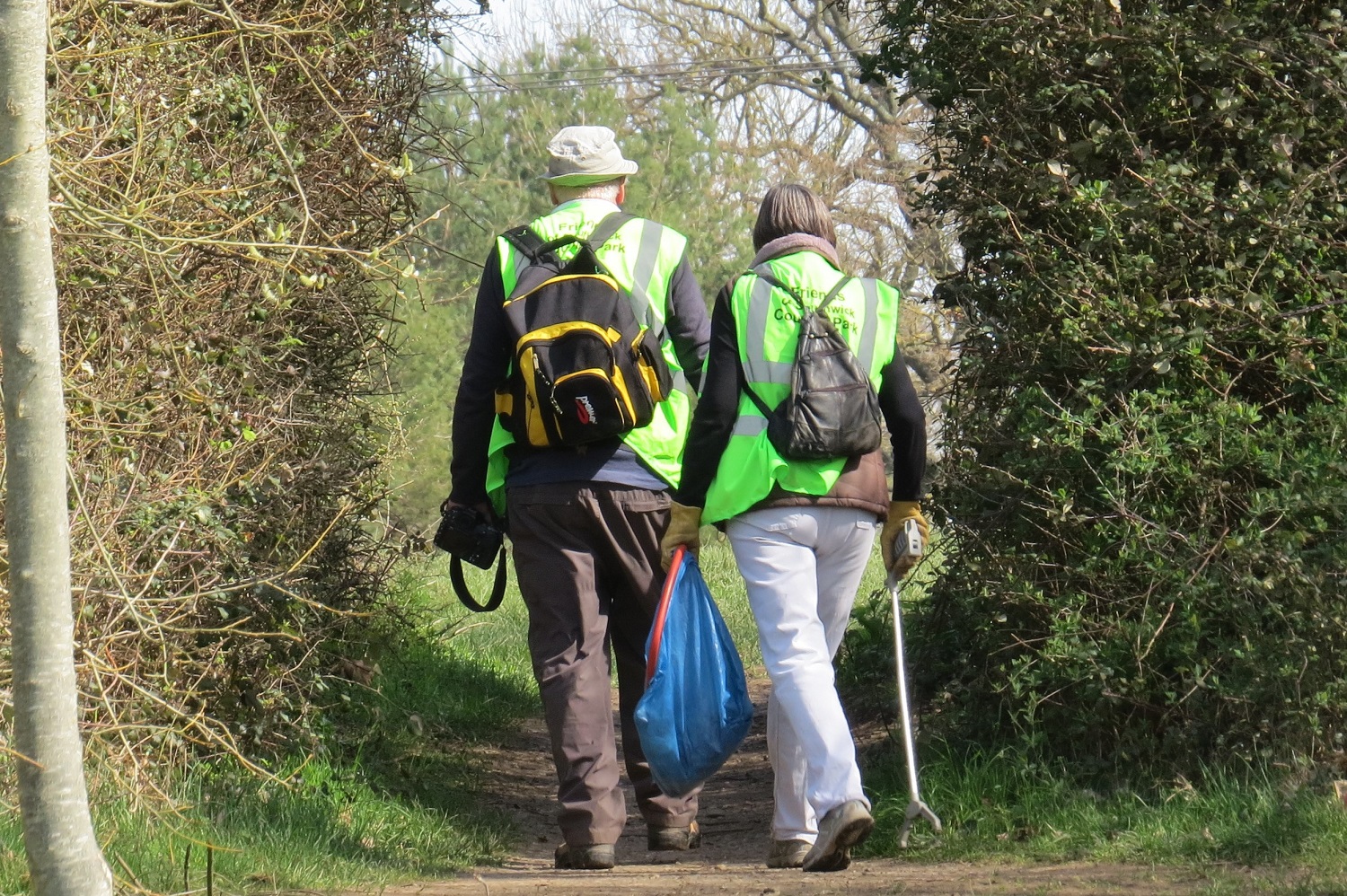


 Southwick Country Park Nature Reserve
Awesome 👍