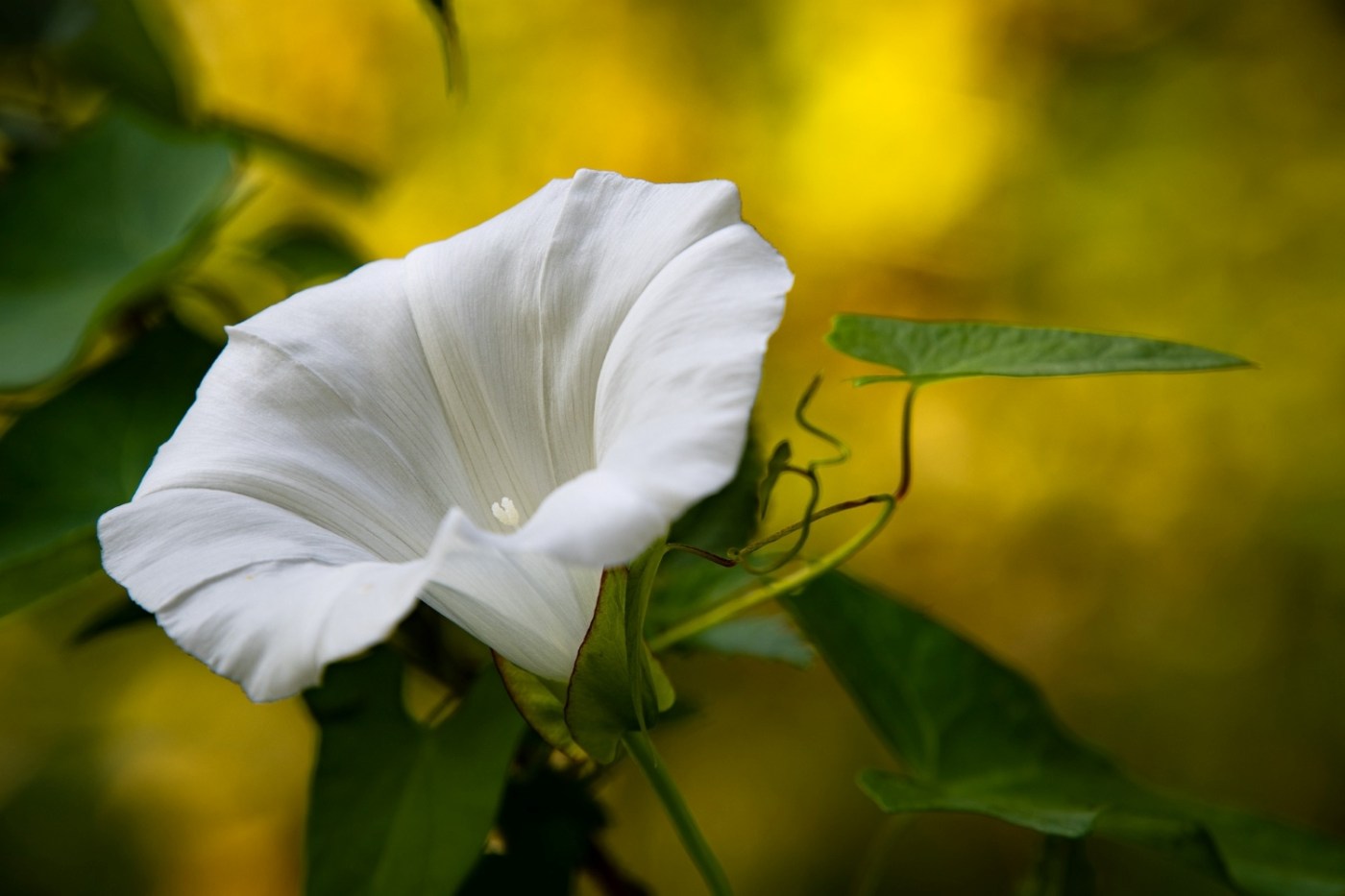
This is Calystegia sepium, which goes by many common names: hedge bindweed, Rutland beauty, bugle vine, heavenly trumpets, or bellbind. But in these parts, where it seems to hold a lot of our countryside together, we call it greater bindweed or convolvulus.
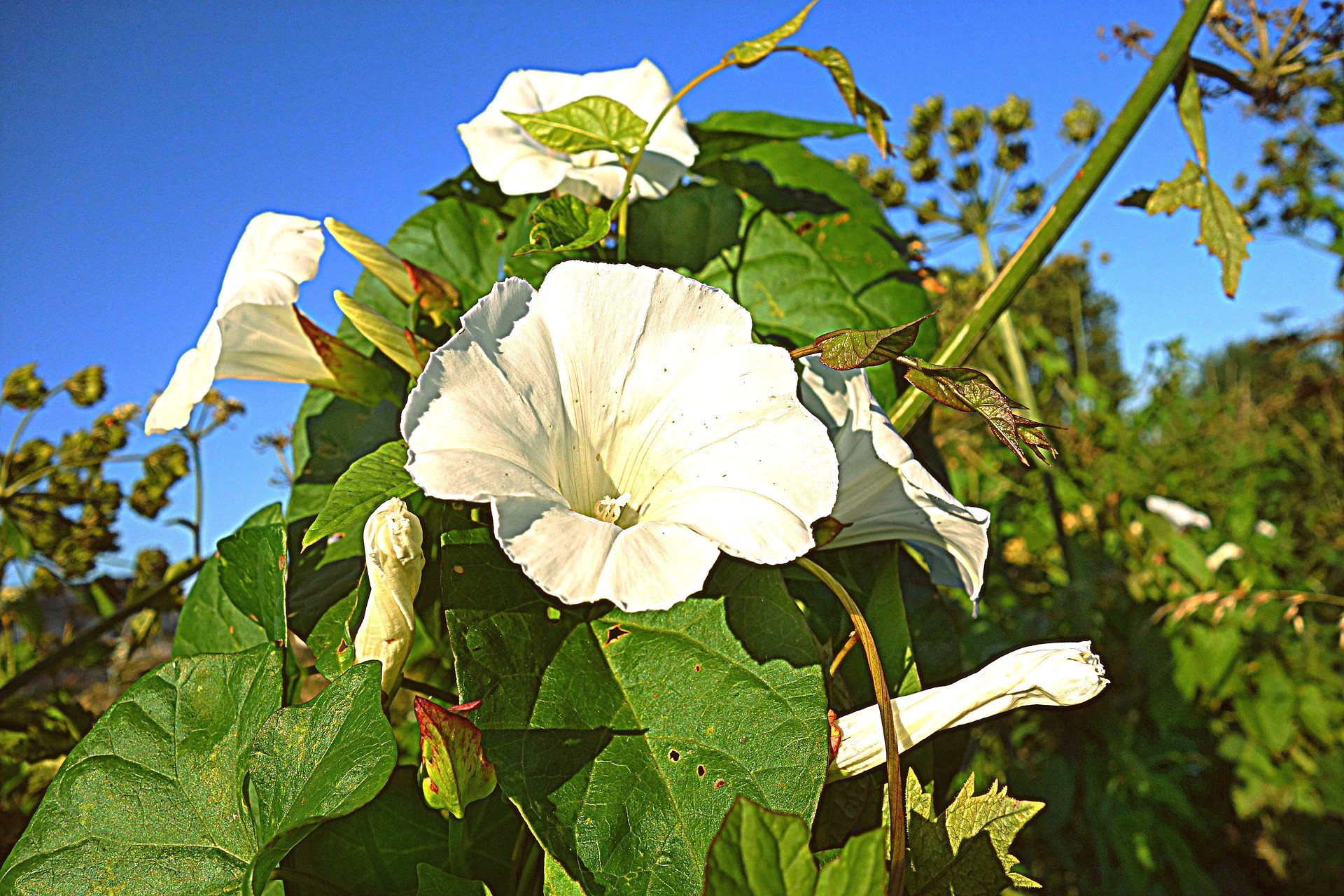
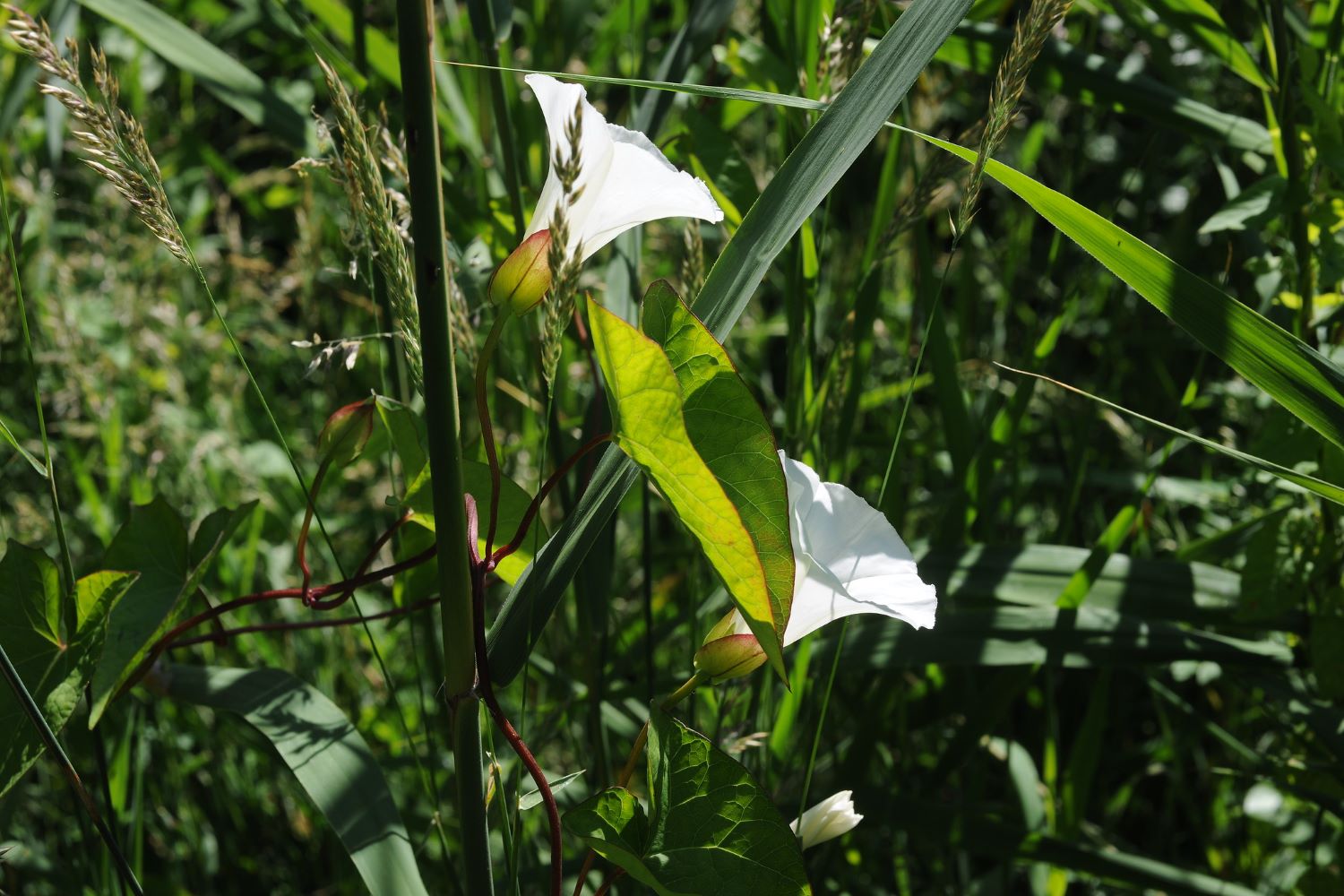

It is a botanical success story, a perennial plant that retires for the winter into underground stems (stolons and rhizomes) where it has stored sugars enough to see it through to the next growing season. The whole plant is toxic, so the over-wintering roots and stolons are safe from foragers. If they are disturbed by digging animals, winter ploughing or desperate gardeners, there is payback: come the spring every last little broken piece of the root can (and will) grow a new plant.


Greater bindweed is a climber. It hauls itself up into the light using other plants as support, twisting around them in a counter-clockwise direction to a height of up to three metres. It can smother the vegetation it climbs through and its extensive, spaghetti-like systems of rhizomes will choke the roots of competing plants.
Its beautiful trumpet shaped flowers attract all sorts of nectar feeders. The white flowers are highly visible at dusk and attract moths; the convolvulus hawk moth uses a long proboscis to reach the nectar, while its caterpillars are one of the very few species that will feed on its leaves: its toxicity saves greater bindweed from most browsers.
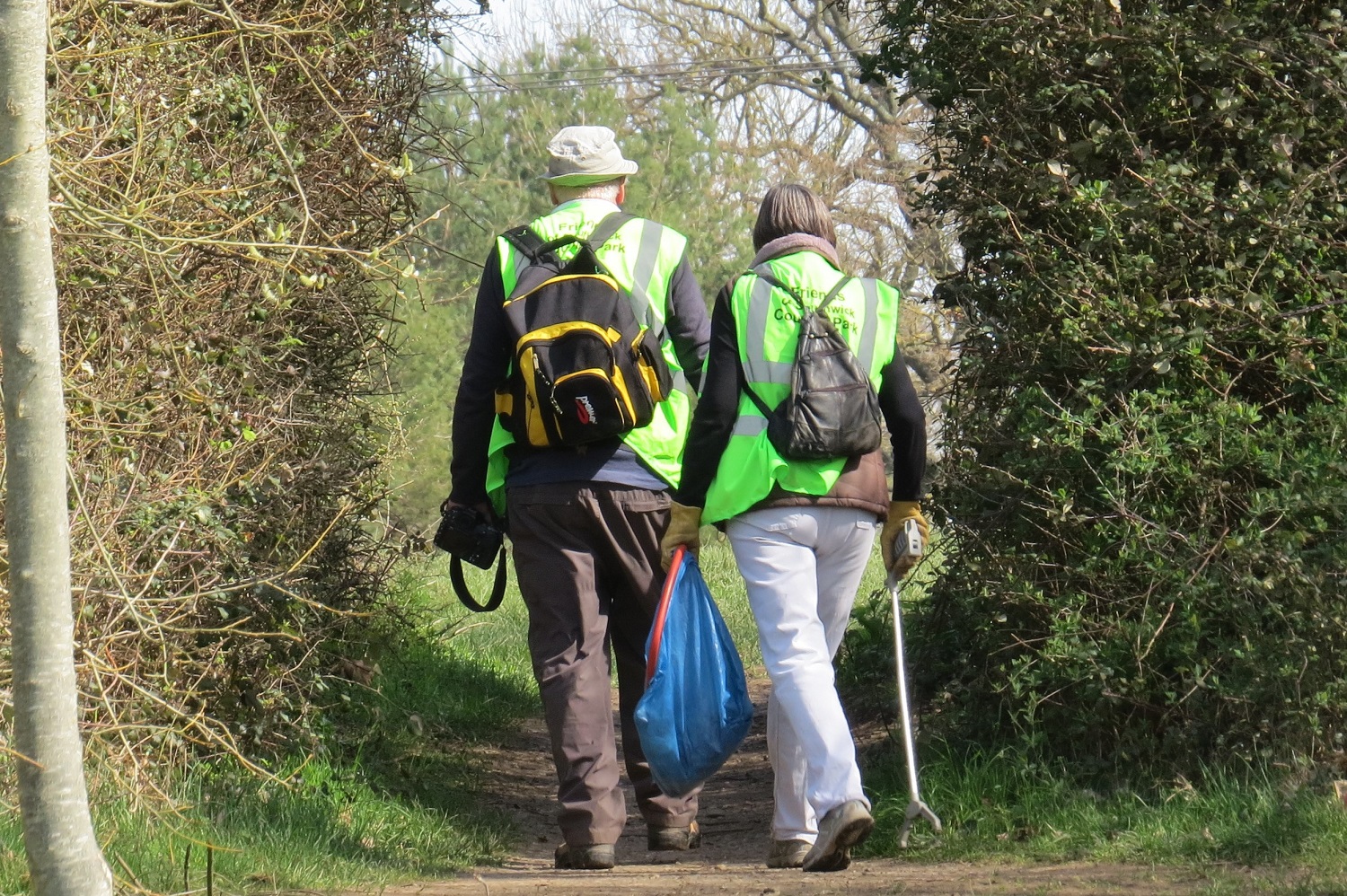


 Southwick Country Park Nature Reserve