
Marbled white
The distinctive marbled white (Melanargia galathea) is common and widespread in southern England. At this time of year it chooses unimproved meadow grassland, showing a preference for purple flowers such as wild marjoram, thistles, knapweeds and red clover. The caterpillars feed on grasses particularly red fescue.


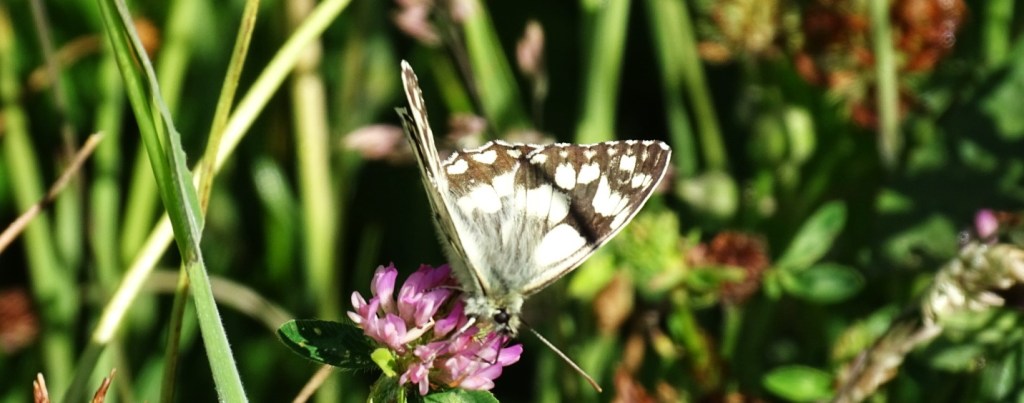
All images taken in the reserve
[1] Mating marbled whites by Ian Bushell) [2] Marbled white male by Ian Bushell [3]Marbled white feeding on red clover by Cheryl Cronnie
Header Image by Cheryl Cronnie
Conservation Status
Butterfly Conservation priority: Low
European status: Not threatened



 Southwick Country Park Nature Reserve
where are all the butterflies? It’s nearly time for the big butterfly count but I’ve hardly seen any butterflies even on the buddleja or when the sun is shining? Barbara Johnson.
Barbara, I think the big butterfly count has already started. Google says it’s between 11th July and 4th August this year.
Generally acknowledged that this has been a bad year for butterflies due to the cold wet spring, not just here but over most of UK. Have observed most species but not in any great numbers.
Sadly, it seems to have been a bad year for a lot of invertebrate life. However, the botany seems to be doing well – six feet high and still growing.
we saw several varieties of butterflies when the sun was shining recently but often only in single numbers. We left nettles to grow at the bottom of our garden but haven’t yet seen any butterfly eggs or caterpillars. When does this normally happen? Barbara Johnson.
Everybody seems to think that the year is being very bad for all flying insects but particularly bad for Lepidoptera. The results of the Big Butterfly Count will be published some time in September and may show us how much trouble we are in.