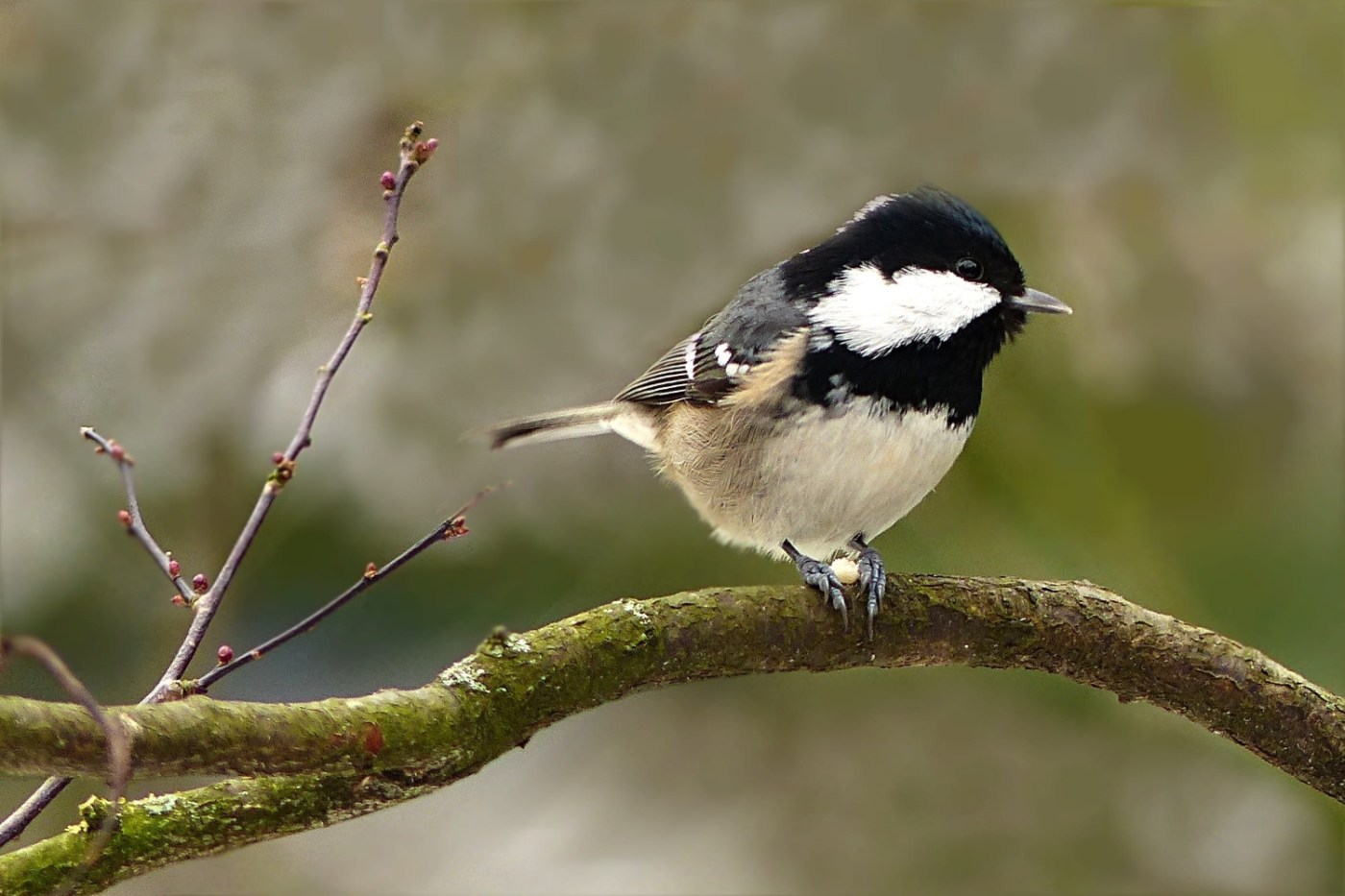
Coal tits (Periparus ater) are shy, fast-moving, acrobatic little birds that weigh hardly more than a 50p piece. They don’t sit still for long, which makes them hard to identify among the reserve’s busy population of similar Paridae.
To make identification even harder, they are the same size as blue tits, have much the same colouring as our marsh tits, and their call, to we mere amateurs, can be very like that of a great tit.


coal tit recorded by Esperanza Poveda (CC BY-NC-SA 4.0) xeno.canto.org
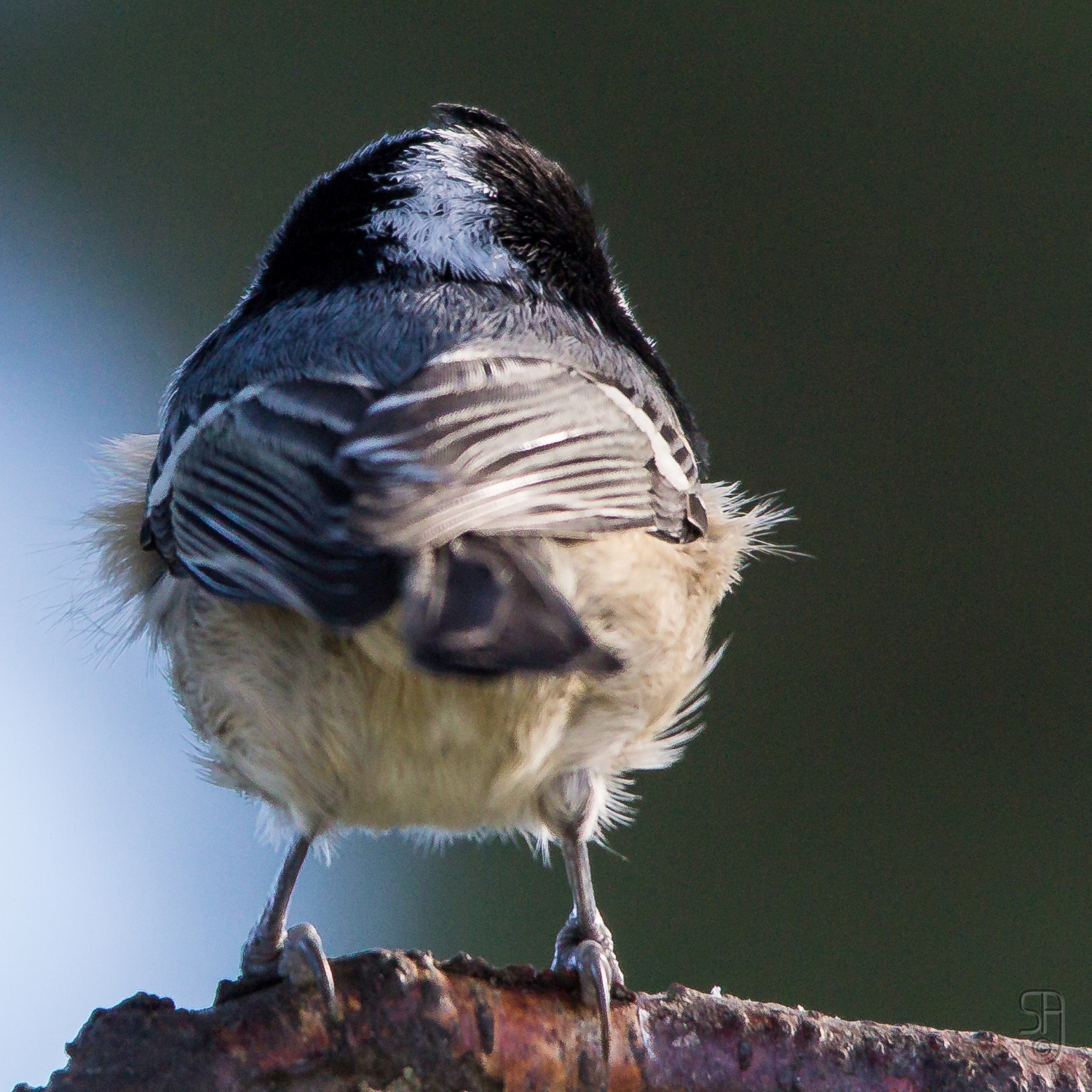
A coal tit has a creamy buff belly and a grey back that is interrupted by the white bars on its folded wing feathers. It has a black bib, white cheeks and a black cap that extends right down to the base of its neck. The most distinctive feature, however, is a white stripe running down the back of of its head. This is what marks it out from our other Paridae.

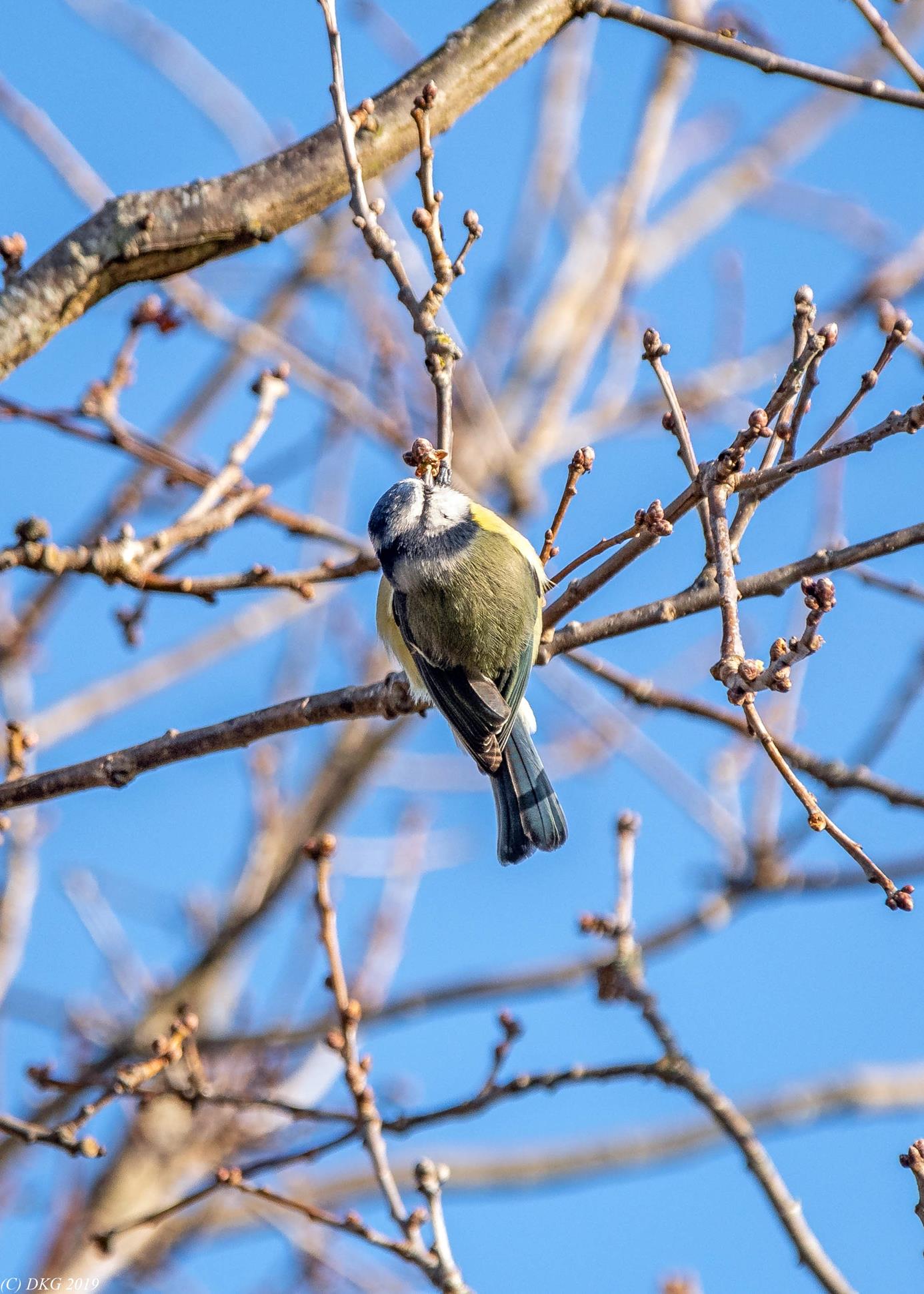
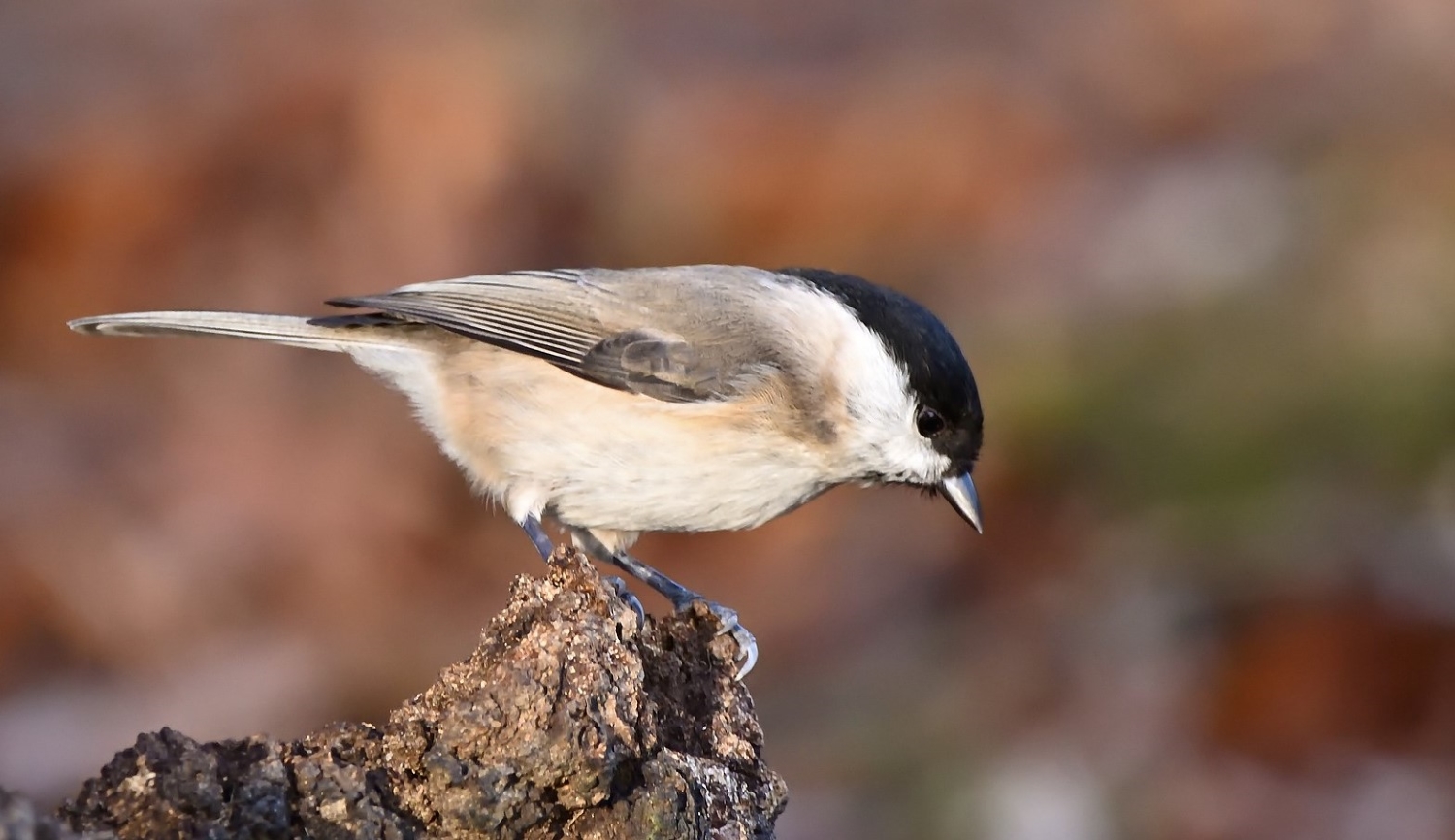
Our other Paridae: great tit (Parus major), blue tit (Cyanistes caeruleus) and marsh tit (Poecile palustris)
While coal tits are known to favour coniferous woodland, they are are seen in the reserve’s copses right through the year and we assume that they breed here.
Keep an eye open for them and, if possible, take pictures for us.

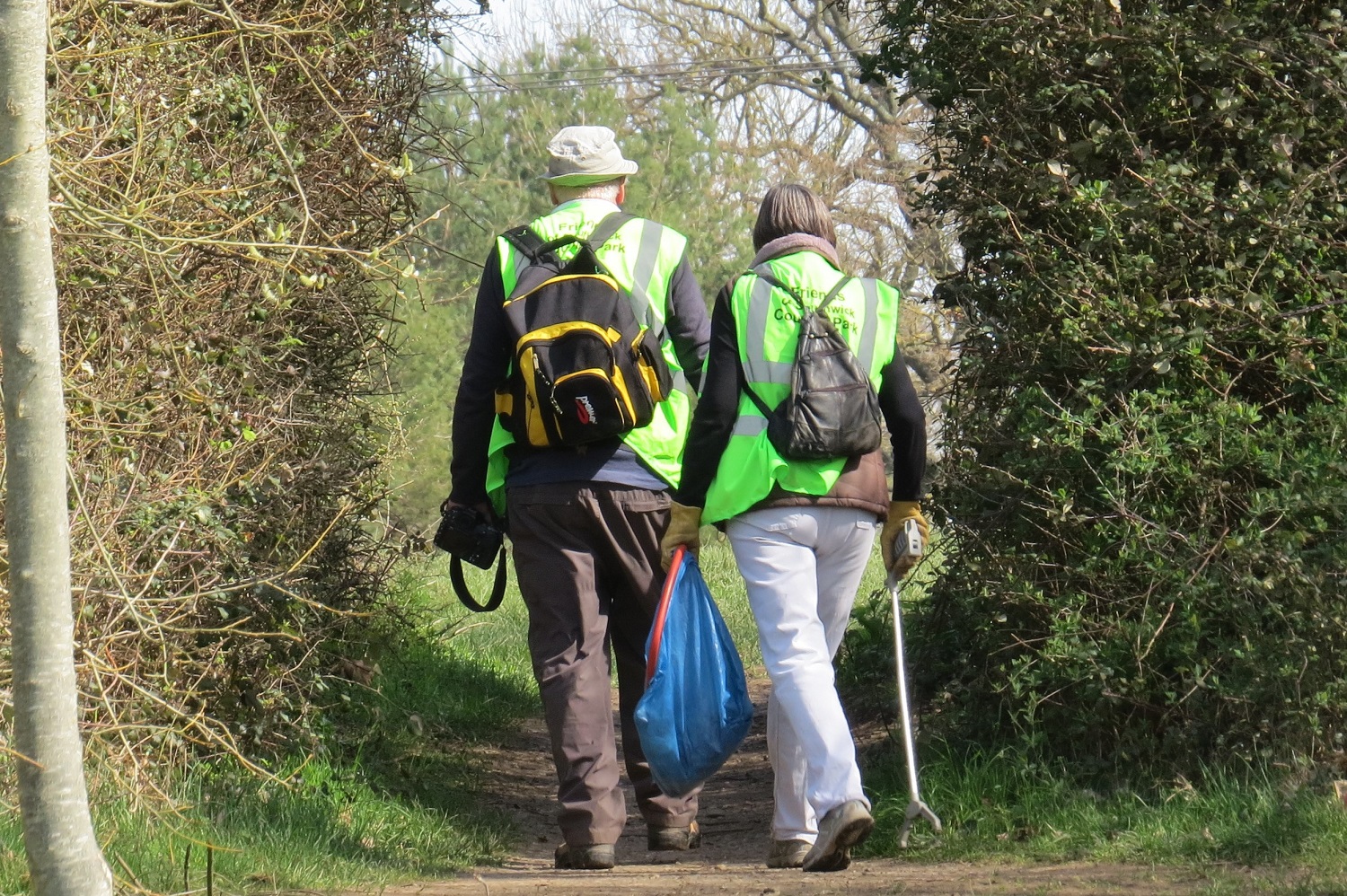


 Southwick Country Park Nature Reserve
Yesterday, with the help of my binoculars, I watched a coal tit, a blue tit and a long tailed tit feeding together from a fat ball container hanging in from a tree in the garden. Barbara Johnson.
How lovely! Now that the breeding season is over, our garden birds will come flocking back to the feeders hanging in the trees.
We actually had far more birds in our garden during the breeding season as parents brought there fledgings to our feeders!
It’s a bit of a relief not to hear squabbling young! jays jackdaws and starlings and to get back to normal again!