
A fascinating fact….
…about pigeons
Pigeons feed their babies on milk! The wood pigeons and collar doves nesting in the reserve’s woods feed their young with something very similar to mammalian milk: a whitish liquid filled with nutrients, fats, antioxidants, and healthy proteins, called crop milk or pigeon milk. It is secreted by the lining of the crop of both male and female pigeons and is regulated by the hormone prolactin, exactly the same hormone that regulates the production of milk in mammals.
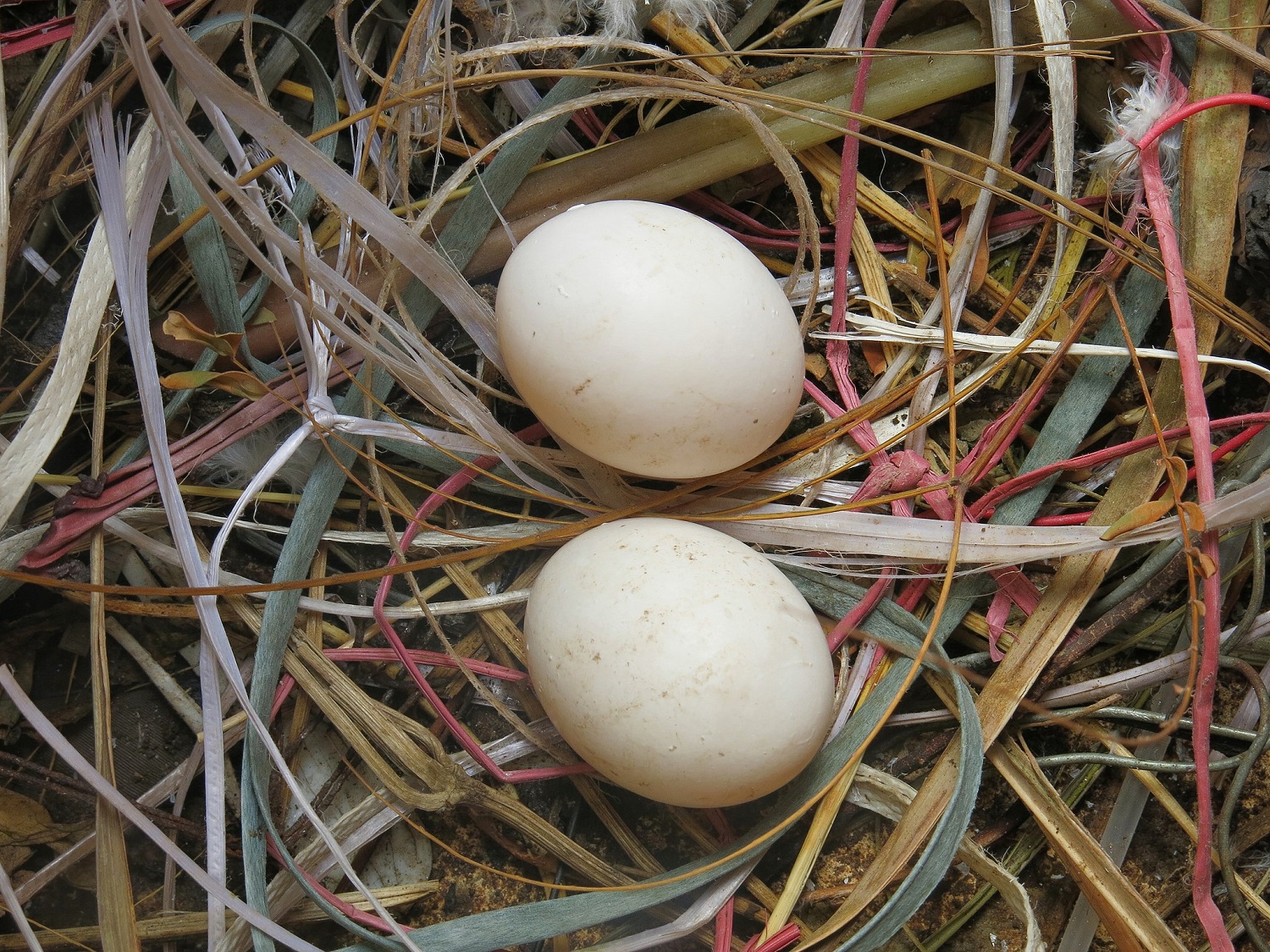

A “pigeon pair” of eggs by Sanjay Acharya (CC BY-SA 3.0) and wood pigeon squabs (CC0)
Pigeons begin to produce crop milk a couple of days before the eggs are due to hatch. They may stop eating at this point so that they can provide the squabs (baby pigeons) with milk that is not contaminated by solid foods from the crop, which the very young squabs would not be able to digest.
The newly hatched squabs are fed on pure crop milk for the first week or so of their lives. Then the parent birds begin to add a proportion of adult food to the mix until by the end of the second week the babies are being fed entirely on regurgitated adult food that has been softened by extra time in the crop. Research suggests that a pair of breeding pigeons can only produce enough crop milk to feed two squabs adequately, which may explain why their clutches are always limited to two eggs.
Our woods are filled with nesting wood pigeons and collar doves at this time of year; their calls and the clatter of their wings are such familiar summer sounds that we hardly pay any attention. It seems extraordinary that we know so little about such ever-present birds. Look up next time you take the path through the woods; look for a pigeon’s nest.

A pair of collar doves (CC0).
Header image by DKG


 Southwick Country Park Nature Reserve