
After the breeding season is over, the reserve’s birds, like this untidy robin. moult.
Feathers don’t grow continuously like our hair or nails do; feathers wear out and have to be replaced. The whole year’s wear and tear is topped off by the demands of nest building and raising chicks. A robin’s plumage, particularly the hen bird’s, can look quite ragged by the time its brood leaves the nest.
Robins moult over a five week period towards the end of summer; the loss of insulation during a moult is felt less severely during the summer. Most, if not all, of their plumage is replaced. Feathers grow from a follicle, so the new feather pushes the old feather out and for a while the bird looks really dishevelled and untidy, just like the one in DKG’s pictures.
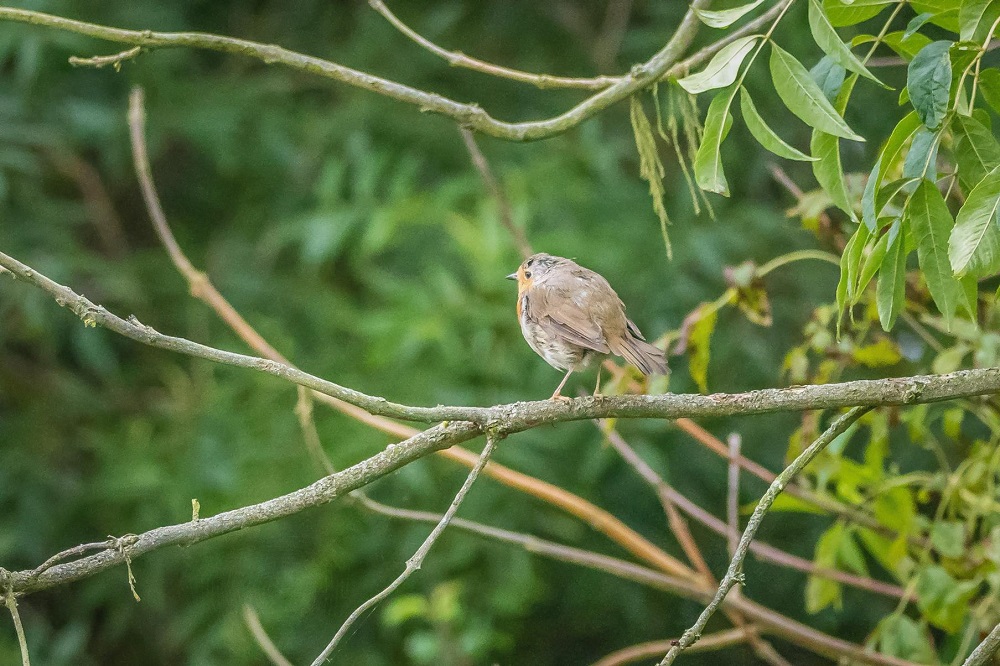
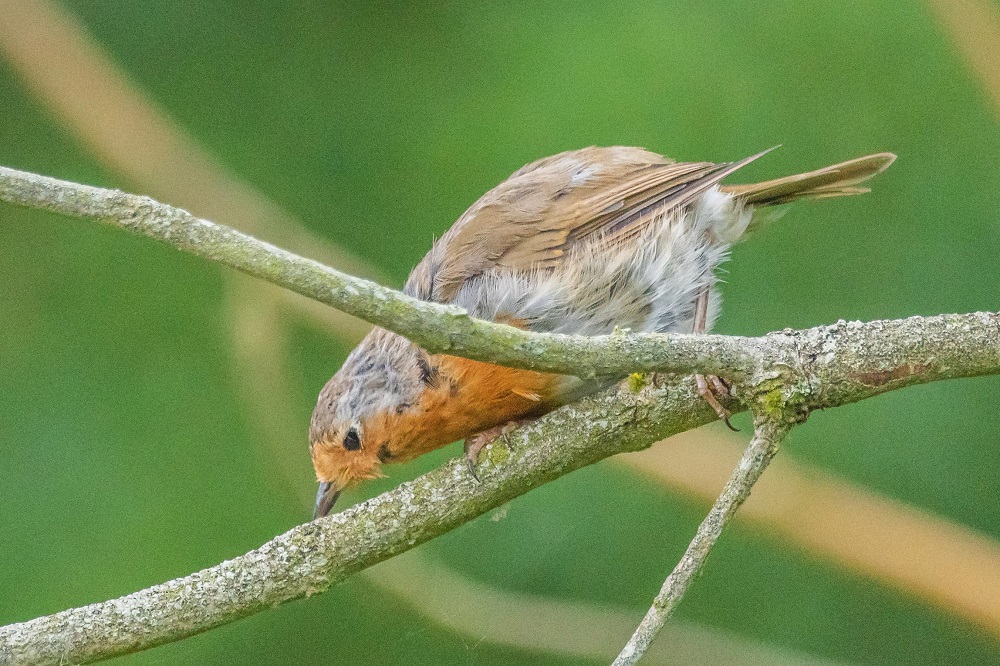

Growing new feathers uses up lots of energy; our moulting robin will have given up its energy-sapping morning song as well as the high places it usually sings from. It will have taken to a quieter life and quieter places, hidden away from predators until its new flight feathers give it back its speed and agility.
Feathers are made of a protein called keratin so our insectivorous robin will be looking for high protein food. Aphids, swarming ants, caterpillars, and the eggs, larvae and pupae of all kinds of flying insects are its usual fare at this time of year.
By the autumn, our robins will be wearing their refurbished plumage: sleek and polished with a shiny, new red breast, all ready for Christmas.
Photographs: DKG


 Southwick Country Park Nature Reserve