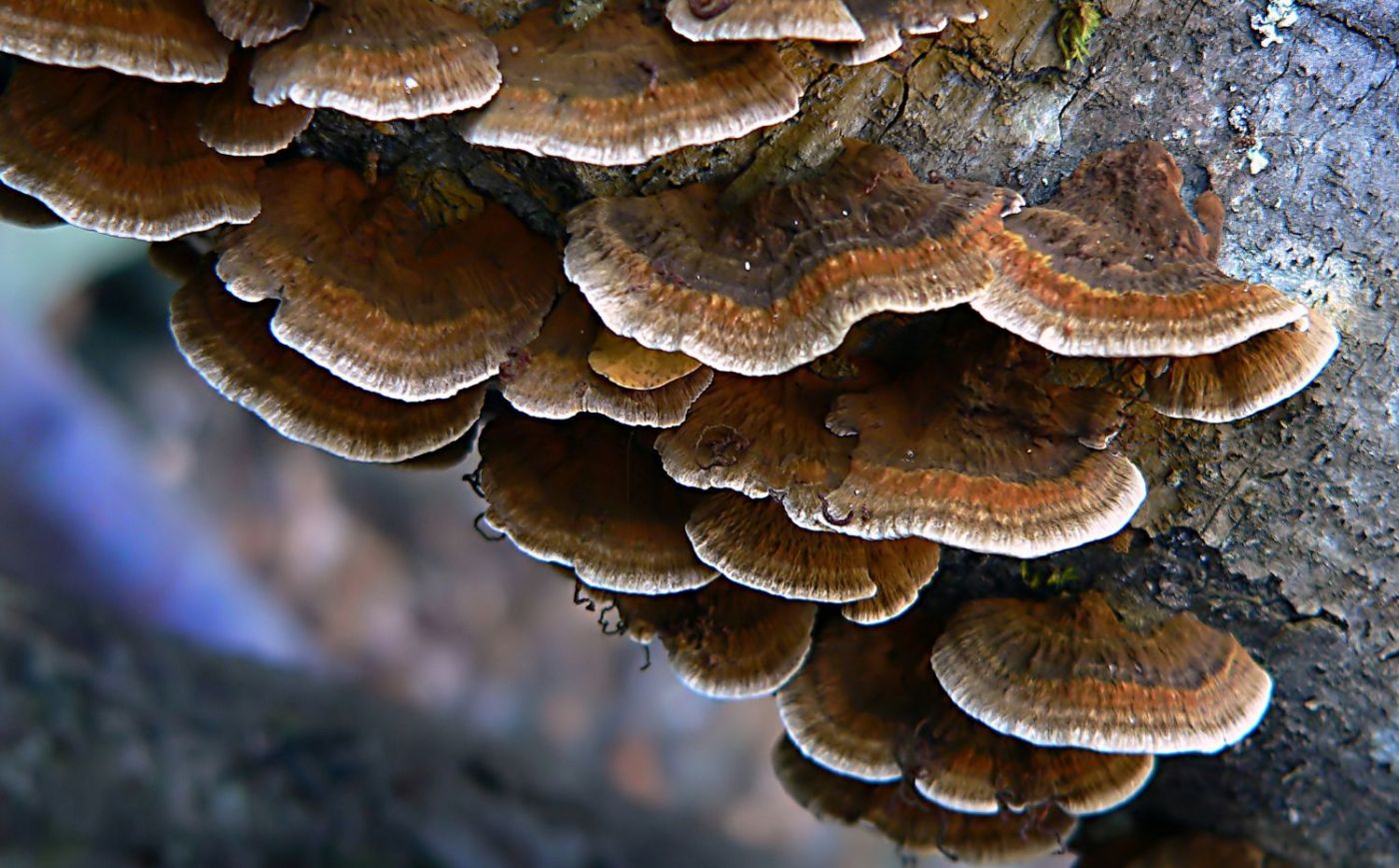
These are a species of bracket fungus common in the reserve: turkey tail (Trametes versicolor). The main part of the fungus, the mycelium, is growing invisibly inside the tree. These beautiful outgrowths are the fruiting bodies, part of the fungus’s reproductive system.
While turkey tail is found on both live and dead wood in our copses, here it is growing and feeding in the heartwood of a living tree. The working parts of a tree, the xylem and phloem, that transport food and water between its leaves and its roots, are unaffected but the heartwood is slowly decaying. Eventually, the heartwood of the host tree will rot away and parts of the trunk will become hollow. Despite this, a tree that is host to a bracket fungus can continue to thrive for many years, even for centuries.
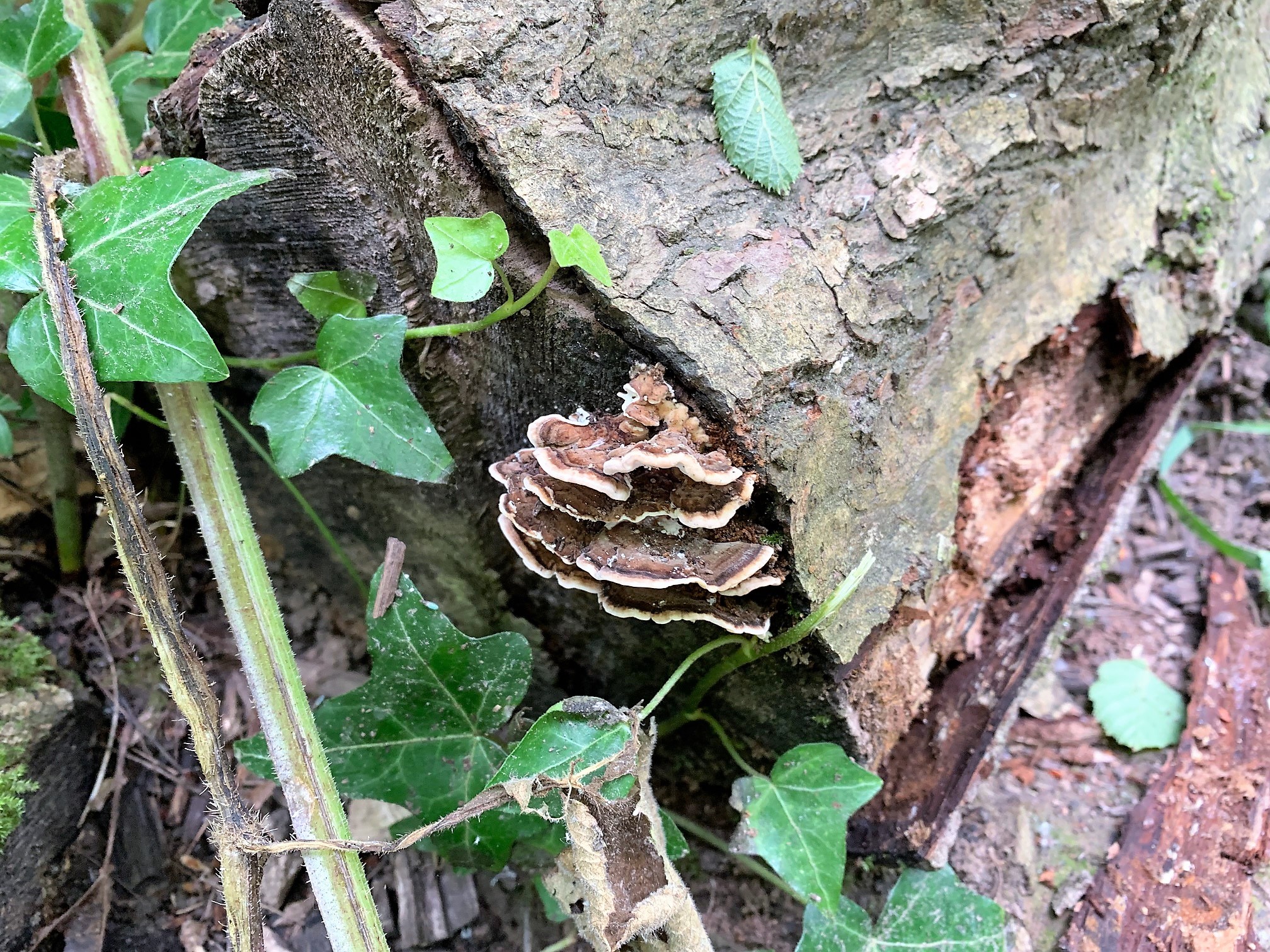


More turkey tail in the reserve, this time growing on dead wood
Bracket fungi are also known as polypore fungi because their spores are distributed from pores or tubes on the underside of the brackets, which can be tough, leathery or woody, and plate-like. Most polypore species produce new brackets each year but some, like the turkey tail, continue to grow from year to year, marking each year’s grow with a discernible ring.
While turkey tail brackets are small, rarely wider than the palm of your hand, some species can produce enormous brackets. The old ash tree at Fiveways, near the reserve’s picnic place is host to what we think is a well established shaggy bracket (Inonotus hispidus), which grows huge brackets, more than 30cm across by the end of September. Take a look next time you pass.


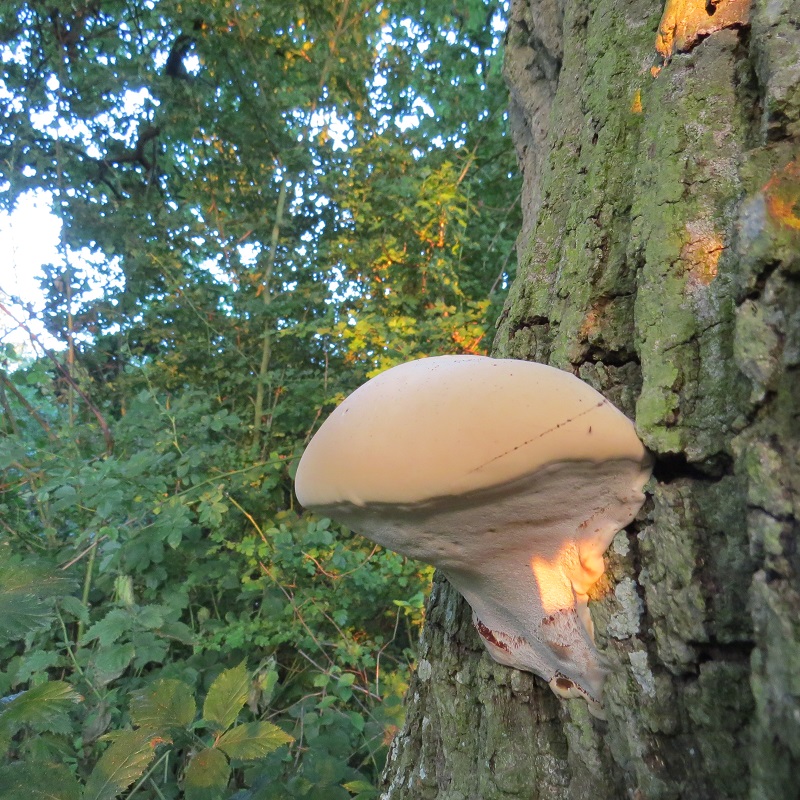
Here are more species of bracket fungus found in the reserve
There are more than 40 different species of bracket fungus in the UK and over a thousand known world-wide. Note the use of the word known: Kew estimates that we have described and named only 10% of the planet’s fungi so it is very likely that both those numbers will grow.
Fungi have a poor reputation: too often they are labeled destructive, something to guard against. If you Google bracket fungi, the Royal Horticultural Society pops up top of the list to tell you that bracket fungi are dangerous organisms from which your garden or orchard trees need protection. But the decaying heartwood of a host tree is important micro-habitat for wildlife. There are estimated to be more than 2,000 species of invertebrates in the UK that need decaying wood to complete their lifecycles.
We need to pay more attention to what Sir David Attenborough calls The Whole Thing: the beautiful tree, the backet fungi and all the invertebrates it plays host to as well as the creatures that live in the holes when the heartwood has rotted away.
Go carefully in this strange weather.
Header image: turkey tail by Bernard Spragg (PDM1) flickr.com


 Southwick Country Park Nature Reserve