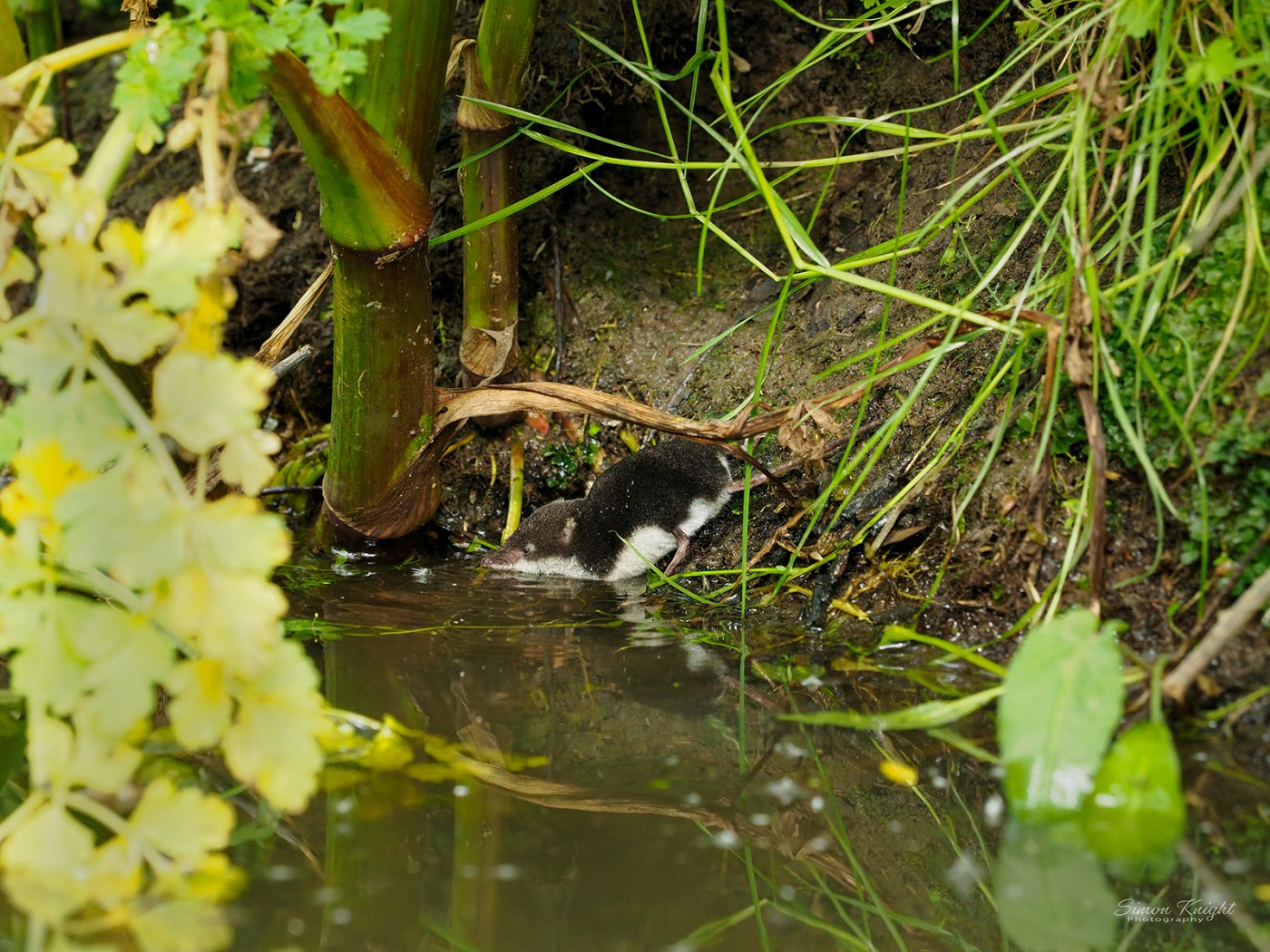
There are water shrews in the reserve. This header picture was taken by Simon Knight in the Lambrok’s tributary stream at the bottom of Kestrel Field.
The UK has three native species of shrew, all of them belonging to the Soricinae subfamily, commonly called red-toothed shrews because the enamel on the tips of their teeth contain a red or orange iron-based pigment. The water shrew is the largest of the three. Including its tail, it can be as long as 17cm, which is almost twice as long as a pygmy shrew and, at 12-18 grams, it is twice as heavy as a common shrew. Although we think of shrews as tiny, the water shrew is about the same size as a largeish house mouse.


As their name suggests, water shrews are semi-aquatic, adapted to life in and around water. Their thick, dense, water-repellent fur is dark grey on top with a white under-belly, a system of counter-shading that allows them to hide from predators. Looked at from above, their dark back blends into the dark water; from below, the white belly prevents them from standing out against the sky. There are further adaptations: a water shrew has large back feet with a fringe of stiff hairs that are thought to serve the same function as webbed toes, and on the underside of its tail is a line of stiff hairs that act as a keel.
Water shrew lives are short and undertaken at a frantic pace. Born in the summer, they spend their first and only winter as a sexually immature sub-adult. They become sexually mature in the following summer and during that summer the females can produce as many as three litters, each one of up to fifteen pups. The adults die at the end of this, their only breeding season.
It’s very difficult to assess water shrew population numbers. They are shy, elusive and rarely seen. The Mammal Society says that there were only 3,300 reported sightings in the period 2000 – 2016, as compared to 8,500 reports of the common shrew. The Society’s best guess for the nationwide population of water shrews is 700,000… “but there could be as few as 240,000 or as many as 1.9 million.” Nevertheless, the species is included in the UK’s Red List as being of Least Concern.


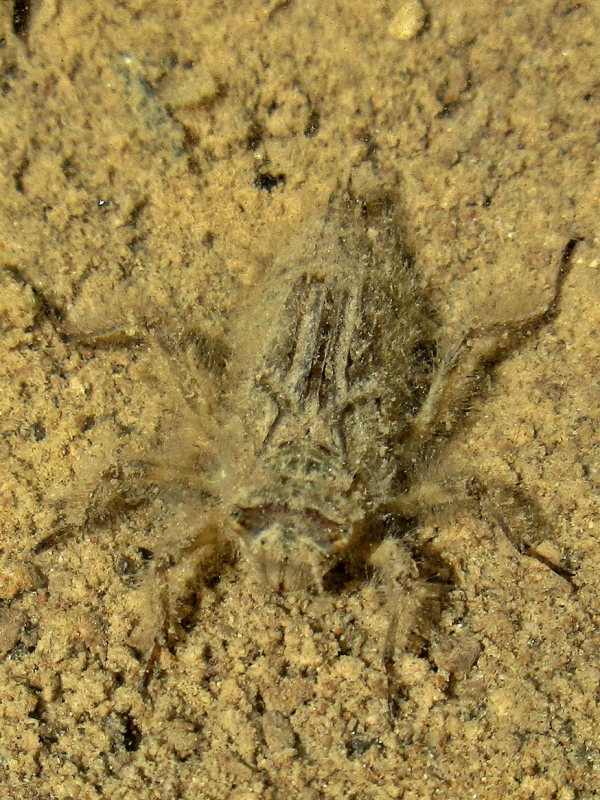


A water shrew’s menu
Water shrews are carnivorous predators, with a very high metabolism and little capacity to store fat. They are therefore ferocious underwater hunters, searching for aquatic invertebrates, tadpoles, newts and small fish. On dry land, equally driven, they hunt earthworms, beetles and the odd crunchy snail, a menu that suggests they are willing to eat almost anything they can catch.
A water shrew’s bite is poisonous which makes it and the common shrew (Sorex araneus) the UK’s only venomous mammals . Their saliva contains a cocktail of toxins that stun and immobilise their prey; this enables them not only to subdue larger creatures, such as frogs, but also, apparently, to store comatose prey in specially dug larders: the stuff of nightmares.
Why on earth do we insist on thinking of small furry creatures as cute? The reserve’s water shrews are fascinating, predatory, ruthless and just a tiny bit horrifying; let’s treasure them for what they really are.
Header Image: Water shrew (SCPLNR 31.05.22) by Simon Knight



 Southwick Country Park Nature Reserve
Wow! I thought awe how cute are they! Then I continued to read about the stuff of nightmares…. never saw a horror film about shrews but they are lethal!
Red in Tooth and Claw. The more we learn about all these tiny little-regarded creatures, the more fascinating it becomes. I have never even seen a water shrew and if you had asked me I would probably have denied that there were any venomous mammals anywhere in the UK. We live and learn.