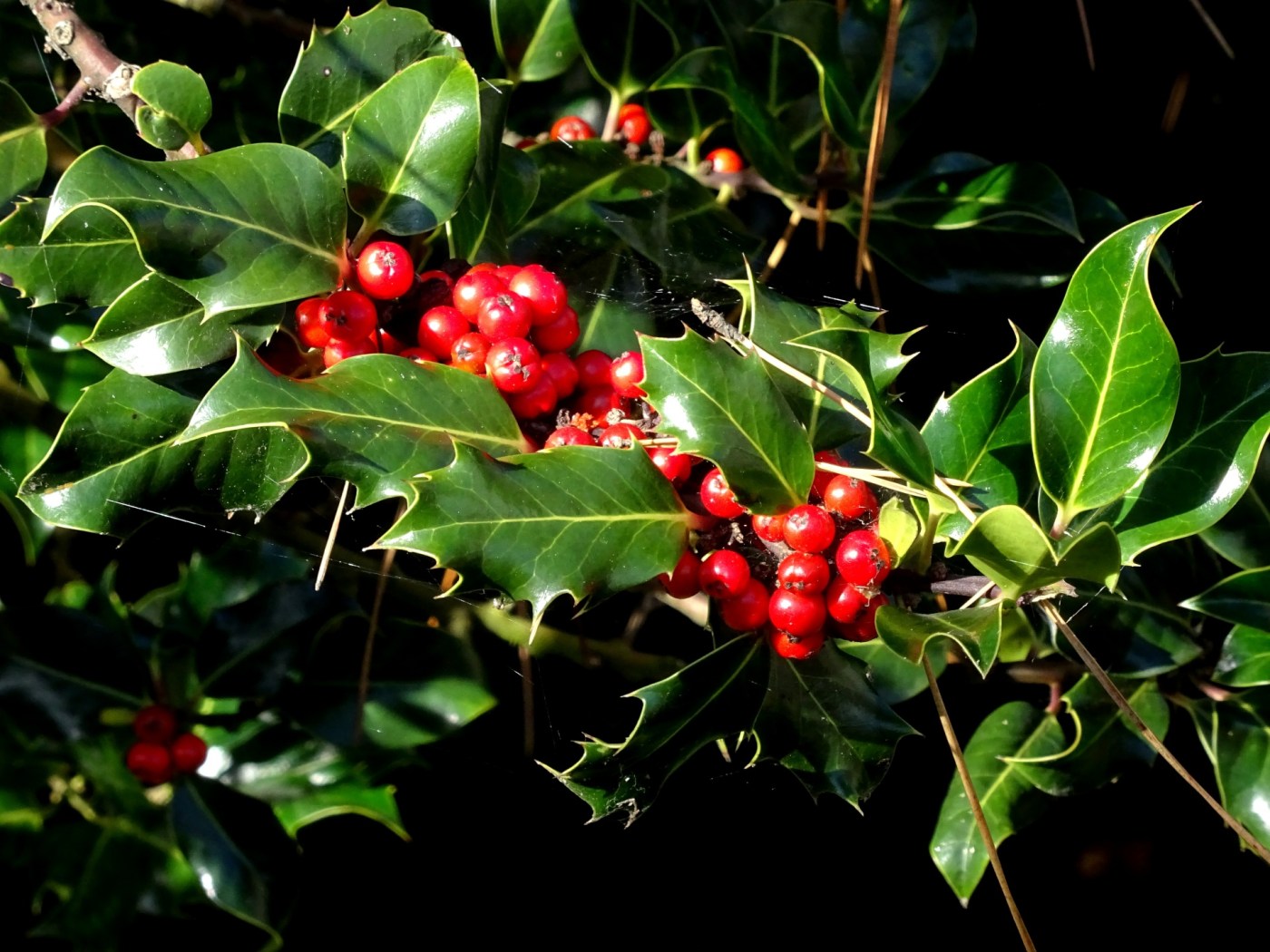
Here are some interesting holly-facts to accompany you in your preparations for Christmas.
ONE: our common holly’s scientific name is Ilex aquifolium. The species’ name, aquifolium, comes from the Latin words for needle (acus) and leaf (folium): prickly leaved.
TWO: a mature holly tree can be as tall as 15 metres and as old as 500 years.
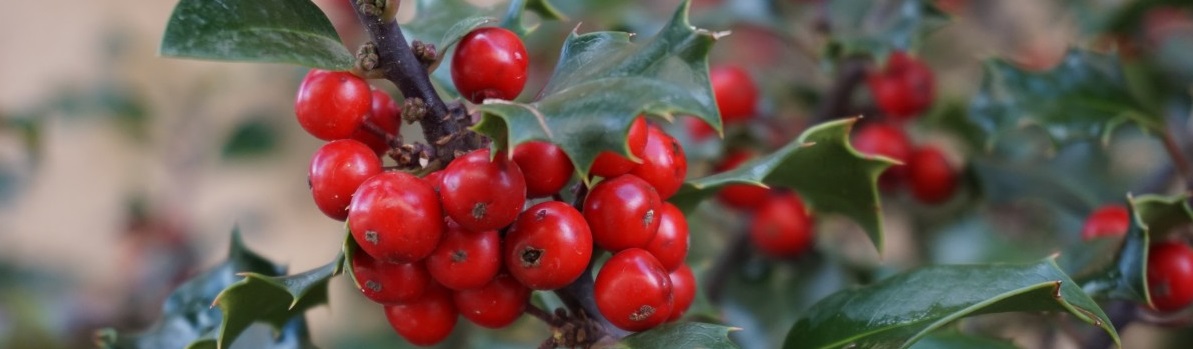
THREE: it is dioecious species, which means that there are male and female trees, which bloom with separate male and female flowers during the spring and early summer. The male flowers have longer stamens than the female flowers but it isn’t until the female flowers begin to develop into the familiar scarlet berries that you can be sure whether your holly tree is a male or a female tree. A male tree will not provide berries no matter how close to Christmas it is.


FOUR: not all holly leaves are spiky. In general, the younger leaves are the spiky ones and the older leaves are smoother. But recent research has found that a holly tree can generate spikier leaves as a response to browsing animals, which suggests a more complex picture: the topmost leaves are not only the oldest, they are the furthest away from the dangers of browsers.
FIVE: despite these different levels of spikiness, all of the leaves on a holly tree are genetically the same, sharing the same DNA sequence. When environmental factors affect the way a DNA sequence is expressed (with or without spikes, for instance, in response to browsing animals) these are called epigenetic changes. Epigenetic changes don’t alter the tree’s DNA, but they alter how the tree reads its DNA in a certain environment.
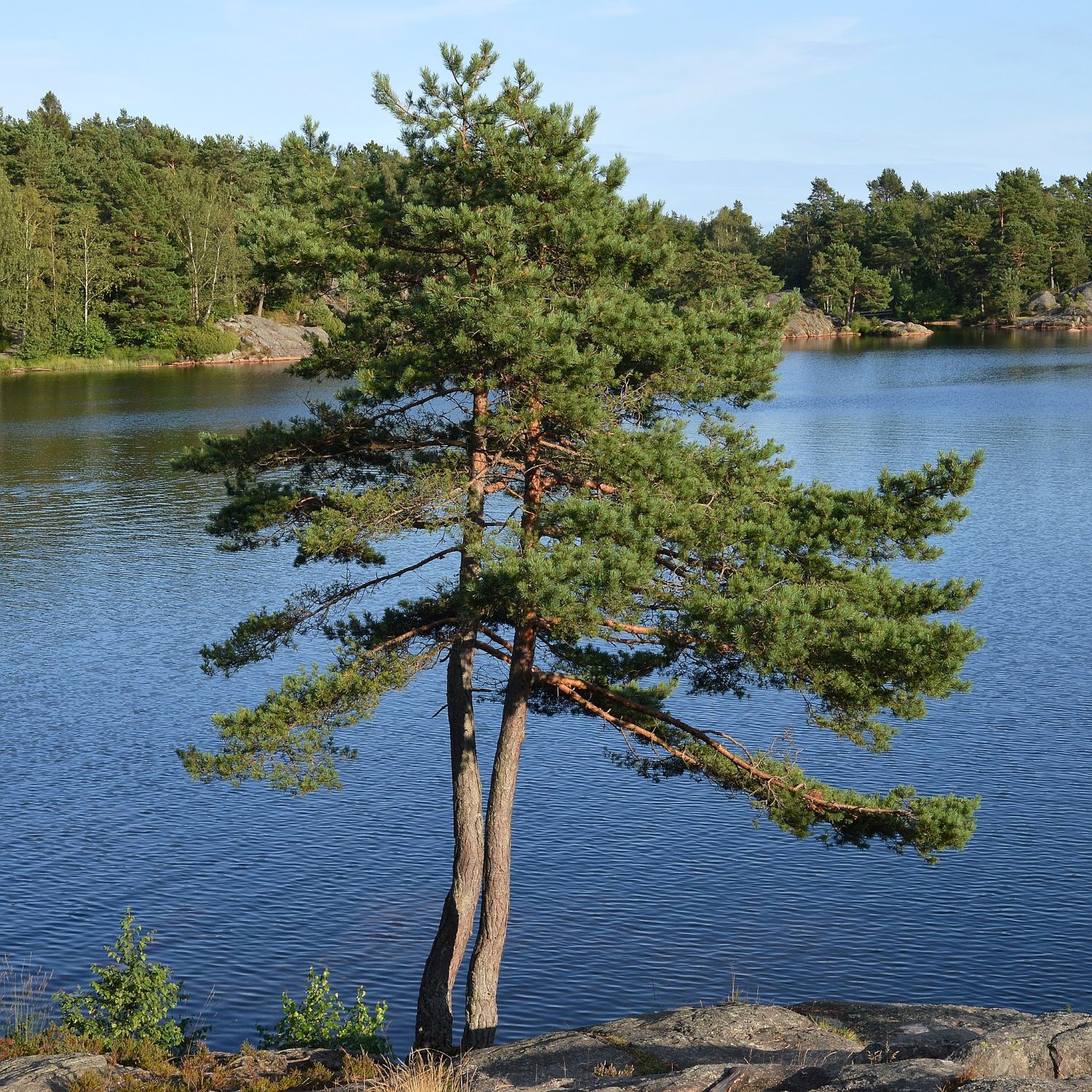
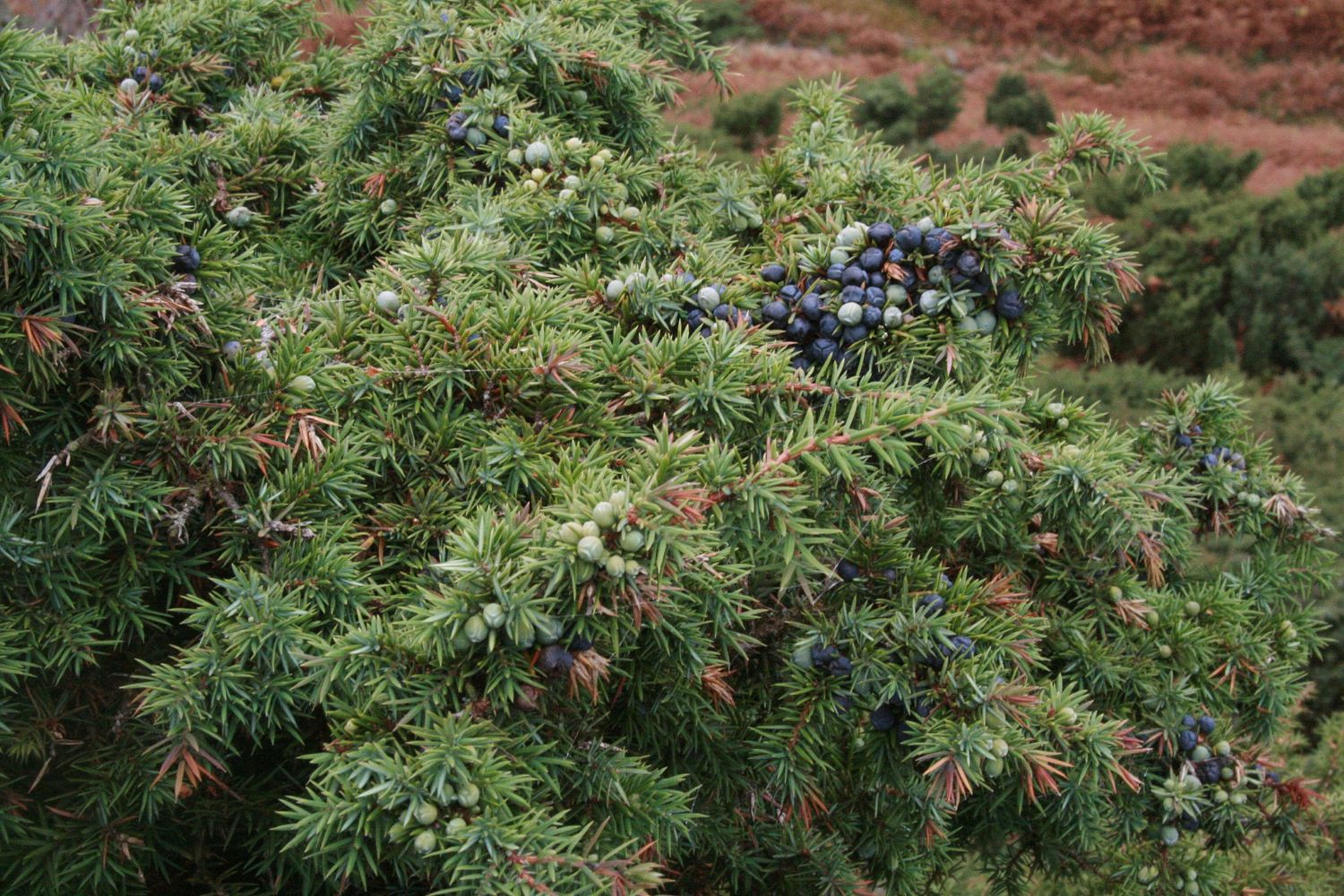


SIX: holly is one of only five evergreen trees native to the UK; the other four are box, juniper, Scots pine and yew.
SEVEN: holly berries are poisonous to most mammals, including humans. Every year, children are poisoned by eating the holly berries on the decorations on their Christmas dinner table – just to be on the safe side, here is a link to the Poison Control website.
EIGHT: but holly is not poisonous to birds; for birds they are an important winter food source, particularly late in the year when they have been sweetened by frost.


NINE: traditionally, holly trees were left uncut in a trimmed hedge. In the old religions, holly represented luck and protection, and it was considered taboo to cut a holly tree down. And then, of course, there were the witches … witches are known to run along the top of hedges and a prickly, un-cut holly tree stops her in her tracks.
TEN: before Prince Albert re-invented the Christmas tree, holly bushes were called Christmas trees.


 Southwick Country Park Nature Reserve
very very interesting, thank you.