
ONE: our Christmas robins have a scientific name: (Erithacus rubecula).
TWO: they are passerines, technically insectivores, that belong to the Muscicapidae family


THREE: there are hundreds of ancient myths and legends to account for the association between robins and Christmas but the one we like is a little more modern. Apparently, Victorian postmen, nick-named Robin because they wore red jackets, delivered that other Victorian invention, the Christmas card – and there have been robins on our Christmas cards ever since.
FOUR: another favourite legend has it that the feather’s on the robin’s breast were scorched red as it fetched water for poor souls in Purgatory.
FIVE: Robins sing all year round; they will even sing at night next to bright street lights.
European robin from xeno-canto by Jacobo Ramil Millarengo (CC BY-NC-SA 4.0)
SIX: robins are highly aggressive and will fight to the death over territory. It has been estimated that 10% of all adult robin deaths can be attributed to other robins.
SEVEN: most British robins are sedentary, rarely moving far for from the places where they were hatched. However, about 5% do head south for the winter. Apparently these few migrators are faithful to both their summer and winter territories, even though they might be hundreds of kilometres apart.
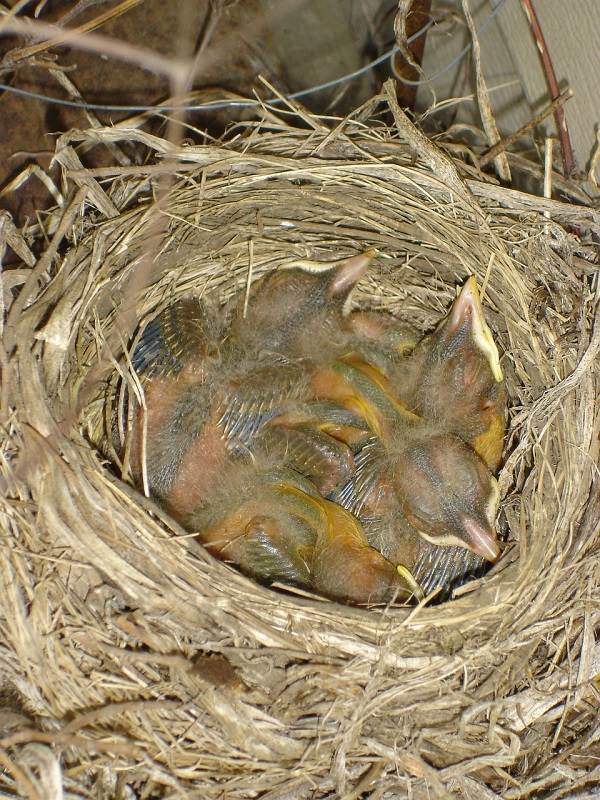
EIGHT: male and female robins look identical and the juveniles of both sexes are brown with golden spots.

NINE: vital statistics
length: 14cm
weight: 18g
wingspan: 21cm
TEN: their conservation status is: common, classified in the UK as Green under the Red List for Birds
Happy Christmas!


 Southwick Country Park Nature Reserve