Time to take down the seasonal greenery!
We have two native species of ivy in the UK, Hedera helix and Hedera hibernica. Hedera helix is our common ivy, which grows anywhere and everywhere throughout the UK. Hedera hibernica is the Atlantic ivy, which is more common in the west of the country. In the reserve, we are almost sure that all our ivy is Hedera helix, the common ivy.
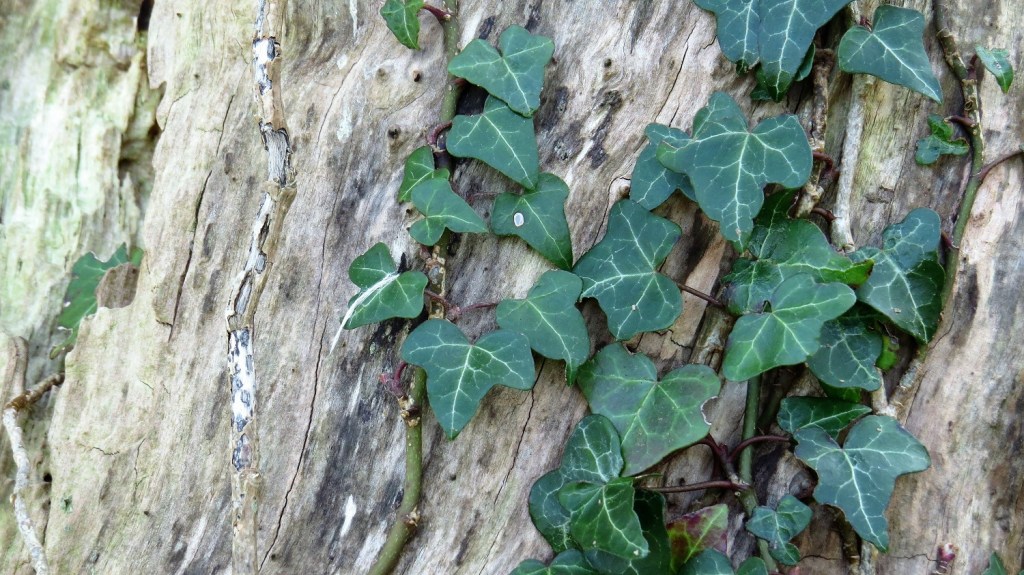

Each of the two species has two forms: juvenile and mature. In both species, the juvenile form has lobed, darker green leaves with pale veins, on long climbing stems, while the mature, flower-bearing form is bushy with smooth, oval, bright green leaves. It can take anywhere between five and ten years for an ivy plant to mature.
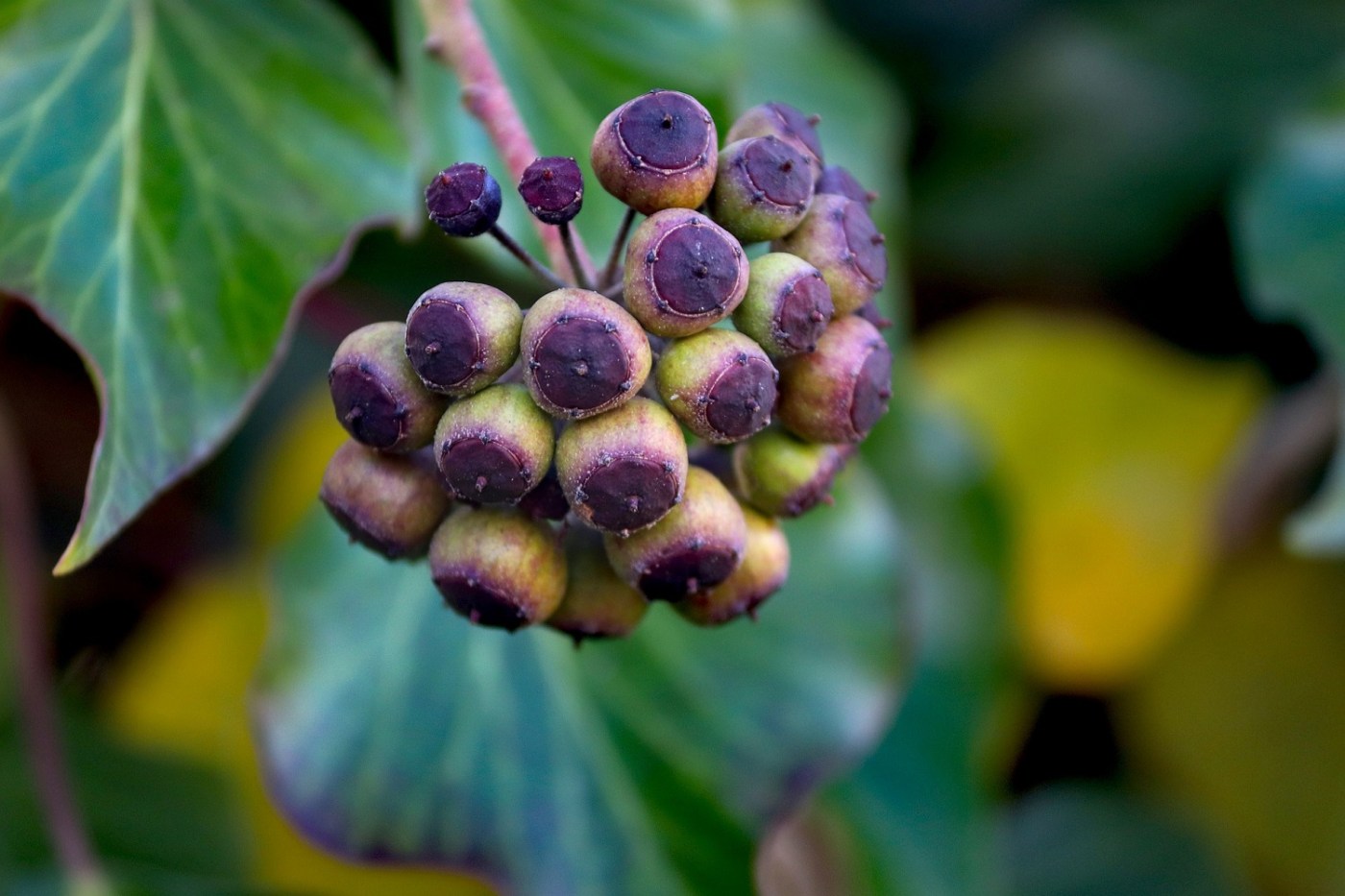
So, in our woodland, the ivy leaves growing on a tree’s trunk will be the lobed immature form trying to climb up to the light, and the mature form with its bright green, smooth-edged leaves, its flowers and berries, is up in the top of the tree.
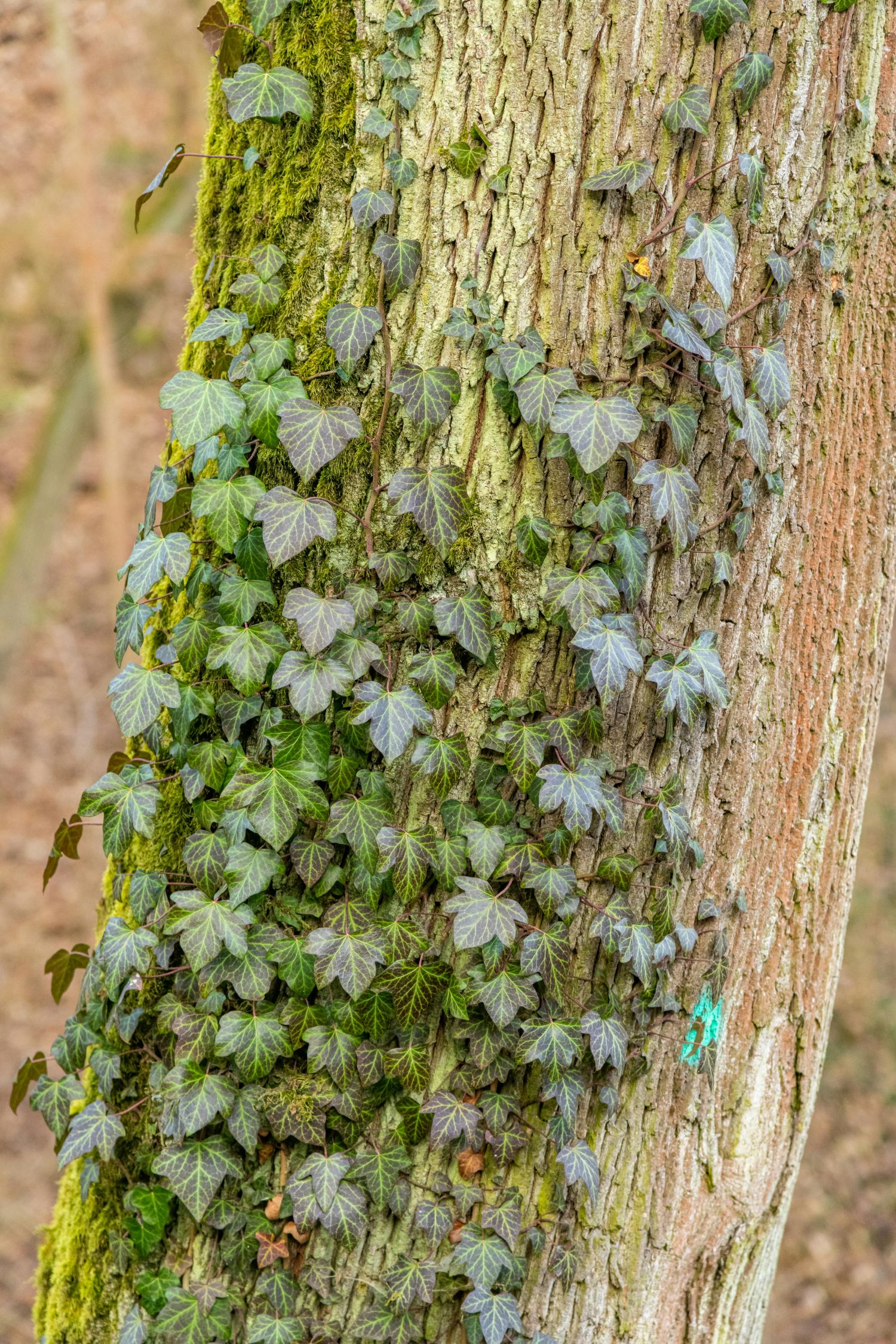
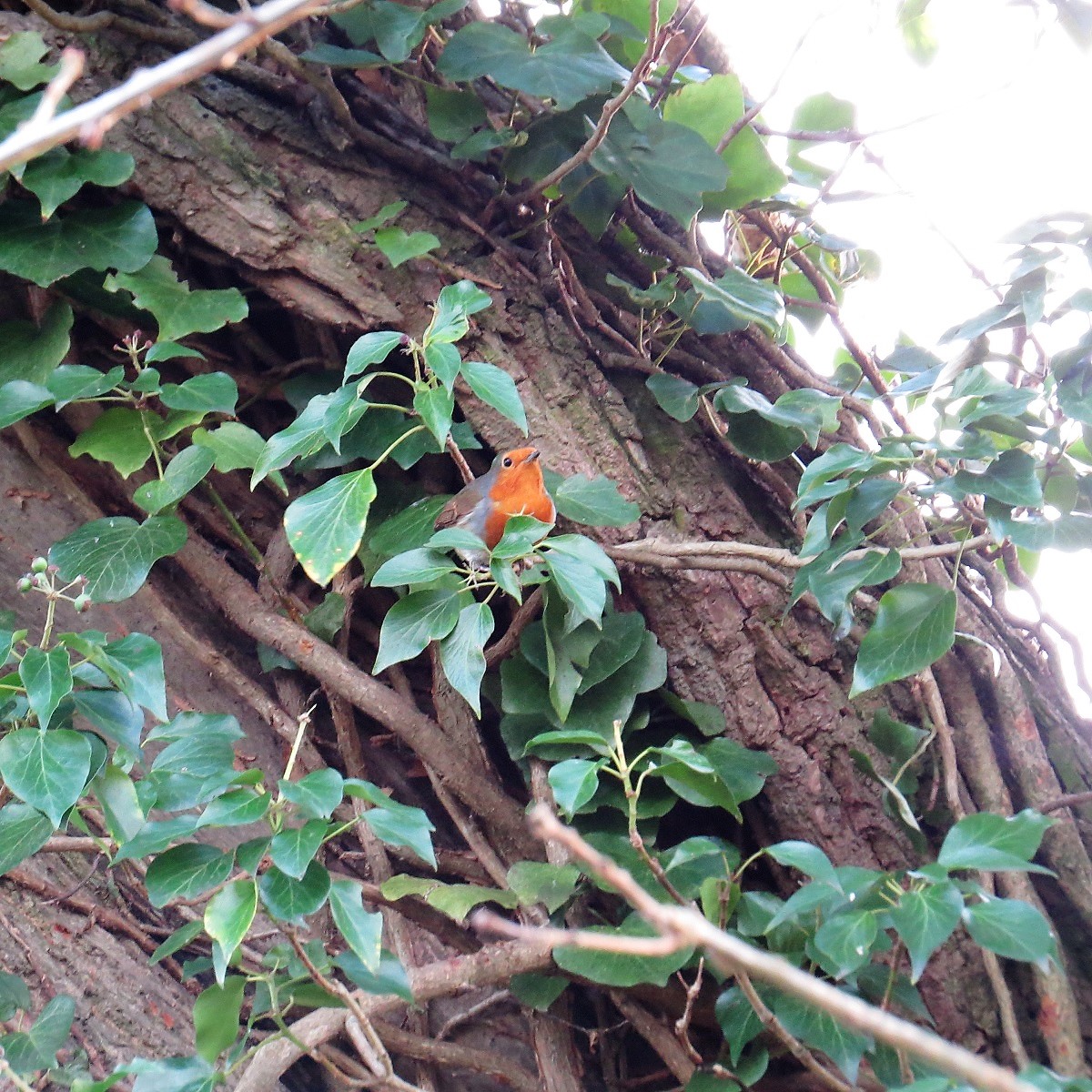
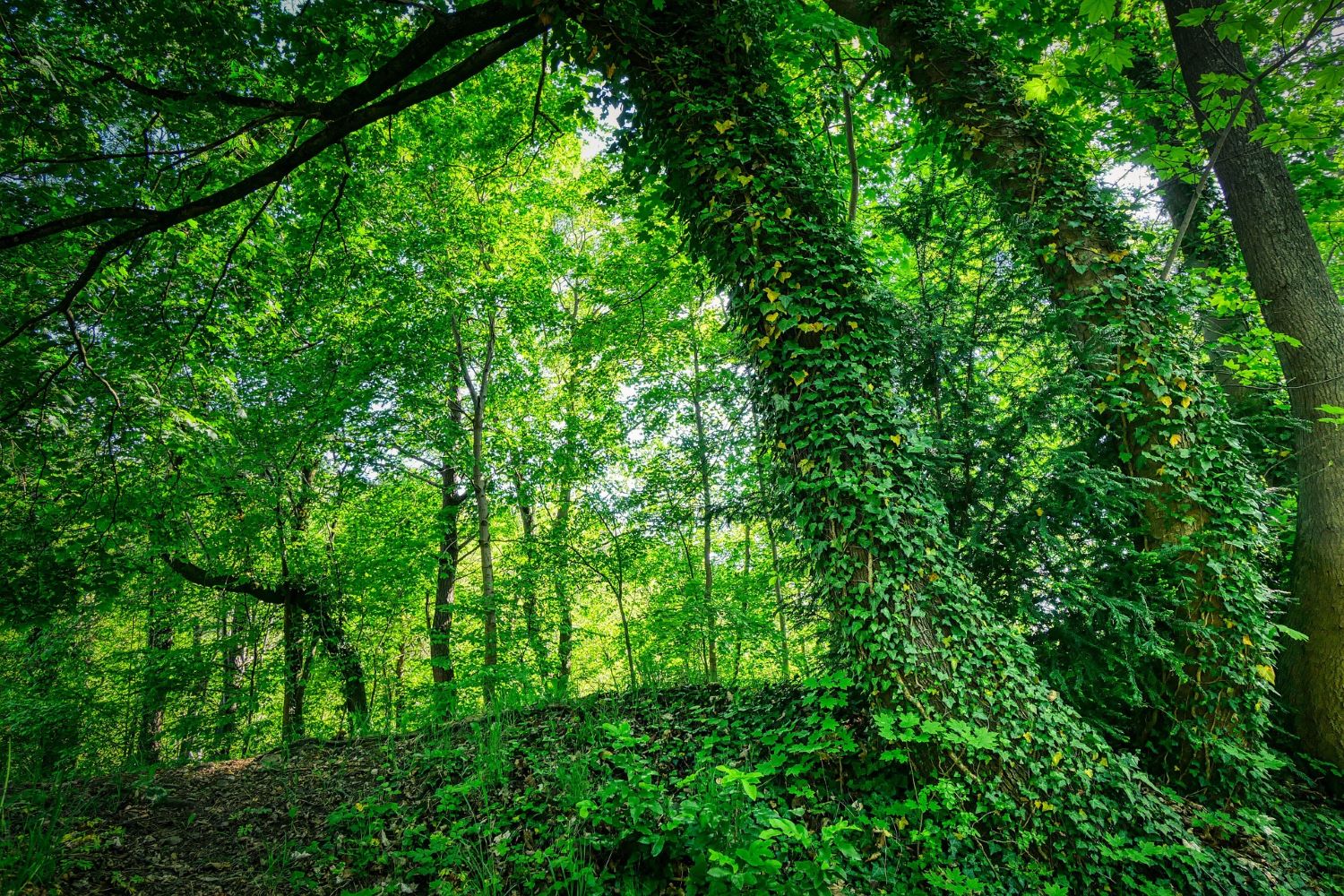
Ivy is often thought to be a parasite, living off a host tree, but ivy has its own separate root system in the soil, accessing its own nutrients and water. Its green leaves photosynthesise, manufacturing the hydrocarbons from which it builds its infrastructure. The holdfast roots on an ivy’s stem are not there to steal a living from the tree; they are there to do just what it says on the box: hold fast.
If you look carefully at trees that are covered with ivy, you will see that many of them are dead or dying. This is not because the ivy has killed them but because ivy thrives best in a dying tree where the leaf-cover is reduced and, as a consequence, there is less competition for light.
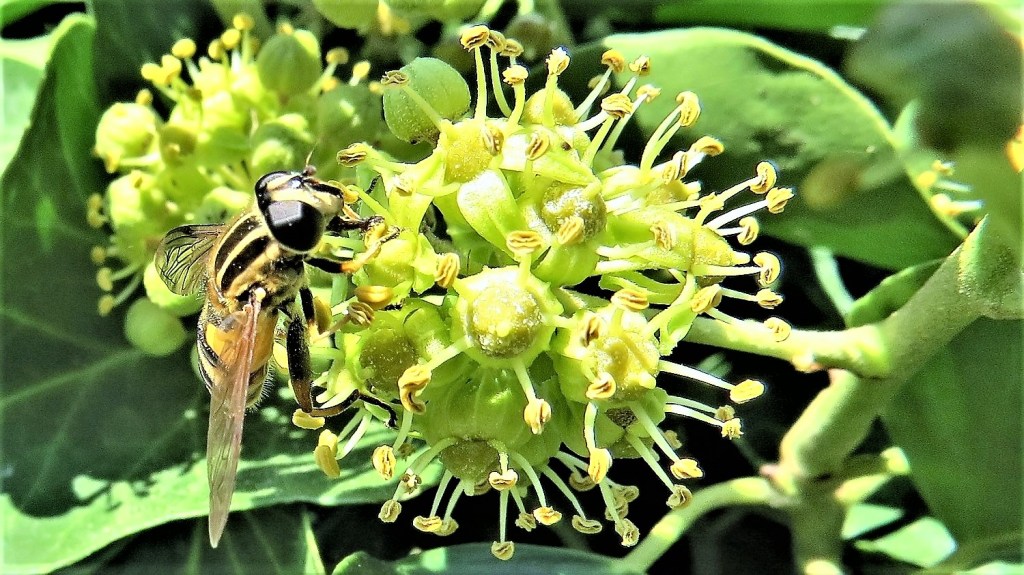
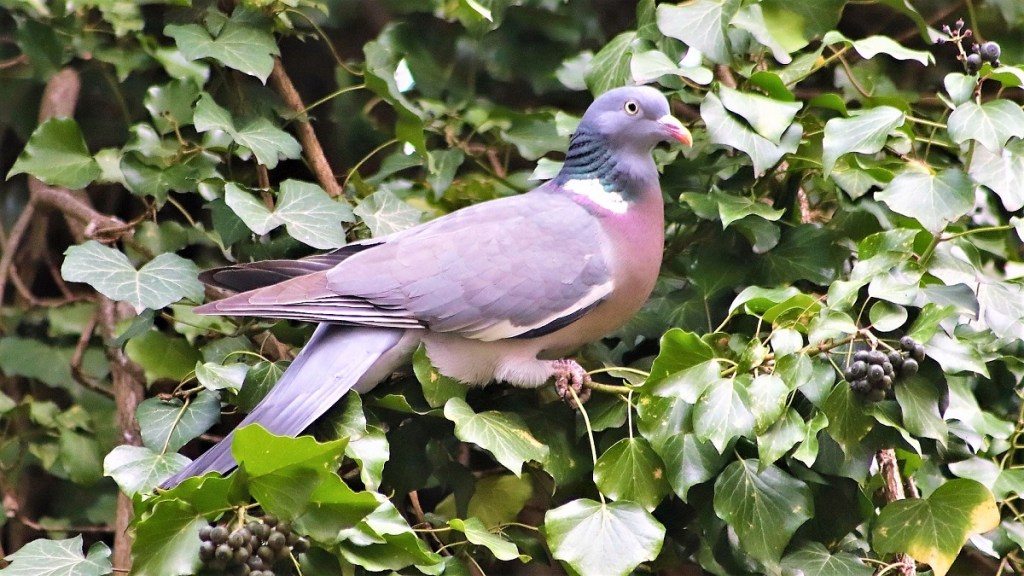
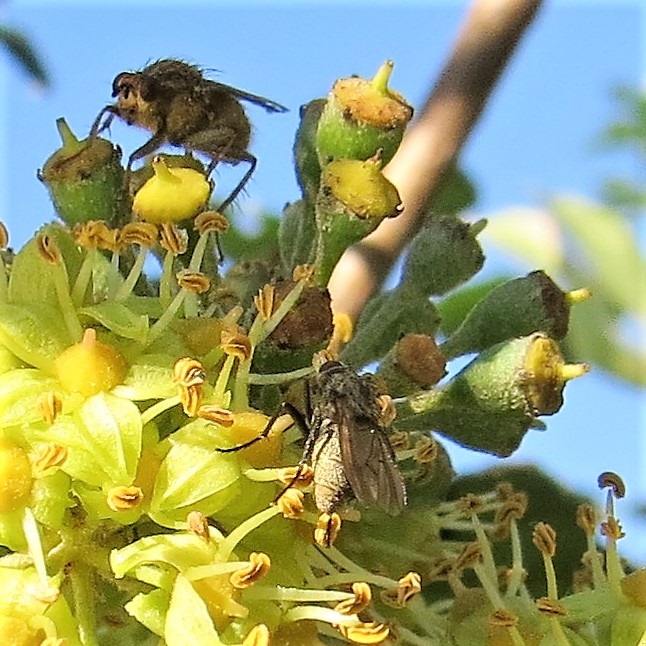
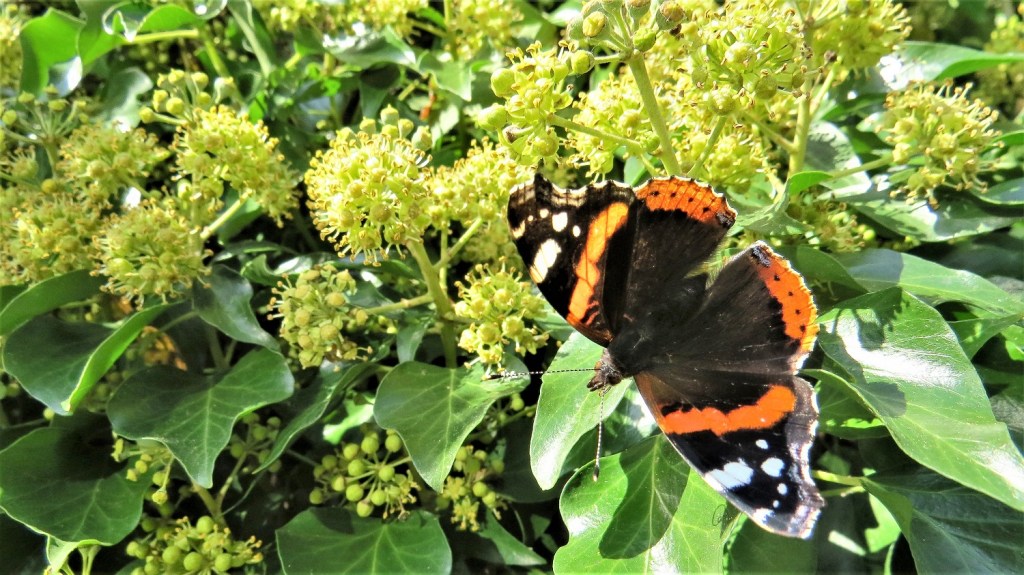
Ivy is habitat: home and a sound living for possibly hundreds of species. Bats roost, birds and small mammals nest in ivy; caterpillars feed on its leaves; wasps, hoverflies (all kinds of flies), bees and butterflies feed on its nectar; pigeons and thrushes get intoxicated on its ripe berries.
Go carefully in this dreadful weather.

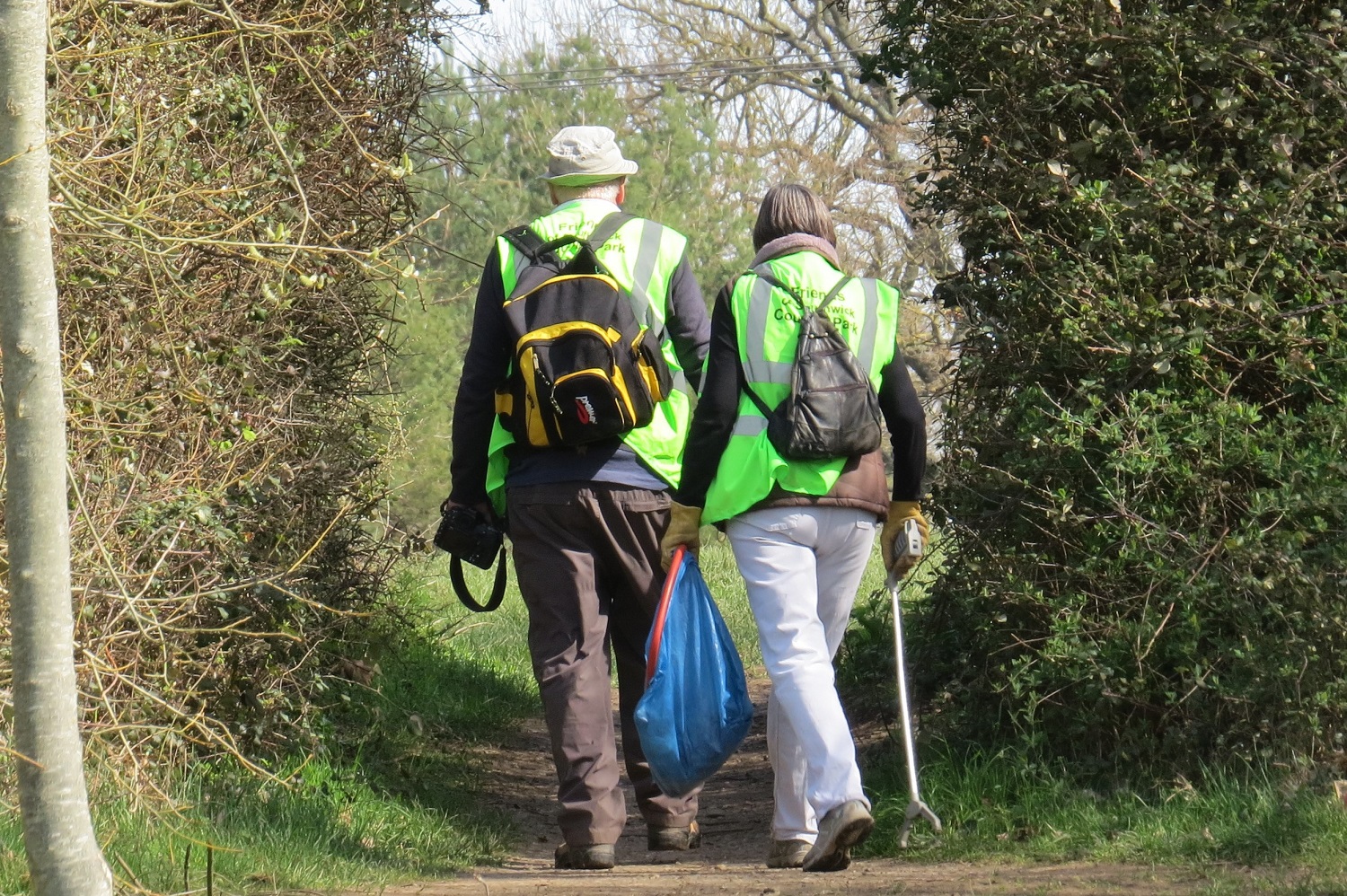


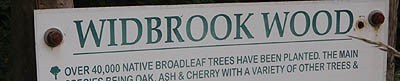
 Southwick Country Park Nature Reserve