
As February begins, at least one of our badger clan’s sows will be either heavily pregnant or nursing up to five newborn cubs.
Typically, depending on her age and status, she will rear just two or three cubs this year. Feeding even two cubs in the middle of winter will be a heavy drain on her resources: like the rest of her over-wintering clan, she is living off her fat reserves. But if she succeeds, the cubs will be sufficiently mature in the spring to leave the sett right at the time when the foraging is at its best and their chances of surviving are at their highest.


Such young badgers cubs are rarely photographed in the wild. These are screen shots from a video by Wildlife Aid, a wildlife rescue organisation
Newborn badger cubs are about the same size as a newborn kitten, covered in thin, grey, silky hair with their dark facial stripes already visible. Their eyes are closed, they are completely helpless and their mother guards them fiercely in a specially dug nursery chamber inside the main sett; she will keep the nursery lined with dry, clean bedding to insulate the cubs from the cold soil. She feeds them exclusively with her milk for at least eight weeks
A badger cub’s eyes do not open until it is five weeks old. As it lives in a dark, underground chamber, where sight is not going to be important, it takes a while for its sight to develop fully. Even at three months old, cubs are still very short-sighted. Sense of smell is the most important sense when they start exploring the tunnels and chambers of their home, at about six or seven weeks. Altogether, the cubs spend at least the first eight weeks of their lives underground, where smell, hearing and touch are far more useful than sight.

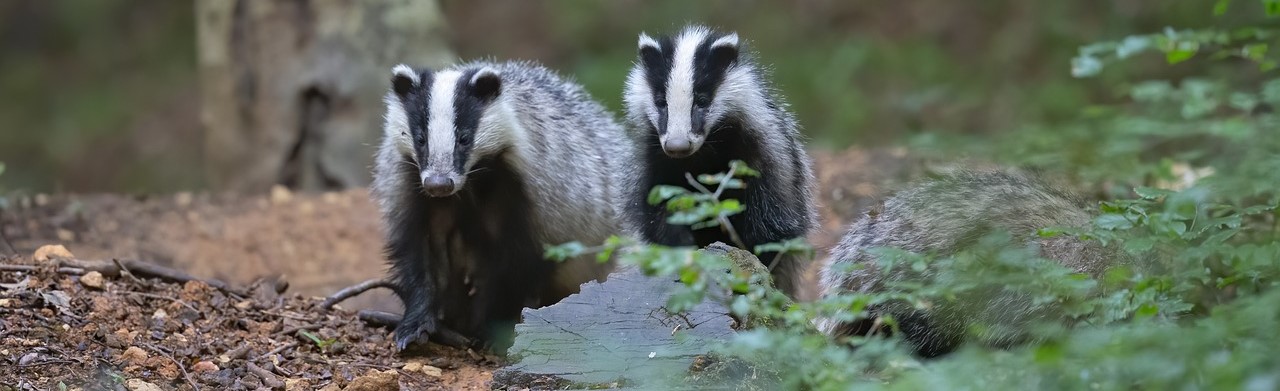

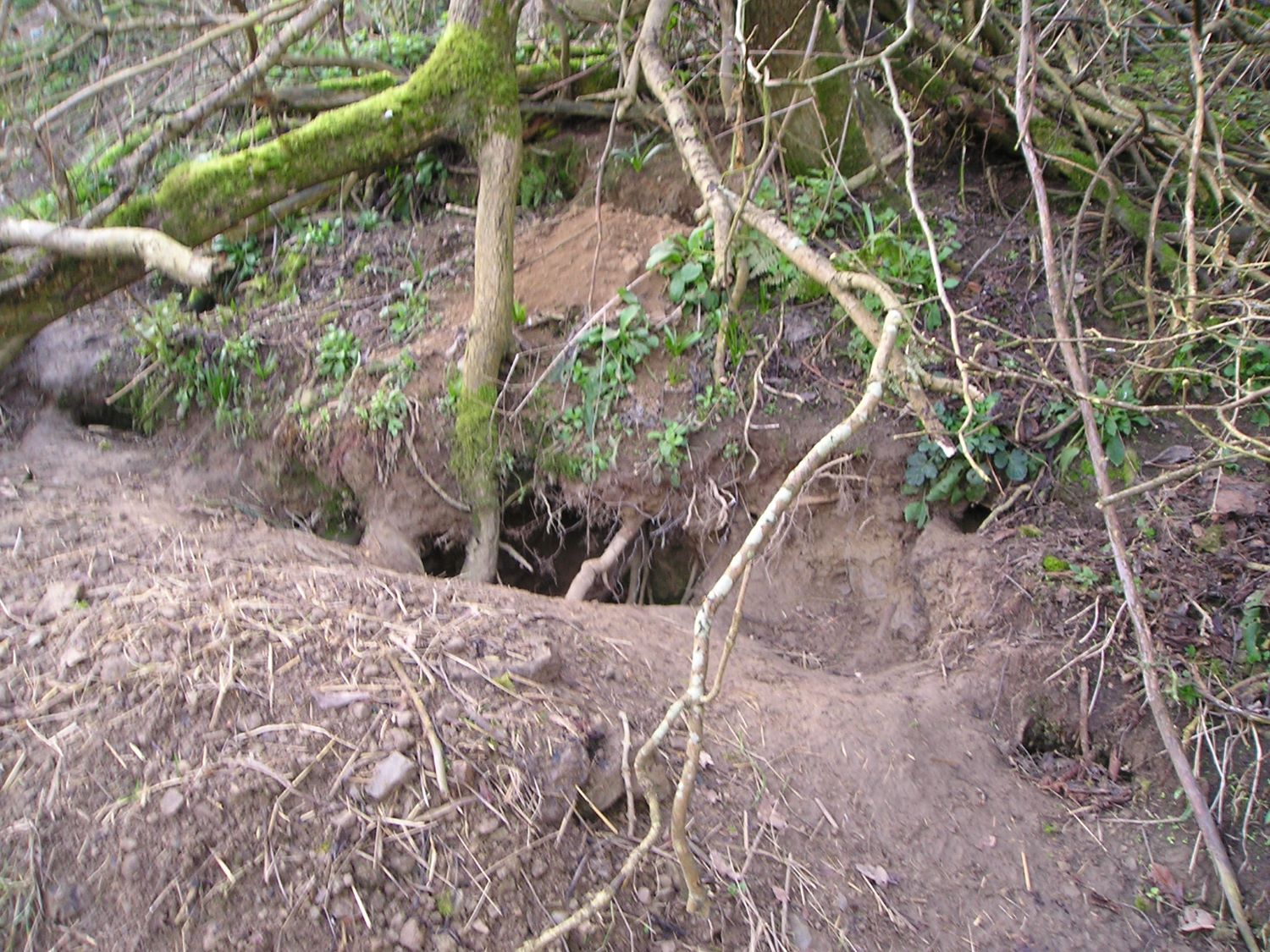
In those first eight weeks, as the cubs explore the sett, they find their way closer and closer to the entrances. Eventually, bold and adventurous, they will leave the sett and foray out into the world, usually in mid to late April, usually with their attentive mother close by, and usually at night. With room to run, badger cubs are energetic and playful, indulging in behaviours that help to develop the social, physical, and cognitive skills they will need to be a successful adult.
The sow weans her cubs when they are three months old. Driven by hunger, they will soon learn to forage for themselves, at first under the supervision of their mother or another of the clan’s adult females, but by midsummer they will be happy to go foraging alone. Together the litter-siblings will explore the clan’s territory, inside the reserve and outside, in the farmland beyond. There are still many dangers, though, for a venturesome cub and on average only one out of every three survives to be one year old.
Header image: a badger carving on the reserve’s Wildlife Wheel at the bottom of The Race.



 Southwick Country Park Nature Reserve