
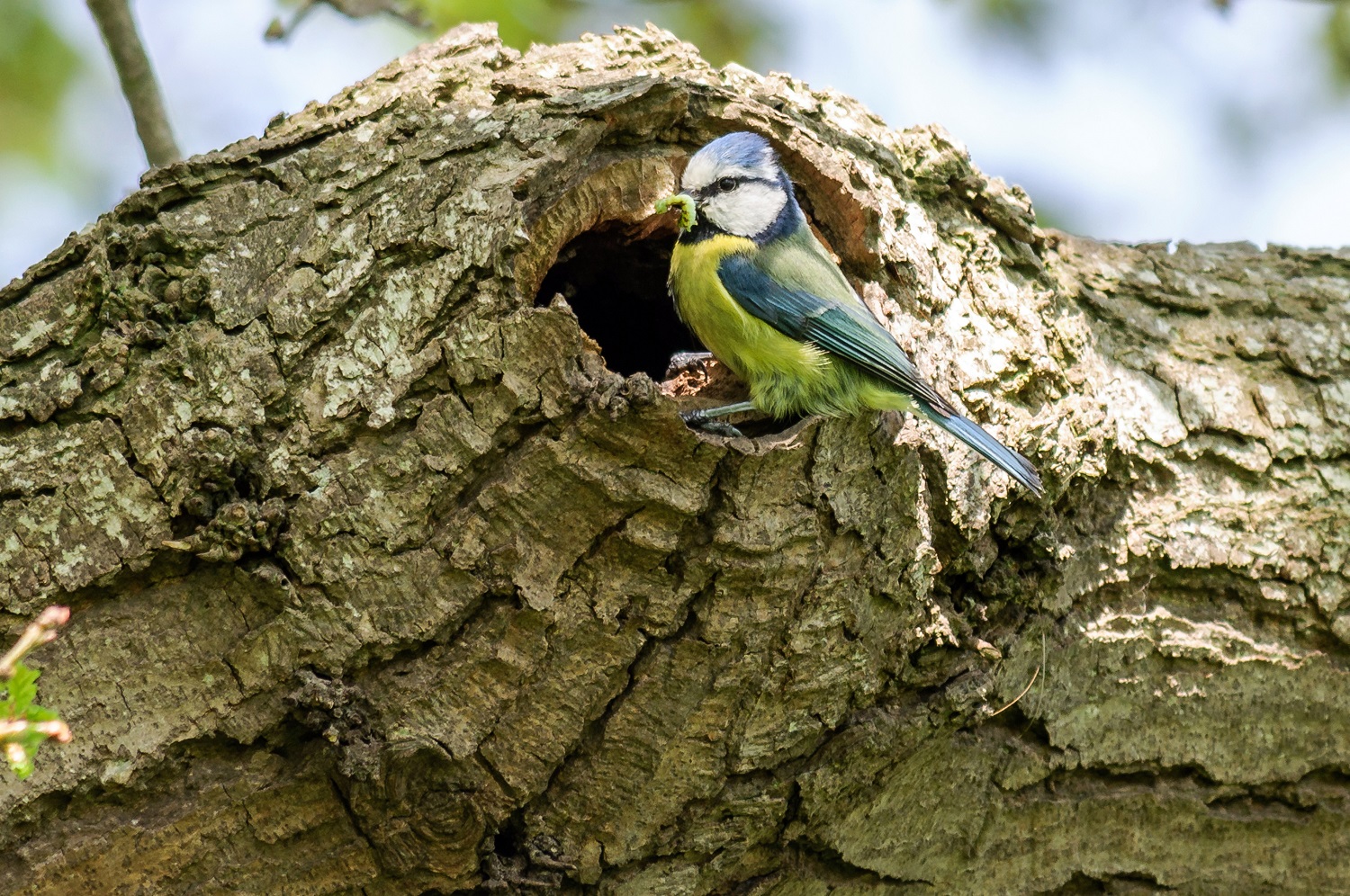
At this time of year, the reserve’s blue tits are pairing up and scouting for nest sites.
Blue tits are secondary cavity nesters. This means that they nest in a hole that was already there, a hole they found as opposed to one they excavated for themselves; excavation is the job of primary cavity nesters.


Blue tits exploring nest holes in the reserve’s oaks.
Our veteran and ancient oaks, home to woodpeckers, boring insects and hundreds of species of wood-decaying fungi, provide many much-favoured and fought over nest sites. If you stand a while under the big oak tree at the bottom of the Arboretum (it’s the one fenced with chestnut paling) you are almost sure to see at least one pair of blue tits reconnoitring and squabbling their way through the branches looking for their ideal home – and quite prepared to fight for it.
Location, as we are told, is everything: our blue tits are looking for shelter from rain and too much direct sunlight, as well as warmth and protection from late frosts, all beyond the reach of predators. Clear flight paths are important, and easy access to mature trees where winter moth caterpillars will be the main food source for the blue tits’ chicks.


Some of the reserve’s veteran oaks.
The pair are also looking for high calorie food; they will need to be in tip-top condition by March, when the breeding season begins. The University of Edinburgh in association with Exeter University and the RSPB conducted an analysis of DNA present in blue tit fecal samples collected in the period immediately preceding the breeding season – and found traces of an astonishing 400 invertebrate species. Obviously, our blue tits’ diet, as they prepare for spring, is much richer and more varied than was previously thought.
Surprisingly, winter moth caterpillars were substantially present among that 400 species. It has always been assumed that winter moth eggs don’t hatch until April or May, when the blue tit chicks also hatch, but this research is suggesting otherwise. A synopsis published on the university’s webpage, Biological Sciences, raises the possibility that the early hatching of some caterpillars might act as a cue for the blue tits to begin the delicate timing of their breeding season.

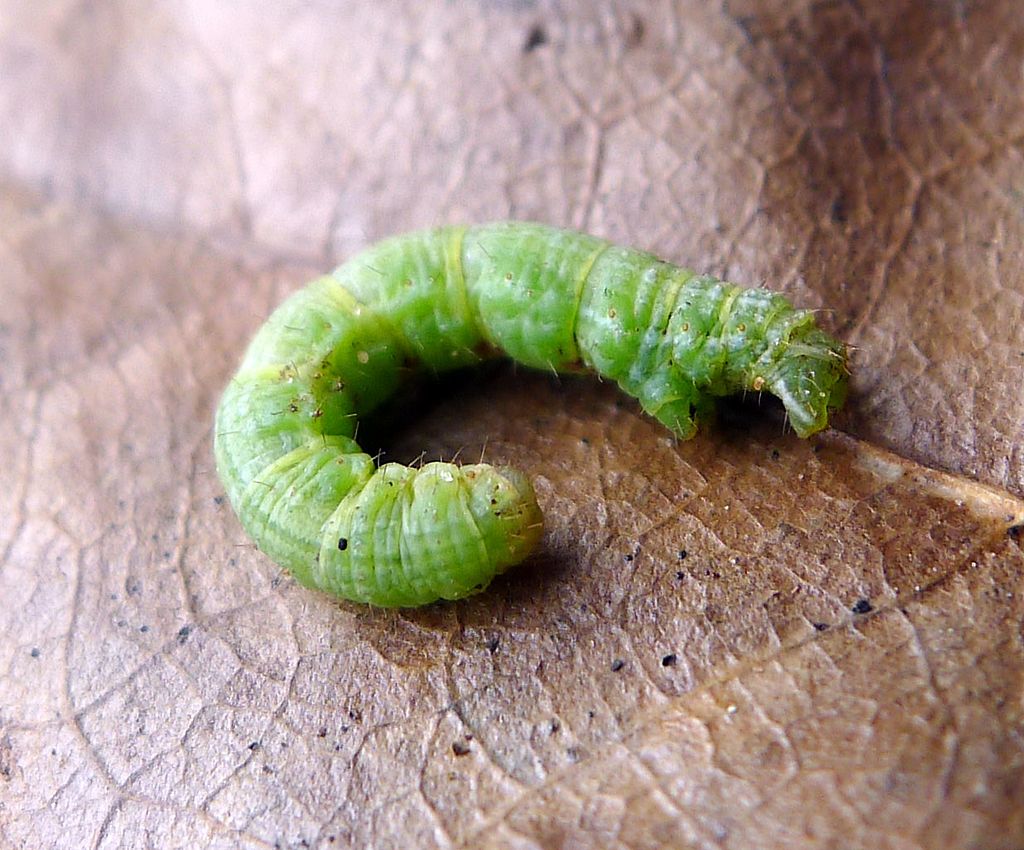
Winter moth adult male and caterpillar.
In late March, the female will start to build her nest while the male stands guard over her efforts. He protects the nest hole from invaders and fights off the pirates that would steal the materials she has collected. The nest will be ready and the first eggs laid probably by the end of the month. The female will lay up to fourteen eggs, one a day, in total more than her entire body weight, before she begins to brood them.
Unlike many of the reserve’s birds, blue tits raise only a single brood of chicks each year and they devote all their resource to that one brood. Their success will depend, in part, on how well they have prepared during this vital time.
Header image by DKG




 Southwick Country Park Nature Reserve
Interesting. I have seen the blue tits in pairs flying from tree to tree. Are they looking for places to nest.
They are very busy at this time of year, not just looking for nest sites but hunting for food. They are in fine fettle at the moment, all ready for breeding, but by the time they have reared a dozen chicks, they will look exhausted.