
Our common frogs (Rana temporaria) have spent their winter sheltering from the cold in the mud at the bottom of the reserve’s ponds, or among composting vegetation and detritus in our hedges and edges.
Like all the UK’s seven species of native amphibians, frogs are cold blooded: they cannot generate heat so their body temperature is the same as that of their environment and as the spring temperatures rise and shine, so do the frogs. Generally speaking, amphibians emerge from their hibernacula when nighttime temperature is consistently above 5°C and they get straight to the business of breeding.

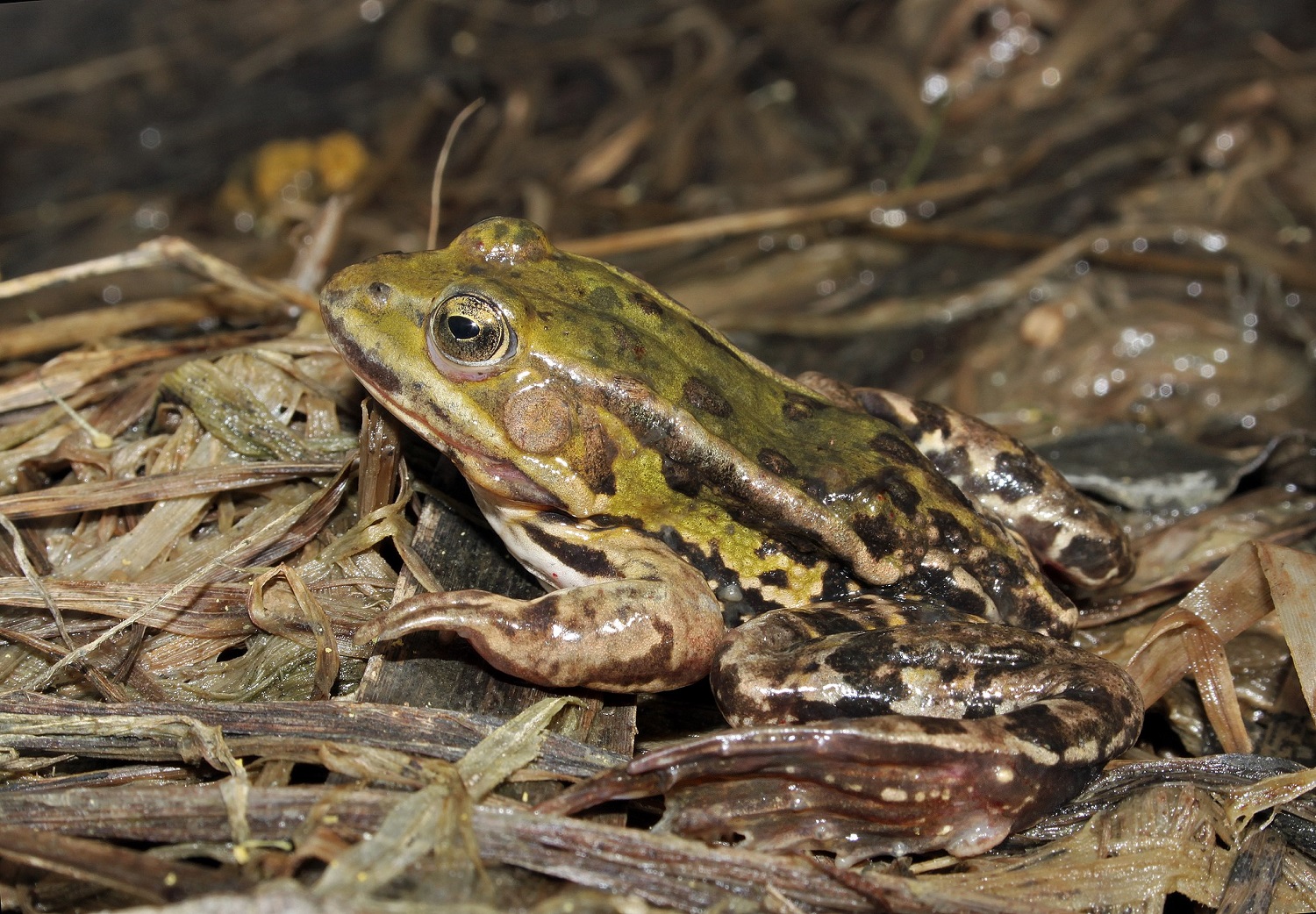
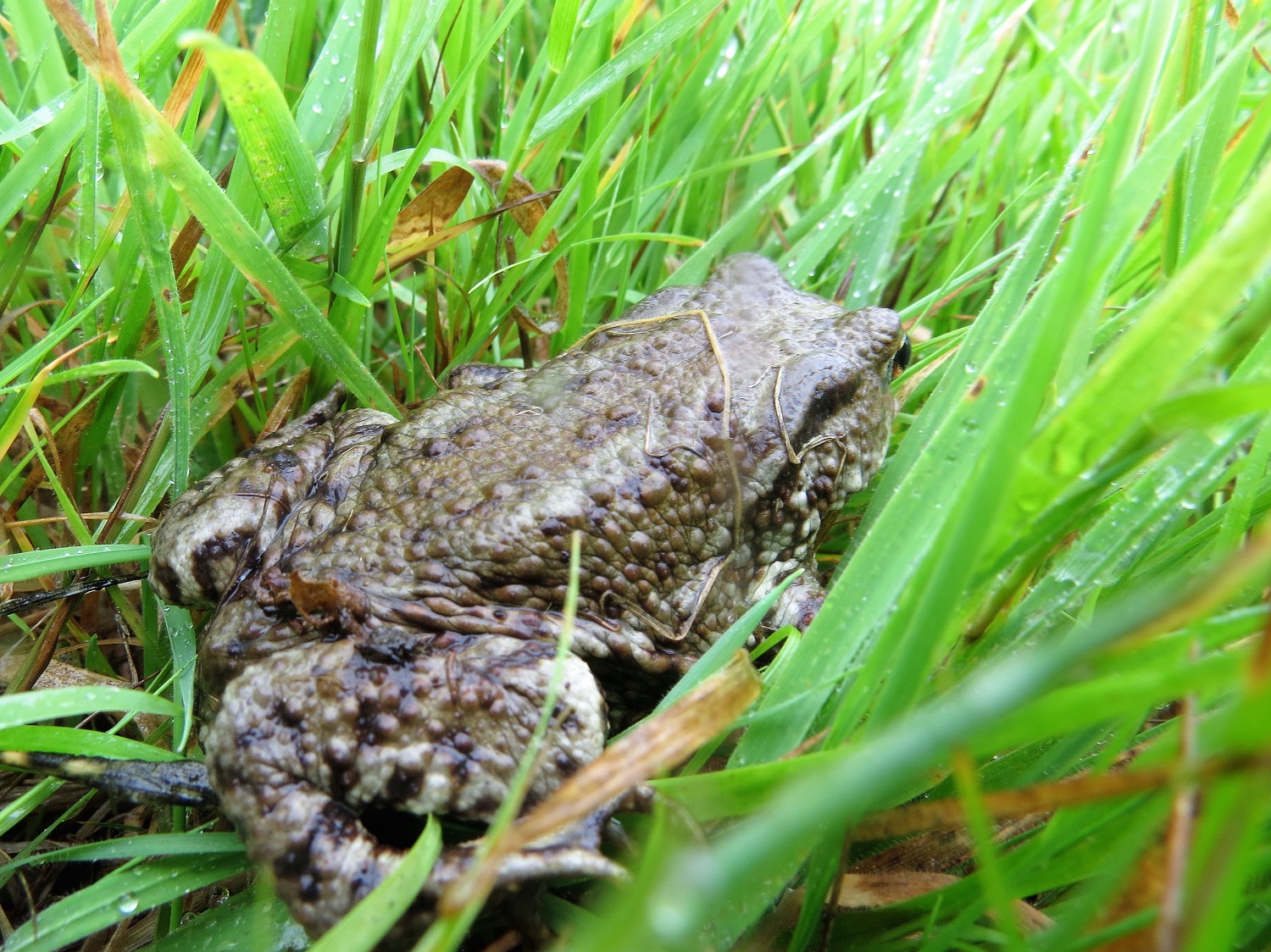
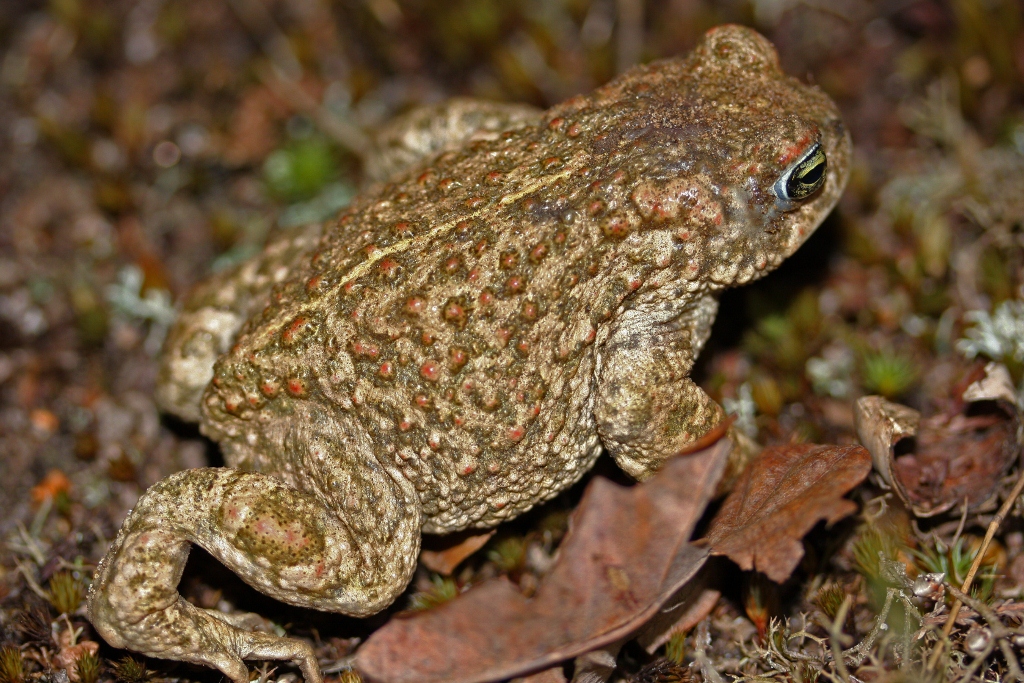

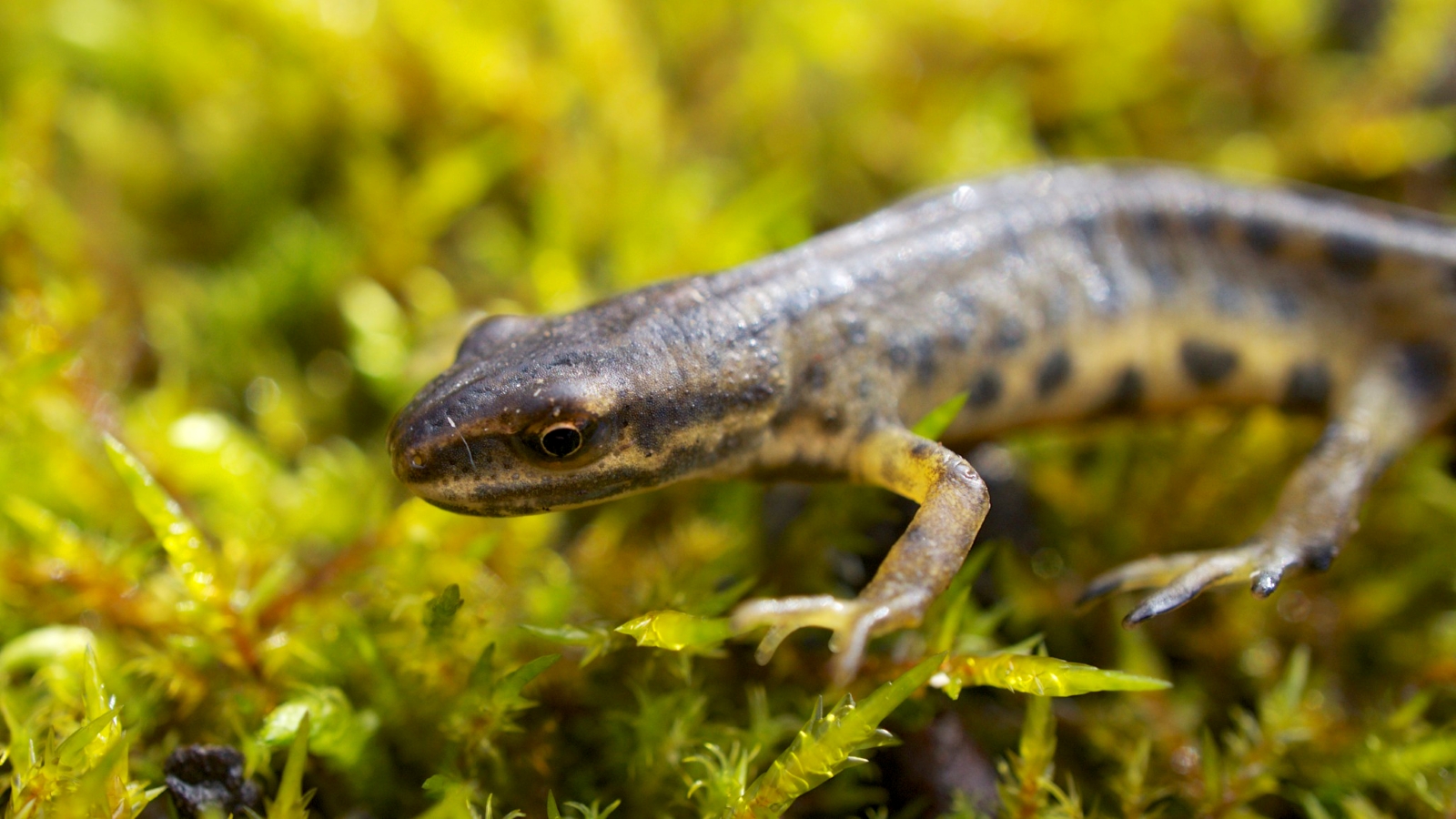
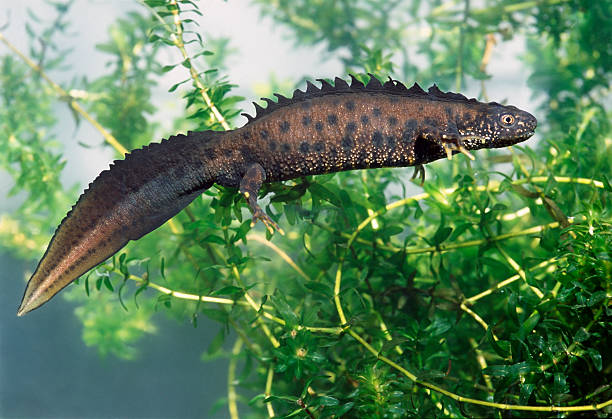
Here are the seven UK native species of amphibian
Frogs are usually two or three years old before they are sexually mature enough to return each year to breed in the pond where they were spawned. This means that most of the frogs energetically pursuing a mate in the pond under the decorated bridge this week were once the tadpoles wriggling at its muddy margins.
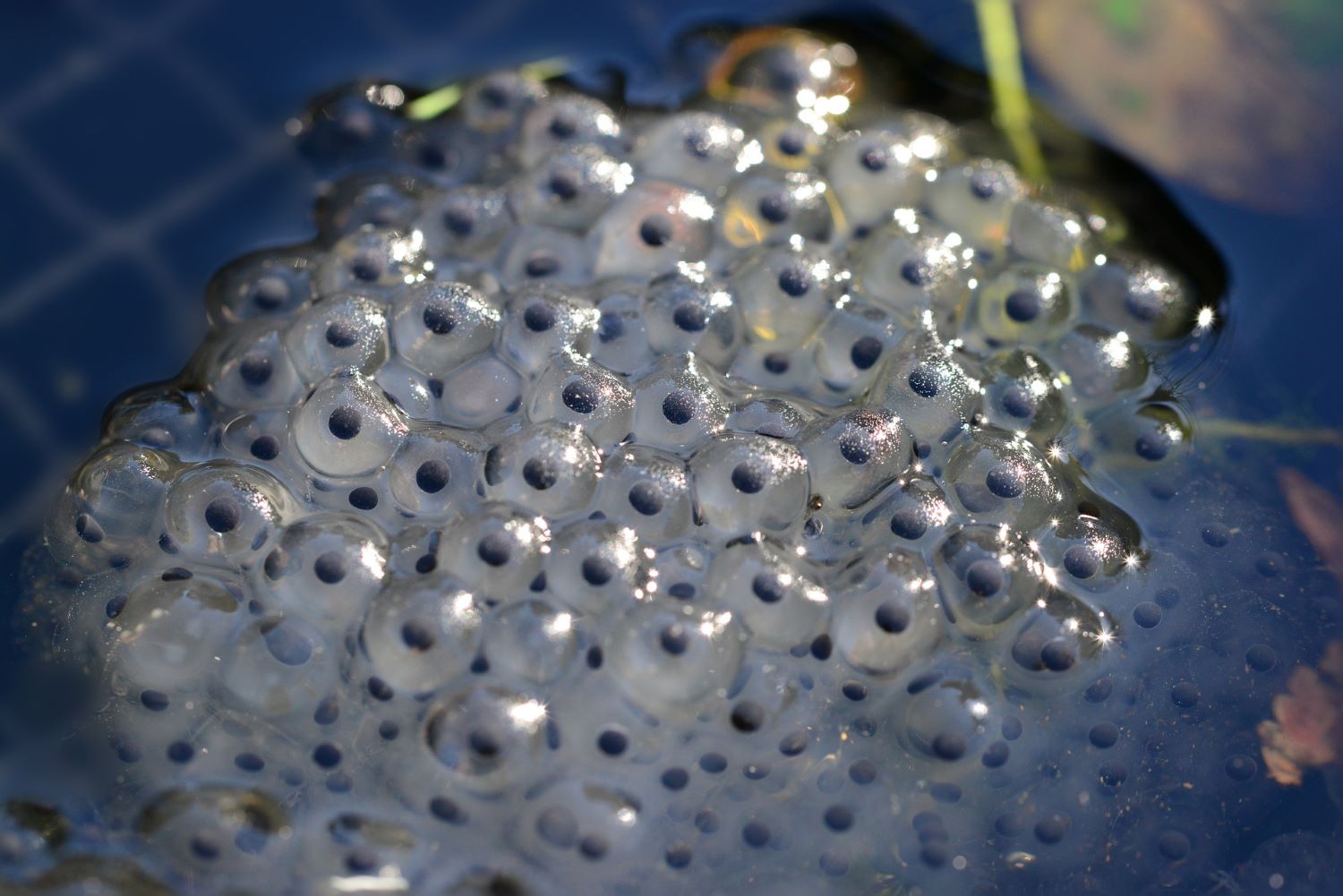

Frog spawn and tadpoles under the decorated bridge between Village Green and Cornfield
The males arrive first. They don’t fight for territory; if there are more frogs than it appears the water will hold, they just pile in on top of one another. The larger males will push and shove their way to the shallowest water where the females prefer to lay their eggs but there is no physical aggression. However, while the males might not fight, they do compete: they sing.
The females arrive when their eggs are fully developed and ready to be fertilised. Their arrival produces a frenzy of noise from the males that has been variously described as a continuous low purr or a distant lawnmower.
Frogspawn and frogsong. If you come up with a better description of their call than a distant lawnmower, please leave it in the comments below.
Research has suggested that the female of some species of frog has a preference for a certain style of song and that she can pick it out of the cacophony – but not so the common frog. The common frog indulges in what scientists call explosive breeding, in which an aggregate of males, over a short period of time, struggle for access to many fewer females. A female can be injured, or even drowned, in the middle of a squabbling ball of frantic and demanding males.
The male that wins grasps the female from behind, around her middle, in an embrace called amplexus. He has nuptial pads, thickened, spiny skin, on his thumbs and his forearms to ensure that she can’t get away from him. The pair can stay in amplexus for anything up to 24 hours, he fending off competing males, while they search for the best shallow water in which to spawn. When the female is ready, she lays her eggs and the male fertilises them instantly.
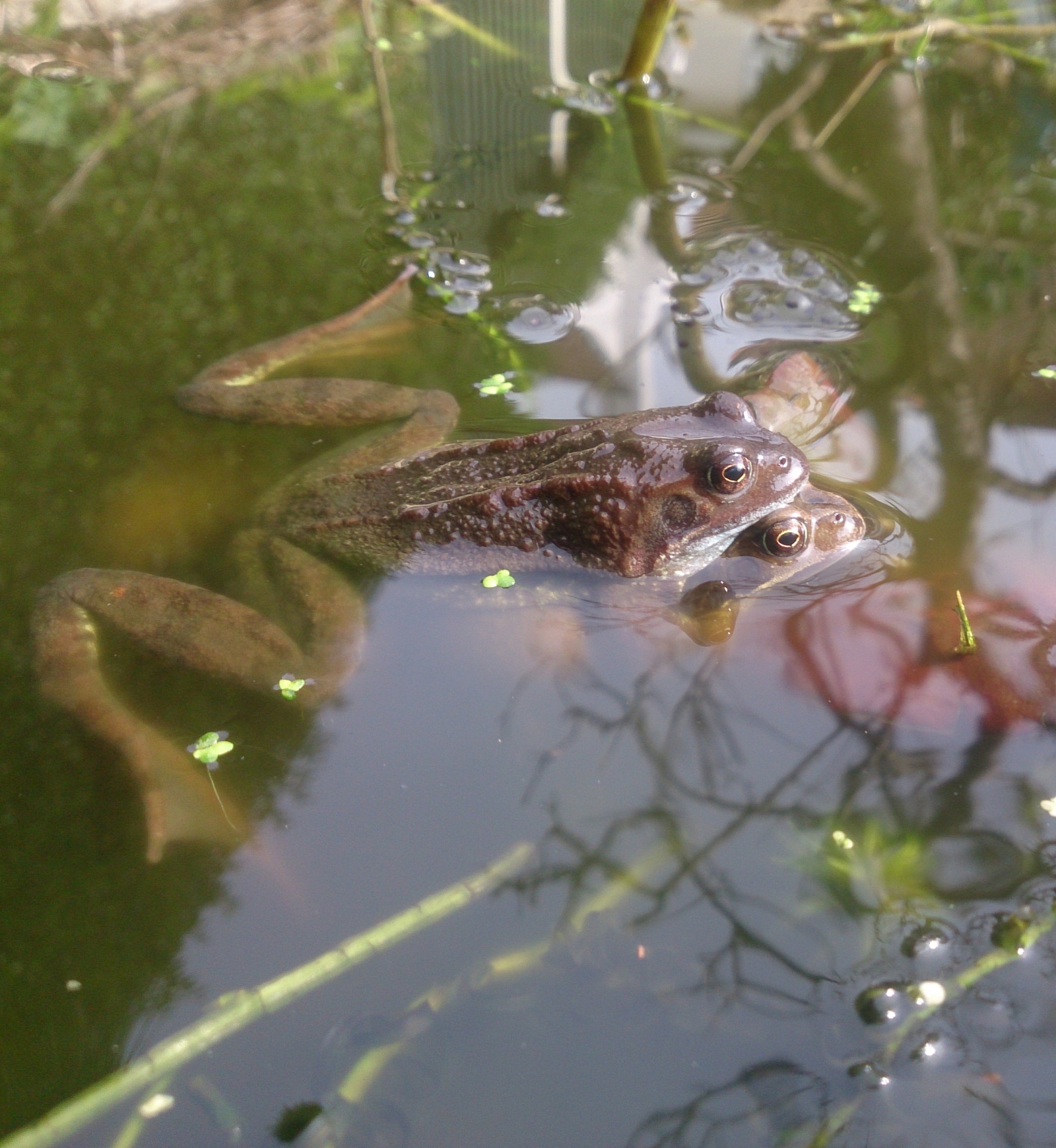
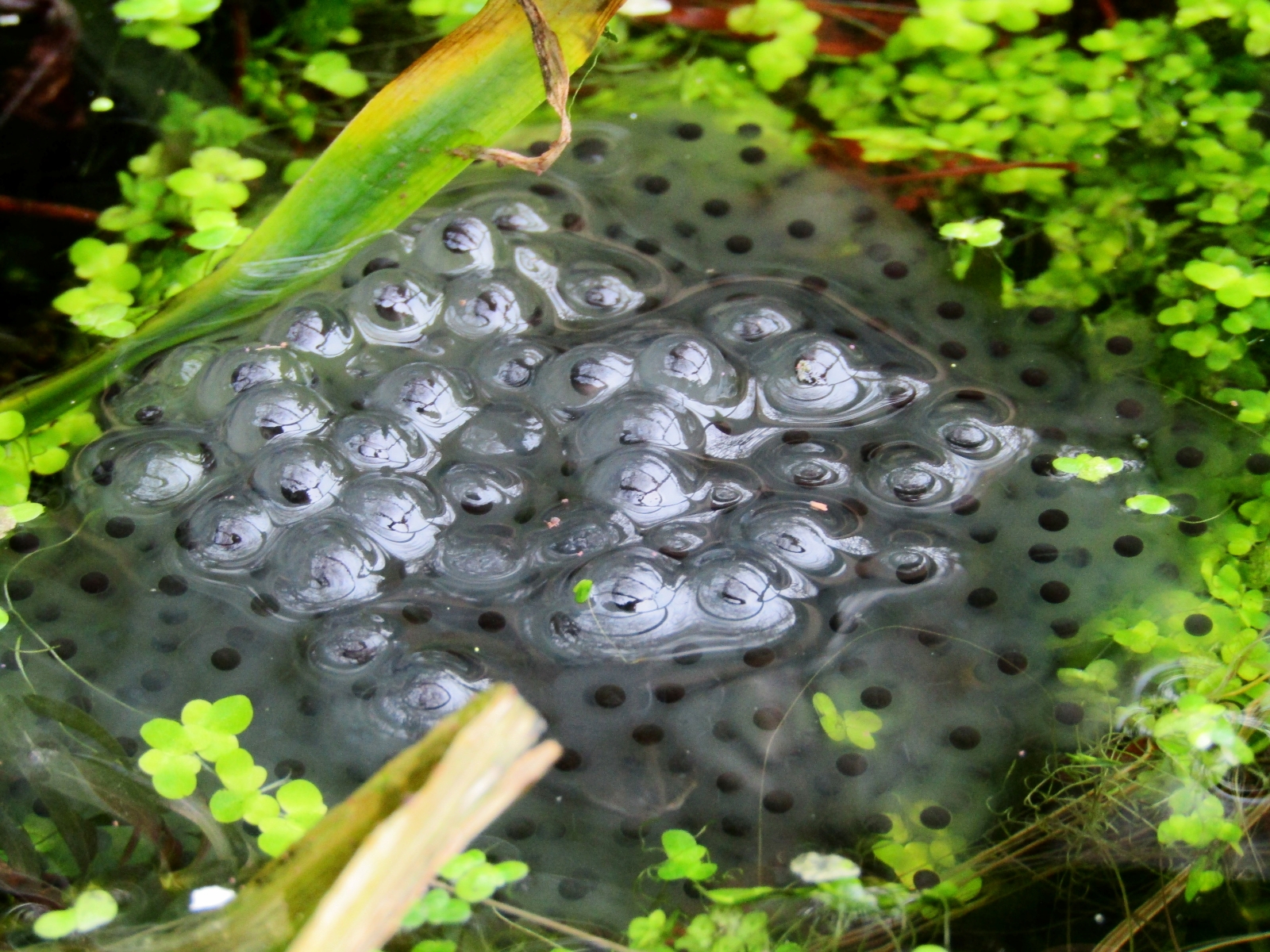
Common frogs in amplexus and newly spawned eggs.
The number of eggs in a clutch of frogspawn can vary anywhere between a few hundred or a few thousand. The larger the clutch, the less its temperature will fluctuate in the changeable spring weather. It is possible that this is one of the reasons that female common frogs spawn together: the resultant mass of spawn protects the developing eggs from sudden changes in temperature. While a sharp overnight frost might kill the eggs on the outside of the mass, those in its centre, where the temperature will have remained stable, will survive.
Next time you cross the stream from Cornfield into Village Green, pause and look over the side of the decorated bridge for frogspawn, a welcome sign that spring has arrived.




 Southwick Country Park Nature Reserve