A common frog photographed in the woods alongside the Lambrok.
Continue reading
A common frog photographed in the woods alongside the Lambrok.
Continue reading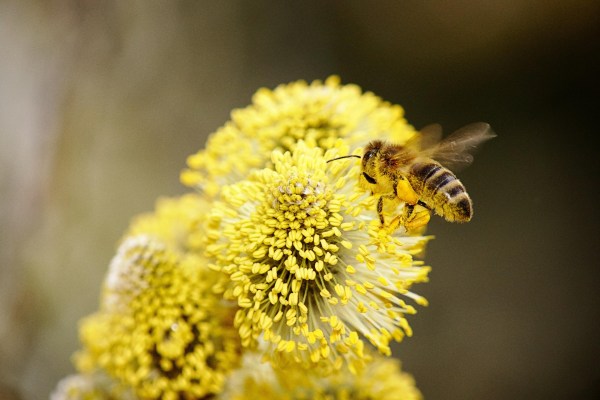
Like all winged Hymenoptera, honey bees have two sets of wings: a larger outer pair and a smaller inner pair. When the bee is flying, the large wing and the small one are hooked together with Velcro-like teeth called hamuli. At rest, the wings are unhooked for easy storage, the outer wing folding over the inner one.

by Ian Bushell
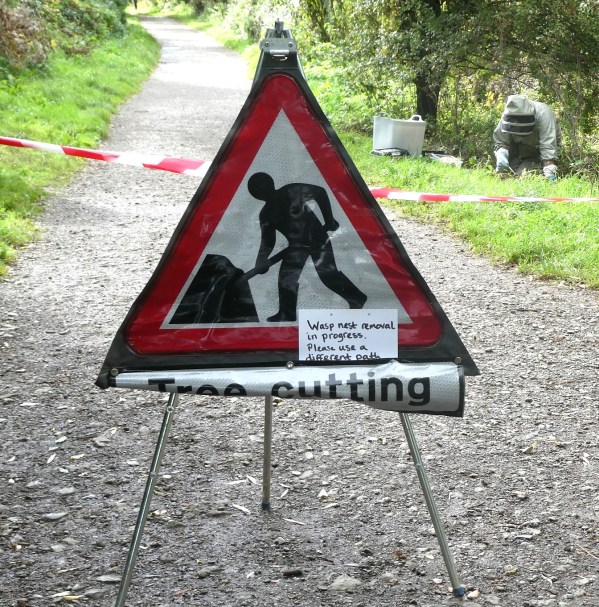
At the beginning of October, at the Amateur Entomological Exhibition at Kempton Park, I was introduced to Dr R.L.Brown from New Zealand, who was doing research into potential biological control of wasps.
Continue reading “International cooperation!”
Collared doves (Streptopelia decaocto) bred in Britain for the first time in 1955, in Norfolk. Within 20 years they had colonised every county in the British Isles, and had even reached Shetland and the Outer Hebrides.
Continue reading “Eurasian collared dove”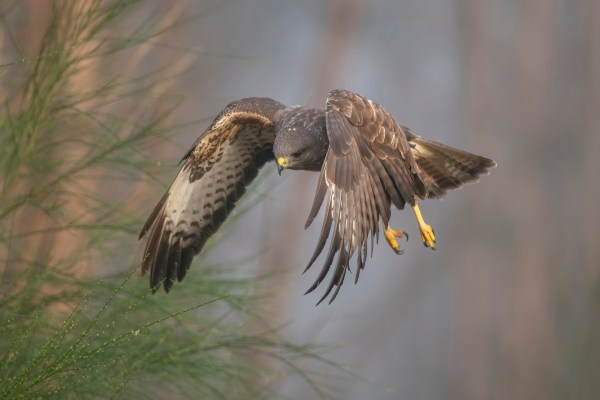
by David Feather
Sadly, here in North Bradley, we had a letter from Defra (Department for Environment, Food & Rural Affairs) today informing us that Bird Flu was in the area and special precautions were needed. Yesterday, I discovered a dead blackbird in our garden and didn’t think anything of it. Today my view was changed by the letter and I shall be looking out for others.
Continue reading “Bird Flu”
In the summer, County Recorder Richard Aisbitt identified meadow foxtail (Alopecurus pratensis) in our fields, a tall grass with a furry flower head that looks like a fox’s brush: hence its name.
Continue reading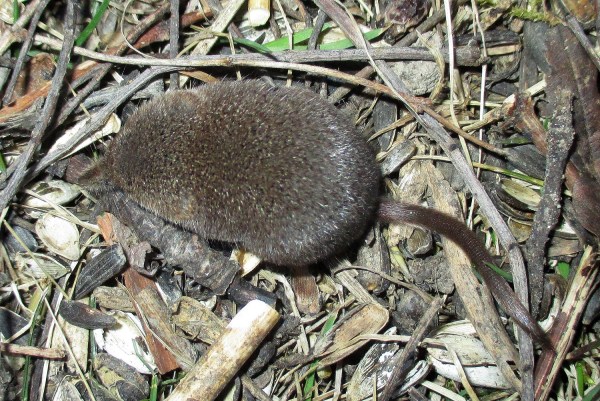
Our pygmy shrews can eat 125% of their body weight every day! An average pygmy shrew weighs 4.1 grams and, averagely, munches through a daily 5.0 grams’ worth of insects, arachnids and woodlice.

Conservation Status: Shrews are protected under the 1981 Wildlife & Countryside Act. As with all shrews, they may be trapped only under licence.

Just a few of the reserve’s coleoptera.
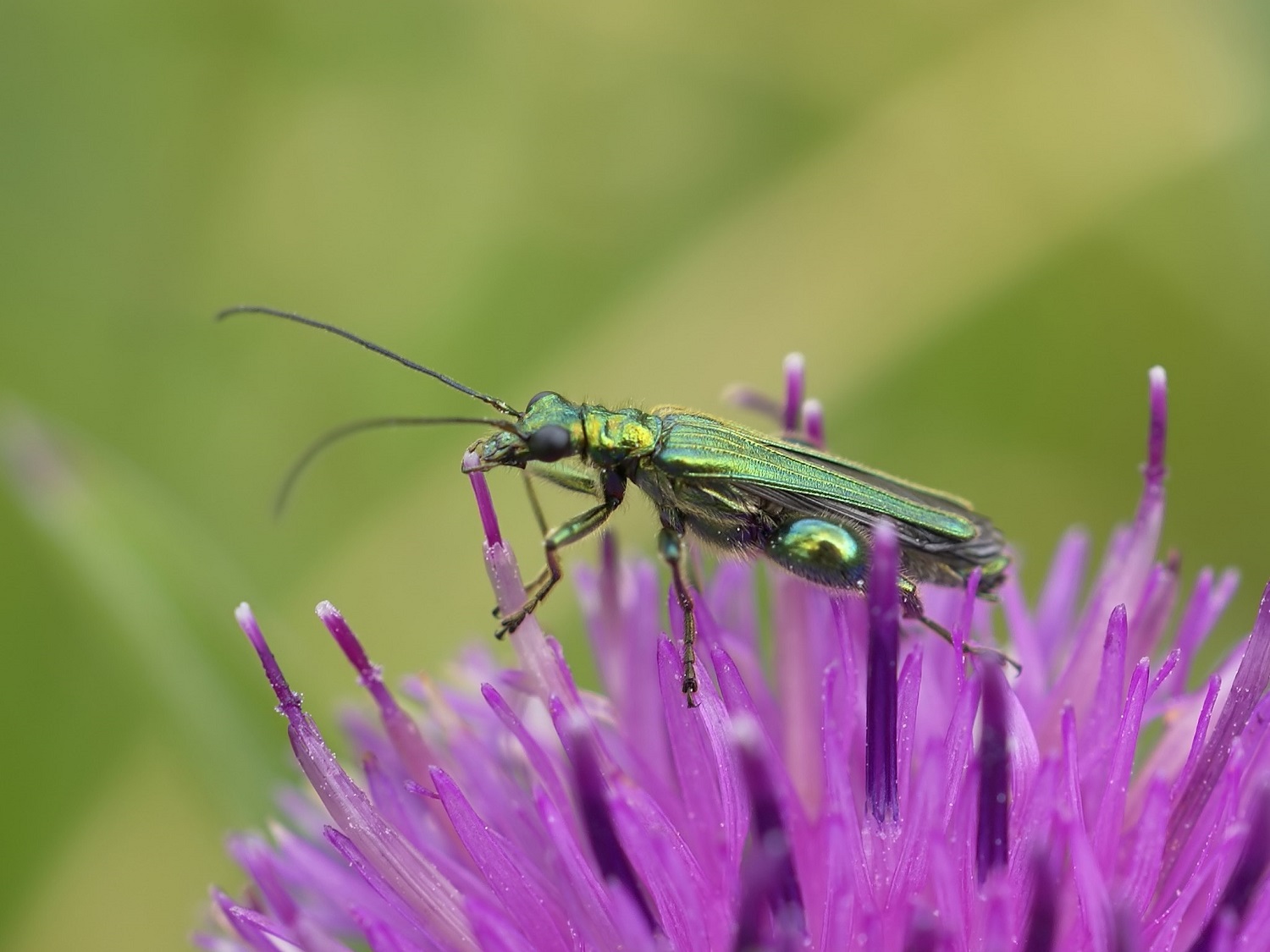


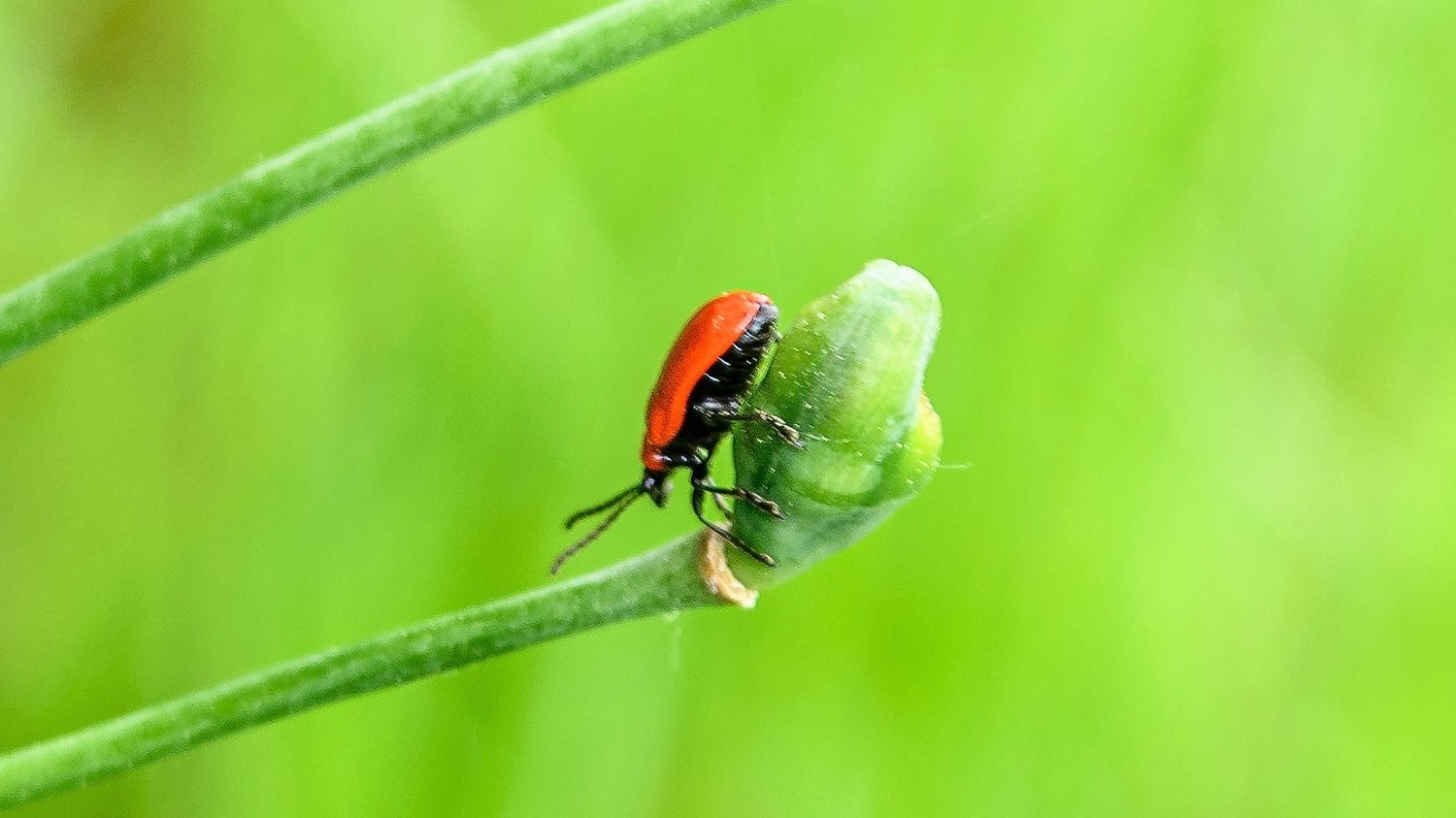
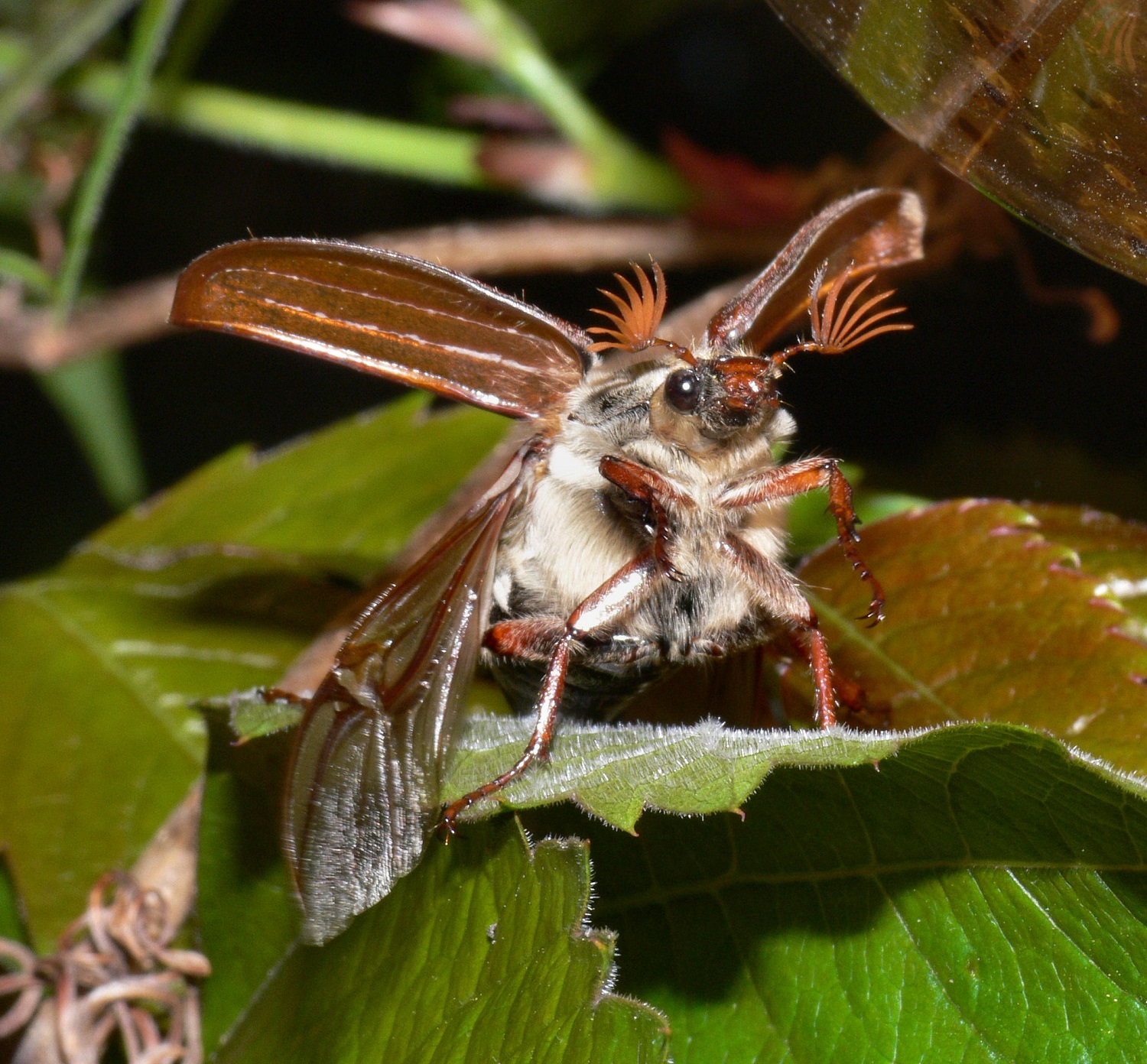

Header image: Red headed cardinal beetle by Gail Hampshire (CC BY 2.0) wikimedia.com

Kingfishers usually come to the reserve in the autumn when breeding pairs split up and the year’s fledglings spread out to look for their own territories. This year, after such a long period of drought, things might be different.
Read on:
A ringed female Nathusius’ pipistrelle (Pipistrellus nathusii), weighing in at just 8g, recently set a British record by flying 2,018km from London to the Russian village of Molgino, near Moscow – where it was killed by a cat.
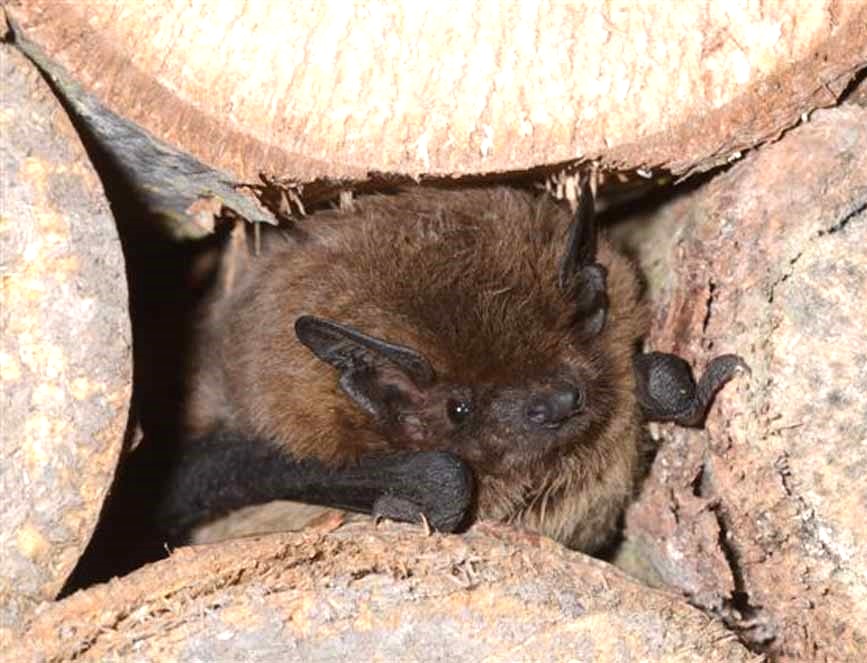
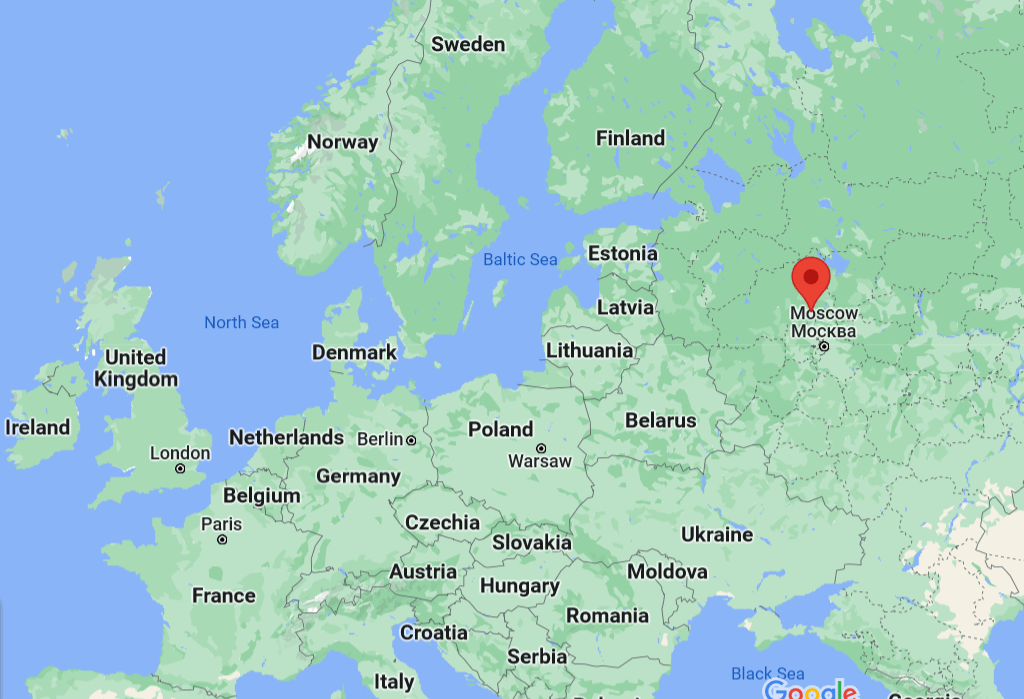
A Nathusius’ bat was first identified in the reserve in 2019 by Richard Green, Lead Ecologist for the RPS Ecology Survey of Church Lane. This is just one of twelve species of bats identified in the reserve.
Header imge: Nathusius pipistrelle wing by Rauno Kalda (CC BY-SA 4.0) via Wikimedia Commons


In the UK the populations of our more common butterflies have fallen by 46% in the last 50 years while the rarer species have declined by 77%. We have lost 60% of our flying insects in just 20 years. We have entirely lost 13 species of our native bees since the 1970s and fully expect more to follow.
Continue reading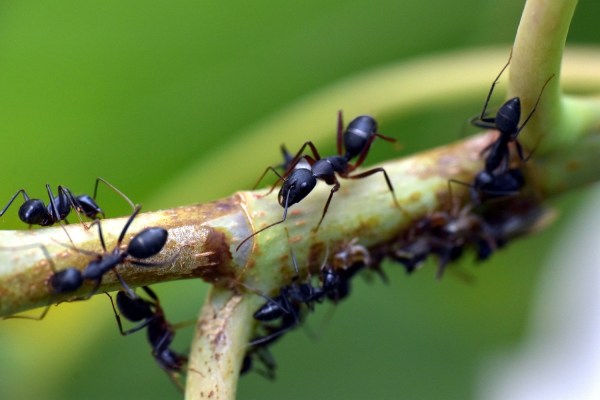
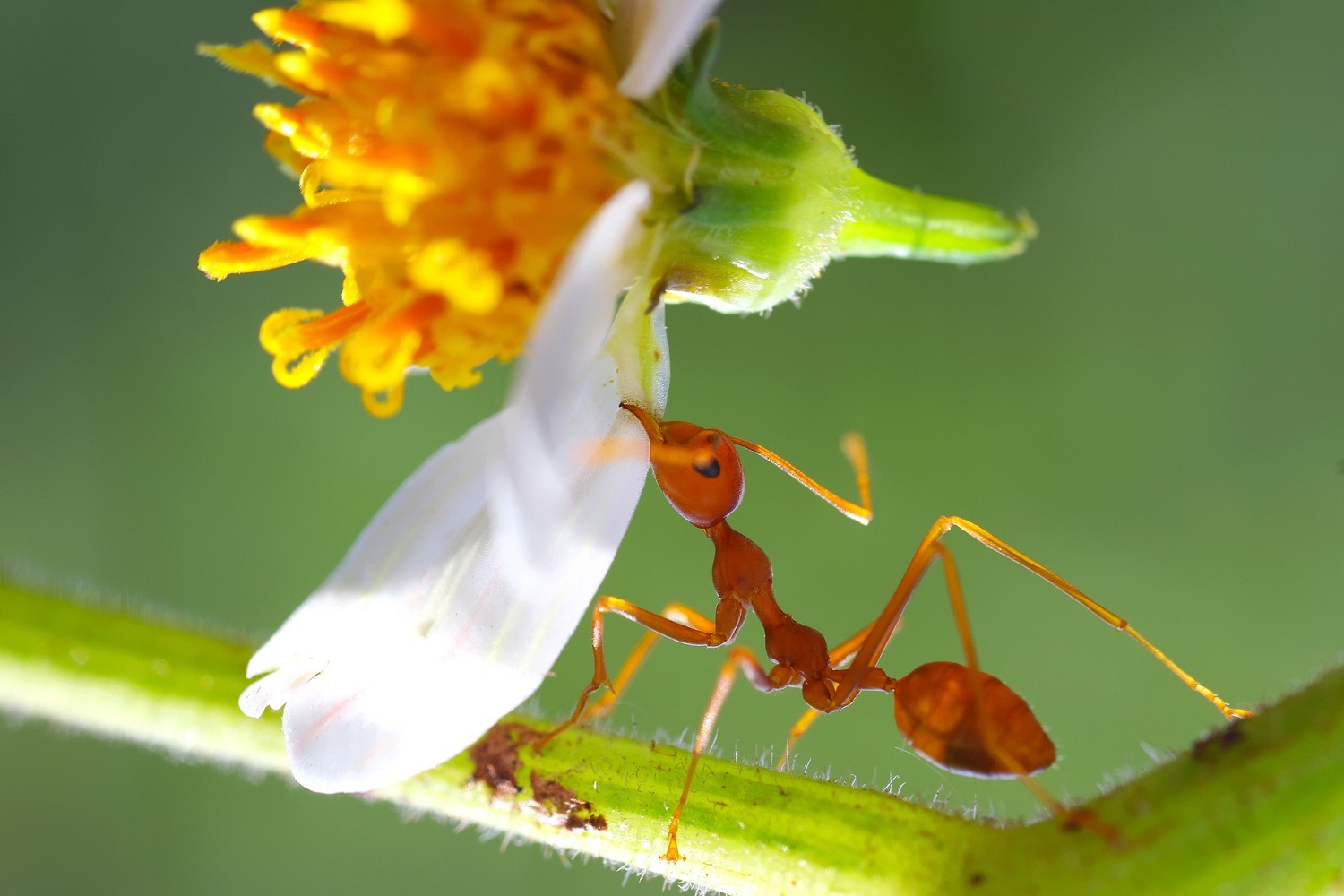
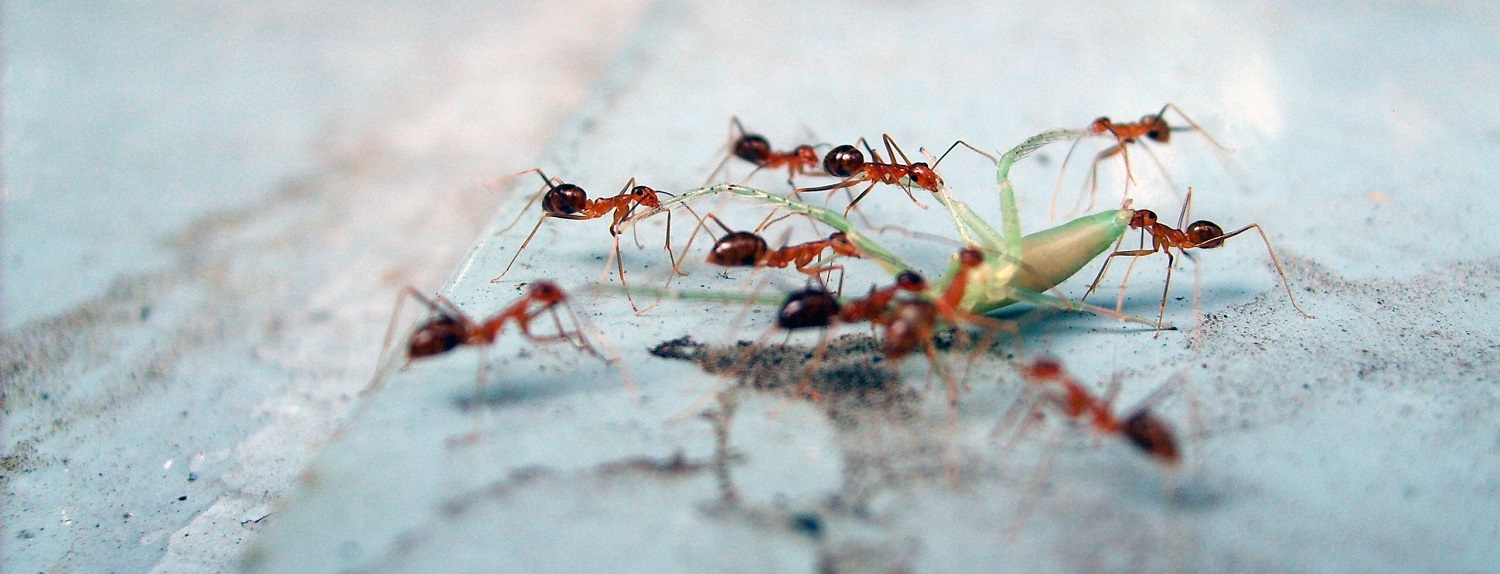
The latest research has concluded that our planet is home to 20 quadrillion ants – 20,000,000,000,000,000 – made up of 15,700 known species and subspecies. The total biomass of all those ants is 12 million tonnes which is more than the biomass of all wild birds and non-human mammals combined. Gosh!


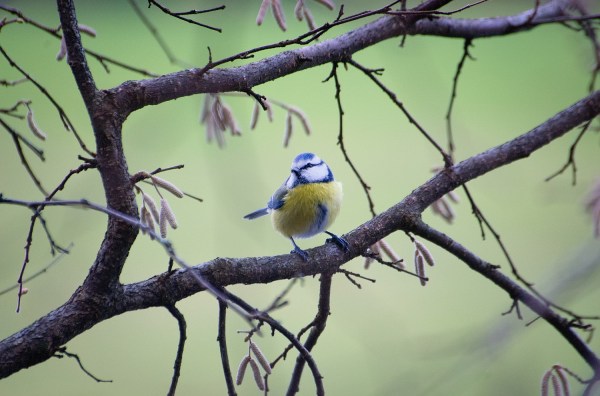
The increasing use of nest box cameras has shown how frequently garden nest boxes are used by blue tits for winter roosting.
Continue reading
A clouded yellow (Colias croceus) was identified in the reserve this summer for the first time in eight years. It is a migrant species, an early summer visitor from North Africa or Southern Europe.
Continue reading “Clouded yellow”
There are two badger setts in the park, hidden away in its quiet places; here are some interesting badger facts.
Continue reading “Badger facts”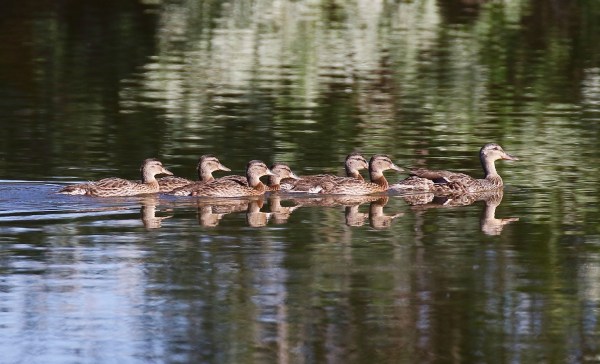
This year’s Ig Nobel prize for physics went to Professor Frank Fish , for research into the question of why ducklings swim in a line behind their mother. Apparently, the linear formation saves energy with the last duckling in the line benefitting the most. Didn’t we already know that?

by MTSOfan (CC BY-NC-SA 2.0) flickr.com
Header Image: by Michael B. Smith (CC BY 2.0) flickr.com
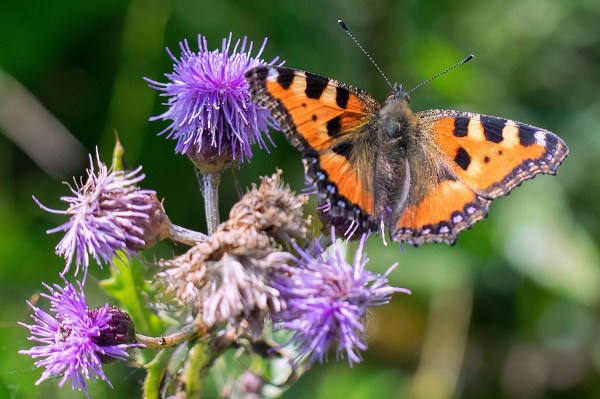
This year’s Big Butterfly Count recorded fewer butterflies than in any previous year.
Continue reading “The results are in”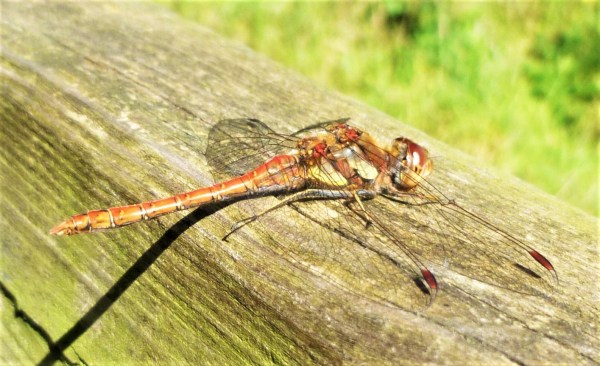
by Ian Bushell
Yesterday afternoon, at the bottom set-side in Village Green, I was chatting with an old chap who, as a boy had played in these fields, when I saw a pair of dragonflies flying by.
Continue reading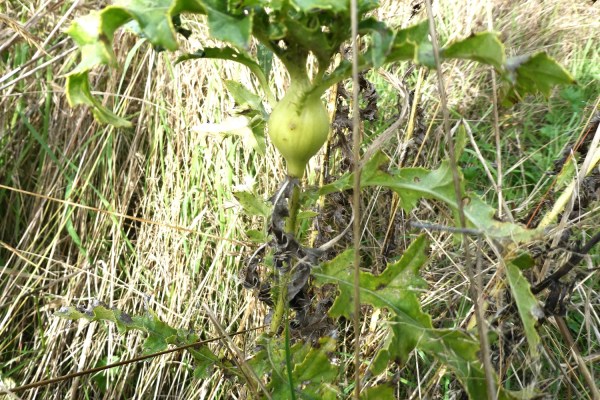
by Ian Bushell
This afternoon, I found these galls on the Creeping Thistle in the second set-aside in Village Green. They are caused by Canada Thistle Gall Fly, Urophora cardui. This is a very distinctive fruit fly which, despite its name, is indigenous to the UK and Europe.
Continue reading
The scientific name for the seven spot ladybird is Coccinella septempunctata; if you had the right magic wand, a spell like that would put spots on anything.

The reserve’s ivy flowers between September and November; each plant’s flowering season is quite short but a succession of plants flowers all through the autumn. The flowers are small, green and yellow, and so insignificant-looking that many people don’t realise that that they are flowers at all.
Read on:
A late summer southern hawker photographed in the reserve last week by Clive Knight. The southern hawker’s flight period runs from the end of May right through into November but each individual dragonfly lives for only around six weeks. This one, to judge by it’s faded colours and torn wings, is approaching the end of its life.

The summer’s drought made difficulties for our dragonflies. Many of the shallow pools along the Lambrok dried up completely and the big pond, Grand Central Station for our Odonata, was reduced to a mere puddle. Not only do all dragonflies and damselflies need standing water for successful breeding, but so do their flying insect prey: nowhere to lay eggs, nothing to eat, not a good year.

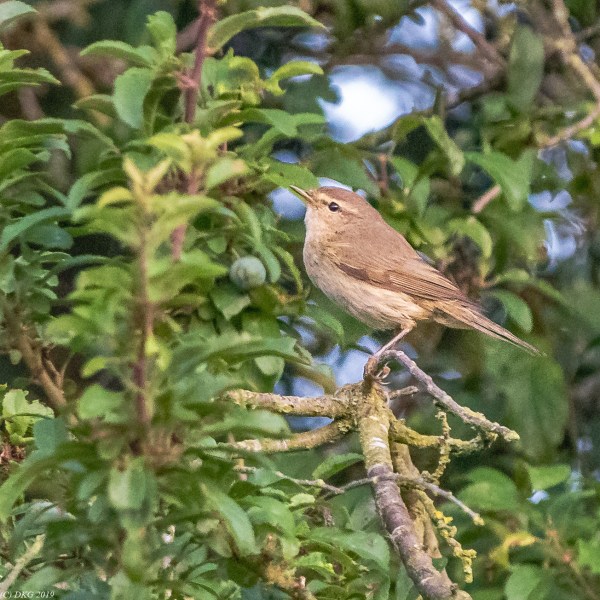
Most of our willow warblers will have left by now; they will be on their way to sub-Saharan Africa where they will spend their winter. Theirs is the longest journey undertaken by any of the park’s migratory birds. Why do such tiny birds fly so far and take such risks to do it?
Continue reading “Willow warbler migration”
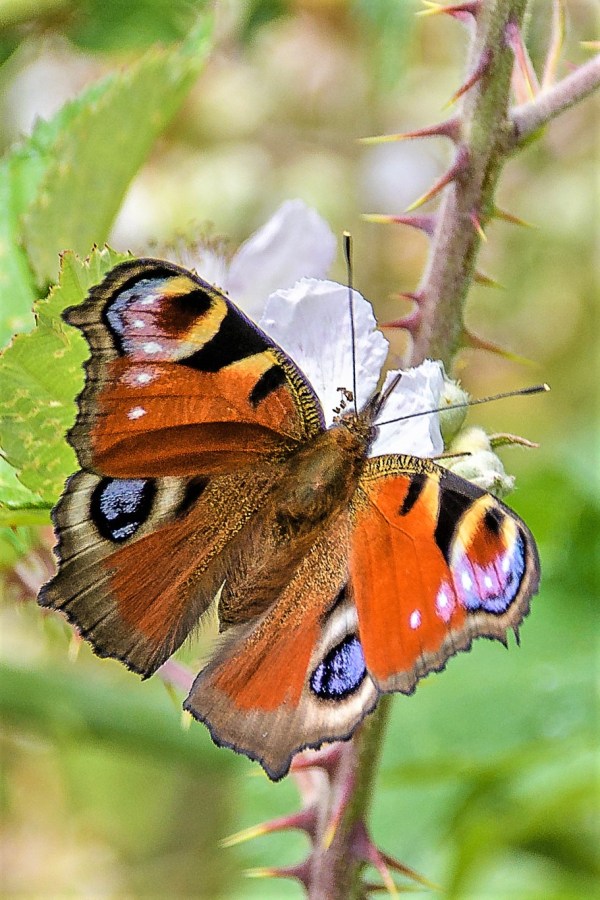
The nighttime temperature is dropping and soon we will see the first frosts. The reserve’s invertebrates are preparing for hibernation.
Continue reading


 Southwick Country Park Nature Reserve