The 1959 Injurious Weeds Act does not just apply to ragwort. It names four more species as well: broad leaved dock, creeping thistle, curled dock, and the spear thistle. We have them all.
Continue reading “Creeping thistle”Creeping thistle
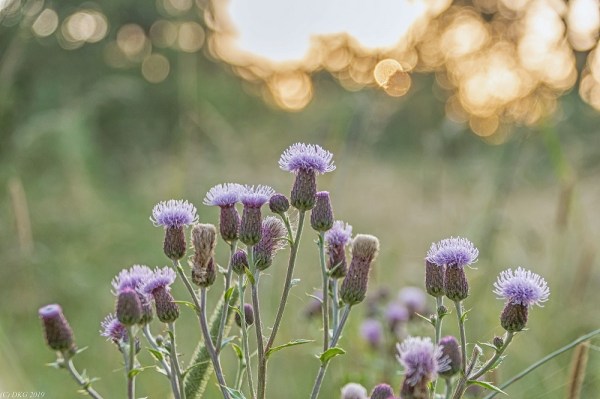
The 1959 Injurious Weeds Act does not just apply to ragwort. It names four more species as well: broad leaved dock, creeping thistle, curled dock, and the spear thistle. We have them all.
Continue reading “Creeping thistle”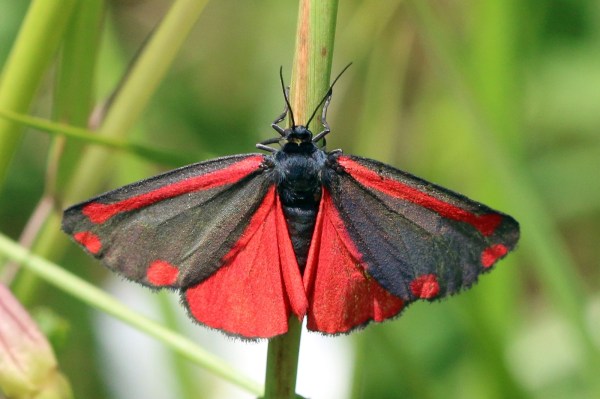
Cinnabar moth
Have you found striped yellow and black caterpillars feeding on ragwort? These are the larvae of a cinnabar moth (Tyria jacobaeae), and their striped football jerseys are a danger signal.
Continue reading
Bees buzz in two different ways.
Continue reading “BUZZ!”
Another post about a plant that has many common names: ragwort.
Continue reading “Stinking Willie and marefart”
Message from Clive to FoSCP and Ian : Mon 15/07/2024 11:54
Quiet on the reserve today with heavy showers. But as I was walking through one of the cut-through paths. I noticed these flowers. It comes up as Enchanters Nightshade on my recogniser app. If that is so, I understand that it is common but I had not seen it here before.
Clive
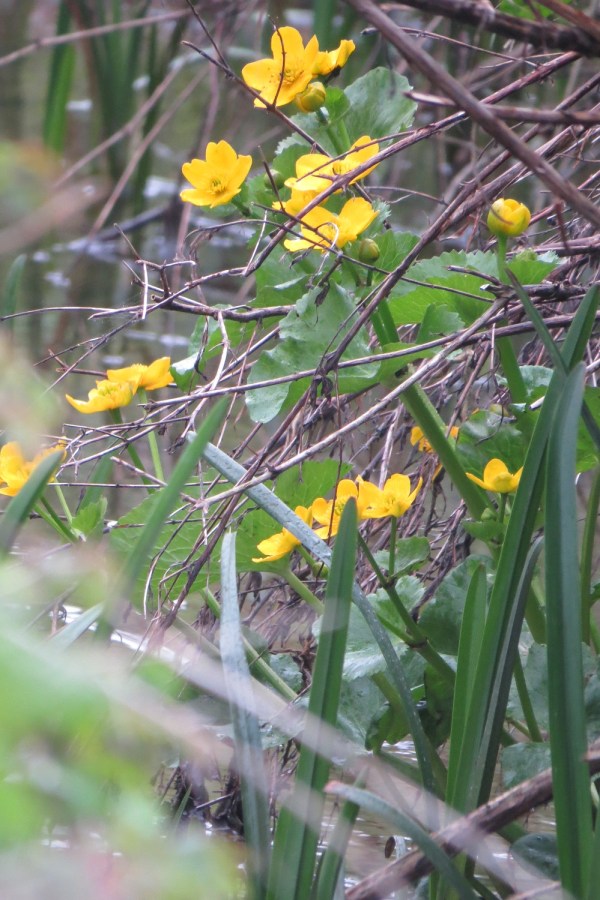
Above is a picture is of Caltha palustris flowering in Lambrok Stream, a plant I have always called marsh marigold but that Ian calls kingcup. Who is right?
Read on to see who is right
This is Calystegia sepium, which goes by many common names: hedge bindweed, Rutland beauty, bugle vine, heavenly trumpets, or bellbind. But in these parts, where it seems to hold a lot of our countryside together, we call it greater bindweed or convolvulus.
Continue reading “Greater bindweed”
A flower crab spider lying in wait for unsuspecting pollinators to join it on its hogweed flowerhead.

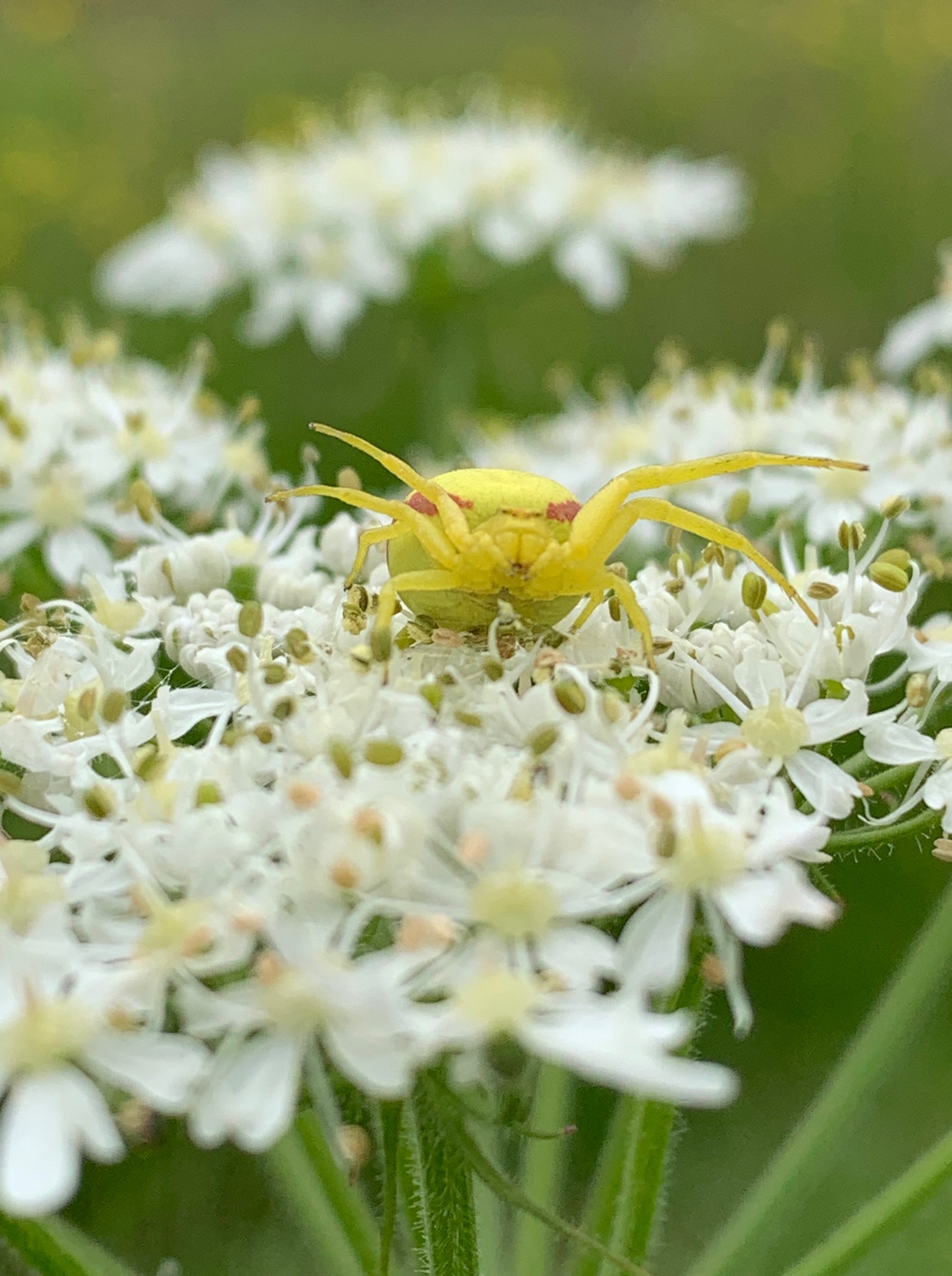
All images by Clive Knight (SCPLNR June 24)
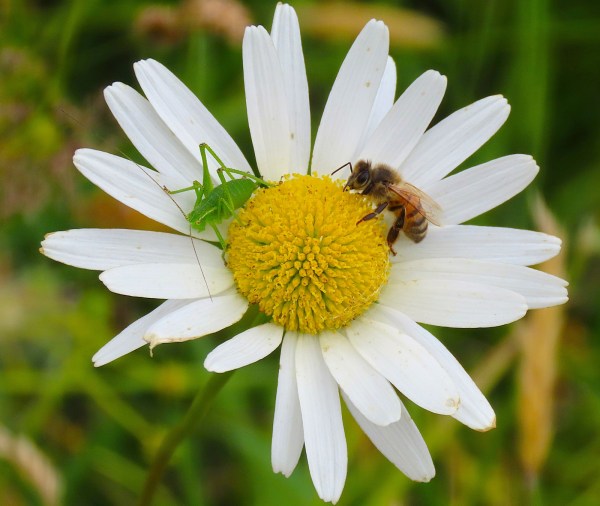
Ashley Wicks has sent us a beautiful picture of a speckled bush cricket and a honey bee sharing an ox-eye daisy. While the bee is collecting nectar and pollen for its colony, the cricket is either just passing through or is there to eat the flower petals.
Thanks Ashley!

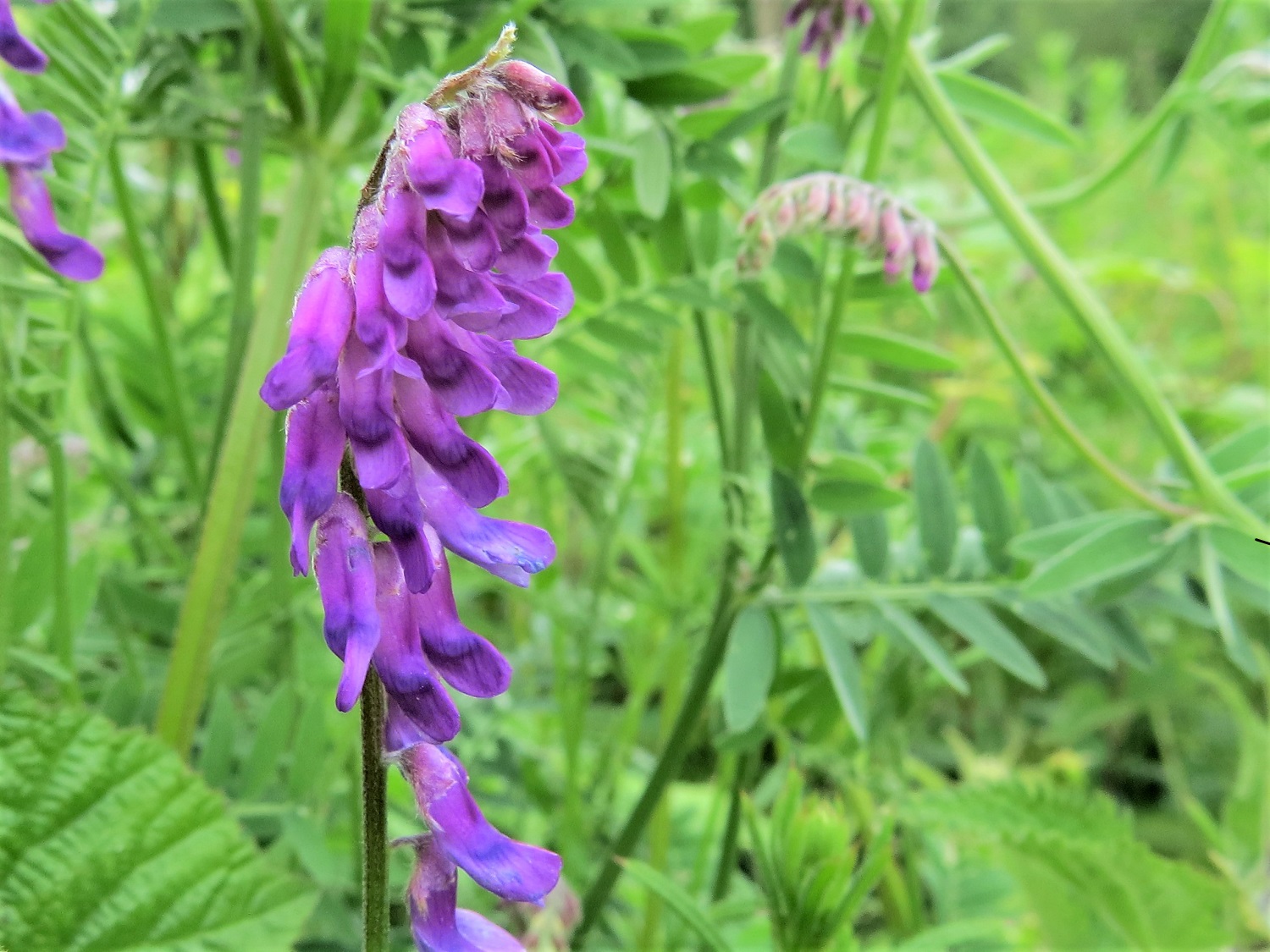
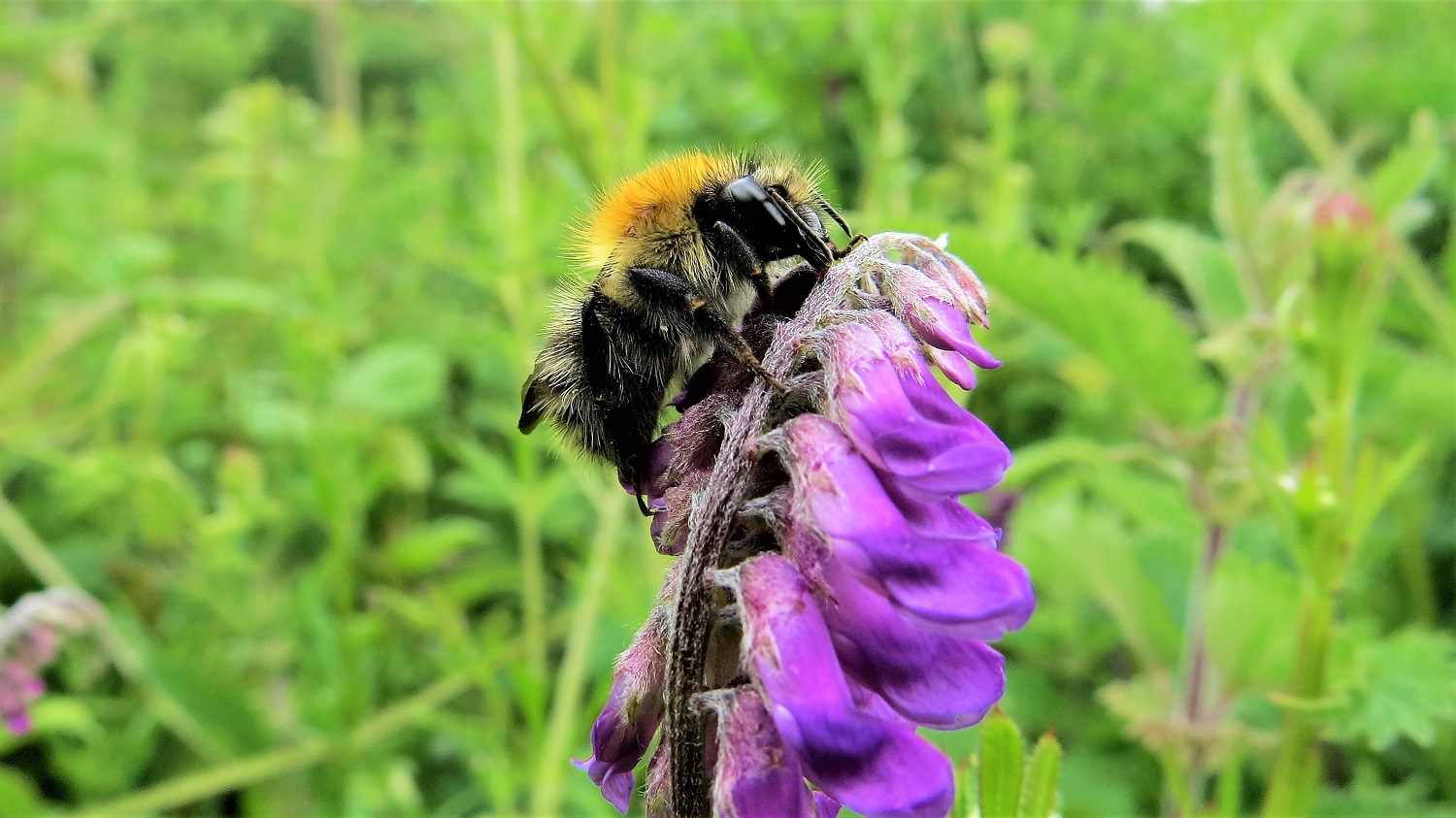
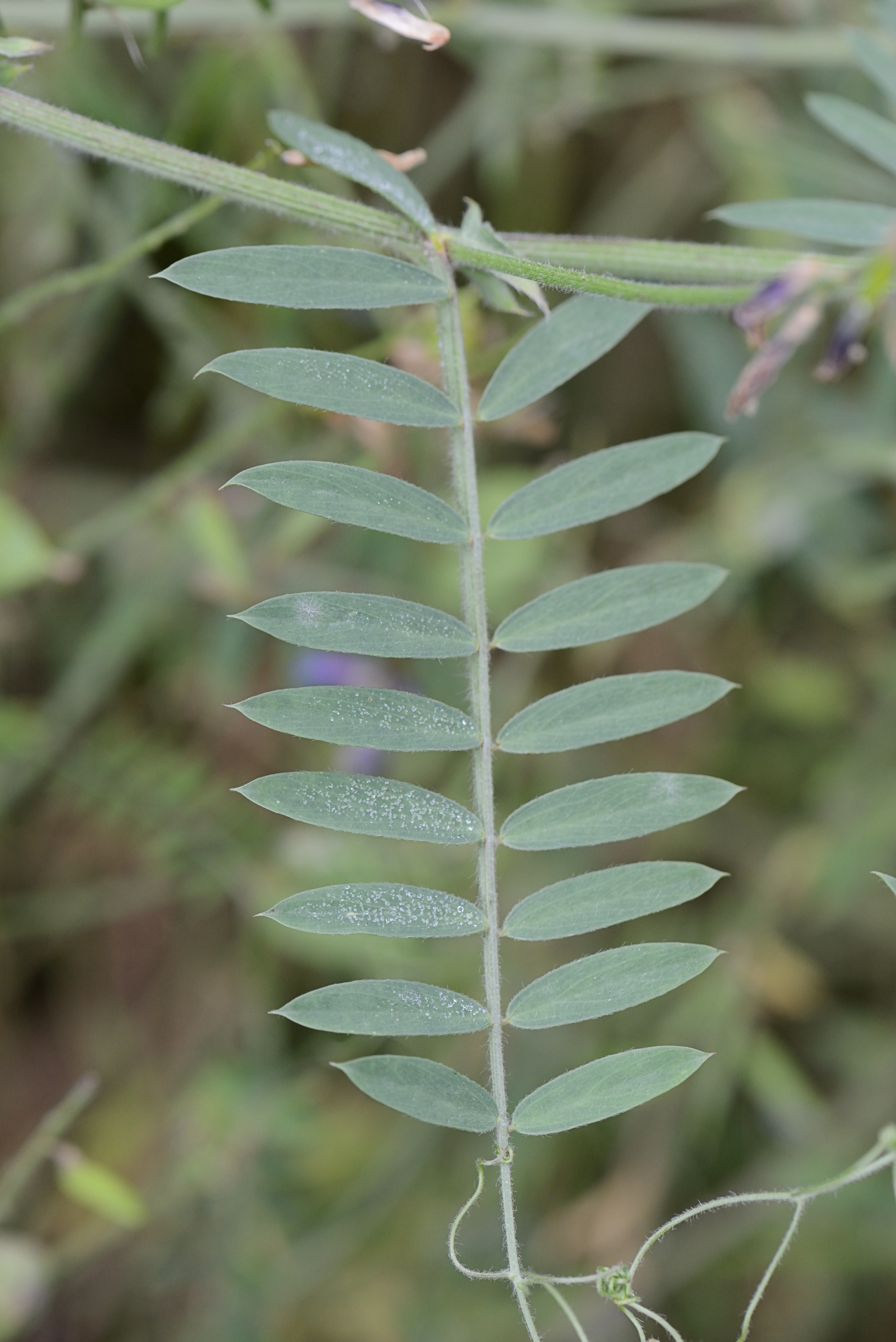
After all those insects, a little botany: tufted vetch (Vicia cracca) growing at the end of Lambrok Meadow.


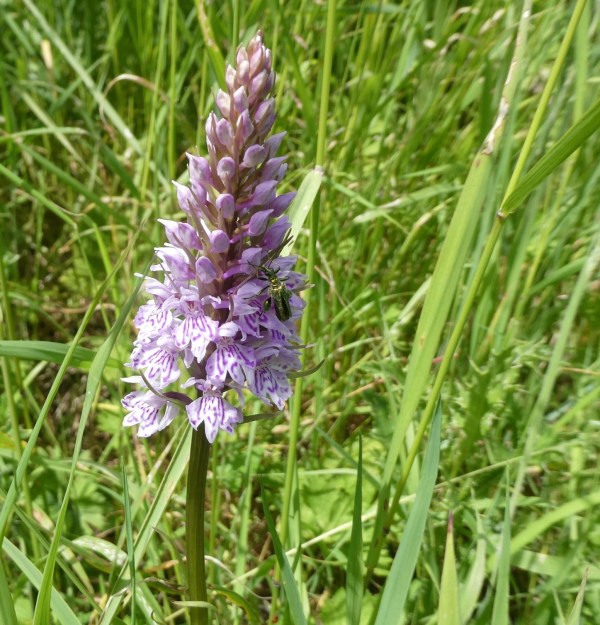
Our common spotted orchids are in flower! Ian has sent photographs and we have added pictures from previous years to make a gallery.


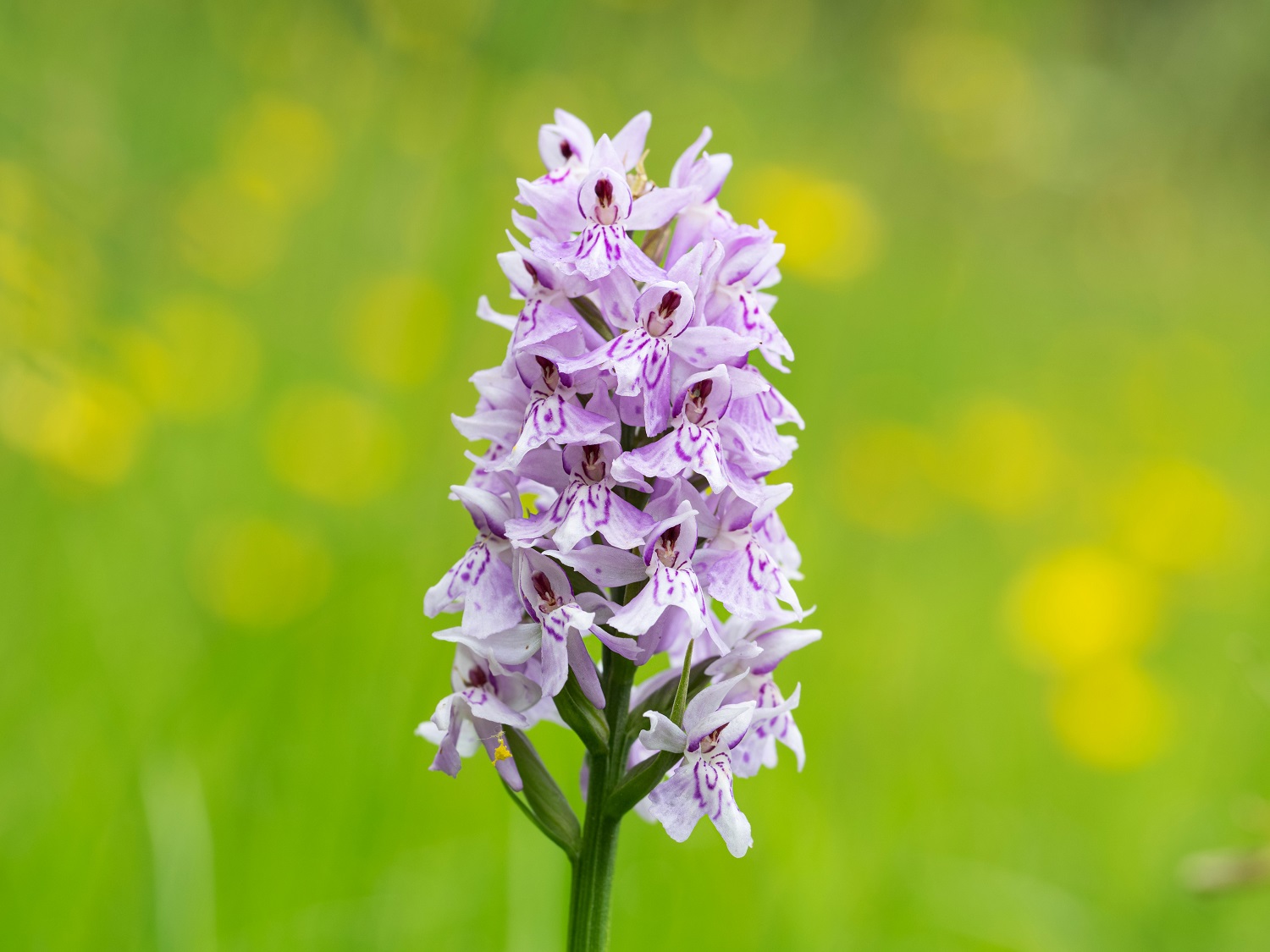


Header image by Ian Bushell

This is an ichneumon wasp feeding on hogweed near Lambrok Stream.
Continue reading “Ichneumon wasp”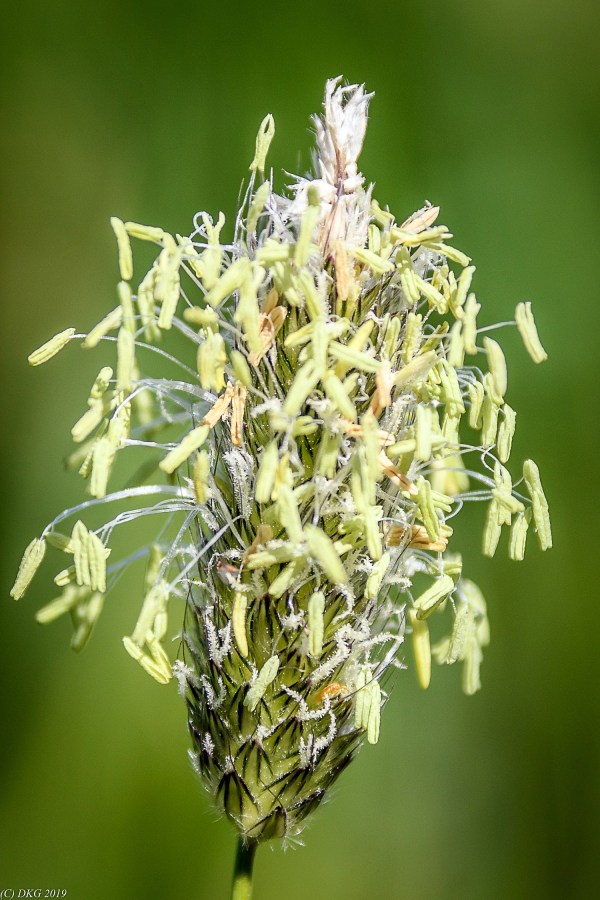
Grasses are flowering plants: they have all the same essential bits and pieces as a buttercup or a dandelion. The difference is that they are wind pollinated so they have not adapted their structure to meet the needs of insect pollinators: they have no scent, no nectaries, no colours or ultra-violet sign posts and no petals to make landing platforms.
Continue reading “Grasses”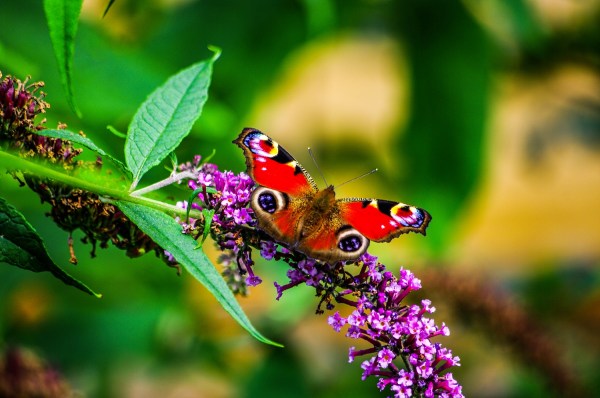
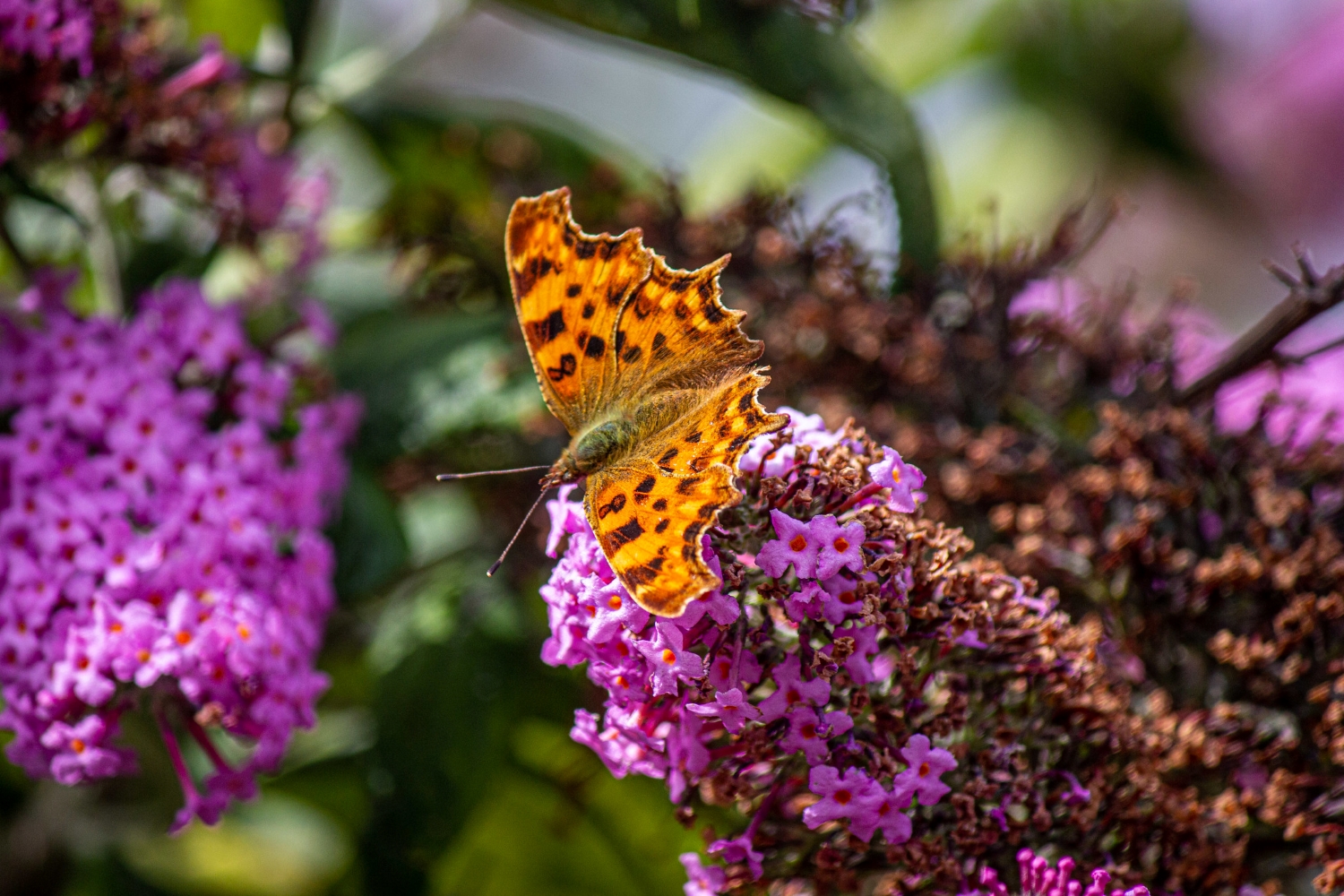
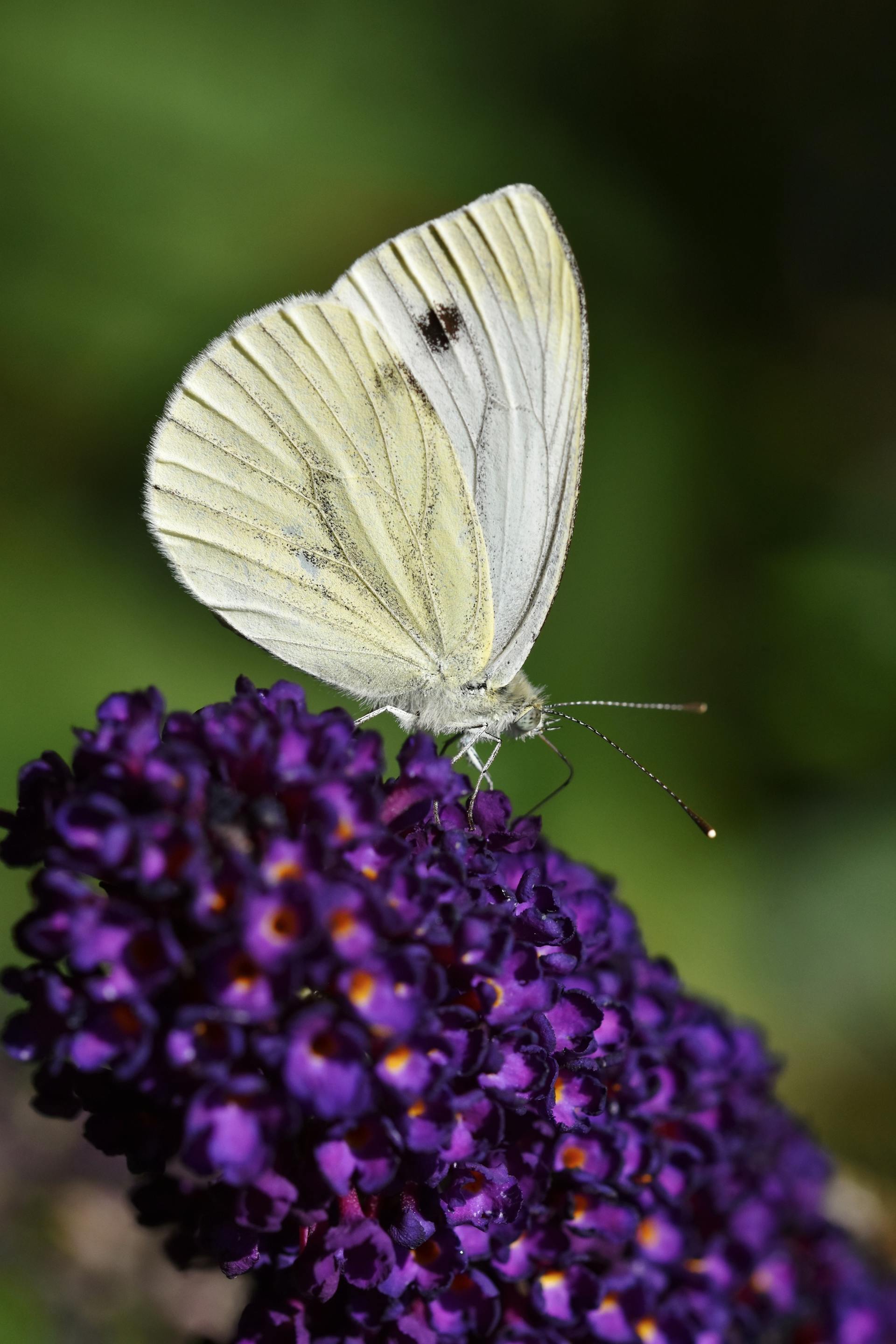
You might see all these butterflies on your buddleia this summer but they all need other, less garden-friendly, sometimes undesirable, plants if they are to complete their life cycles.



This is Stachys sylvatica, commonly known as hedge nettle, hedge stachys or hedge woundwort. It is growing at the far end of Lambrok Meadow.
Continue reading

Our common vetch (Vicia sativa) is in flower. It’s a scrambling plant and you’ll find it among tall grasses, holding itself upright with the tendrils that grow from the tip of its leaf stalks. Its bright pink flowers attract all kinds of invertebrates.
Continue reading “Vicia sativa”
This is Anagallis arvensis or scarlet pimpernel which grows among the grass in the set-aside at the top of Kestrel Field. It is a tiny annual plant more usually found growing in bare ground under arable crops than among the reserve’s lush grasses and, like so many of our wildflowers species, it is now in serious decline due to modern intensive agricultural practices.
Continue reading
Our hedges are full of roses!
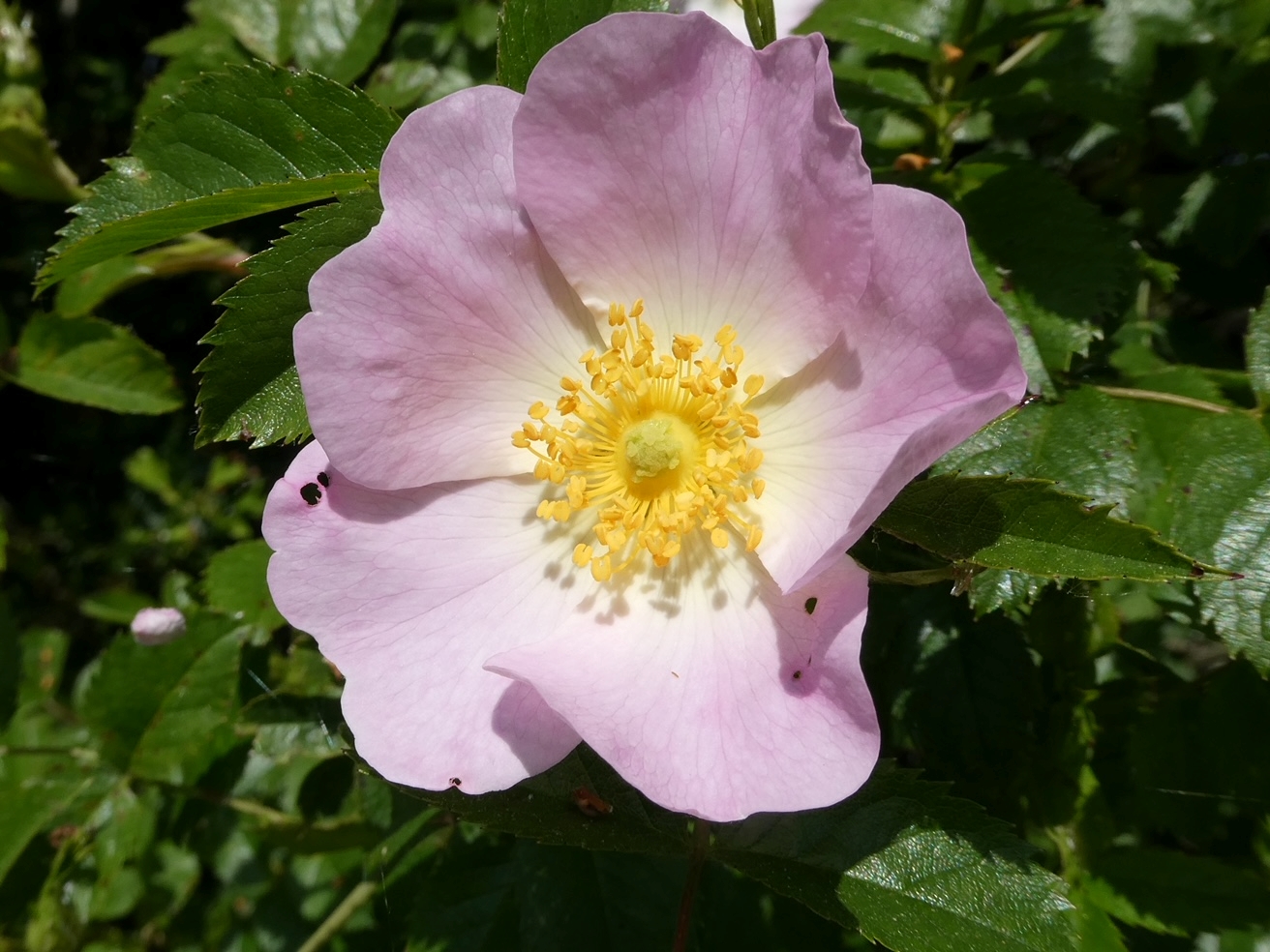


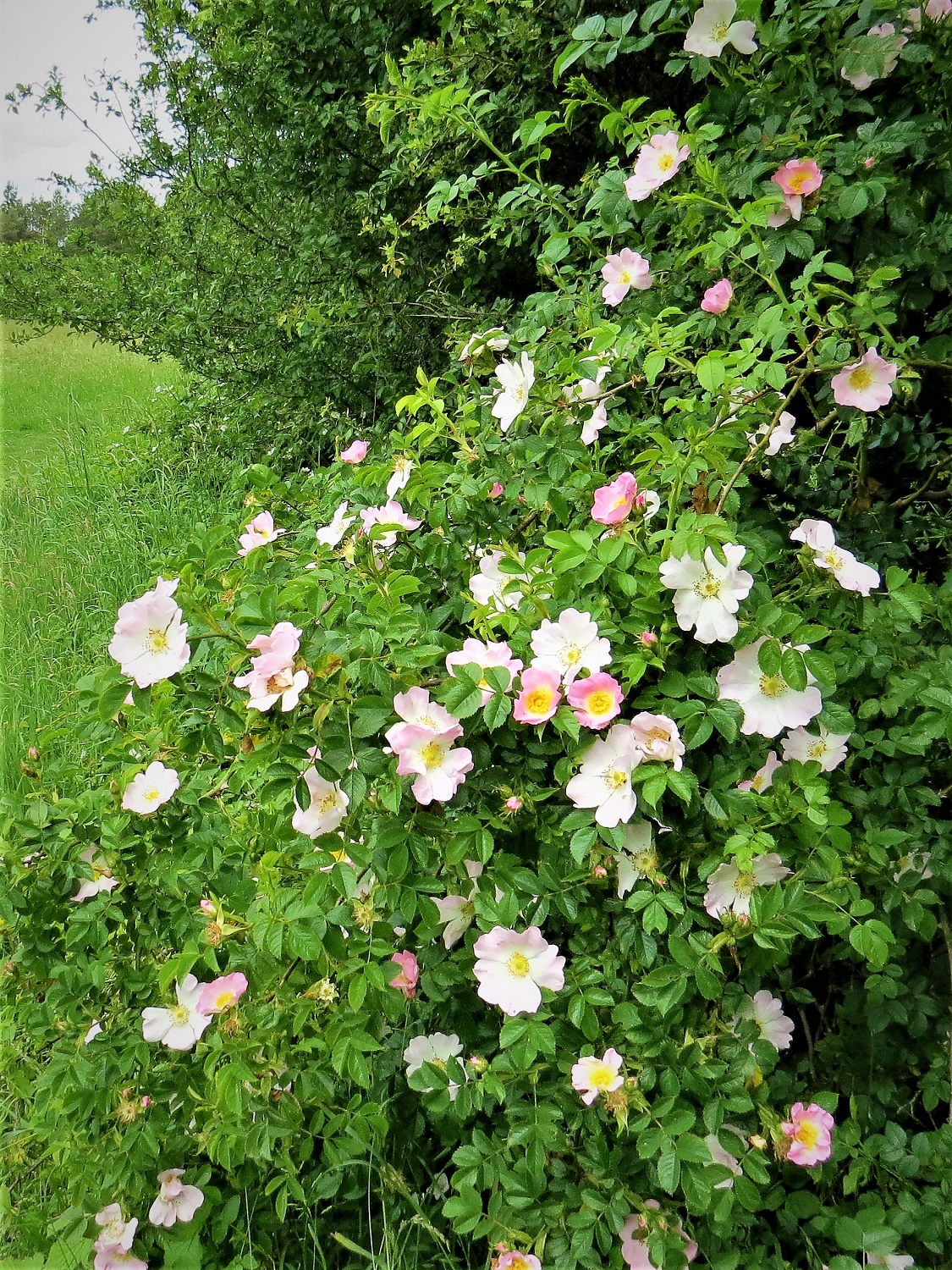
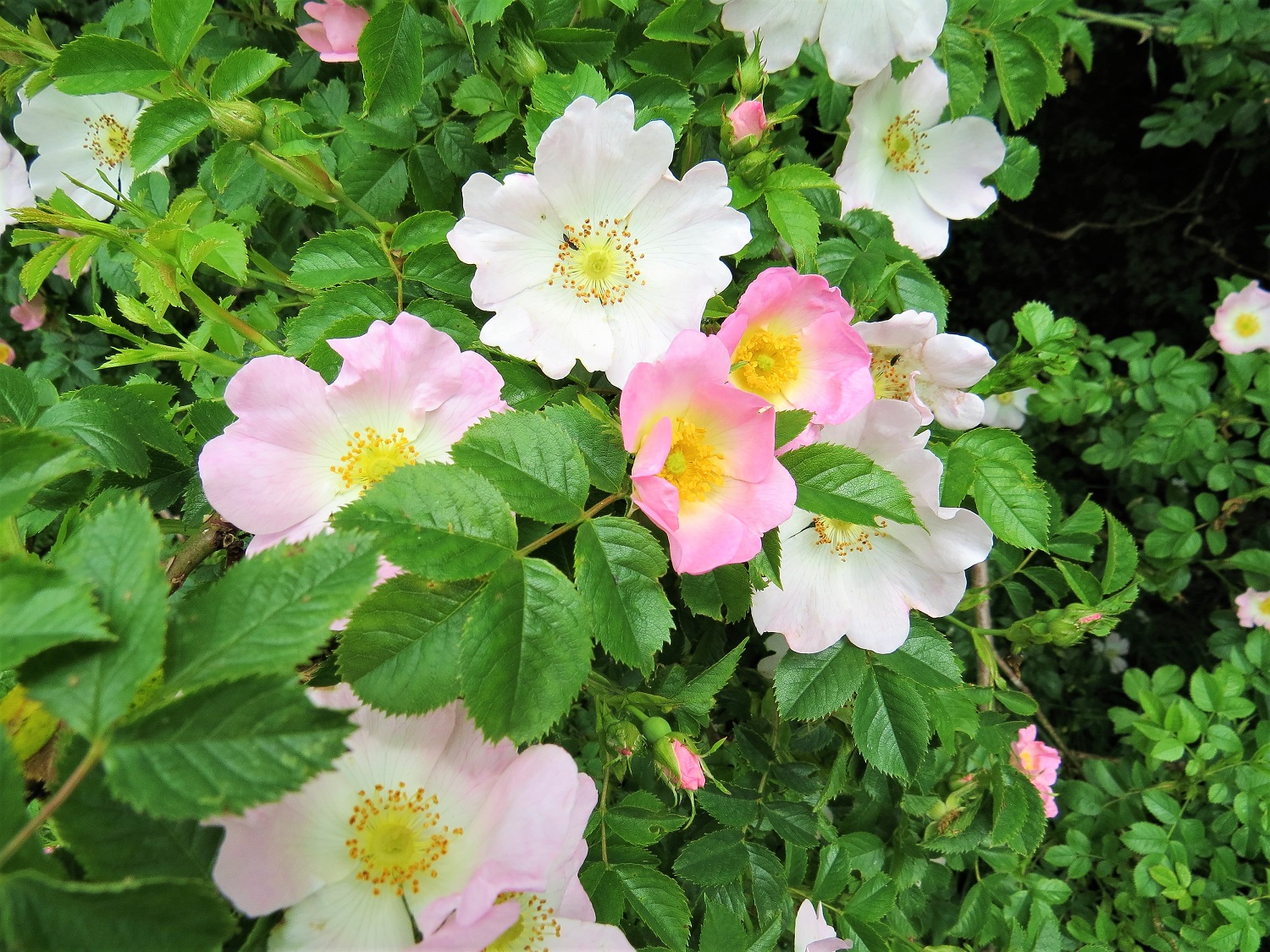
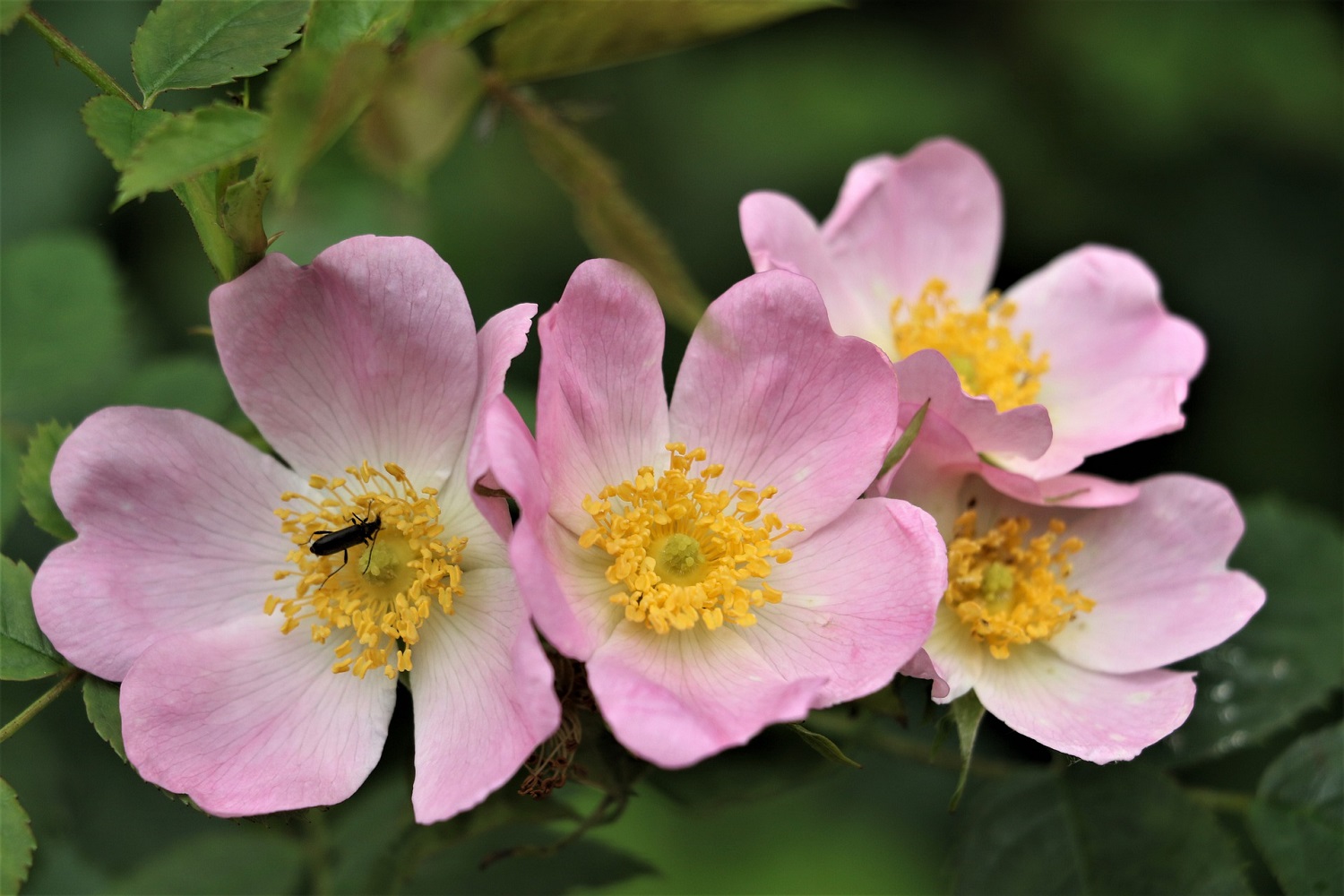
Header image: dog rose © Ian Bushell (SCPLNR May 24)

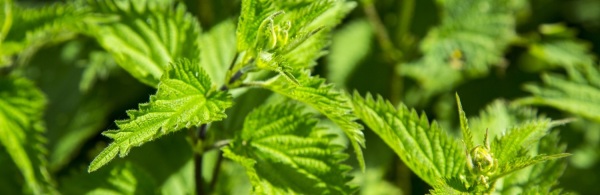
…about nettles for Be Nice To Nettles Week
Continue reading “Ten facts…”

There are only two species of iris native to the UK and we have them both growing in the reserve: Iris pseudacorus and Iris foetidissima.
Continue reading “IRIS”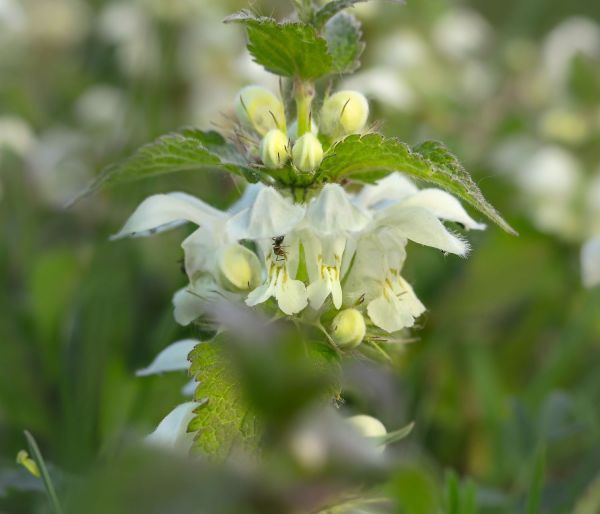
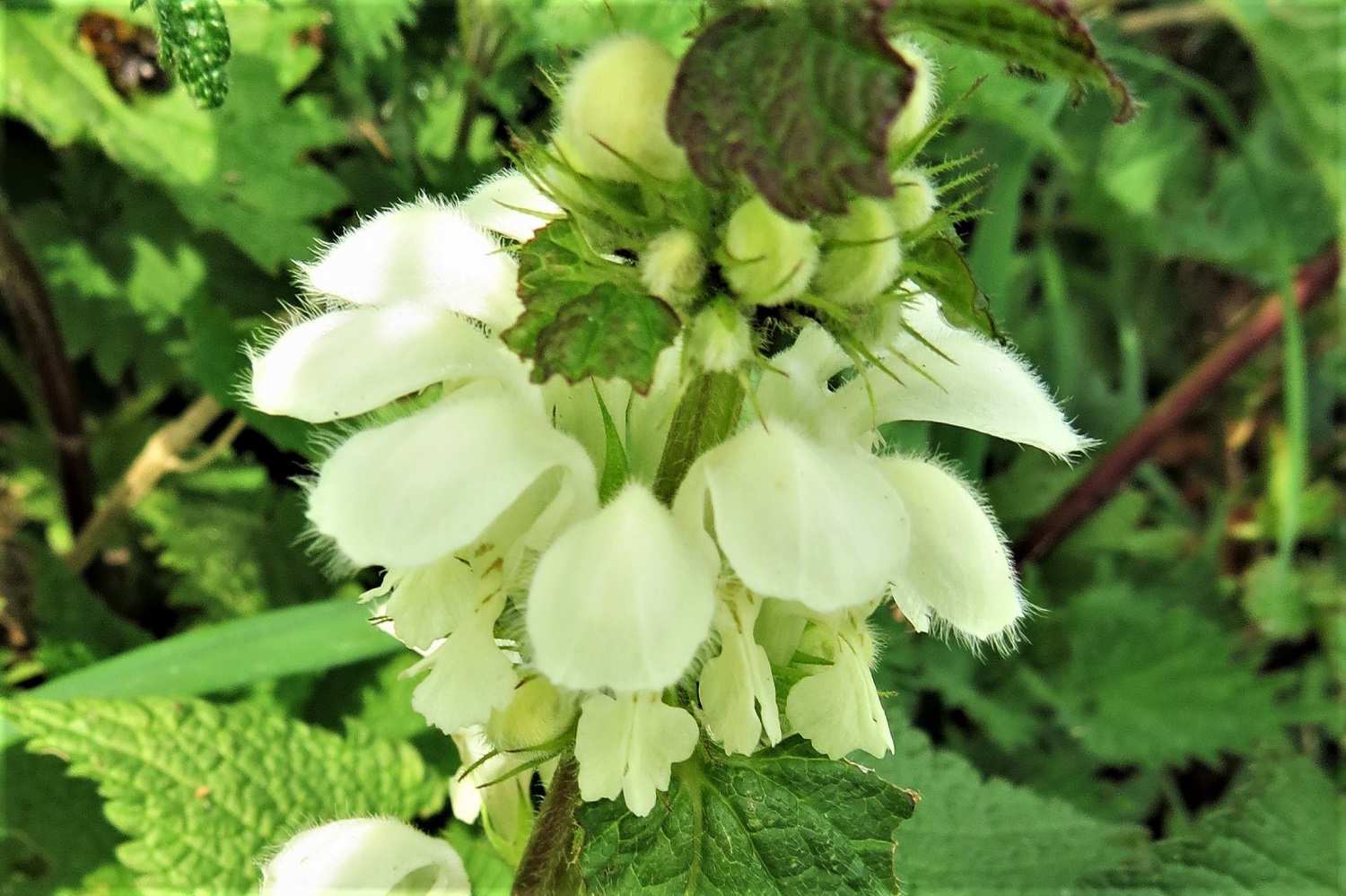
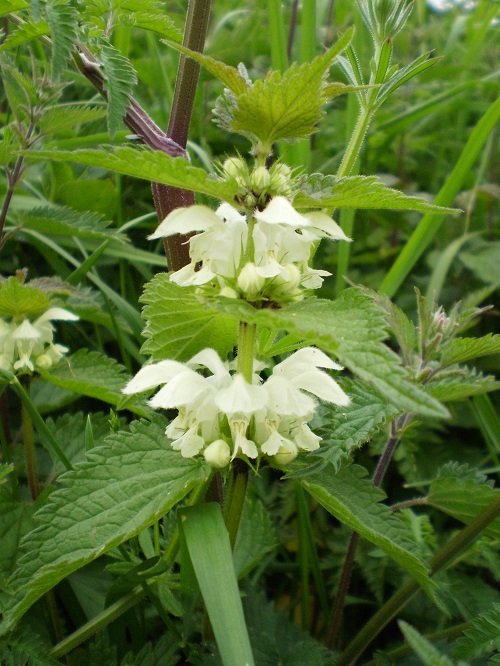
The extraordinary flowers of white dead nettle (Lamium album); find them in our hedges and edges, besieged by pollinators.





 Southwick Country Park Nature Reserve