Crane Flies

There are hundreds of species of crane fly in this country and almost all of them go by the name of daddy-long-legs. The differences between species can be microscopically small but we think this specimen photographed in Sheep Field is either a common European crane fly (Tipula paludosa) or a marsh crane fly (T. oleracea). At this time of year they hatch in the reserve’s field in their thousands, if not millions.

Continue reading
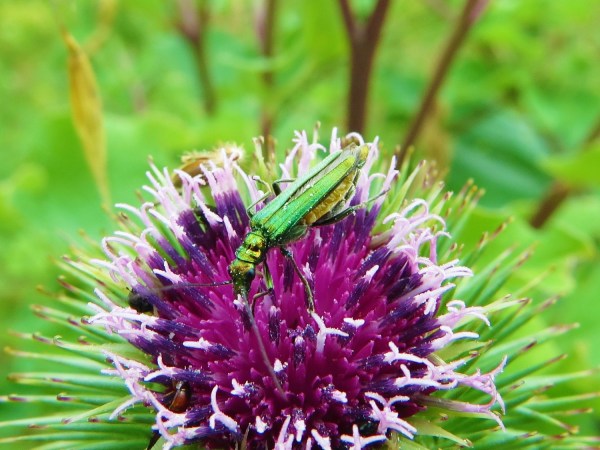
Thick legged flower beetle

An iridescent green, female Oedemera nobilis, known as the thick legged flower beetle or swollen thighed beetle, photographed in the reserve last year. It is the male (see below) that has the strangely shaped hind legs for which the species is named

[1] by Gail Hampshire (CC BY 2.0) flickr.com; [2] © Hans Hillewaert (CC BY-SA 4.0) wikimedia.org

How to tell a grasshopper from a cricket

  • The most visible difference between a grasshopper and a cricket is that crickets tend to have very long antennae while grasshoppers’ antennae are short.
Continue reading
Five spot burnet moth

These are five spot burnet moths (Zygaena trifloii), dayflying nectar feeders. Regular contributor Cheryl Cronnie photographed this mating pair at the end of June.

Continue reading
Did You Know….

The reserve’s great pond snails (Lymnaea stagnalis) can crawl on the under side of the water surface, eating algae as they go and breathing oxygen from the air. 

Header Image: Great pond snail by Peter Pfeiffer (CC BY-SA 4.0) commons.wikimedia.org

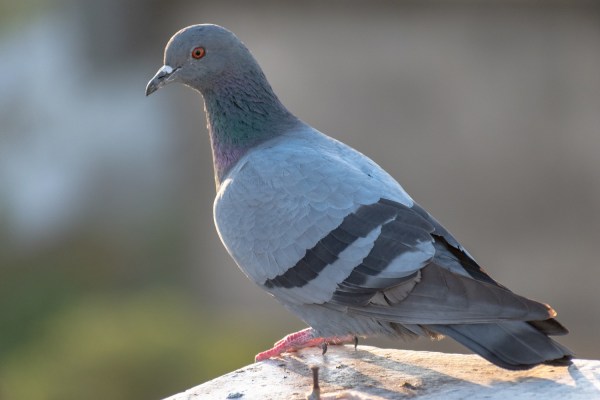
Pigeon post

Rock doves (Columba livia) are known to have been domesticated for more than 5,000 years. They are mentioned in cuneiform writing on clay tablets dug up in Mesopotamia and in hieroglyphics on the walls of ancient Egyptian tombs. There is a growing belief among archaeologists that these pigeons were, in fact, the first birds to be domesticated, more than 10,000 years ago,

Continue reading “Pigeon post”

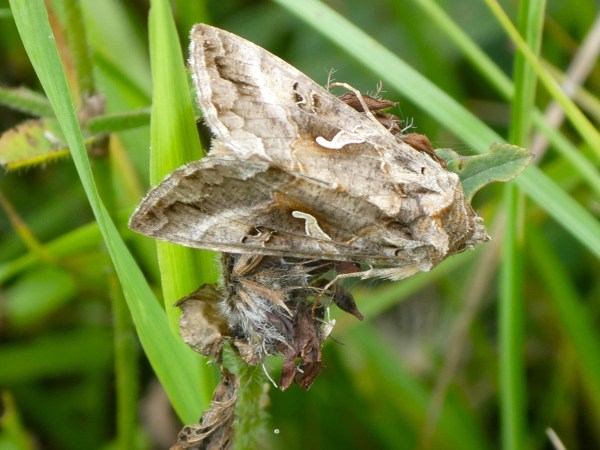
A day flying moth, beautifully camouflaged on a wildflower seedhead, found and photographed yesterday by Clive Knight, and identified by Ian Bushell: a Silver Y (Autographa gamma).

Create a website or blog at WordPress.com

Up ↑