The charm of goldfinches we published yesterday reminded us of a piece from last year that might, during this long hiatus between Christmas and the New Year, bear repeating
Continue reading “A mischief of magpies”A mischief of magpies
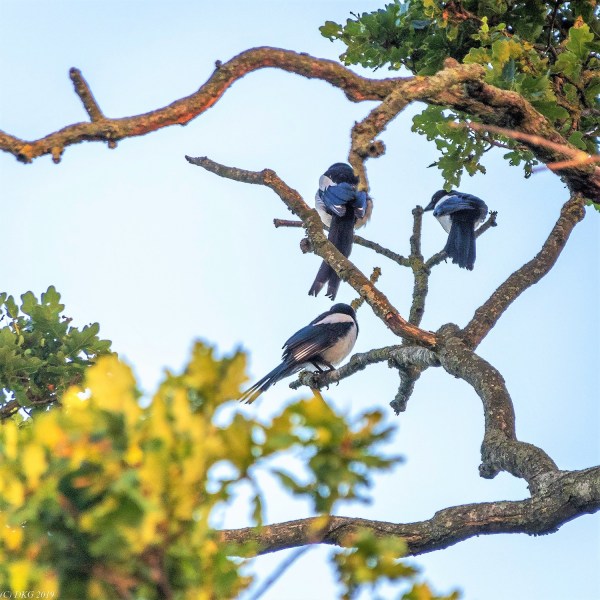
The charm of goldfinches we published yesterday reminded us of a piece from last year that might, during this long hiatus between Christmas and the New Year, bear repeating
Continue reading “A mischief of magpies”
The 29th is the fifth day of Christmas – when we are supposed to receive five gold rings from our true loves. But few of the Friends have any use for gold rings so here, instead, is a fivefold gallery of the reserve’s goldfinches.
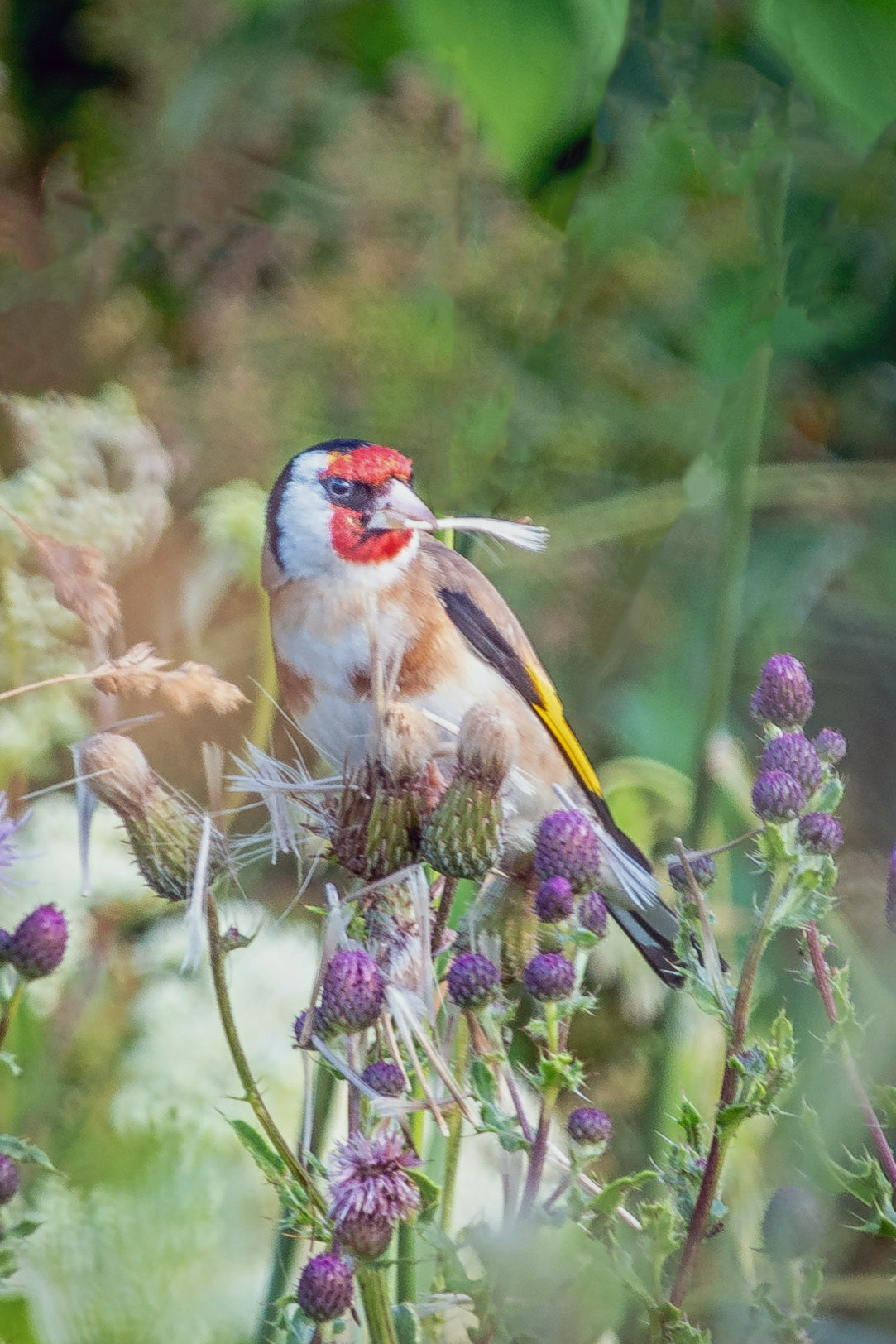


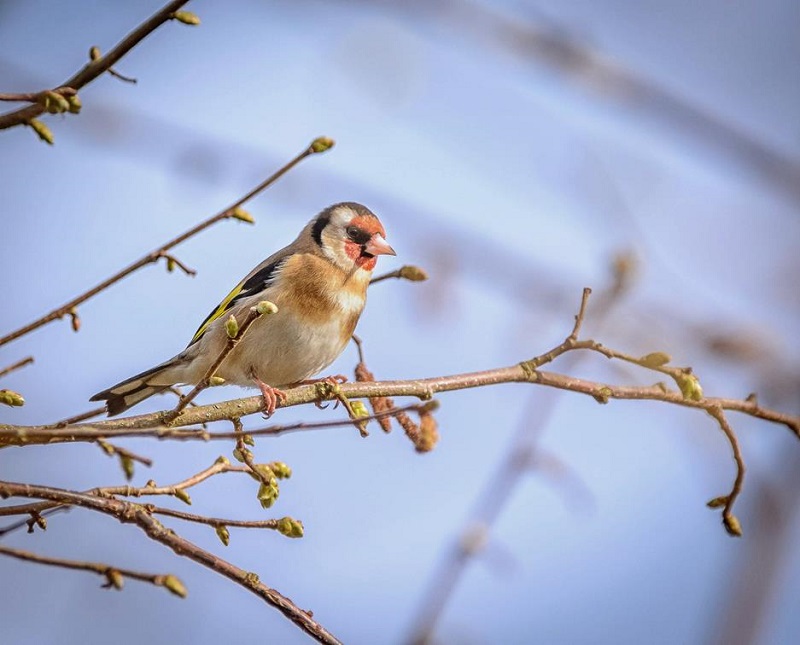
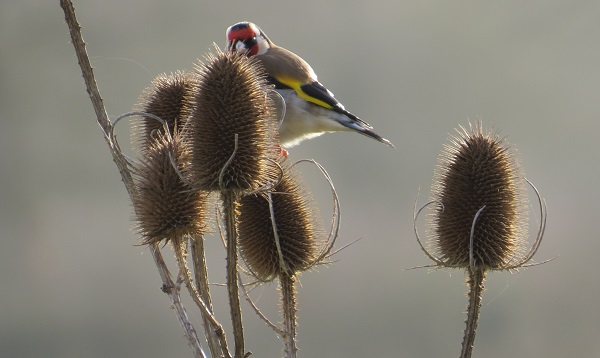
All pictures taken in the reserve.

It’s Saint Stephen’s Day, the second day of Christmas, when an 18th century carol would send us two turtle doves.
Continue reading “Turtle doves”
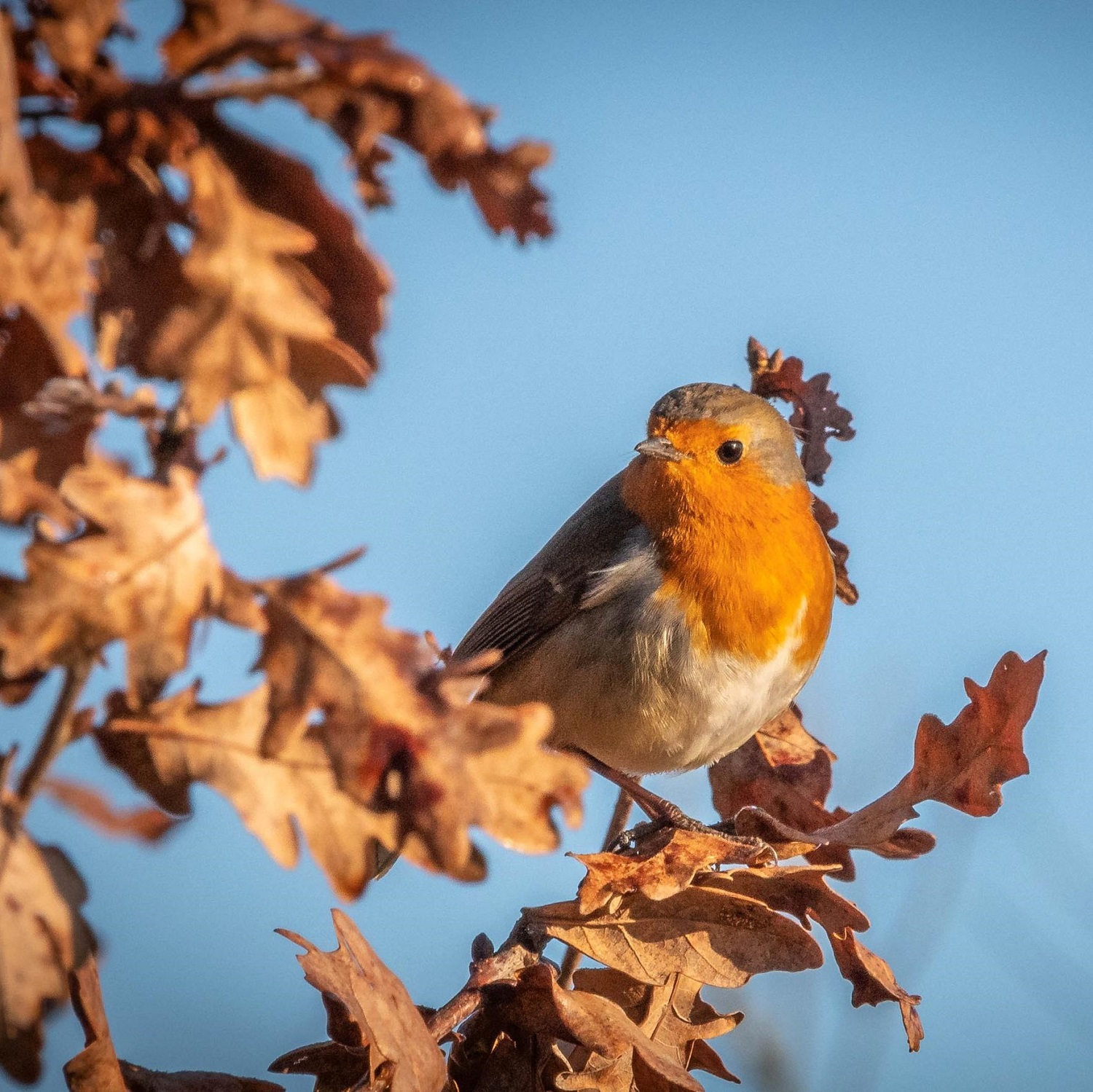
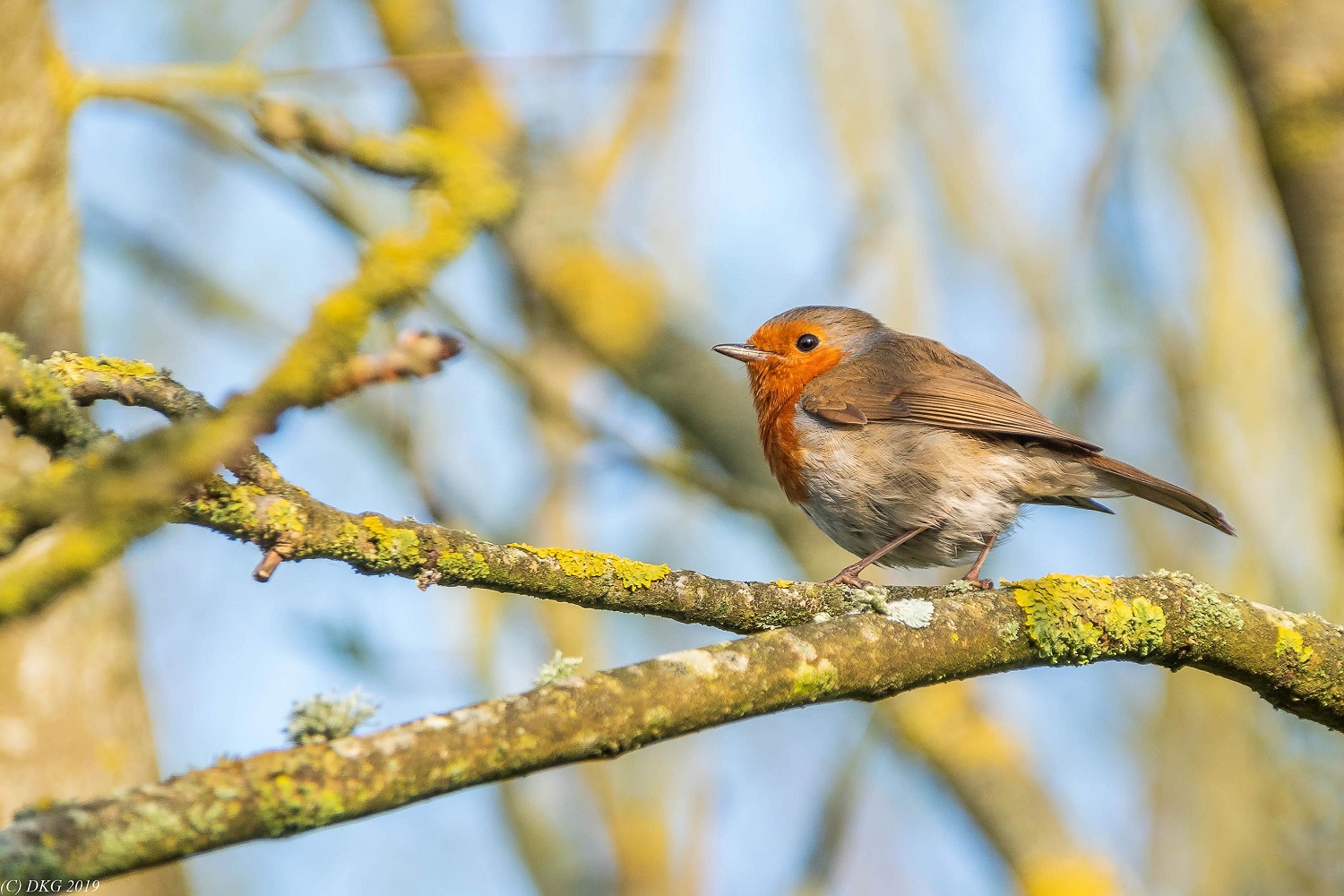
A Christmas Eve gallery of the reserve’s robins, photographed by DKG.




Fieldfare (Turdus pilarus) and redwing (Turdus musicus), migratory thrushes from mainland Europe, are common winter visitors to the park. They are easily confused; here is a video to help you distinguish the two species.
Header picture: Fieldfare (Turdus pilaris) by Teresa Reynolds (CC BY-SA 3.0)
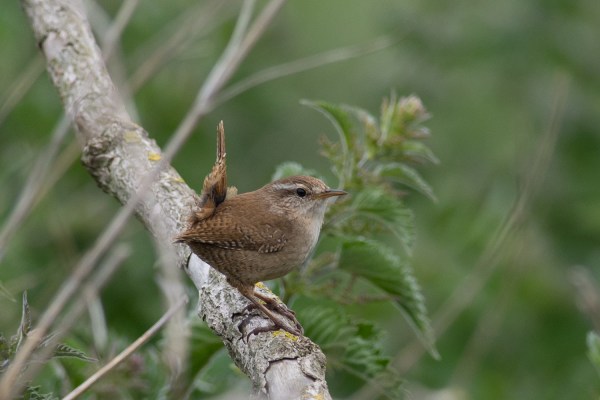
Jenny Wren, the Eurasian wren, Troglodytes troglodytes.
Continue reading “Jenny Wren”
Simon Knight, our in-house wildlife photographer, has sent us a long tailed tit huddled against the cold of a frosty morning.
click here to see how such tiny birds cope with these freezing nights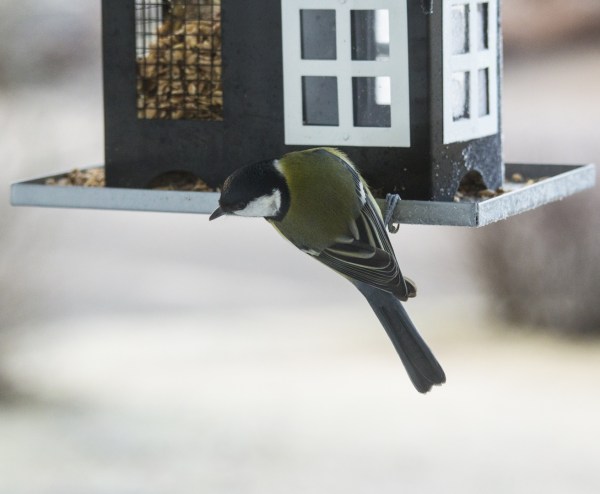
Treat your garden birds with a Christmas bird table. Here are some suggestions:
Continue reading “Christmas bird table”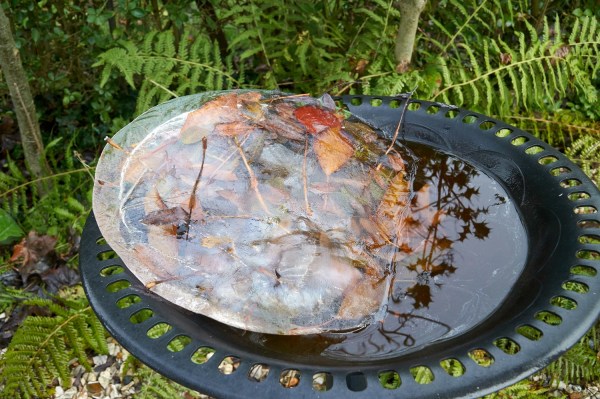
Birds need clean water for both drinking and bathing whatever the weather. We know you put out clean water for your garden visitors during the drought but please don’t forget they will need the same support as the temperature falls and natural sources of water freeze over.
Continue reading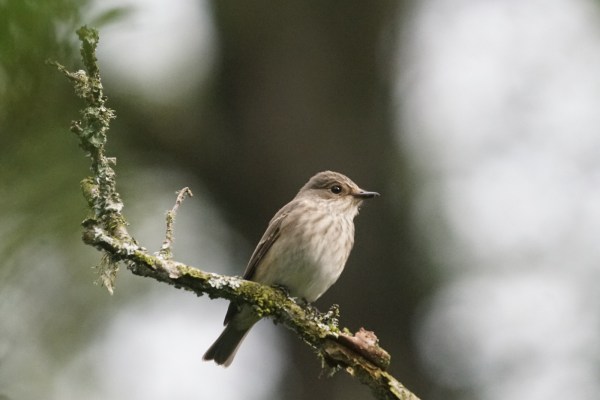
On this very cold and damp Sunday morning, let’s look back at one of our summer visitors: Muscicapa striata, the spotted fly catcher.
Continue reading “Spotted flycatcher”
The Winter moth (Operophtera brumata) is one of the few Lepidopterans that can cope with winter’s freezing temperatures in its adult stage. They are endothermic which means that they can produce heat internally by biochemical processes, just as warm-blooded creatures do.
Continue reading “Winter moths”
A message from Barbara Johnson:
Where have all the blackbirds gone? Are they able to find enough food in the wild so don’t need to visit our gardens?
Continue reading “The blackbird question.”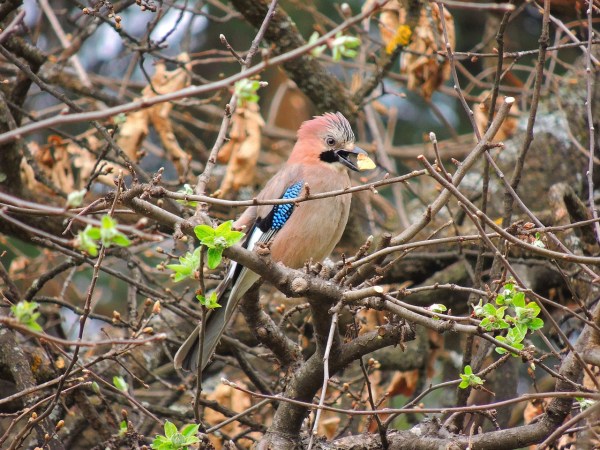
There are always jays somewhere in the reserve
Continue reading “Jay”
Collared doves (Streptopelia decaocto) bred in Britain for the first time in 1955, in Norfolk. Within 20 years they had colonised every county in the British Isles, and had even reached Shetland and the Outer Hebrides.
Continue reading “Eurasian collared dove”
Kingfishers usually come to the reserve in the autumn when breeding pairs split up and the year’s fledglings spread out to look for their own territories. This year, after such a long period of drought, things might be different.
Read on: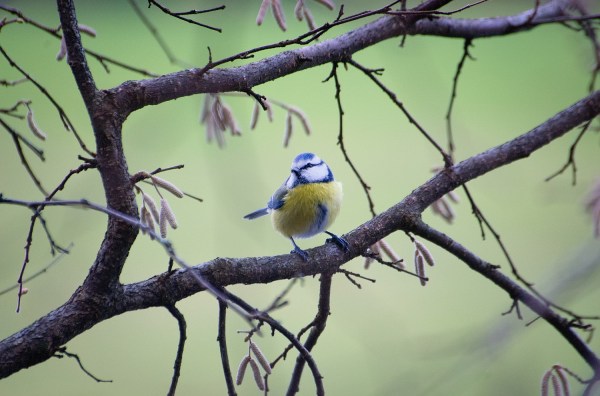
The increasing use of nest box cameras has shown how frequently garden nest boxes are used by blue tits for winter roosting.
Continue reading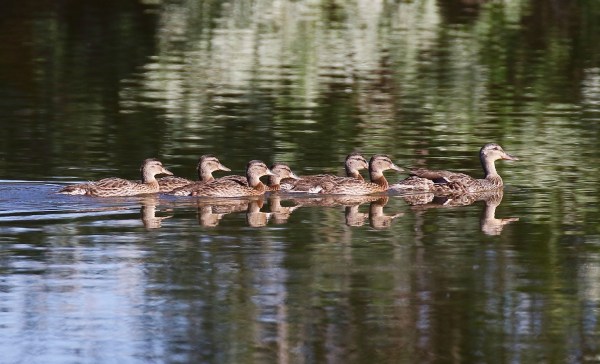
This year’s Ig Nobel prize for physics went to Professor Frank Fish , for research into the question of why ducklings swim in a line behind their mother. Apparently, the linear formation saves energy with the last duckling in the line benefitting the most. Didn’t we already know that?

by MTSOfan (CC BY-NC-SA 2.0) flickr.com
Header Image: by Michael B. Smith (CC BY 2.0) flickr.com
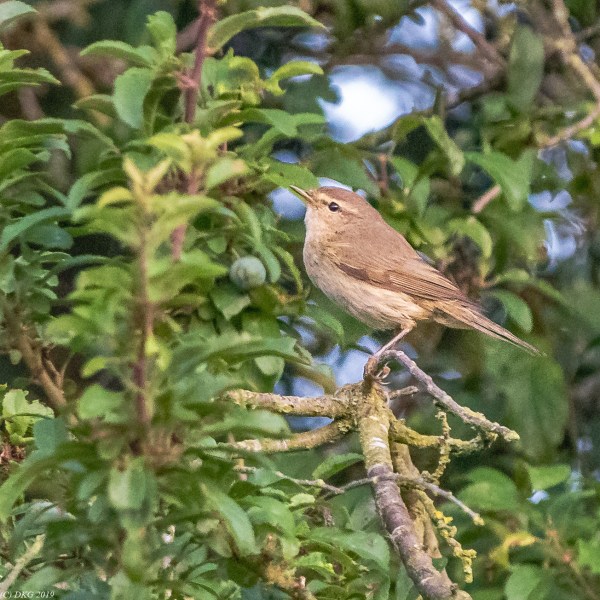
Most of our willow warblers will have left by now; they will be on their way to sub-Saharan Africa where they will spend their winter. Theirs is the longest journey undertaken by any of the park’s migratory birds. Why do such tiny birds fly so far and take such risks to do it?
Continue reading “Willow warbler migration”
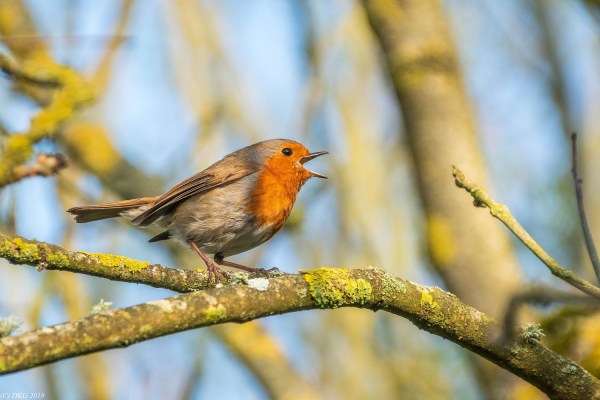
Robins, both male and female, sing almost the whole year round with just a pause after the breeding season, when they go into hiding for the moult.
Continue reading “Winter song”
There are several families of magpies in the reserve. This year’s crop are, as yet, short-tailed, loud- mouthed and clumsy, hanging out in gangs and still learning to fly properly. But, despite their dramatic black and white beauty, their reputation is poor.
Read on: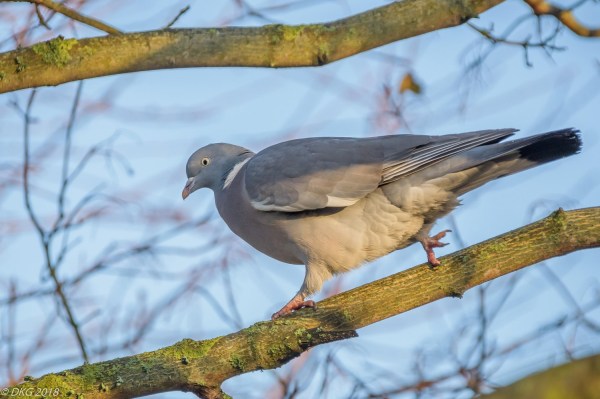
Wood pigeons (Columba palumbus) are our largest and most common pigeon. Gregarious, very adaptable and given to flocking in enormous numbers at this time of year, they are an everyday sight in British towns and countryside.
In towns they seem unafraid but in the park they are shy and wary. Often the first indication that they are there at all is the loud clattering and clapping of their wings as they take off and fly away. Their call is the lovely, familiar background noise of spring and summer.
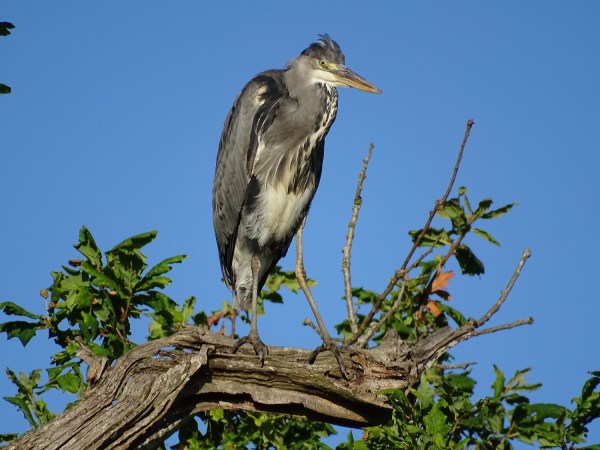
A juvenile grey heron (Ardea cinerea) photographed in the reserve at the weekend by Cheryl Cronnie.
Continue reading
A common whitethroat (Sylvia communis), photographed in the park by DKG in the summer of 2019. It is probably either a female or a juvenile; the male is more distinctively coloured.
Continue reading “Whitethroat”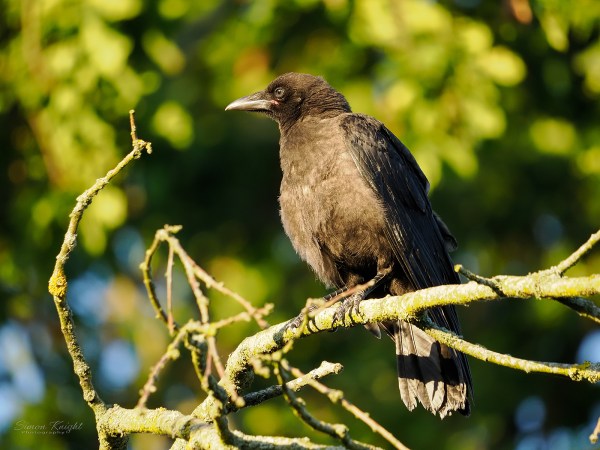
by Simon Knight
During this extreme hot spell we are all currently enduring, there is no doubt that the best time to be in the reserve is first thing in the morning.
Continue reading


 Southwick Country Park Nature Reserve